
PUBLIC HEALTH CHAIRS JOIN CONNECTICUT EMS LEADERS TO CALL FOR REFORM, INVESTMENT AND PRESERVE LIFE-SAVING CARE
FOR IMMEDIATE RELEASE
Contact: Joe O’Leary | Joe.OLeary@cga.ct.gov | 508-479-4969
January 30, 2023
Today, Public Health Committee Chairs State Senator Saud Anwar (D-South Windsor) and State Representative Cristin McCarthy Vahey (D-Fairfield), flanked by dozens of emergency medical services professionals, advocated with health care leaders for improvements to current EMS systems including payment reform, data collection and transparency and efforts to bolster the state’s EMS workforce. Already experiencing strain before the COVID-19 pandemic, professionals warned that the EMS health care field is struggling under rising costs and understaffing, with consequences potentially harming public health and emergency response.
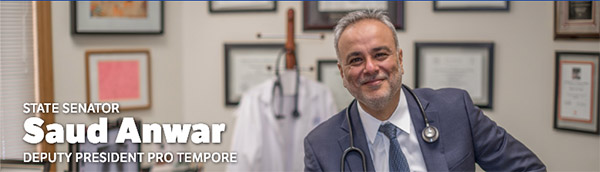
“When we talk about emergencies, time is life,” said Sen. Anwar. “The first few moments are the most critical to save a life. Every second can make a difference. And our state is moving in a direction where, in parts of the state, people experiencing emergencies have to wait as long as 40 minutes for aid or even longer. That can mean a difference in outcome that’s life and death. The Public Health Committee this year will work to address issues in emergency medical services and look at how we can do better. Legislation will address components including response times to see how our responses and systems work while preventing EMS deserts and finding supports for EMS workers. We can save lives by doing this. We have not treated EMS professionals with the respect they deserve; this legislation can fix that.”
“Our job here at the legislature is to help connect the dots, and some of those dots for EMS haven’t been connected in recent years, including payment, coordination and successfully assuring you have the people you need to help us,” said Rep. McCarthy Vahey. “Our job is to help the helpers and make sure they have the resources they need to perform critical jobs. We are going to be connecting the dots not just across the aisle but across committees as we know these issues aren’t just public health issues but human services, public safety and insurance issues. We will collaborate to make sure we can understand the data, understand the issues and understand the connection between all of those areas.”
“EMS is one of the many skilled health care areas where we have shortages,” said Karen Buckley, Vice President of Advocacy for the Connecticut Hospital Association. “We’re pleased to see a focus on growing and retaining professionals in this field. EMS providers play a critical role in both responding to 911 emergencies and movement of patients between health care settings and essential health care appointments, which has a direct role on patients. It’s also critical for ensuring patient beds are available to those who need them, something that was vital during our response to the COVID-19 pandemic and now, as we treat sicker patients than ever before. We applaud the Public Health Committee’s commitment to legislation that will support efforts to recruit and retain EMTs, including programs that would create a worker pipeline. We also support efforts to improve payment rates, which will have a direct impact on payment reform for care at all levels in the EMS system.”
“Many towns are experiencing a crisis of providing EMS services to residents,” said John Elsesser, town manager for the town of Coventry. “We have worked internally to address manpower shortages and costs, and feel we are now on life support. In Coventry, we merged our two volunteer fire departments to improve staffing. The town took over the ambulance, worked with outside ambulance services, eliminated one ambulance and tried many things to motivate volunteers to reduce cost and retain 24/7 service. We looked into private services for aid and they just said no. And then COVID hit. Understandably, some volunteers were concerned, and the town brought in temporary staffing firms to ensure 24/7 staffing. We were able to use ARPA funds for this, and response times were cut in half. We had hoped to phase this extra $500,000 expense into our operating budget, but voters said no twice. We face increased call volume, longer calls and dramatic increases in time to respond. Towns are now calling on the state to step up and ensure these needed services to our citizens. To fix this, we recommend increasing the state Medicaid rate to match what Medicare is paying and establishing rural rates in communities removed from full service emergency centers. We recommend making annual rate increases automatic depending on inflation, incentivizing volunteers perhaps through a property tax credit, and creating subsidized credit for training, as well as expanding high school training options, among others.”
The EMS advocates called for the following improvements to current systems:
- The Office of Emergency Medical Services and Office of Health Strategies would create a dashboard of EMS services tracking response time for calls, whether mutual aid was needed, a list of most common causes for calls each month, if individuals were taken to hospitals and which hospitals accepted the most patients, and type of ambulance service (volunteer, hospital-owned, for-profit or other).
- All Medicaid ambulance rates, including Advanced Life Support, Basic Life Support and mileage rates, would be increased 10% each year until rates would be equal to Medicare rates for the same services. Medicaid and Medicare rates would then be tied together.
- Tuition reimbursement to any successful student of state-approved EMT or paramedic programs who are national registered. In return for reimbursement, students would need to serve for at least three years with a state ambulance service. Further steps to benefit the EMS workforce include allowing high school students to take EMT courses, incentivizing the career path with a real estate reduction in exchange for service, and including EMTs and paramedics in town health plans.
- Continue an existing working group on EMS pressures for 18 more months and having that group include recommendations for increasing EMS workforces in Connecticut.
Caption: Rep. McCarthy Vahey, left, and Sen. Anwar, speaking, stand in the Legislative Office Building Monday flanked by EMS leaders and professionals.
Share this page: