FOR IMMEDIATE RELEASE
Contact: Joe O’Leary | Joe.OLeary@cga.ct.gov | 508-479-4969
February 17, 2026
WEDNESDAY: PUBLIC HEALTH COMMITTEE, SENATOR ANWAR TO HOLD PUBLIC HEARING ON PRIVATE EQUITY IN HEALTH CARE, FIGHTING OVERDOSES
Where: LOB Room 1D, Zoom, Youtube Live
When: Wednesday, Feb. 17, noon
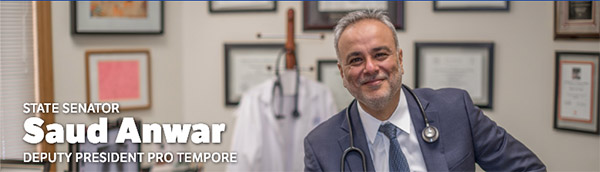
On Wednesday, February 18 at noon, in 1D of the Legislative Office Building and simulcast online on Zoom and Youtube Live, the Public Health Committee will hold its first public hearing of the 2026 legislative session. Among the 14 bills on the agenda are two session priorities for State Senator Saud Anwar (D-South Windsor), Senate Chair of the Public Health Committee, regarding key priority bills:
- Senate Bill 196 seeks to provide a response to recent private equity woes seen in Connecticut by addressing certain practices undertaken in the past by companies operating in Connecticut. Under the legislation, beginning October 1, no hospital will be allowed to enter a sale-leaseback transaction, where they sell the property/land of the hospital and then lease it back from the new owner, unless they are in direct financial distress, their governing body authorizes the decision explicitly for financial reasons and the hospital informs the Public Health Commissioner and Attorney General. Hospitals would need to confirm annually that private equity does not have a controlling interest in a hospital and that it maintains full governance over its assets and activities.
- As Connecticut finally sees success in slowing the growth of overdose deaths within its borders, Senate Bill 195 takes legislation that nearly became law in 2025 before an eleventh-hour removal and pushes for new resources and approaches to support people struggling with opioid use disorder. It would create a pilot program for up to four overdose prevention centers in Connecticut, which would be staffed by licensed health care providers to provide aid, access to test strips and connections to treatment for individuals entering the centers. Individuals would have access to visit the overdose prevention centers in the process of using substances; they are stocked with opioid antagonist drugs and other resources to improve safety and encourage treatment for those struggling.