Sen. Lesser Joins Rep. Comey and fellow Legislators in Advocating for Expanded Epinephrine Access

Sen. Lesser Joins Rep. Comey and fellow
Legislators in Advocating for Expanded Epinephrine Access
lesser

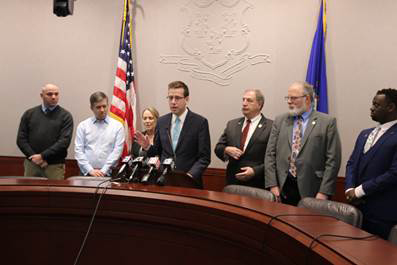
HARTFORD, CT – Today, State Senator Matt Lesser (D-Middletown) joined state Representatives Robin Comey (D-Branford), Public Health Committee co-chair Jonathan Steinberg (D-Westport) and Quentin Phipps (D-Middletown) to advocate for expanded access to life-saving epinephrine to treat anaphylactic allergic reactions.

Senate Bill 706 (SB 706), “An Act Concerning Epinephrine Auto Injectors,” will make epinephrine devices and EpiPens available in public venues, camps, preschools and entertainment businesses. Sen. Lesser and Rep. Comey worked collaboratively on this legislation. Sen. Lesser and Rep. Comey said expanded access to epinephrine will save lives.

“We have an opportunity to ensure children and adults suffering from a life-threatening anaphylactic allergic reaction will have access to epinephrine and do not have to wait or hope they are close enough to a hospital in order to receive the care they need,” said Sen. Lesser. “Workplaces across Connecticut are not allowed to stock EpiPens and other epinephrine devices the way they are in other states. Senate Bill 706 will correct this problem and save lives. I commend the efforts of Rep. Robin Comey on this important issue and piece of legislation.”

“There is no cure for food allergies, but awareness and education can greatly contribute to managing the condition,” said Rep. Comey. “And if that fails, a timely injection of epinephrine to an individual suffering anaphylactic shock from a reaction could mean the difference between life and death. I am pleased to help educate others on this important issue and thank all the advocates and partners for their commitment and support.”

Keith Garbart, the Legislative Liason for the Connecticut Camping Association and the Camp Director at Winding Trails Summer Day Camp in Farmington, also supports this legislation and said as many as 200 out of the 650 campers who attend the Winding Trails Summer Day Camp each day have some type of allergy. He said passing this legislation will provide peace of mind to families that their children with known or unknown allergies will be safe.

“A lot of camps, like in our case, do not have access to stock epinephrine,” said Garbart. “This legislation would give us the opportunity to have that in our nursing stations and in those undiagnosed cases where someone gets stung by a bee and they did not know they were allergic. Having the ability to have a stock EpiPen is a great idea for camps.”

A recent study revealed that 32 million Americans are living with food allergies and 26 million of those affected are adults. Severe food allergies can be life-threatening and, according to the Food and Drug Administration, it is estimated that each year in the United States there are 30,000 emergency room visits, 2,000 hospitalizations, and 150 deaths due to anaphylaxis to food.

Currently 33 other states and the District of Columbia have passed legislation permitting public venues to maintain epinephrine auto injectors. SB 706 has received bipartisan support, advancing out of the Public Health Committee by a unanimous vote on March 8. It now awaits action by the state Senate.

Bradley Applauds State Senate Advancement of Legislation to Strengthen Protections for Immigrants

Bradley Applauds State Senate Advancement of
Legislation to Strengthen Protections for Immigrants

Bradley

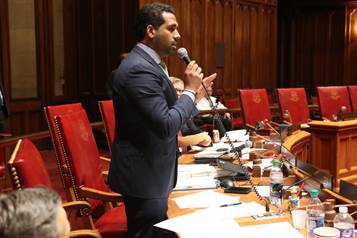
HARTFORD, CT – State Senator Dennis Bradley (D-Bridgeport) applauded the state Senate’s advancement of legislation that will strengthen the Connecticut Trust Act. It passed the State Senate by a 20-15 vote early Wednesday morning. Sen. Bradley said this legislation provides necessary protections for immigrants in Connecticut.

“Passing this legislation ensures that we uphold the very best of what it means to be American,” said Sen. Bradley. “We believe as a nation that individuals’ rights and freedoms are what make our nation the very best. Innocent people should not fear the government. As the Trump Administration continues to fail on immigration and demonize the innocent, this legislation will protect innocent immigrants from having to live in fear over deportation in our state.”

Senate Bill 992, “An Act Concerning the Trust Act,” would prohibit Connecticut law enforcement officers from detaining an individual based on Immigration and Customs Enforcement (ICE) detainers. Additionally, it would clarify that judicial marshals and other law enforcement officials may honor civil immigration detainers only when accompanied by a judicial warrant.

In 2013, the General Assembly passed “Trust Act” legislation that attempted to define the rules for law enforcement officials dealing with undocumented immigrants. In response to instances where law enforcement responded to civil immigration detainers by holding individuals for indefinite lengths of time, the Act limited when local law enforcement may detain individuals, and it prohibited holding a person on behalf of federal immigration authorities for more than 48 hours.

In December 2014, the Department of Corrections (DOC) established a new policy that further limited enforcement of civil immigration detainers. An individual with an Immigration and Customs Enforcement (ICE) detainer could be held “only if” the individual had (1) a prior “violent felony conviction; (2) a match in the terrorist screening database; or (3) “a final Order of Deportation or Removal issued by the United States which is accompanied by a Judicial Warrant.”

A March 2019 report from the Connecticut Immigrant Rights Alliance highlights that Connecticut Judicial Marshals have been enforcing civil immigration detainers issued by ICE, despite not being required by federal law to do so. This has raised legal concerns and may be in possible violation of the 2013 Connecticut Trust Act. The report found that 78% of judicial marshals detain individuals in situations that would not be grounds for detention under DOC policy. Two categories in particular are responsible for this: (1) a final order of deportation or removal; and (2) unacceptable risk to public safety. These categories are broad and unreliable and not enforced by DOC.

The bill now awaits a vote by the state House of Representatives.

Senate Passes Bill To Study Gender Discrimination In Response To Federal Government Attacks On Equality

Senate Passes Bill To Study Gender Discrimination In Response To Federal Government Attacks On Equality

HARTFORD, CT – Early Wednesday morning, the Senate passed legislation that would create a committee to study gender-based or expression-based discrimination in schools and workplaces across Connecticut. This committee would study current anti-discrimination laws and determine the extent of current discrimination based on gender identity and expression. State Senator Saud Anwar (D-South Windsor) lauded its passing.

The bill aims to protect Connecticut residents from numerous actions the Trump administration has taken to backtrack on progress combating gender discrimination. President Trump banned transgender people from serving in the military without having any idea what it would mean for those currently serving or how it would impact our military readiness. The U.S. Department of Justice reversed policy that provided non-discrimination protections for transgender people in the workplace. The Department of Education also reversed policy and will not take action on any complaints filed by transgender students who are banned from restrooms that match their gender identity. Staff at the Centers for Disease Control and Prevention were instructed not to use the term “transgender” in official documents.

“No one in our society should be afraid to express themselves, but it’s all too clear that discrimination against LGBTQ people remains prevalent in our society,” said Sen. Anwar. “By approving this study, we have an opportunity to learn how our laws succeed and fail in protecting our fellow citizens, and we can address any failures in the future.”

According to a study of LGBTQ school students in Connecticut conducted by GLSEN, 85 percent of students were the target of homophobic remarks and 20 percent of students were physically harassed because of their gender expression. This is despite Connecticut updating its anti-discrimination laws in 2011. This legislation is designed to study the effects of those updates and the effectiveness of current laws, and whether further updates would better protect individuals in schools and places of employment.

This legislation received support from numerous groups, among them Chief Public Defender Christine Perra Rapillo, ACLU-CT Executive Director David McGuire and the National Association of Social Workers-CT. They argued that the bill would help fight discrimination based on gender identity or expression in Connecticut, providing better protections for many individuals, especially those who are transgender or gender-nonconforming. It would determine “whether enhancements should be made to the existing statutes to assure equal treatment and safety of this protected class of individuals,” Rapillo said.


Finance Committee Passes Student Loan Debt Relief Legislation

Finance Committee Passes Student Loan Debt Relief Legislation

lesser

State Senator Will Haskell speaks with State Senator Dennis Bradley (D-Bridgeport) on the Senate floor Tuesday.

HARTFORD, CT – Today, the Finance Committee passed Senate Bill No. 72, a bill that would make Connecticut a more affordable state for recent college graduates and the companies who hire them. The bill earned bipartisan support and will help address the growing student debt crisis.

State Senator Alex Bergstein (D-Greenwich), Senate Chair of the Banking Committee, originally introduced this bill, which was then referred to the Finance Committee and approved today. The amended bill is the product of a collaboration between Sen. Bergstein and State Senators Will Haskell (D-Westport) and James Maroney (D-Milford). It creates a tremendous opportunity for Connecticut to retain and attract talented, young college graduates.

Senate Bill No. 72, “An Act Establishing a Tax Credit for Employers That Make Payments on Loans Issued to Certain Employees By The Connecticut Higher Education Supplemental Loan Authority,” creates a tax credit for employers who make payments on the student loans of qualified employees.

Individuals can receive relief if they are state residents, are employed full-time, received education loans or refinanced loans through CHESLA and graduated in the last five years. Employers who make payments directly on the behalf of their employees can receive a 50 percent tax credit on those payments. Employers cannot claim credits for more than five taxable years per employee or for loan payments greater than what an employee owes in a year.

“By offering Connecticut college graduates a compelling reason to live and work in the state for five years post-graduation, we will build a talented workforce that generates more revenue for our state and builds a sustainable and thriving economy,” said Sen. Bergstein.

“I want to thank Sen. Bergstein and Maroney for all of their hard work on this, as well as my colleagues on both sides of the aisle who supported it today. As legislators, we hear constantly from business leaders that they have trouble recruiting a skilled workforce in Connecticut. We do such a good job of educating students, it’s time this state does a better job of keeping these graduates in Connecticut so they can become taxpayers and homeowners,” said Sen. Haskell. “This is a win-win method of addressing student loan debt. It lends a hand to college graduates and incentivizes them to stay in Connecticut after graduation. It gives our employers a reason to hire locally and creates a more friendly tax environment. Every dollar of tax credit given by the state will translate to debt relief for student graduates, benefitting the Connecticut economy.”

“One of my goals this session, and something I campaigned on, was to provide our state’s college graduates with some college loan relief,” said Sen. Maroney. “I applaud state Senators Will Haskell and Alex Bergstein and the rest of the Senate for advancing this legislation. Right now, the only debt that outweighs college loan debt is having a mortgage. We cannot continue to allow our state’s residents to be burdened in this way.”

In public testimony, Sen. Maroney said student loan debt in Connecticut more than doubled from 2008 to 2017, and the Connecticut Realtors supported the legislation, noting first-time home buyers are delayed, on average, by seven years due to student loan debt.

“CTR believes that Connecticut has the opportunity this session to establish our state as a leader in addressing the student debt crisis,” Connecticut Realtors testified.
Caption: State Senator Will Haskell speaks with State Senator Dennis Bradley (D-Bridgeport) on the Senate floor Tuesday.

Finance Committee Passes Student Loan Debt Relief Legislation

Finance Committee Passes Student Loan Debt Relief Legislation

bergstein

HARTFORD, CT – Today, the Finance Committee passed Senate Bill No. 72, a bill that would make Connecticut a more affordable state for recent college graduates and the companies who hire them. The bill earned bipartisan support and will help address the growing student debt crisis.

State Senator Alex Bergstein (D-Greenwich), Senate Chair of the Banking Committee, originally introduced this bill, which was then referred to the Finance Committee and approved today. The amended bill is the product of a collaboration between Sen. Bergstein and State Senators Will Haskell (D-Westport) and James Maroney (D-Milford). It creates a tremendous opportunity for Connecticut to retain and attract talented, young college graduates.

Senate Bill No. 72, “An Act Establishing a Tax Credit for Employers That Make Payments on Loans Issued to Certain Employees By The Connecticut Higher Education Supplemental Loan Authority,” creates a tax credit for employers who make payments on the student loans of qualified employees.

Individuals can receive relief if they are state residents, are employed full-time, received education loans or refinanced loans through CHESLA and graduated in the last five years. Employers who make payments directly on the behalf of their employees can receive a 50 percent tax credit on those payments. Employers cannot claim credits for more than five taxable years per employee or for loan payments greater than what an employee owes in a year.

“By offering Connecticut college graduates a compelling reason to live and work in the state for five years post-graduation, we will build a talented workforce that generates more revenue for our state and builds a sustainable and thriving economy,” said Sen. Bergstein.

“I want to thank Senator Bergstein and Maroney for all of their hard work on this, as well as my colleagues on both sides of the aisle who supported it today. As legislators, we hear constantly from business leaders that they have trouble recruiting a skilled workforce in Connecticut. We do such a good job of educating students, it’s time this state does a better job of keeping these graduates in Connecticut so they can become taxpayers and homeowners,” said Sen. Haskell. “This is a win-win method of addressing student loan debt. It lends a hand to college graduates and incentivizes them to stay in Connecticut after graduation. It gives our employers a reason to hire locally and creates a more friendly tax environment. Every dollar of tax credit given by the state will translate to debt relief for student graduates, benefitting the Connecticut economy.”

“One of my goals this session, and something I campaigned on, was to provide our state’s college graduates with some college loan relief,” said Sen. Maroney. “I applaud state Senators Will Haskell and Alex Bergstein and the rest of the Senate for advancing this legislation. Right now, the only debt that outweighs college loan debt is having a mortgage. We cannot continue to allow our state’s residents to be burdened in this way.”

In public testimony, Sen. Maroney said student loan debt in Connecticut more than doubled from 2008 to 2017, and the Connecticut Realtors supported the legislation, noting first-time home buyers are delayed, on average, by seven years due to student loan debt.

“CTR believes that Connecticut has the opportunity this session to establish our state as a leader in addressing the student debt crisis,” Connecticut Realtors testified.

Sen. McCrory Leads Senate Passage of Updated Open Choice Program Bill

Sen. McCrory Leads Senate Passage of Updated Open Choice Program Bill

Creation of ‘education advocates’ will help ease transition for students

McCrory

HARTFORD – State Senator Doug McCrory (D-Hartford) today led unanimous and bipartisan Senate passage of a bill designed to update Connecticut’s historic and successful Open Choice program to include the creation of ‘education advocates’ in certain schools to help students (and their parents) who may be facing a difficult transition in their new school district.

Senate Bill 1017 passed on unanimous “consent” after a brief debate and now heads to the House for consideration. The bill had previously passed the Education Committee – which Sen. McCrory chairs – on a unanimous basis.

The bill seeks to use any unspent funds in the Open Choice program at the end of the fiscal year to provide grants to regional education service centers to hire education advocates who will provide academic, social, and other supports to students in the Open Choice program.
Connecticut’s Open Choice program, which is more than half a century old, allows urban students to attend public schools in nearby suburban towns, and suburban and rural students to attend public schools in a nearby urban center. Enrollments are offered by school districts on a space-available basis in grades K-12, and lotteries are used to place students when there are more applications than spaces available. The program includes Hartford, Bridgeport and New Haven and their surrounding districts.

“I myself am the parent of a student in the Open Choice program, so I can understand some of the difficulties a kid might experience attending a school in another community that may or may not be entirely welcoming,” Sen. McCrory said. “This bill assures that there will be supports in place for students who travel from one district to another, so kids don’t feel like a stranger. All of our children should feel comfortable in their educational environment.”

Senators Anwar and Slap Lead Bipartisan Plan to Secure State Bonding for Security in Places of Worship

Senators Anwar and Slap Lead Bipartisan Plan to Secure State Bonding for Security in Places of Worship

Rash of state, national and international incidents prompts concern for safety of CT congregants


State Senator Saud Anwar addresses the audience Tuesday in the State Capitol while calling for additional protections for individuals in places of worship.

HARTFORD – Two Democratic state senators today led a bipartisan group of legislators and faith leaders to propose setting aside $5 million in the upcoming state bond package to help the congregants of Connecticut synagogues, mosques and churches remain more secure from domestic hate groups by installing various security measures such as remote door entry systems, video monitoring systems, and shatter-proof windows – the same type of improvements the state offered public schools in the wake of the 2012 Sandy Hook shootings.

State Senators Dr. Saud Anwar (D-South Windsor) and Derek Slap (D-West Hartford) spoke today with Jewish, Muslim, and Christian faith leaders and Democratic and Republican legislators, all of whom who support the houses of worship security bonding plan.

“We don’t yet have all the facts and details regarding the arson attack in New Haven, but no one should feel unsafe or unwelcome in their place of worship,” said Sen. Anwar. “Churches, synagogues, mosques and temples are pillars of our communities where people gather, joining together as one. In this current environment, where religious groups may feel threatened, this bonding will create a sense of resiliency and protection. Irrespective of the situation in New Haven, we must show everyone in our community that we are strong, and join together as one people.”

“We’re seeing a lot of attacks on Jewish, Muslim and some Christian churches across America, and some right here in Connecticut. These attacks strike at the heart of our social fabric, tearing at people’s faith in the very places where they should feel secure and at peace,” Sen. Slap said. “It’s rather sad, but I know many houses of worship are now reacting to increased acts of violence in the same way that public schools did after Columbine and Sandy Hook. So we’re coming together today, regardless of political party, regardless of religious belief, to try and provide some comfort to the people of Connecticut. It’s critical people not feel intimidated when they go to church or synagogue or mosque to live their faith.”

Today’s announcement comes after several high-profile incidents at Connecticut mosques and synagogues.

In late March 2019 – two weeks after a white supremacist killed 51 people in a New Zealand mosque shooting – a person threatened to burn down the Muhammad Islamic Center of Greater Hartford, and disparaged its members with racist and homophobic epithets.
In December 2016 the New Haven Islamic Center received a letter calling Muslims “vile and filthy people.” The letter was addressed to “the children of Satan” and signed “Americans for a Better Way.”

In November 2015 – the same month a terrorist attack in Paris killed 130 people – a man fired four rifle shots into the Baitul Aman Mosque in Meriden.

According to the Anti-Defamation League, there were 39 anti-Semitic incidents in Connecticut in 2018, including 19 instances of harassment, 19 acts of vandalism, and one assault. That is lower than the 49 total acts in 2017, but higher than the 38 acts in 2016 and the 26 acts in 2015.

In January 2017, as part of a nation-wide hoax, bomb threats were called in to Jewish Community Centers in West Hartford and Woodbridge.

On its website, the Southern Poverty Law Center (SPLC) of Montgomery, Alabama has identified six hate groups operating in Connecticut, including two chapters of the anti-Muslim group Act for America, the neo-Nazi group The Daily Stormer, and the white nationalist movement Identity Evropa.

The SPLC is the premier U.S. non-profit organization monitoring the activities of domestic hate groups and other extremists, including the Ku Klux Klan, the neo-Nazi movement, neo-Confederates, racist skinheads, black separatists, antigovernment militias, Christian Identity adherents and others.

The houses of worship security bonding plan would be written into the 2019 state bonding bill, Senate Bill 876, final details of which are still being negotiated.

The houses of worship security bonding plan would generally follow the same format as Public Act 13-3, which established the School Security Competitive Grant Program to assist public and non-public schools in improving their security infrastructure.

In that instance, community leaders, emergency management directors, educational professionals and emergency responders developed comprehensive school security plans that were reviewed and approved by the state Division of Emergency Management and Homeland Security.

Common school security upgrades funded under that program include electronic door locks, window film, card access control systems, six-foot high or higher fencing, traffic control bollards, lighting, office reconfiguration, surveillance cameras, video archiving systems, panic buttons, door replacement, and intercom/phone systems.


Sen. Slap Leads Partisan Plan to Secure State Bonding For Synagogue, Mosque And Church Security

Sen. Slap Leads Partisan Plan to Secure State Bonding For Synagogue, Mosque And Church Security

Rash of state, national and international incidents prompts concern for safety of CT congregants

HARTFORD – Two Democratic state senators today led a bipartisan group of legislators and faith leaders to propose setting aside $5 million in the upcoming state bond package to help the congregants of Connecticut synagogues, mosques and churches remain more secure from domestic hate groups by installing various security measures such as remote door entry systems, video monitoring systems, and shatter-proof windows – the same type of improvements the state offered public schools in the wake of the 2012 Sandy Hook shootings.

State Senators Derek Slap (D-West Hartford) and Dr. Saud Anwar (D-South Windsor) spoke today with Jewish, Muslim, and Christian faith leaders and Democratic and Republican legislators, all of whom who support the houses of worship security bonding plan.

“We’re seeing a lot of attacks on Jewish, Muslim and some Christian churches across America, and some right here in Connecticut. These attacks strike at the heart of our social fabric, tearing at people’s faith in the very places where they should feel secure and at peace,” Sen. Slap said. “It’s rather sad, but I know many houses of worship are now reacting to increased acts of violence in the same way that public schools did after Columbine and Sandy Hook. So we’re coming together today, regardless of political party, regardless of religious belief, to try and provide some comfort to the people of Connecticut. It’s critical people not feel intimidated when they go to church or synagogue or mosque to live their faith.”

“We don’t yet have all the facts and details regarding the arson attack in New Haven, but no one should feel unsafe or unwelcome in their place of worship,” said Sen. Anwar. “Churches, synagogues, mosques and temples are pillars of our communities where people gather, joining together as one. In this current environment, where religious groups may feel threatened, this bonding will create a sense of resiliency and protection. Irrespective of the situation in New Haven, we must show everyone in our community that we are strong, and join together as one people.”

Today’s announcement comes after several high-profile incidents at Connecticut mosques and synagogues, including – most recently – last Sunday’s arson at the Diyanet Mosque in New Haven.

  • In late March 2019 – two weeks after a white supremacist killed 51 people in a New Zealand mosque shooting – a person threatened to burn down the Muhammad Islamic Center of Greater Hartford, and disparaged its members with racist and homophobic epithets.
  • In December 2016 the New Haven Islamic Center received a letter calling Muslims “vile and filthy people.” The letter was addressed to “the children of Satan” and signed “Americans for a Better Way.”
  • In November 2015 – the same month a terrorist attack in Paris killed 130 people – a man fired four rifle shots into the Baitul Aman Mosque in Meriden.
  • According to the Anti-Defamation League, there were 39 anti-Semitic incidents in Connecticut in 2018, including 19 instances of harassment, 19 acts of vandalism, and one assault. That is lower than the 49 total acts in 2017, but higher than the 38 acts in 2016 and the 26 acts in 2015.
  • In January 2017, as part of a nation-wide hoax, bomb threats were called in to Jewish Community Centers in West Hartford and Woodbridge.

On its website, the Southern Poverty Law Center (SPLC) of Montgomery, Alabama has identified six hate groups operating in Connecticut, including two chapters of the anti-Muslim group Act for America, the neo-Nazi group The Daily Stormer, and the white nationalist movement Identity Evropa.

The SPLC is the premier U.S. non-profit organization monitoring the activities of domestic hate groups and other extremists, including the Ku Klux Klan, the neo-Nazi movement, neo-Confederates, racist skinheads, black separatists, antigovernment militias, Christian Identity adherents and others.

The houses of worship security bonding plan would be written into the 2019 state bonding bill, Senate Bill 876, final details of which are still being negotiated.

The houses of worship security bonding plan would generally follow the same format as Public Act 13-3, which established the School Security Competitive Grant Program to assist public and non-public schools in improving their security infrastructure.
In that instance, community leaders, emergency management directors, educational professionals and emergency responders developed comprehensive school security plans that were reviewed and approved by the state Division of Emergency Management and Homeland Security.

Common school security upgrades funded under that program include electronic door locks, window film, card access control systems, six-foot high or higher fencing, traffic control bollards, lighting, office reconfiguration, surveillance cameras, video archiving systems, panic buttons, door replacement, and intercom/phone systems.

Sen. Kushner Joins Bipartisan Plan to Secure State Bonding for Synagogue, Mosque and Church Security 

Sen. Kushner Joins Bipartisan Plan to Secure State Bonding
for Synagogue, Mosque and Church Security 

Rash of state, national and international incidents
prompts concern for safety of CT congregants

HARTFORD – State Senator Julie Kushner (D-Danbury) joined a bipartisan group of legislators and faith leaders today to propose setting aside $5 million in the upcoming state bond package to help the congregants of Connecticut synagogues, mosques and churches remain more secure from domestic hate groups by installing various security measures such as remote door entry systems, video monitoring systems, and shatter-proof windows – the same type of improvements the state offered public schools in the wake of the 2012 Sandy Hook shootings.

Sen. Kushner spoke today with Jewish, Muslim, and Christian faith leaders and Democratic and Republican legislators, all of whom who support the houses of worship security bonding plan.

“No longer are we personally immune to the effects of religious hate crimes, even those that take place on the other side of the country. The victim in the recent California synagogue shooting was the cousin of my neighbor in Danbury,” Sen. Kushner said. “This bonding for security improvements at Connecticut houses of worship is an important step, and a necessary step, but it should also be just a step in our broader conversation to reach out to and speak with one another on these matters. We need to stand strong and be fearless, both here in Connecticut and across the country, in the face of hate.”

Today’s announcement comes after several high-profile incidents at Connecticut mosques and synagogues, including – most recently – last Sunday’s arson at the Diyanet Mosque in New Haven.

In late March 2019 – two weeks after a white supremacist killed 51 people in a New Zealand mosque shooting – a person threatened to burn down the Muhammad Islamic Center of Greater Hartford, and disparaged its members with racist and homophobic epithets.
In December 2016 the New Haven Islamic Center received a letter calling Muslims “vile and filthy people.” The letter was addressed to “the children of Satan” and signed “Americans for a Better Way.”

In November 2015 – the same month a terrorist attack in Paris killed 130 people – a man fired four rifle shots into the Baitul Aman Mosque in Meriden.

According to the Anti-Defamation League, there were 39 anti-Semitic incidents in Connecticut in 2018, including 19 instances of harassment, 19 acts of vandalism, and one assault. That is lower than the 49 total acts in 2017, but higher than the 38 acts in 2016 and the 26 acts in 2015.

In January 2017, as part of a nation-wide hoax, bomb threats were called in to Jewish Community Centers in West Hartford and Woodbridge.

The houses of worship security bonding plan would be written into the 2019 state bonding bill, Senate Bill 876, final details of which are still being negotiated. 

The houses of worship security bonding plan would generally follow the same format as Public Act 13-3, which established the School Security Competitive Grant Program to assist public and non-public schools in improving their security infrastructure. In that instance, community leaders, emergency management directors, educational professionals and emergency responders developed comprehensive school security plans that were reviewed and approved by the state Division of Emergency Management and Homeland Security.

Common school security upgrades funded under that program include electronic door locks, window film, card access control systems, six-foot high or higher fencing, traffic control bollards, lighting, office reconfiguration, surveillance cameras, video archiving systems, panic buttons, door replacement, and intercom/phone systems.

Senator Hartley Commemorates Groundbreaking of Waterbury’s First Food Hub

Senator Hartley Commemorates Groundbreaking of Waterbury’s First Food Hub

lesser

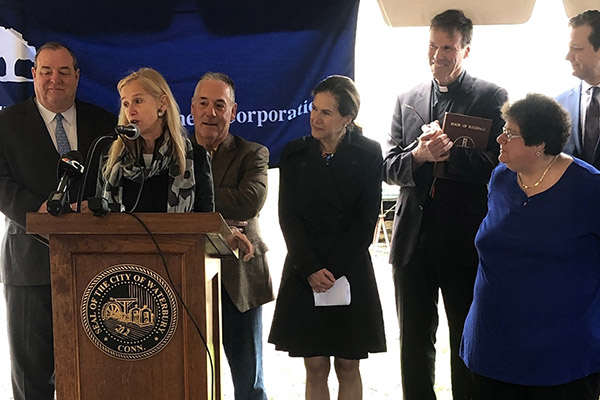
State Senator Joan Hartley speaks Monday at the groundbreaking ceremony for the Brass City Regional Food Hub in Waterbury.

WATERBURY, CT –State Senator Joan Hartley (D-Waterbury) joined fellow legislators Representative Jeffrey Berger (D-Waterbury) and Representative Geraldo Reyes (D-Waterbury), Lieutenant Governor Susan Bysiewicz and Waterbury leaders Monday to commemorate the opening of Waterbury’s first food hub. The Brass City Regional Food Hub, located on Mill Street, will host a combination market, greenhouse and food-washing facility, not only providing farms with an area to wash produce but also creating new access points to fresh, healthy food for residents.

“I can’t tell you what a thrill it is to be here this morning,” said Sen. Hartley. “It was, is and continues to be an incredible project to work on. How we eat is how we live, and this food hub’s going to make fresh fruit, locally grown, available to a community that did not have that. There are conversations on working with community colleges’ culinary schools and local bodegas – basically, to touch every part of this community, also becoming a manufacturing center. We’ve been up, and we’ve been down, but this is all about the grit of Waterbury.”

Sen. Hartley further lauded Bysiewicz and the entire Waterbury delegation, including Rep. Berger and Rep. Reyes, for their work. Waterbury Mayor Neil O’Leary, among others, credited Sen. Hartley for her extensive work on the project.

In 2015, Brass City Harvest received funding from the United States Department of Agriculture to design its regional food hub, and since then, stakeholders including the State of Connecticut Bond Commission and the State Farm Viability Program have joined local leaders to coordinate its creation. Brass City Regional Food Hub is the first food hub in Connecticut, helping farms and Waterbury residents come together to support businesses, expand access to healthy food and help train workers to succeed in agriculture and the food industry.