Statement from Senate President Martin Looney & Senate Majority Leader Bob Duff on Funding for Special Education and Nonprofits

Statement from Senate President Martin Looney & Senate Majority Leader Bob Duff on Funding for Special Education and Nonprofits

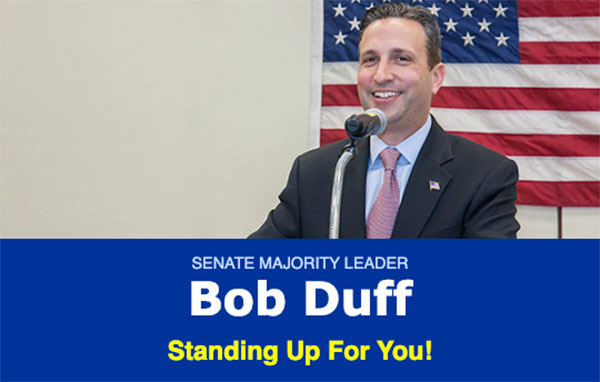
HARTFORD – Today, Senate President Pro Tempore Martin Looney and Senate Majority Leader Bob Duff released the following statement regarding recently passed funding for special education and nonprofits.

“After speaking with our caucus last night, tomorrow the Senate Democrats are prepared to override both line-item vetoes or pass legislation to once again appropriate this funding for nonprofits and special education. The funding exists to address these immediate needs, and we are prepared to protect organizations that are under attack by the Trump administration and support our students, teachers, and local education.”

Contact: Kevin Coughlin | kevin.coughlin@cga.ct.gov

Sen. Gadkar-Wilcox Statement on Governor’s Veto of Special Education Funding

Sen. Gadkar-Wilcox Statement on Governor’s Veto of Special Education Funding

Today, State Senator Sujata Gadkar-Wilcox, Chair of the Special Education Committee, issued a statement in response to Governor Lamont’s line-item veto of additional special education funding for the current fiscal year.

“I am incredibly disappointed to learn that the Governor has decided to veto the $40 million special education funding that the legislature appropriated last week. I have traveled across the state and heard the desperate pleas from parents, educators, students, Boards of Education and municipal leadership who all said they need money and they need it now. This decision undermines the needs of our school districts, our local tax-payers and above all – our most vulnerable students.”

Senator Duff Releases Statement Regarding Mayor Rilling’s Decision to Not Seek Reelection

Senator Duff Releases Statement Regarding Mayor Rilling’s Decision to Not Seek Reelection

Today, Senate Majority Leader Bob Duff (D-Norwalk) released the following statement regarding Mayor Harry Rilling’s decision to not seek reelection.

“After over fifty years of service to Norwalk, including more than a decade as mayor, Harry Rilling has certainly earned his retirement. But that doesn’t make it any easier to see him go. After an entire career in law enforcement, Harry went on to become a steadfast leader who prioritized investing in Norwalk’s future, whether through supporting education, revitalizing the downtown area, or addressing climate change. It’s hard to imagine a more dedicated leader or a better partner. I wish him the best in this well-deserved retirement.”

SOUTHEAST CONNECTICUT LEGISLATORS SUPPORT NEW APPROACH TO FIGHTING AQUATIC INVASIVE SPECIES

SOUTHEAST CONNECTICUT LEGISLATORS SUPPORT NEW APPROACH TO FIGHTING AQUATIC INVASIVE SPECIES

Caption: Sen. Marx speaks in Hartford Monday with Rep. Menapace looking on.

Ahead of a Monday morning public hearing in the Environment Committee considering legislation that would create a pilot program for boatwashing stations at a key Salem body of water, southeastern Connecticut legislators advocated for an evolution to the state’s approach to fighting invasive species.
State Senator Martha Marx (D-New London) and State Representative Nick Menapace (D-East Lyme, Montville, Salem) led the call ahead of the public hearing, joined by Rhea Drozdenko of the Connecticut River Conservancy.

Boatwashing stations are increasingly used in parts of the United States in the battle against aquatic invasive species, which have spread to many Connecticut bodies of water. As boaters can unknowingly carry invasive plants or plant residue on their vessels that can cause their spread in additional bodies of water, these stations provide high-pressure hot water or compressed air to clean boat hulls and prevent further spread.

This is intended to build upon existing systems in place around Connecticut educating the public about aquatic invasive species and approaching plant removal, which can be a costly, time-consuming and repetitive process.

“Gardner Lake is just the latest place in Connecticut to see invasive species invade its waters, but this problem has been pervasive for years,” said Sen. Marx. “We’re pushing for a new approach to keeping invasive aquatic species out of waterways statewide, and we believe boatwashing stations can play a significant role in keeping boats clean and preventing further spread of plants that threaten wildlife and recreation.”

“This is not just something that would be nice to have. Connecticut needs to do better in preventing the spread of invasive species like hydrilla,” said Rep. Menapace. “There’s an incredible cost to cleaning this up and the incredible economic loss we lose from invasive species is significant. When people can’t go fishing, when they can’t go boating or swimming, it’s the kind of stuff that dominates an ecosystem and kills native life there, this is a huge problem. If we don’t deal with it now and try to prevent the spread, it will just get costlier.”

“This particular strain of hydrilla originated in the Connecticut River in 2016, and since then it has spread from Agawam, Massachusetts to the edge of the Long Island Sound,” said Drozdenko. “It has taken over the main stem of the river and its tributaries, since then spreading to lakes and ponds outside the watershed. Prevention is really the key. Hydrilla is getting national attention, but we aren’t giving enough attention to prevention. It’s much more cost-effective and can preserve recreational opportunities in our waters; invasive species are a problem for both our ecosystems and for our local businesses.”

Michigan State University said these stations represent a strong prevention strategy to limit and prevent presence and spread of aquatic invasive species, which become difficult and expensive to remove if given the chance to become entrenched in a body of water.

The Department of Energy and Environmental Protection said these invasive species include hydrilla, Zebra mussels and Eurasian water milfoil, among others. They crowd out native wildlife and plant life in a body of water and can reproduce rapidly, also interfering with water recreation by clogging boat motors and polluting swimming areas.

Connecticut boating statutes already emphasize the “clean, drain, dry” technique, where boaters should inspect and clean their vessels, drain water from every part, and let them dry before going out again, for up to five days if possible. The washing station proposal would provide an on-premises way for boaters to quickly achieve that goal without damage to a boat, its components or its equipment.

Current state practices emphasize education and prevention to protect state waterways. Existing policies include a $100 violation for anyone caught transporting a vessel without inspecting and cleaning it and an Aquatic Invasive Species Stamp, funded by vessel registration or renewal and by out-of-state boaters. That stamp funds projects including increased awareness, restoration and rehabilitation of bodies of water and treatments to control aquatic invasive species.

Regions including New York state’s Adirondack region and Washington’s Olympic National Park have introduced boat washing stations to support the battle against invasive species.

SEN. SLAP SENDS LEGISLATION FULLY FUNDING COLLEGE SCHOLARSHIP PROGRAM TO SENATE FLOOR

SEN. SLAP SENDS LEGISLATION FULLY FUNDING COLLEGE SCHOLARSHIP PROGRAM TO SENATE FLOOR

Caption: State Representative Seth Bronko (R-Naugatuck), on left, speaks to State Senator Derek Slap during Thursday’s Higher Education Committee meeting.

Today, the Higher Education and Employment Advancement Committee cast a bipartisan vote to support Senate Bill 5, “An Act Concerning Higher Education Affordability and Accountability,” sending it to the Senate floor for further consideration. The bill fully funds the state’s Roberta B. Willis scholarship foundation, which provides financial relief to Connecticut four-year college and university students on a needs basis.

If made law, the law would fully fund the foundation’s scholarships, which provide students with between $4,500 and $5,200 per year toward tuition. In the 2022 fiscal year, 16,000 students qualifying for the scholarships did not receive state assistance, as only 31% of eligible students received scholarships due to underfunding.

In public testimony, the Connecticut Business and Industry Association noted only 40% of eligible students received grants in the 2023 fiscal year.

The Hartford Foundation for Public Giving testified that the legislation seeks to provide more predictable and timely financial support to Connecticut students pursuing their educations.

“Right now, the status quo in Connecticut is that two-thirds of students who are eligible for the Roberta B. Willis scholarship program – students from middle- and low-income families, many the first in their families to go to college – get nothing because we do not fully or adequately fund our public scholarship programs like many other states,” said State Senator Derek Slap (D-West Hartford), Senate Chair of the Higher Education and Employment Advancement Committee, during the Committee’s meeting today. “As a result, we have one of the worst brain drains in the country. That’s bad for families, it’s bad for our economy. This bill is a game changer. It’s an important statement from our committee that says this is important to support families and keep our students here.”

Under the legislation, beginning in the 2025-26 fiscal year, the Office of Higher Education would disburse funds for the scholarship program no later than May 1 for grants awarded in the following fall semester and November 1 for grants awarded in the following spring semester.

The bill also seeks to support Connecticut students and students and the state’s workforce as questions arise nationally and statewide regarding future federal funding for financial aid programs.

According to a study by the National Association of State Student Grant and Aid Programs, Connecticut is in the bottom ten states nationally regarding percentage of state higher education funding for student aid. As many as three out of four of students seeking undergraduate degrees in the United States remain in-state for college, but in Connecticut, that figure drops to about three out of five.

With final passage, Senate Bill 5 would become Connecticut’s latest Democrat-led expansion of access to higher education, building on the state’s debt-free community college program, automatic admission program and expanded access to lower-interest loans from the Connecticut Higher Education Supplemental Loan Authority.

Senator Honig Condemns the Trump Administration’s Firing of Thousands of Veterans

Senator Honig Condemns the Trump Administration’s Firing of Thousands of Veterans

Senator Paul Honig, co-chair of the legislature’s Veterans’ and Military Affairs Committee, released the following statement Wednesday in response to estimates that President Donald Trump’s administration had fired nearly 6,000 military veterans from the federal government:

“It’s shocking to have to say this, but here goes: it is unacceptable that the Trump administration has fired thousands of military veterans from the federal government in the last several weeks,” Senator Honig, D-Harwinton, said. “These are men and women who put everything on the line for our country, and we owe them better than an abrupt termination of their careers. We owe them better than the fear and anxiety that comes with depleting the family savings just to put food on the table. We owe them better than unemployment benefits and a frantic search for a new job.

“As Senate chair of the state legislature’s Veterans’ and Military Affairs Committee, where we’ve been doing our best to improve the lives of Connecticut veterans, it is disheartening to watch the federal government casually inflict so much damage on a population to whom we owe so much. These firings are wrong and they should be reversed immediately.”

Senator Honig’s statement is a response to data released Tuesday by U.S. Rep. Rosa DeLauro, a Connecticut Democrat who serves as ranking member of the House Appropriations Committee, and U.S. Rep. Debbie Wasserman Schultz, of Florida, which estimated that the Trump administration and billionaire Elon Musk had fired 5,857 veterans from a variety of federal agencies.

“Our veterans make significant sacrifices in service of our country, but those sacrifices do not seem to matter to President Trump and unchecked billionaire Elon Musk,” Congresswoman DeLauro said. “They are an essential part of our federal workforce, bringing their expertise to every single agency. Republicans are turning their back on them, allowing Musk to fire at least 6,000 veterans and leave them with no way to feed their families or keep a roof over their heads. This move should outrage anyone who respects our veterans and servicemembers and believes our promises to them should be upheld. We have repeatedly asked the Trump administration for additional information on the exact number of veterans they have fired and what they plan to do to support them. The American people deserve answers.”

FOR IMMEDIATE RELEASE
Contact: Hugh McQuaid | Hugh.McQuaid@cga.ct.gov 

Sen. Lesser Statement on House Passage of Republican Budget Plan

Sen. Lesser Statement on House Passage of Republican Budget Plan

HARTFORD – Today, Senator Matt Lesser, D-Middletown, released the following statement on the U.S. House of Representatives passing the Republican budget plan.

“The Republican budget resolution is immoral, irresponsible, and dangerous. It opens the door for slashing hundreds of billions of dollars in funding for Medicaid, Children’s Health Insurance Program, and SNAP – the federal food stamp program. It poses a massive threat to everyone who relies on Medicaid – the poor, seniors in nursing homes, 40% of children in Connecticut. It’s also going to wreak havoc with the finances of every health clinic and hospital in Connecticut – and to the state budget as a whole. Why? To give Elon Musk a tax cut he doesn’t even need.

“In addition to hurting Connecticut’s families, the resolution will wreak absolute havoc on Connecticut’s budget and finances. Medicaid is a $10 billion annual partnership between the state and federal government. And if Elon Musk and Donald Trump don’t keep their part of the bargain, it will absolutely devastate our state’s finances and the finances of nearly every healthcare provider and nonprofit in the state.

“This budget proposal is just the start of the process, but when fully enacted, it will slash federally funded human services by $880 billion, inevitably impacting patients and seniors right here in Connecticut.”

FOR IMMEDIATE RELEASE
Contact: Garnet McLaughlin | Garnet.McLaughlin@cga.ct.gov

Senator Hochadel Votes to Approve $40 Million in Special Education Funding

Senator Hochadel Votes to Approve $40 Million in Special Education Funding

Senator Jan Hochadel, D-Meriden, voted Tuesday to approve legislation containing an additional $40 million in state funding to help Connecticut municipalities support special education services as well as new directives to guide local school boards in the event that federal immigration officials seek to enter public schools.

“Providing quality education for every child is one of our most important responsibilities, and this funding is an essential step toward ensuring towns and cities have the resources they require to support students with special education needs,” Senator Hochadel said. “It’s critical the state continue to prioritize support for Connecticut classrooms to ensure that we equip all students with the tools for success, regardless of their needs.”

This legislation, approved on a 34 – 0 vote, adds to the $181 million which was previously appropriated for Fiscal Year 2025 bringing the total to $221 million.

The funding will be allocated through the Excess Cost Grant program and distributed to municipalities through a tiered reimbursement structure that prioritizes funding for the neediest cities and towns.

The legislation adopted Tuesday also contained new language designed to make it easier for local school boards to question federal Immigration and Customs Enforcement (ICE) agents if they seek to enter a public school looking for information about potentially undocumented students.

“I have taught in enough classrooms to know that even minor disruptions can make learning and teaching challenging,” Senator Hochadel said. “No student—and no teacher—should have to live in fear of immigration officials entering a school and removing a child. Connecticut’s schools must remain places where every student feels safe enough to focus on their education. This bill ensures that our schools have a clear process for handling federal immigration actions, so that students can continue to learn without fear, and educators can do their jobs without distraction.”

The bill includes provisions to require that each school designate an administrator to interact with federal immigration authorities, amend its school safety and security plan to align with recent guidance from the state Department of Education (SDE) to protect the constitutional rights of all people in schools, and prohibit the discipline of any school employee who acts in accordance with that SDE guidance.

Contact: Hugh McQuaid | Hugh.McQuaid@cga.ct.gov

Senator Lesser Votes to Pass $40 Million in Emergency Funding for Special Education

Senator Lesser Votes to Pass $40 Million in Emergency Funding for Special Education

HARTFORD – Senator Matt Lesser, D-Middletown, voted Tuesday to approve legislation containing an additional $40 million in state funding to help Connecticut municipalities support special education services as well as new directives to guide local school boards in the event that federal immigration officials seek to enter public schools.

“I’m proud to support this $40 million in emergency support to help Connecticut towns and cities provide quality education for children with special needs,” Senator Lesser said. “This investment represents a first step toward addressing an urgent problem. It will not be the last. Today’s bill is a downpayment on our commitment to helping towns fund these rising costs, and I look forward to securing additional resources to ensure that all students in Middletown, Cromwell, Newington, Rocky Hill and Wethersfield get the support they deserve.”

This legislation, approved on a 34 – 0 vote, adds to the $181 million which was previously appropriated for Fiscal Year 2025 bringing the total to $221 million.

The funding will be allocated through the Excess Cost Grant program and distributed to municipalities through a tiered reimbursement structure that prioritizes funding for the neediest cities and towns.

The legislation adopted Tuesday also contained new language designed to make it easier for local school boards to question federal Immigration and Customs Enforcement (ICE) agents if they seek to enter a public school looking for information about potentially undocumented students.

“Connecticut students deserve the opportunity to learn in peace, free from the disruptions caused by the chaos of the Trump administration,” Senator Lesser said. “Immigration authorities have a job to do, but we do not need federal agents in our classrooms, just like we don’t need them in our health centers or our houses of worship. I’m happy to support this bill, which provides Connecticut education officials with a clear process for considering the requests of immigration agents.”

The bill includes provisions to require that each school designate an administrator to interact with federal immigration authorities, amend its school safety and security plan to align with recent guidance from the state Department of Education (SDE) to protect the constitutional rights of all people in schools, and prohibit the discipline of any school employee who acts in accordance with that SDE guidance.

FOR IMMEDIATE RELEASE
Contact: Hugh McQuaid | Hugh.McQuaid@cga.ct.gov

Senator Honig Votes to Approve $40 Million in Special Education Funding

Senator Honig Votes to Approve $40 Million in Special Education Funding

Senator Paul Honig, D-Harwinton, voted Tuesday to approve legislation containing an additional $40 million in state funding to help Connecticut municipalities support special education services.

“Towns across my district are contending with the rising cost of special education services. Through today’s vote, the legislature has taken emergency action to offer relief to local taxpayers across Connecticut,” Senator Honig said. “I’m happy to support this legislation because it will help to ensure that our communities can afford to meet the needs of every student, and I look forward to continuing to prioritize our support for special education.”

This legislation, approved on a 34 – 0 vote, adds to the $181 million which was previously appropriated for Fiscal Year 2025 bringing the total to $221 million.

The funding will be allocated through the Excess Cost Grant program and distributed to municipalities through a tiered reimbursement structure that prioritizes funding for the neediest cities and towns.

FOR IMMEDIATE RELEASE
Contact: Hugh McQuaid | Hugh.McQuaid@cga.ct.gov