Sen. Gadkar-Wilcox Statement on Trump Administration’s Termination of Teacher Pipeline Grant

Sen. Gadkar-Wilcox Statement on Trump Administration’s Termination of Teacher Pipeline Grant

Today, State Senator Sujata Gadkar-Wilcox, Senate Chair of the Special Education Committee and Constitutional Law professor, issued a statement in response to President Trump’s Department of Education abruptly revoking a $3.38 million Teacher Quality Partnership Program Grant to address critical teacher shortages in Bridgeport.

“The Special Education Committee just completed a listening tour across the state and the resounding consensus was that we have a critical teacher shortage. This federal grant was providing funding to create a pipeline for teachers in high need areas, like Bridgeport. This will impact students, teachers, parents and local municipalities who are already struggling to find teachers. Moreover, the freezing of federal funds that have already been allocated by Congress is grossly unconstitutional, in violation of the Impoundment Control Act, and creates chaos and uncertainty among institutions and organizations relying on these funds, as well as the communities they serve.”

The grant was issued to Sacred Heart University who worked in partnership with Bridgeport and Stamford Public Schools to create a teacher pipeline. The program offers a year-long, co-teaching residency and a significantly subsidized tuition benefit. These funds would have helped recruit, train and retain 80 educators to serve Connecticut’s highest-needs school, with a particular focus on shortage areas like special education and STEM.

The notification of immediate grant termination cited, “The Acting Secretary of Education has determined that, per the Department’s obligations to the constitutional and statutory law of the United States, this priority includes ensuring that the Department’s grants do not support programs or organizations that promote or take part in diversity, equity, and inclusion (“DEI”) initiatives or any other initiatives that unlawfully discriminate on the basis of race, color, religion, sex, national origin, or another protected characteristic.” 

SEN. OSTEN, EASTERN CT LEGISLATORS PUSH FOR RE-WRITING THE STATE’S ECONOMIC OPPORTUNITY MAP

SEN. OSTEN, EASTERN CT LEGISLATORS PUSH FOR RE-WRITING THE STATE’S ECONOMIC OPPORTUNITY MAP

State Senator Cathy Osten (D-Sprague) is leading a bipartisan push by more than a dozen eastern Connecticut lawmakers to re-write the state’s ‘opportunity map’ which is used by state agencies to determine where scarce housing funds should go – and most of them currently go to ‘high opportunity’ Fairfield County and not to dozens of low- or moderate-opportunity towns in eastern Connecticut.

Sen. Osten has co-sponsored Senate Bill 1128, “AN ACT CONCERNING THE CONNECTICUT HOUSING FINANCE AUTHORITY CONNECTICUT OPPORTUNITY MAP,” which requires  the Connecticut Housing Finance Authority to update not only the Connecticut Opportunity Map but also the underlying policies in creating the map.

The bill is just the latest attempt by eastern Connecticut lawmakers to level the playing field when it comes to the state distribution of tax credits for builder to construct more affordable housing in the state.

“We must sound like a broken record making the same argument over and over and over again, but it’s time for Connecticut economic policy to stop hobbling those cities and town who want to get ahead, and who need to get ahead, when it comes to affordable housing. We just can’t keep rewarding the same Gold Coast towns because they’ve already got it all and now they’re getting even more,” Sen. Osten said. “Every Connecticut town needs affordable housing, including eastern Connecticut. Just ask any of the several hundred defense subcontractors in the region who can’t get enough people to work for them because there’s no place to live. That’s got to change.”

Both The Connecticut Housing Finance Authority (CHFA) and the state Department of Housing (DOH) use the Connecticut Opportunity Map to determine financing opportunities offered by CHFA and DOH.  According to the DOH, opportunity mapping is a way to look at neighborhood resources and outcomes such as school performance, poverty concentration, safety and more. “Where you live affects your access to opportunity — and this can be mapped … The goal of opportunity mapping is to identify opportunity-rich and opportunity isolated communities. With a basic understanding of the geography of opportunity we can then better determine who has access to opportunity resources and how to remedy opportunity inequality.”

Eastern Connecticut towns score poorly on the opportunity map. The entire eastern third of Connecticut – essentially from Union and Ashford down through Windham, Lebanon and Salem to East Lyme, and every town to the east – are labelled as low- or moderate-opportunity options for new housing funds.

But nearly all of Fairfield County – outside of Bridgeport – is labelled as high opportunity.

In June 2021, Sen. Osten and a group of Democratic lawmakers from eastern Connecticut secured a one-month delay and a review of a proposed change CHFA to its new rules governing how the state distributes millions of dollars in tax credits for affordable housing development.

CHFA has long emphasized opportunity score when deciding what affordable housing projects will receive state tax credits, thereby lowering the cost for builders. Cities and towns are graded according to the degree of ‘opportunity’ in the surrounding community, usually defined as a town’s school rating, its poverty rate, its proximity to community colleges, and its jobs-to-population ratio. A high opportunity score is desirable, and a low opportunity score makes it virtually impossible to receive state grants for affordable housing construction.

But the next month, CHFA approved its opportunity map as proposed. Under CHFA’s scoring system, only 1% of the towns in Tolland, Windham and New London Counties – about a third of Connecticut’s land mass – qualify as “high” opportunity areas, compared to 20% statewide.

EAST WINDSOR DELEGATION WELCOMES $2 MILLION SMALL CITIES GRANT AWARDED TO EAST WINDSOR TO IMPROVE AFFORDABLE HOUSING

FOR IMMEDIATE RELEASE
Contact: Joe O’Leary | Joe.OLeary@cga.ct.gov | 508-479-4969

EAST WINDSOR DELEGATION WELCOMES $2 MILLION SMALL CITIES GRANT AWARDED TO EAST WINDSOR TO IMPROVE AFFORDABLE HOUSING

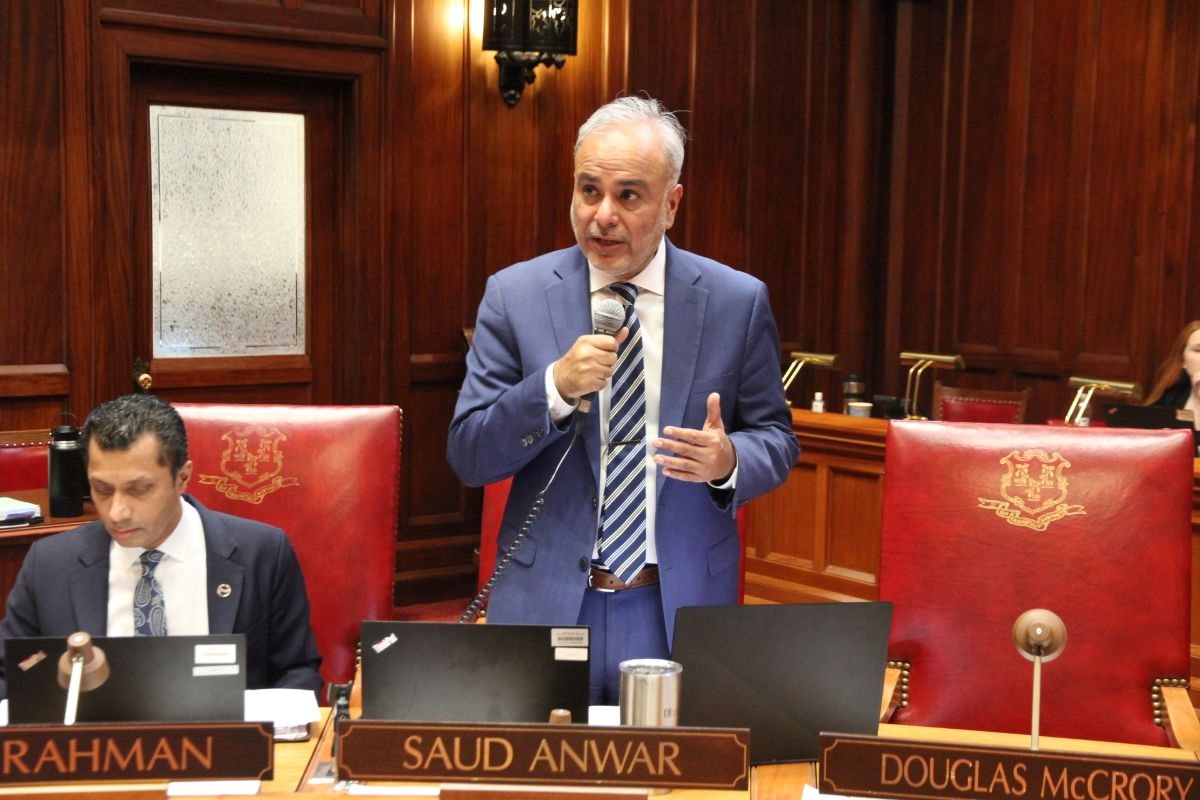
Today, the East Windsor delegation of lawmakers, including State Senator Saud Anwar (D-South Windsor), State Representative Jaime Foster (D-East Windsor, Ellington) and State Representative Carol Hall (R-Enfield, East Windsor), welcomed the announcement that East Windsor will receive $2 million in grants through the Community Development Block Grant Small Cities program to support capital improvements to local affordable housing.

East Windsor’s funds will support capital improvements to the existing Park Hill affordable housing complex with 84 units, with funds used to support energy efficiency upgrades through installation of heat pumps; improved siding, insulation, windows and doors; and new kitchens, stoves and flooring throughout units. Work would also include handicapped accessibility upgrades to bathrooms, converting tubs to showers for elderly and disabled residents.

“This investment in our community will support dozens of local households with long-term benefits that will pay off for decades,” said Sen. Anwar. “I’m grateful to Governor Lamont and our state for their continual support.”

“These upgrades will provide improved energy efficiency and resources for residents of Park Hill, which means they’ll have real-world, long-term benefits for them,” said Rep. Foster. “I’m grateful and encouraged by Governor Lamont’s support for East Windsor.”

“It is so important to continue to improve and upgrade the existing affordable housing in Connecticut,” Rep. Hall said. “These grants assist our low- and moderate-income families by providing tangible quality of life improvements for them and to our overall community and I look forward to more grant opportunities for residents of the 59th District.”

The $2 million grant is administered with support from the state Department of Housing with funding from the U.S. Department of Housing and Urban Development. Eligible projects are required to be in a municipality with fewer than 50,000 residents.

SEN. CABRERA CITES ALGORITHMIC DISCRIMINATION CONCERNS AS PART OF BLACK & PUERTO RICAN CAUCUS’S EIGHT LEGISLATIVE PILLARS FOR 2025

SEN. CABRERA CITES ALGORITHMIC DISCRIMINATION CONCERNS AS PART OF BLACK & PUERTO RICAN CAUCUS’S

EIGHT LEGISLATIVE PILLARS FOR 2025

HARTFORD – State Senator Jorge Cabrera (D-Hamden) announced today that the artificial intelligence algorithmic discrimination concerns as outlined in Senate Bill 2 is one of the Top 8 public policy pillars that the Black and Puerto Rican Caucus will seek to pass into law this session.

“The federal government under Donald Trump will do nothing with Elon Musk and David Sacks — a tech venture capitalist — being in charge of federal artificial intelligence policy. They’re more concerned with the investment portfolios of the tech millionaires and billionaires than the lives and the opportunities of the people of Connecticut,” Sen. Cabrera said. “We need the AI protections that Senate Bill 2 will enshrine. Among other things, we need to require companies to test certain algorithms to ensure they’re fair and accurate.”

Sen. Cabrera spoke at the Black and Puerto Rican Caucus’s press conference on its 2025 legislative priorities. The Caucus, formed in 1976, consists of about three dozen House and Senate members with the goal of promoting and assisting minorities in becoming more actively involved in the political process, in attaining political office, and in raising the economic potential for minorities in Connecticut.

Sen. Cabrera spoke specifically about the problem of discriminatory algorithms used by artificial intelligence that can prevent minority citizens from getting jobs, mortgages, paying too much for college, and other issues. Senate Bill 2 – one of the Senate Democrats’ Top 12 priorities in 2025 – seeks to protect all Connecticut consumers from the risks of algorithmic discrimination and the unfair treatment posed by artificial intelligence.

AI logarithmic discrimination could increase the racial wealth gap in America by $43 billion every year, according to a 2023 McKinsey Report. As examples of AI algorithm discrimination, Sen. Cabrera noted:

-A 2014 Amazon hiring algorithm for technology job openings weeded out women by checking resumes to see if they had played on a women’s sports team in college.

-iTutor was sued after its algorithm rejected job applicants that were over age 55 for women and 60 for men.

-Another hiring algorithm determined that parents made worse employees because they tend to take more time off to care for children.

-A student loan algorithm charged higher interest rates if you graduated from a historically Black university.

WESTPORT DELEGATION DENOUNCES ANTI-SEMITIC SNOWMAN DISCOVERED IN TOWN

WESTPORT DELEGATION DENOUNCES ANTI-SEMITIC SNOWMAN DISCOVERED IN TOWN

The Westport delegation, including State Senator Ceci Maher, State Representative Jonathan Steinberg and State Representative Dominique Johnson, today denounced an anti-Semitic snowman discovered this week in the Newman Poses Preserve. The snowman had a swastika on its body, while its face appeared designed to resemble Adolf Hitler and one of its arms was raised in a Nazi salute.

The Anti-Defamation League of Connecticut issued a statement expressing “deep concern” about the snowman, which was discovered in a local park by a hiker, decrying use of a swastika and citing the offensive nature of the snowman’s design.

“This pathetic display is an example of the fear anti-Semitism tries to derive from the public, and that it was left anonymously in a local park is evidence that its creator knows they should be ashamed of themselves,” said Sen. Maher. “Our community cannot and will not condone anything like this, especially in already heightened tensions and times. I’m proud that the Westport community is coming together to denounce all forms of hate.”

“This is a disgusting display of hatred, not to mention failure; the Nazis lost World War II and their ideology has been pushed to the margins for nearly a century since. I’m heartened that the Westport community is immediately coming together to reinforce that this is completely unacceptable and has no place here or anywhere,” said Rep. Steinberg.

“This depiction of Hitler, swastikas and antisemitism is an act of malice meant to strike fear in the hearts of residents, and I’m proud of the Westport community for its universal disgust regarding this snowman,” said Rep. Johnson. “Fear and hate thrive in darkness, not in the woods of Westport. We are always stronger when we look out for one another and recommit ourselves every day to keep building an inclusive community representing all of us. This intimidation will not deter us in that goal.”

Contact: Joe O’Leary | 508-479-4969

Senator Rahman Introduces Bill that would Excuse Student Absences for Religious Holidays

Senator Rahman Introduces Bill that would Excuse Student Absences for Religious Holidays

Today, a bill introduced by state Senator MD Rahman (D-Manchester) that would excuse student absences for new widely recognized religious holidays was raised during the Education Committee Meeting.

Senator Rahman’s bill, SB 640, ‘An Act Concerning Absences for Observance of a Religious Holiday,’ aims to protect a students’ right to practice their religion without academic repercussions.

“A student’s absence for a religious holiday should always be marked excused as they are respecting and honoring their cultural practices,” said Sen. Rahman. “A child should be able to observe a religious holiday without it hindering their school’s attendance as it allows them to observe important traditions and practices that are integral to their identity and spiritual growth. By supporting religious observances, schools promote respect for cultural diversity and help students feel valued and understood.”

Senator Rahman has heard from numerous constituents saying they are upset their child will miss a day of school for a religious holiday and it will affect their attendance record. If a student misses a day of school for a major holiday such as Hanukkah, Diwali, or Eid, their absence would be marked as excused.

AS PUBLIC HEALTH COMMITTEE VOTES TO SEND BILL TO SENATE FLOOR, PUBLIC HEALTH COMMITTEE RALLIES FOR PANCREATIC CANCER REFERRAL PROGRAM

AS PUBLIC HEALTH COMMITTEE VOTES TO SEND BILL TO SENATE FLOOR, PUBLIC HEALTH COMMITTEE RALLIES FOR PANCREATIC CANCER REFERRAL PROGRAM

On Monday, as the Public Health Committee met to advance Senate Bill 1191 to the Senate floor, members of the committee joined advocates and medical professionals to rally and recognize the importance of screening and treating pancreatic cancer.

If made law, SB1991 seeks to create a referral program for pancreatic cancer screening and treatments, targeting unserved or underserved populations where individuals may not have regular access to medical resources. Under the legislation as drafted if made law, the Department of Public Health will establish a pancreatic cancer screening and treatment referral program to promote screening, detection and treatment of pancreatic cancer among unserved and underserved populations; educate the public regarding pancreatic cancer and benefits of early detection; and counseling and referral services for treatment.

“This is about turning pain into purpose,” said State Senator Saud Anwar (D-South Windsor), Senate co-chair of the Public Health Committee. “Pancreatic cancer is the second-most deadly form of cancer in our state. These deaths are preventable. Unfortunately, pancreatic cancer is so pervasive that in some cases, once it’s found, it’s too late to treat it. People at later stages see it as a death sentence. But it is treatable if discovered early. This bill pulls our state’s resources together to better ensure scans occur in time to catch and treat this cancer. We have a responsibility to create a screening program that can better save lives in our communities.”

“We’ve had some real success in our state with our screening program, trying to save lives, and that’s what we’re trying to do here today,” said State Representative Cristin McCarthy Vahey (D-Fairfield), House chair of the Public Health Committee. “We need to get the message out that prevention is key, especially when it comes to pancreatic cancer. A lot of people don’t know what to do or what to look for, but we have people committed to making sure the word gets out around our state. In public health, we look in every way for everything we can do to prevent terrible diseases.”

State Senator Doug McCrory and State Representatives Sarah Keitt, Henry Genga, Antonio Felipe, Eleni Kavros-Degraw and Robin Comey, all on the Public Health Committee, joined the chairs.

“In 2024, about 67,000 new cases of pancreatic cancer were diagnosed in the United States and about 52,000 people died from pancreatic cancer,” said Dr. Brett Schipper of Hartford Healthcare, a pancreatic surgeon. “Survival increases depending on when it’s diagnosed. The key to survival is early detection. Hartford Healthcare is partnering with Project Purple, a not-for-profit based in Connecticut, to set up Connecticut’s largest pancreatic cancer screening program. It will identify high-risk individuals and screen them to hopefully catch cancer early. Legislation like this bill will catch cases early and save lives.”

Linda Kowalski, executive director of the Radiological Society of Connecticut and herself having lost her husband, Mark Gilhuly, to pancreatic cancer last year, led the rally in an effort to ensure residents of the state can have the best resources available to them for screenings, testing and treatments.

“I don’t want other families to go through what Mark and I did. That’s why this bill matters,” said Kowalski. “We have an opportunity to take meaningful action to not only add pancreatic screenings to the list of referral services recommended by the Department of Public Health, but also to develop new educational programs and systems for tracking and following up on pancreatic cancer screenings.”

Duff & Fairfield County Senators Call on Altice to Issue Refunds to Connecticut Customers

Duff & Fairfield County Senators Call on Altice to Issue Refunds to Connecticut Customers

“Otherwise, we may need to get involved via passing legislation to require refunds or credits under these circumstances.”

Hartford, CT—Senate Majority Leader Bob Duff and a coalition of Fairfield County Democrats called Friday on Altice USA, owner of Optimum, to issue refunds or credits to Connecticut MSG Networks customers, who have been unable to watch their favorite teams for weeks due to prolonged corporate negotiations.

Connecticut fans of the New York Rangers, Knicks, Devils, and other teams have been deprived of critical sports programming due to ongoing disputes between two corporations: Optimum and MSG Networks.

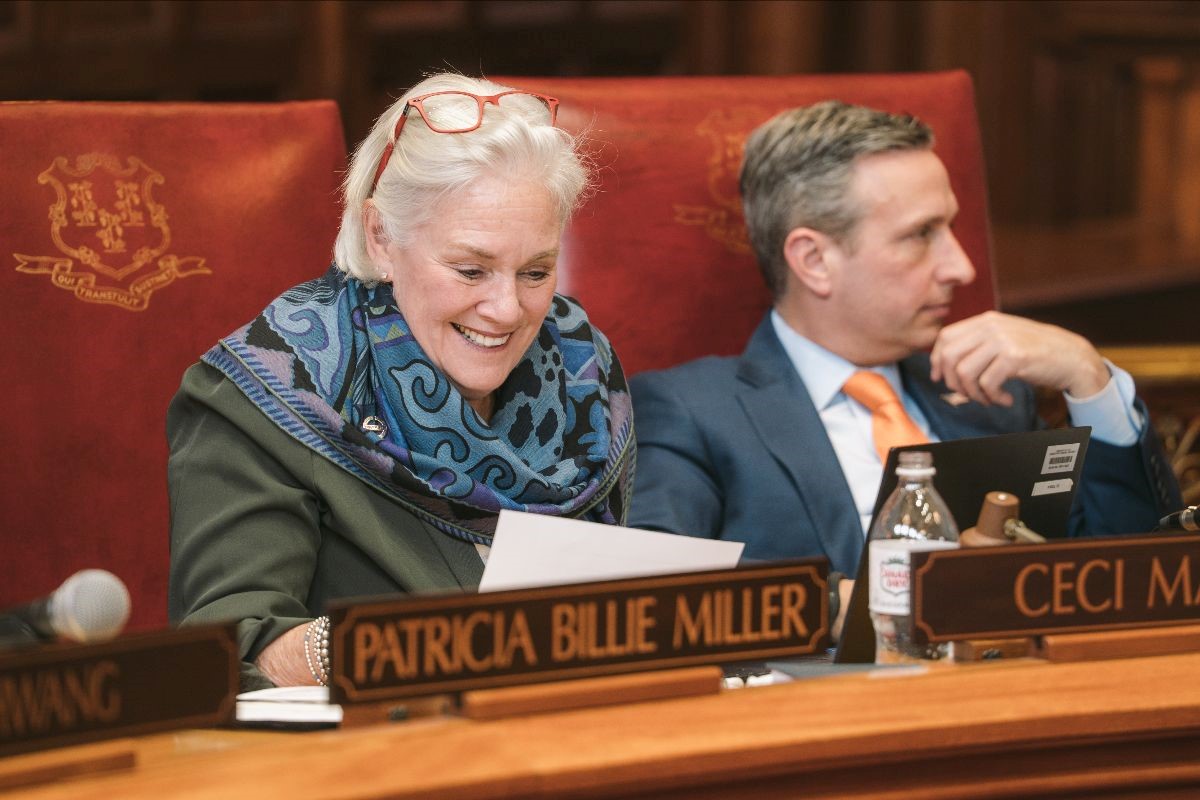
On Friday, Senator Duff, D-Norwalk, along with Senators James Maroney, D-Milford, Sujata Gadkar-Wilcox, D-Trumbull, Herron Keyon Gaston, D-Bridgeport, Julie Kushner, D-Danbury, Ceci Maher, D-Wilton, and Pat Billie Miller, D-Stamford, wrote to Altice CEO Dennis Mathew to demand refunds for Connecticut customers.

“Our constituents pay significant amounts of money for the content you and MSG provide, but they have not been able to view the athletic events that give them joy in over five weeks,” the senators wrote. “Despite receiving less than they are paying for, our constituents have not received any compensation for the failure of Altice and MSG to provide what was agreed to.”

The senators stressed that they were not taking sides in the ongoing dispute between MSG Entertainment and Altice. Their most recent letter to the Altice executive followed a similar message to representatives of both companies in late January.

On Friday, the senators said it was time for Optimum to immediately restore viewers’ access to Madison Square Garden channel through Optimum and refund audiences for the services they were not provided for more than five weeks.

“The disagreement between Altice and MSG is harming our constituents, our economy, and your companies,” the senator wrote. “If you cannot settle this disagreement, at the very least you owe it to your customers to compensate them for this loss, which is no fault of their own. Otherwise, we may need to get involved via passing legislation to require refunds or credits under these circumstances.”


Mr. Dennis Mathew

Chairman and Chief Executive Officer

Altice

1 Court Square

Long Island City, NY 11101

Dear Mr. Mathew:

We are writing to you in follow up to our January 20, 2025 letter asking you and Madison Square Garden Entertainment (MSG) to put your customers first by coming to an agreement that will benefit all parties regarding the current disagreement between your companies. We have yet to hear back from you on this,

and the disagreement between your company and MSG has not been resolved. We are not taking any side in this dispute, however, in light of the prolonged nature of this dispute, we believe it is time for your company to provide refunds or credits to customers affected by this dispute.

Our constituents pay significant amounts of money for the content you and MSG provide, but they have not been able to view the athletic events that give them joy in over five weeks. Despite receiving less than they are paying for, our constituents have not received any compensation for the failure of Altice and MSG to provide what was agreed to. We ask that in addition to immediately giving viewers access to the Madison Square Garden channel through Optimum, you provide these customers with a refund or credit for not being provided this service for five weeks.

The disagreement between Altice and MSG is harming our constituents, our economy, and your companies. If you cannot settle this disagreement, at the very least you owe it to your customers to compensate them for this loss, which is no fault of their own. Otherwise, we may need to get involved via passing legislation to require refunds or credits under these circumstances.


State Senator Bob Duff, Majority Leader

State Senator James Maroney, 14th Senatorial District

State Senator Sujata Gadkar-Wilcox, 22nd Senatorial District

State Senator Herron Keyon Gaston, 23rd Senatorial District

State Senator Julie Kushner, 24th Senatorial District

State Senator Ceci Maher, 26th Senatorial District

State Senator Patricia Billie Miller, 27th Senatorial District

SENATOR MARX RELEASES STATEMENT FOLLOWING YALE NEW HAVEN HEALTH ENDING NURSE FAMILY PARTNERSHIP CONTRACTS

SENATOR MARX RELEASES STATEMENT FOLLOWING YALE NEW HAVEN HEALTH ENDING NURSE FAMILY PARTNERSHIP CONTRACTS

State Senator Martha Marx (D-New London), Senate Vice Chair of the Public Health Committee and a career visiting nurse, today issued a statement following Yale New Haven Health’s Health at Home Southeast announcement that its Nurse Family Partnership and Wellness program will not renew contracts with surrounding towns and will cease services to impacted communities at the beginning of the next union contract on June 30. This will result in the loss of approximately eight union jobs.

The Nurse Family Partnership sends nurses directly to the homes of at-risk pregnant mothers and follows the mother and baby from pregnancy to delivery through three years of age. The wellness program provides a part-time nurse to the local homeless hospitality center, nursing services at local senior centers, and makes home visits to some homebound patients in certain municipalities. Municipalities in south central Connecticut and the VNASC was contracted to provide those services. Towns no longer have nurses working for them and there is no stated succession plan for those who will provide these services.

The statement follows:
“Yale New Haven Health’s decision to end its Nurse Family Partnership contracts and wellness services is one seeking short-term gain at the expense of long-term community pain. YNNH has taken away some very important services that don’t just provide unique benefits but are directly vital in the towns they’re offered in. In addition to the potential layoffs this decision will bring for nurses, these programs will leave vital services unfulfilled in our communities, leaving patients and community needs unmet and in some instances sharply reducing the quality of care homebound and disabled patients will receive. The federal government working to slash important programs is bad enough. For Yale to cut them further in our backyard is going to worsen already severe impacts.”

Contact: Joe O’Leary | 508-479-4969 | Joe.OLeary@cga.ct.gov

Senator Hochadel Statement on the Passing of Former Rep. Emil “Buddy” Altobello Jr.

Senator Hochadel Statement on the Passing of Former Rep. Emil “Buddy” Altobello Jr.

Senator Jan Hochadel, D-Meriden, issued the following statement today on the passing of former Rep. Emil “Buddy” Altobello Jr.

“Buddy Altobello leaves behind a huge footprint in Meriden civic life and a legacy of dedicated service to our city and its people,” Senator Hochadel said. “I was privileged to have been represented by such a steadfast advocate and feel inspired by the example he set. Few achieve the lasting impact Buddy had in the state House and city council, and even fewer do so with his reputation for kindness. He will be deeply missed, and my thoughts are with his friends and family.”