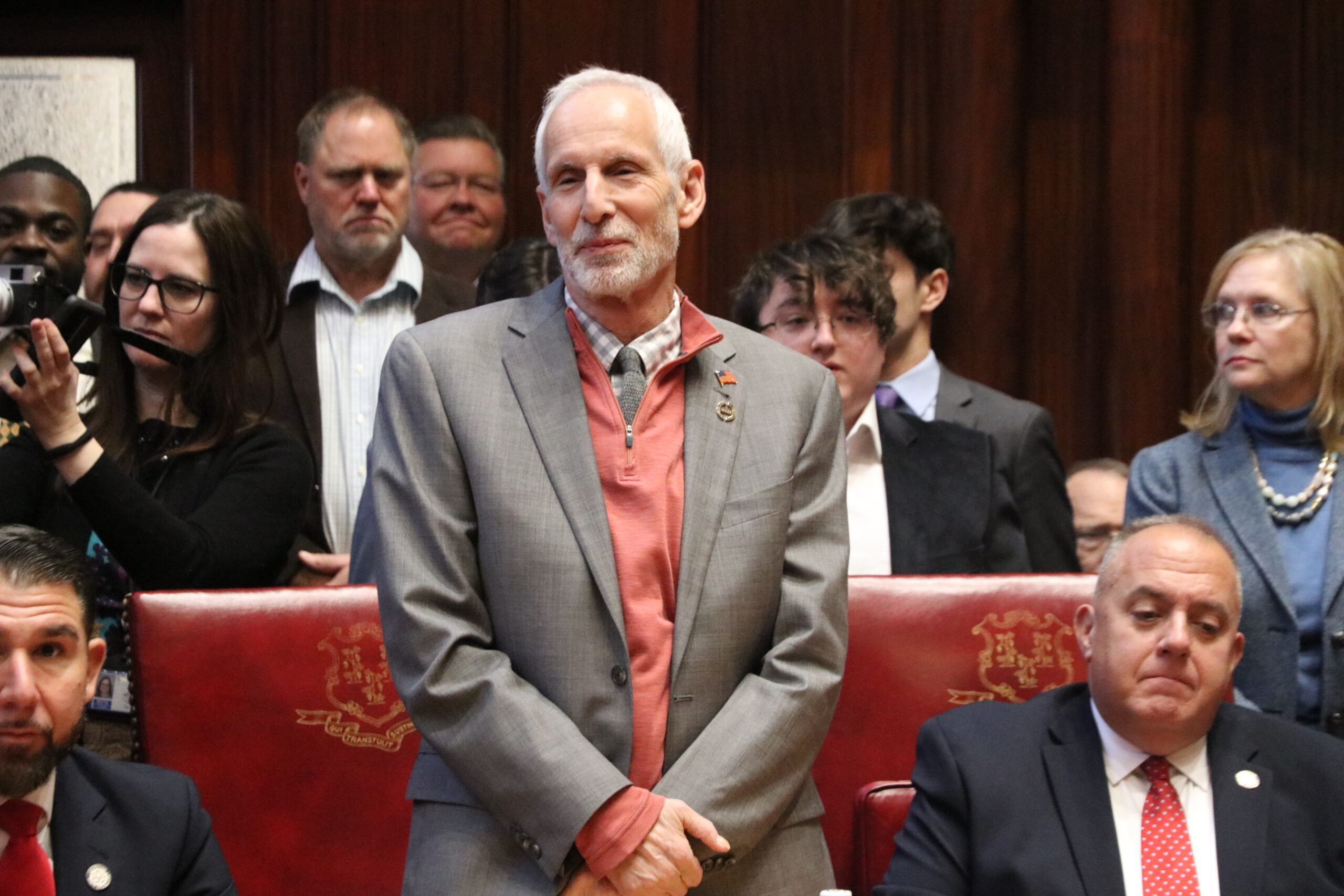
Senate Democrats Take Aim at College Affordability

Senate Democrats Take Aim at College Affordability

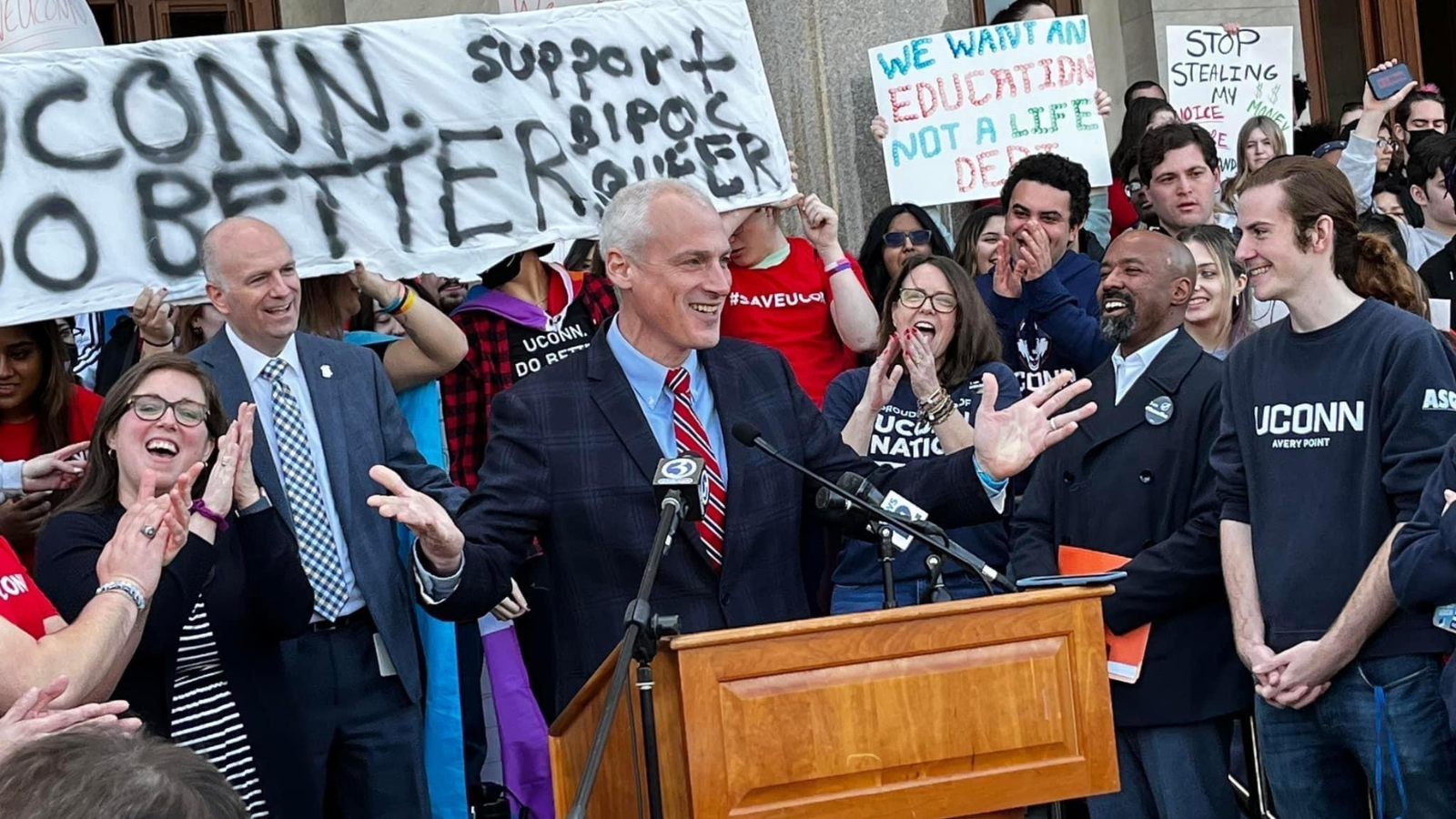
HARTFORD – Today, Senate Democrats announced priority legislation that takes aim at college affordability by fully funding the state’s Roberta B. Willis scholarship foundation. Senate President Martin Looney, Majority Leader Senator Bob Duff, and State Senator Derek Slap, Co-Chair of the Higher Education and Employment Advancement Committee, proposed legislation to increase funding for needs-based scholarships for Connecticut students attending four-year colleges and universities.

Roberta B. Willis Scholarships are awarded on a need-basis and are, on average, between $4,500 and $5,200. In FY 22, only 31% of eligible students received the scholarship, leaving 16,000 students who qualified for the scholarships without state assistance.

Connecticut’s investment in needs-based scholarships is among the lowest in the country. According to a National Association of State Student Grant and Aid Programs survey, forty-three other states spend a greater percentage of state funding for higher education on student aid than Connecticut does. Connecticut also loses 40 percent of its young adults to colleges and universities in other states.

“Increasing funding to our scholarship program will provide significant assistance to financially struggling students and their families, allowing them to take on less debt while furthering their education,” said Senate President Pro Tem Martin Looney. “This proposal, coupled with the General Assembly’s recent history of funding debt-free community college, workforce development, automatic admissions, and more, tells current and prospective students that Connecticut is a place where they can start a career, increase their earning potential, and have a realistic path toward more opportunity.”

“Connecticut has some of the greatest public institutions of higher education in the country and we need to ensure that Connecticut students have access to these schools,” said Senate Majority Leader Bob Duff. “Increasing funding toward our needs-based scholarship program will help students afford tuition at these institutions, keeping talent in Connecticut and lowering the financial burden on students and their families.”

“Connecticut’s lack of investment into our students and young people has created a brain-drain, we are losing highly educated and skilled workers to our surrounding states,” said Sen. Derek Slap, Senate Chair of the Higher Education and Employment Advancement Committee. “Over the last several years we have greatly expanded access to community college and workforce development opportunities. Looking towards this legislative session, as Senate Chair of the Higher Education and Employment Advancement Committee, ensuring that bachelor’s degrees are more affordable for students and their families will be one of my top priorities. Now is the time to fully fund our state’s scholarship program and send a strong message to students: we are willing to invest in you if you choose Connecticut for college.”

Over the last several years Democrat led legislation has expanded access to higher education through debt-free community college, Connecticut Automatic Admission Program (CAAP) and expanding access to lower interest CHESLA loans.

Additionally, Connecticut continues to offer career pathways through secondary and post-secondary education options:

-Six CT State Community College campuses offer pathways to becoming a registered nurse

CT State Workforce Development and Continuing Education courses in business, healthcare, hospitality, information technology, manufacturing and social services

CT State ‘Micro-Credentials’ for focused skills in healthcare and professional development

Connecticut State Employee Training Program offers current state employees professional development in essential business skills, leadership development, technical advancements and trade skills upskilling.

FOR IMMEDIATE RELEASE
Contact: Kevin Coughlin | 203-710-0193 | kevin.coughlin@cga.ct.gov

Senate Democrats Take Aim at College Affordability

Senate Democrats Take Aim at College Affordability

HARTFORD – Today, Senate Democrats announced priority legislation that takes aim at college affordability by fully funding the state’s Roberta B. Willis scholarship foundation. Senate President Martin Looney, Majority Leader Senator Bob Duff, and State Senator Derek Slap, Co-Chair of the Higher Education and Employment Advancement Committee, proposed legislation to increase funding for needs-based scholarships for Connecticut students attending four-year colleges and universities.

Roberta B. Willis Scholarships are awarded on a need-basis and are, on average, between $4,500 and $5,200. In FY 22, only 31% of eligible students received the scholarship, leaving 16,000 students who qualified for the scholarships without state assistance.

Connecticut’s investment in needs-based scholarships is among the lowest in the country. According to a National Association of State Student Grant and Aid Programs survey, forty-three other states spend a greater percentage of state funding for higher education on student aid than Connecticut does. Connecticut also loses 40 percent of its young adults to colleges and universities in other states.

“Increasing funding to our scholarship program will provide significant assistance to financially struggling students and their families, allowing them to take on less debt while furthering their education,” said Senate President Pro Tem Martin Looney. “This proposal, coupled with the General Assembly’s recent history of funding debt-free community college, workforce development, automatic admissions, and more, tells current and prospective students that Connecticut is a place where they can start a career, increase their earning potential, and have a realistic path toward more opportunity.”

“Connecticut has some of the greatest public institutions of higher education in the country and we need to ensure that Connecticut students have access to these schools,” said Senate Majority Leader Bob Duff. “Increasing funding toward our needs-based scholarship program will help students afford tuition at these institutions, keeping talent in Connecticut and lowering the financial burden on students and their families.”

“Connecticut’s lack of investment into our students and young people has created a brain-drain, we are losing highly educated and skilled workers to our surrounding states,” said Sen. Derek Slap, Senate Chair of the Higher Education and Employment Advancement Committee. “Over the last several years we have greatly expanded access to community college and workforce development opportunities. Looking towards this legislative session, as Senate Chair of the Higher Education and Employment Advancement Committee, ensuring that bachelor’s degrees are more affordable for students and their families will be one of my top priorities. Now is the time to fully fund our state’s scholarship program and send a strong message to students: we are willing to invest in you if you choose Connecticut for college.”

Over the last several years Democrat led legislation has expanded access to higher education through debt-free community college, Connecticut Automatic Admission Program (CAAP) and expanding access to lower interest CHESLA loans.

Additionally, Connecticut continues to offer career pathways through secondary and post-secondary education options:

-Six CT State Community College campuses offer pathways to becoming a registered nurse

CT State Workforce Development and Continuing Education courses in business, healthcare, hospitality, information technology, manufacturing and social services

CT State ‘Micro-Credentials’ for focused skills in healthcare and professional development

Connecticut State Employee Training Program offers current state employees professional development in essential business skills, leadership development, technical advancements and trade skills upskilling.

FOR IMMEDIATE RELEASE
Contact: Kevin Coughlin | 203-710-0193 | kevin.coughlin@cga.ct.gov

Flood Compensation Program Helps Hundreds of Hartford Residents

Flood Compensation Program Helps Hundreds of Hartford Residents

By Hugh McQuaid
January 7 @ 9:30 am

Credit Andrey Popov / Canva


A Connecticut relief program has directed nearly $9 million to assist more than 500 Harford residents and property owners who were impacted by ground flooding, the Office of the State Comptroller announced in December.

The Hartford Flood Relief and Compensation Program was created in 2023 to assist Hartford homeowners and businesses whose property had been damaged by severe flooding in the city’s North End.

According to a new report from Comptroller Sean Scanlon’s office, the program has since provided $8,191,494.97 in relief to 523 property owners, renters, and business owners with another $565,803 in claims still in the works.

In a press release, Scanlon said the initiative had provided “tangible relief” to hundreds of residents and businesses.

“This program has demonstrated the positive impact government can have when we partner with communities to address chronic challenges and better the lives of citizens,” Scanlon said. “We would not have been able to do this without our legislative partners, community leaders, [program administrator] Dr. Gary Rhule, and the Blue Hills Civic Association.”

Originally funded at $5 million, the relief program was established and later expanded through advocacy by North End residents and support from Hartford-area legislators like Sen. Doug McCrory, D-Hartford.

In a press release, McCrory thanked everyone involved with administering the program for helping many Hartford residents put their lives back together in the aftermath of devastating floods.

“This program has been a lifesaver for many members of our community, who have been dealing for too long with the devastating impacts of flooding across the North End,” McCrory said. “This $9 million represents a direct response to the needs of our families.”

According to the comptroller, the program received more than 130 applications in the last several weeks before its application window closed on Dec. 2. Scanlon said some properties were still awaiting home inspections. He proposed allocating additional funding for the program during the legislative session that begins on Jan. 8.

Connecticut Climbs 27 Spots in National Bike Safety Rankings Over 15 Years

Connecticut Climbs 27 Spots in National Bike Safety Rankings Over 15 Years

By Joe O’Leary
January 6 @ 11:30 am

Credit: Olaser / Canva


Usually, governments don’t like to promote surveys ranking their state 40th out of 50. When those surveys show how far they’ve come, however, they may sing a different tune.

In 2010, Connecticut ranked 40th on the League of American Bicyclists’ list of the most bike-friendly states in the country. Fourteen years later, the Nutmeg State has come a long way. In the 2024 rankings, Connecticut climbed all the way to 13th, and that’s up seven spots just in the last two years.

Every other year, the League of American Bicyclists releases its list, and in the last 15 years, Connecticut has improved its standing from near the bottom of the ranking to a position closer to the top. There’s still work left to do, officials said, but the continued growth indicates positive movement.

This year’s list found Connecticut receiving high marks for its investment in infrastructure and in planning for the future. The report recognized the state’s laws protecting bikers and safety measures but criticized the lack of bicycle counting programs amid the state’s vehicle-heavy transportation methods.

The report praised specific policies enacted in Connecticut like the state’s implementation of complete streets initiatives, its Safe Passing Law, which requires motorists to give bicyclists three feet of space when passing, and the development of a statewide bike plan in the last ten years.

In a press release, the Department of Transportation highlighted several advances that helped the state ascend 27 spots in 15 years. For instance, Connecticut has implemented a Safe Routes to School Program to educate children, a Complete Streets Design Directive to ensure future road projects include bicycle-friendly infrastructure and an Active Transportation Microgrant that provides communities with funds to improve bicycle and pedestrian safety.

“Through investments and programs, we’re making it easier and safer for people to use active transportation,” said Connecticut Department of Transportation Commissioner Garrett Eucalitto. “There is still more to do to ensure there are more bike lanes, paved trails, and bike-friendly accommodations across our state.”

The importance of the work has been underscored by recent events in Connecticut. Residents of West Hartford expressed concerns about bikers’ safety during a public hearing in early December. Meanwhile, in 2023, there were five bicyclist fatalities and 336 bicycle injuries involving motor vehicles — nearly one per day.

High-Quality Internet Access Rapidly Spreading Through Connecticut

High-Quality Internet Access Rapidly Spreading Through Connecticut

By Joe O’Leary
January 4 @ 5:00 am

Credit: Andranik / Canva


While the Internet has been a part of daily life for decades now, the pandemic exposed how access to broadband connections was uneven at best. Working and learning from home revealed that high-speed internet access was “not a luxury, but a necessity, for all Americans,” as the Biden Administration said in 2023.

That’s something Connecticut leaders have kept in mind for years, and the results of the state’s biannual broadband report make that clear. From 2022 to 2024, state efforts have expanded broadband internet access to 92.2% of households in Connecticut, up from 86.7%.
That’s many thousands of households with better connectivity and stronger service.

This year’s results are the first to reflect the expansion initiative begun in 2022. From 2022 to 2024, homes without access to broadband internet dropped from 1.7% of the state to just 0.4%. Meanwhile, gigabit service access rose from nearly zero locations to about 850,000 locations.

A major effort to increase internet access standards to one gigabyte downloaded per second and 100 megabytes uploaded per second has also found success. In 2022, only 38% of the state could access that level of service; today, it’s 87%.

In a December press release, Gov. Ned Lamont said expanding access to broadband would remain a priority for Connecticut.

“We’ll keep working with communities, businesses, and local leaders to guarantee that everyone in Connecticut, no matter where they live, can benefit from the opportunities high-speed internet provides,” Lamont said. “As technology evolves, so must we.”

One of this year’s biggest advances in broadband service expansion was the announcement of $28 million in grants expanding service to locations that either do not have broadband service or are not receiving service meeting state standards. Administered through a new community grant program, those funds will serve 88 cities and towns in the state, getting service connections to hard-to-reach or underserved locations. Another $12 million in funds remain for similar work.

What’s to come in the next two years? Experts who compiled the report for the Department of Energy and Environmental Protection said the state’s next steps should include simplifying the process to deploy internet service to more locations, enhancing grant monitoring to maximize effective investments and developing risk mitigation strategies in the event of complications ranging from supply chain disruptions to technical issues during broadband deployment.

Though the pandemic’s worst impacts have faded in recent years, the push for enhanced service access serves to aid students by providing better service to bolster their educations, foster career growth, and improve overall quality of life everywhere from adoption of telemedicine to enhanced social connections.

“The internet is here to stay, and it’s a great state priority to make sure all of our residents can access the fast speeds and reliable service necessary to keep up in the modern age,” said Sen. Norm Needleman, Senate Chair of the legislature’s Energy and Technology Committee.

Senators Looney and Duff Announce Senate Democratic Committee Assignments

Senators Looney and Duff Announce Senate Democratic Committee Assignments

HARTFORD – Today, Senate President Pro Tempore Martin Looney (D-New Haven) and Senate Majority Leader Bob Duff (D-Norwalk) released the committee assignments for Democratic Senators for the 2025-2026 General Assembly term.

The full list can be found here and is listed below.

Senators Looney and Duff Announce Senate Democratic Committee Assignments

Senators Looney and Duff Announce Senate Democratic Committee Assignments

HARTFORD – Today, Senate President Pro Tempore Martin Looney (D-New Haven) and Senate Majority Leader Bob Duff (D-Norwalk) released the committee assignments for Democratic Senators for the 2025-2026 General Assembly term.

The full list can be found here and is listed below.

Senator Needleman Urges Municipal Leaders to Reject Utility Company Fear Mongering

Senator Needleman Urges Municipal Leaders to Reject Utility Company Fear Mongering

Senator Norm Needleman — Senate chair of the legislature’s Energy and Technology Committee and first selectman of the Town of Essex — urged his fellow Connecticut municipal leaders on Friday to resist fear mongering tactics recently employed by regulated utility companies.

The statement follows a letter received by many municipal leaders, including Senator Needleman, from Eversource executives on Dec. 30, 2024. The letter, framed as an “update,” suggested that recent rate decisions by the Public Utilities Regulatory Authority (PURA) would impede the company’s ability to serve municipalities and deter private utility companies from making capital expenditures meant to improve the grid.

“These monopolies have shifted their strategy,” Senator Needleman said. “Instead of engaging solely in the regulatory process, they’re now airing their objections in a modern news media that thrives on controversy and taking to platforms such as a letter to local officials to start a manufactured pressure campaign.”

Despite its claims to the contrary, Eversource’s gas and electric divisions continue to enjoy rate recovery for past and current investments. Since 2018, Eversource’s electric division has been permitted to recover $300 million per year in new capital expenditures in addition to the recovery built into its base distribution rates.

In fact, neither division of Eversource has applied for a distribution rate case decision from PURA since 2018, meaning the company has threatened to reduce its budget and quality of service while still collecting the same revenues in rates.

“Anyone familiar with traditional utility ratemaking will confirm what your pocketbooks are already telling you: these utilities have enjoyed extraordinary rate relief for decades,” Senator Needleman said. “So much so that the legislature acted on a bipartisan basis through Public Act 23-102 to sunset Eversource’s $300 million slush fund effective with the date of its next rate case decision.”

Senator Needleman criticized the letter from Eversource executives as an attempt to undermine Connecticut’s efforts to force transparency and accountability on private corporations with monopolies and convince municipal leaders to support future rate increases in the name of “investments.”

However, utility companies are unlikely to scale back infrastructure investments, as these expenditures are recouped with substantial returns. Currently, the authorized return on equity stands at 9.25% for Eversource electric and 9.10% for United Illuminating, providing significant financial incentives for such projects.

Senator Needleman encouraged municipal leaders to resist propaganda circulated by the utility companies with lobbyists and full-time employees dedicated to managing relationships with town leaders.

“When you get scary sounding letters like the one earlier this week, ask yourself questions about the underlying motive and do a gut check,” Senator Needleman said. “Despite their recent insinuations that the walls are caving in financially, Connecticut utilities are still seeing record earnings, an 82% increase in the dividend payouts to shareholders over the last 10 years and record salaries for top CEOs.”

Contact: Hugh McQuaid | Hugh.McQuaid@cga.ct.gov

Speed Camera Option Coming to a Town Near You

Speed Camera Option Coming to a Town Near You

By Lawrence Cook
January 3 @ 5:00 am

Credit: TattyWelshie / Canva


A Republican mayor is now touting the public safety aspects of a “red light camera” bill that was approved overwhelmingly by legislative Democrats while opposed by most all Republicans – including those representing the mayor’s own hometown.

Bristol Mayor Jeff Caggiano — who is also Bristol’s longtime Republican Town Committee Chairman — recently told The Hartford Courant that he looks forward to beginning the process of installing red light cameras in Bristol after receiving numerous complaints from the public about Bristol drivers making local streets unsafe.

The Red Light Camera bill, which allows municipalities to install automated speed cameras around town and mail tickets to offenders, was passed last year as part of the 2023 Vision Zero Council pedestrian safety law which seeks to improve motorist, pedestrian and bicyclist safety in Connecticut.

CTNewsJunkie reports that speed cameras are also under consideration in big cities like New Haven and Stamford and even in tiny Washington, Connecticut (population 3,685).

But despite Caggiano’s praise for the new law, two-thirds of Republican state senators voted against the bill, including state Sen. Henri Martin, R-Bristol. In the House, 70% of Republicans voted “No”, including Bristol Reps. Cara Pavalock-D’Amato and Joe Hoxha. The only legislator representing Bristol to vote “Yes” on the speed cameras bill was Democratic Rep. Mary Fortier.

Meanwhile, 91% of Democrats voted to pass the bill, which was then signed into law by Gov. Ned Lamont on June 27.

According to the Connecticut Crash Data Repository at the University of Connecticut, there have been 313 traffic deaths in Connecticut – a combination of drivers, passengers, motorcyclists, pedestrians, and bicyclists – as of December 13, with another dozen or so are expected by the end of 2024. There were a total of 308 traffic deaths in Connecticut in 2023, 367 in 2022, and 302 in 2021.

At the January 30, 2023 public hearing on the bill, dozens of people spoke in favor of it, including law enforcement and elderly advocates.

“We are proud to support the Vision Zero Council in their mission to eliminate transportation- related deaths,” said Lieutenant Colonel Kenneth Cain of the Connecticut State Police. “The Connecticut State Police have been part of the Vision Zero Council since its creation and have worked with our partner agencies to improve transportation safety.”

“Common sense laws with processes in place to ensure a just and fair system is what we see proposed, and we believe will help further protect the citizens in the State of Connecticut,” said Waterbury Police Chief Fernando C. Spagnolo, Jr.

“AARP Connecticut is thankful for the work that the Vision Zero Council put into creating its recommendations, and we hope that you will join us in supporting HB 5917,” said Anna Doroghazi, Associate State Director for Advocacy and Outreach of AARP Connecticut.

On the floor of the Senate, on the day Democrats gave final passage to the bill before sending it on to Lamont for his signature, Sen. Christine Cohen, D-Branford, said, “The goal is to ensure that there are no fatalities related to traffic related incidents. And the thought is that these fatalities due to traffic crashes are often preventable. In fact, the belief is that they are all preventable. Whether you’re on a bicycle or you’re a pedestrian, or you’re driving in a car, we want to do all that we can to ensure that you are on those roadways in a safe manner.”

For more information on how to be a safer driver in Connecticut, please visit the Highway Safety Office.

Sen. Lesser Statement on the Passing of Former Sen. Mary Daugherty Abrams

Sen. Lesser Statement on the Passing of Former Sen. Mary Daugherty Abrams

Today, State Senator Matt Lesser (D-Middletown) issued a statement on the tragic passing of former State Senator Mary Daugherty Abrams.

“Mary was one of the finest people I have ever known,” said Sen. Lesser. “She was a ball of sunshine and a real force for good. She was tough, but joyful – a happy warrior. We worked closely representing Middletown together, on health care reform and on a great many issues. She was a friend and close ally. The Senate was at its very best with her around, and I will miss her greatly. My deepest condolences to her husband Jim, her children and grandchildren, and all who knew and loved her.”

FOR IMMEDIATE RELEASE
Contact: Garnet McLaughlin | garnet.mclaughlin@cga.ct.gov | 860-304-2319