Sen. Slap Leads Unanimous Committee Vote for Statewide Scholarship Program

Banner

Sen. Slap Leads Committee Vote for Statewide Scholarship Program

Task Force Proposal Expands Promise Programs and Establishes Statewide Scholar Success Grant

HARTFORD, CT — Today, State Senator Derek Slap and State Representative Gregg Haddad, co-chairs of the Higher Education and Employment Advancement Committee, celebrated unanimous committee passage of legislation designed to improve college affordability and strengthen Connecticut’s higher education and workforce pipeline.

 
Senate Bill 380 incorporates the recommendations of the Promise Program Task Force, established during the 2025 legislative session to examine how Connecticut can expand access to higher education, improve student success, and better align education with the state’s long-term economic needs.
 
“Connecticut is severely behind our peer states when it comes to scholarship investment, and it’s no surprise that we end up losing thousands of students to colleges and employment out of state,” said Sen. Slap. “Promise Programs have a proven record of success in getting students into college, helping them pay for it and providing critical support along the way. This is a sound investment into the future of our students and our state, and I’m grateful for the work of the Task Force in bringing us their recommendations.”

“Today’s unanimous approval through the Higher Education is an early indication that this proposal’s time has come. It would provide much needed financial aid to students who have worked hard to demonstrate that they are committed to earning their degree and contributing to our state. Lack of resources should never be a hurdle so high that our best and brightest students forgo opportunity rather than fulfill their destiny,” said Rep. Haddad. “The task force completed a solid report that is ready to be considered by the legislature and, hopefully, passed and fully funded. I thank them for their effort.”

“For nearly two decades, I’ve worked to expand access and affordability in higher education and better align it with the needs of our state,” said Dr. Kelvin Roldán, co-chair of the Promise Program Task Force. “As we plan for the future, Connecticut has an opportunity to create clear, affordable pathways for all students—including our middle-class families—to stay, succeed, and build their futures here. This proposal would ultimately support more than 30,000 students each year, dramatically expanding opportunity across income levels. By making college more accessible, we can retain more of our talent, strengthen our workforce, and position Connecticut as a national leader in connecting higher education to economic opportunity.”

“With the passage of this bill to support Promise Programs and create College Success Grants for thousands of CT students, our state will now be in a leadership position prioritizing affordable higher education and a future that builds the most highly educated population in the country,” said Richard Sugarman, co-chair of the Promise Program Task Force. “We will retain our most talented students and will also become an importer of talent. This bill will reduce the cost of college for thousands of Connecticut families with annual incomes up to $110,000. This is the kind of commitment to our children and their education that will position Connecticut to prosper in the knowledge economy of the future. It’s a true win win… students win, families win, our workforce wins, our economy wins… Connecticut wins.”
 
Currently, Connecticut underinvests significantly in student financial aid, spending approximately $245 per undergraduate student, compared to a national average of roughly $1,283 per student. At the same time, Connecticut exports nearly 40 percent of its college-bound students each year, with many enrolling in neighboring states.
 
The Task Force, co-chaired by Dr. Kelvin Roldán and Richard Sugarman, recommended creating a coordinated Connecticut Ecosystem of Promise that expands local Promise programs and strengthens statewide college affordability efforts.
 
Promise Programs pair financial aid with proven student success supports, including high-touch advising, mentorship, financial literacy education, and career alignment. Together, these initiatives improve college affordability, expand student success, and position Connecticut to lead with a highly educated workforce in the years ahead.
 
The bill includes:

  • The establishment of grants of $300 per student enrolled in current Promise programs, at an appropriation of $4.8 million
  • The creation of a Scholar Success Grant Program that provides need- and merit-based financial aid to Connecticut students, with award levels scaled by household income up to $110,000. This program requires an appropriation of $30 million to the Office of Higher Education
  • The Office of Higher Education will establish a program to support a goal of establishing 8 new promise programs across the state. These programs must serve students in alliance districts

PUBLIC HEALTH COMMITTEE CHAIRS CHEER CONNECTICUT PHYSICIAN ACCESS TO INTERSTATE MEDICAL LICENSURE COMPACT

Senator Anwar

FOR IMMEDIATE RELEASE
Contact: Joe O’Leary | Joe.OLeary@cga.ct.gov | 508-479-4969

March 17, 2026

PUBLIC HEALTH COMMITTEE CHAIRS CHEER CONNECTICUT PHYSICIAN ACCESS TO INTERSTATE MEDICAL LICENSURE COMPACT

Connecticut public health leaders on Monday cheered Connecticut physicians’ access to and ability to apply to the Interstate Medical Licensure Compact, a platform offering voluntary and expedited pathways to licensing for qualified physicians. With the move, the state joins more than 40 others in offering access to speedy licensing for physicians to practice in multiple states.

It comes after Connecticut adopted the Interstate Medical Licensure Compact in 2022.

“There’s a shortage of physicians in the state of Connecticut. We are hoping this compact will allow us to increase access to care,” said State Senator Saud Anwar (D-South Windsor), Senate Chair of the Public Health Committee. “The gradual shortage of physicians, especially in specialty fields and specialist practices, has been a major problem, causing significant waiting time for patients. This implementation will help us reach a better place.”

“Joining the IMLC improves oversight and makes sure Connecticut has better connections with other states as part of a larger effort to enhance the field of physicians in our state,” said State Representative Cristin McCarthy Vahey (D-Fairfield), House Chair of the Public Health Committee. “This is an important step forward that makes sure Connecticut is up to date with national standards and can continue responding to changes in the field.”

Under the shift, qualified physicians can now register to receive licensure to practice medicine in multiple states, key to relieve care shortages and cut down on red tape preventing expanded delivery of care. Maine and New Hampshire are already members of the compact, with Connecticut joining Rhode Island and Vermont as states in the process of adopting it.

When a physician gets a license to practice, in most states, they apply through the IMLC, which screens them and notifies the Department of Public Health to produce a letter of qualifications. After a background check, that letter is the key to expedited licensing in other states; the physician pays the IMLC to manage renewals instead of paying separate states for their licensure.

While this is a benefit for physicians’ ease of access and licensing, it’s also beneficial for oversight in the medical field. If a physician’s license is revoked, surrendered, relinquished or suspended, all of their licenses will be placed in the same status.

Looney, Duff Outraged as Trump Economic Advisor Says Consumers ‘Last of Our Concerns’

Newsletter Header

Looney, Duff Outraged as Trump Economic Advisor Says Consumers ‘Last of Our Concerns’

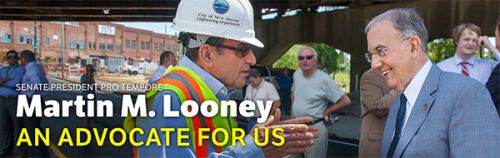
HARTFORD — Today, Senate President Martin M. Looney (D-New Haven) and Senate Majority Leader Bob Duff (D-Norwalk) were outraged by comments made by the Trump regime National Economic Council director Kevin Hassett on Tuesday, where Hassett claimed consumers are the “last of our concerns” as the Iran war continues.

As the war enters its fourth week and the prospect of it lasting for months looms, Hassett appeared on CNBC to discuss the economic consequences. Hassett said extending the war “wouldn’t really disrupt the US economy very much at all,” though it would “hurt consumers, and we’d have to think about what we’d have to do about that, but that’s really the last of our concerns right now.”

“After starting a lawless war with no plan, the Trump regime confirms what we’ve already known: Washington Republicans don’t care about the American public,” said Looney and Duff. “The Strait of Hormuz remains closed as a result of US actions, disrupting global trade and causing the price of just about everything to increase. The cost of a gallon of gas is up nearly $1 in the last month, and crude oil markets remain volatile. Americans were already struggling, and now they’re feeling the pain even more. We are calling on Connecticut Republicans to stand up for their constituents and denounce their MAGA colleagues for such a blatant disregard for affordability in our state. While the Trump regime’s behavior is both shameful and shameless, at least they’re willing to admit they no longer care about regular people.”

These latest comments come amid a turbulent environment where analysts increasingly believe the war with Iran, started with United States strikes on February 28, will stretch on for months, with extended impacts on global fuel and trade.

Those impacts are already apparent, as in less than a month, the average price of a gallon of gas in Connecticut rose by 78 cents, and the cost of a barrel of crude oil rose from $60 to more than $100. Increasing fuel costs will bleed into transportation and shipping, with a heavy impact on shipping.

Since the war started, the Strait of Hormuz, through which 20% of global oil flows, has been effectively closed, triggering a global fuel crisis.

The cost increases layer on top of the cost of Trump tariffs – even though the initial ones were deemed unlawful by the Supreme Court in February, Trump immediately implemented 15% global tariffs that will remain in place for months.

FOR IMMEDIATE RELEASE
Contact: Kevin Coughlin | kevin.coughlin@cga.ct.gov | 203-710-0193

Looney, Duff Outraged as Trump Economic Advisor Says Consumers ‘Last of Our Concerns’

Newsletter Header

Looney, Duff Outraged as Trump Economic Advisor Says Consumers ‘Last of Our Concerns’

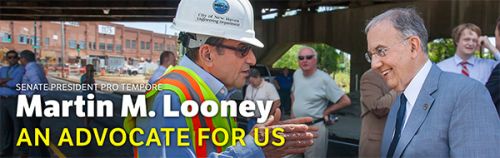
HARTFORD — Today, Senate President Martin M. Looney (D-New Haven) and Senate Majority Leader Bob Duff (D-Norwalk) were outraged by comments made by the Trump regime National Economic Council director Kevin Hassett on Tuesday, where Hassett claimed consumers are the “last of our concerns” as the Iran war continues.

As the war enters its fourth week and the prospect of it lasting for months looms, Hassett appeared on CNBC to discuss the economic consequences. Hassett said extending the war “wouldn’t really disrupt the US economy very much at all,” though it would “hurt consumers, and we’d have to think about what we’d have to do about that, but that’s really the last of our concerns right now.”

“After starting a lawless war with no plan, the Trump regime confirms what we’ve already known: Washington Republicans don’t care about the American public,” said Looney and Duff. “The Strait of Hormuz remains closed as a result of US actions, disrupting global trade and causing the price of just about everything to increase. The cost of a gallon of gas is up nearly $1 in the last month, and crude oil markets remain volatile. Americans were already struggling, and now they’re feeling the pain even more. We are calling on Connecticut Republicans to stand up for their constituents and denounce their MAGA colleagues for such a blatant disregard for affordability in our state. While the Trump regime’s behavior is both shameful and shameless, at least they’re willing to admit they no longer care about regular people.”

These latest comments come amid a turbulent environment where analysts increasingly believe the war with Iran, started with United States strikes on February 28, will stretch on for months, with extended impacts on global fuel and trade.

Those impacts are already apparent, as in less than a month, the average price of a gallon of gas in Connecticut rose by 78 cents, and the cost of a barrel of crude oil rose from $60 to more than $100. Increasing fuel costs will bleed into transportation and shipping, with a heavy impact on shipping.

Since the war started, the Strait of Hormuz, through which 20% of global oil flows, has been effectively closed, triggering a global fuel crisis.

The cost increases layer on top of the cost of Trump tariffs – even though the initial ones were deemed unlawful by the Supreme Court in February, Trump immediately implemented 15% global tariffs that will remain in place for months.

FOR IMMEDIATE RELEASE
Contact: Kevin Coughlin | kevin.coughlin@cga.ct.gov | 203-710-0193

MEDIA ADVISORY – 11AM, CAPITOL SOUTH LOBBY – JUST CAUSE ADVANCES, LAWMAKERS PLAN WHAT’S NEXT

Banner

MEDIA ADVISORY: 11AM, CAPITOL SOUTH LOBBY – JUST CAUSE ADVANCES, LAWMAKERS PLAN WHAT’S NEXT

MEDIA ADVISORY: 11AM, CAPITOL SOUTH LOBBY – JUST CAUSE ADVANCES, LAWMAKERS PLAN WHAT’S NEXT
 

Where: State Capitol, South Lobby Portico (facing Capitol Avenue)
When: Tuesday, March 17, 11 a.m.
Who: Lawmakers championing Senate Bill 257, including State Senator Martha Marx and State Representative Antonio Felipe, Chairs of the Senate Housing Committee, State Rep. Kevin Brown and State Rep. Anthony Nolan; advocates with Connecticut Tenants Union, CT Fair Housing Center, Make The Road CT and the Just Cause Coalition
 
Following its passage from the Housing Committee on March 10, lawmakers and advocates seeking to support and protect tenants will celebrate Senate Bill 257’s Just Cause protections, seeking to better protect the rights and stability of countless Connecticut renters.

SB257 seeks to require a listed reason in the event of an eviction, trying to reduce housing instability, unfair evictions and homelessness among tenants who can be exposed to abuses of power. The policy does not bar evictions but seeks to end the practice of no-fault evictions, representing more than 10% of all evictions.

Contact: Joe O’Leary | 508-479-4969 | Joe.OLeary@cga.ct.gov

ADVISORY: Sen. Lesser, Advocates, Impacted Residents to Promote Statewide SNAP Proposal

Banner

Sen. Lesser, Advocates, Impacted Residents to Promote Statewide SNAP Program

Today, State Senator Matt Lesser, Senate Chair of the Human Services Committee, will hold a press conference alongside legislators, advocates and impacted residents to support legislation that would address food insecurity and shortfalls in the federal Supplemental Nutrition Assistance Program (SNAP), due to funding cuts passed by the Trump administration in the federal republican budget. 
 
The legislation will be receiving a public hearing shortly after the press conference.
 
Senate Bill 497 moves $40 million from the Federal Cuts Response Fund, established in Special Act 26-1, to create a transitional assistance fund. This fund would be used for a state-funded SNAP program for residents impacted by the new federal eligibility requirements:

  • A homeless person or person at risk of homelessness
  • An adult diagnosed with Autism Spectrum Disorder (ASD) who is not otherwise classified as disabled
  • A young adult who is aging out of the foster care system
  • An adult who is a caretaker for a child between the ages of 14-18
  • An adult ages 55-64
  • An asylum-seeker, refugee or other immigrant with a visa or pending visa with a immigrant status as victim of human trafficking or domestic abuse

The proposal also ensures that veterans who are not able to meet the new federal work requirements do not risk having their SNAP benefits reduced, it increases reimbursement rates for Meals on Wheels, a critical senior nutrition program and creates a Medicaid waiver program.
 
Who:
State Senator Matt Lesser, Senate Chair of Human Services Committee
State Senator Paul Honig, Senate Chair of Veterans Committee
State Representative Jaime Foster, House Chair of the Veterans Committee
Coralys Santana, The Connecticut Project Action Fund
Barbara Gandia, impacted resident from Bristol
Alison Weir, Executive Director, Connecticut Veterans Legal Center
Matthew Dillon, Attorney, Connecticut Legal Services
Marisa Rodriguez, impacted resident from New Britain
Dr. Molly Markowitz, Pediatrician, CT-American Academy of Pediatrics Chapter
What: Press Conference on a Statewide SNAP Proposal
Where: Hearing Room 1D in the Legislative Office Building
When: Today – Tuesday, March 17 at 10 a.m.

ADVISORY: Sen. Lesser, Advocates, Impacted Residents to Promote Statewide SNAP Proposal

Banner

ADVISORY:

ADVISORY:

Sen. Lesser, Advocates, Impacted Residents to Promote Statewide SNAP Program

Tomorrow, State Senator Matt Lesser, Senate Chair of the Human Services Committee, will hold a press conference alongside legislators, advocates and impacted residents to support legislation that would address food insecurity and shortfalls in the federal Supplemental Nutrition Assistance Program (SNAP), due to funding cuts passed by the Trump administration in the federal republican budget. 
 
The legislation will be receiving a public hearing shortly after the press conference.
 
Senate Bill 497 moves $40 million from the Federal Cuts Response Fund, established in Special Act 26-1, to create a transitional assistance fund. This fund would be used for a state-funded SNAP program for residents impacted by the new federal eligibility requirements:

  • A homeless person or person at risk of homelessness
  • An adult diagnosed with Autism Spectrum Disorder (ASD) who is not otherwise classified as disabled
  • A young adult who is aging out of the foster care system
  • An adult who is a caretaker for a child between the ages of 14-18
  • An adult ages 55-64
  • An asylum-seeker, refugee or other immigrant with a visa or pending visa with a immigrant status as victim of human trafficking or domestic abuse

The proposal also ensures that veterans who are not able to meet the new federal work requirements do not risk having their SNAP benefits reduced, it increases reimbursement rates for Meals on Wheels, a critical senior nutrition program and creates a Medicaid waiver program.
 
Who:
State Senator Matt Lesser, Senate Chair of Human Services Committee
State Senator Paul Honig, Senate Chair of Veterans Committee
State Representative Jaime Foster, House Chair of the Veterans Committee
Coralys Santana, The Connecticut Project Action Fund
Barbara Gandia, impacted resident from Bristol
Alison Weir, Executive Director, Connecticut Veterans Legal Center
Matthew Dillon, Attorney, Connecticut Legal Services
Marisa Rodriguez, impacted resident from New Britain
Dr. Molly Markowitz, Pediatrician, CT-American Academy of Pediatrics Chapter
What: Press Conference on a Statewide SNAP Proposal
Where: Hearing Room 1D in the Legislative Office Building
When: Tuesday, March 17 at 10 a.m.

Senate Priority Legislation Supporting Commuters and Microtransit Passes Committee

Senate Priority Legislation Supporting Commuters and Microtransit Passes Committee

For Immediate Release
Contact: Garnet McLaughlin – Garnet.McLaughlin@cga.ct.gov – 860-304-2319

Today, Senate Chair of the Transportation Committee State Senator Christine Cohen led committee passage of senate priority legislation that will support commuters and extend microtransit services across the state.
 
“This legislation tackles connectivity, accessibility and clean air goals while providing business-friendly tax credits that help commuters,” said Senator Christine Cohen. “Sound, inclusive and commuter-centered policies like this one really have the power to move Connecticut forward and I look forward to getting this proposal across the finish line.”
 
Senate Bill 9 allocates $10.5 million through FY 27 to extend a successful microtransit program that was first established in 2024 and serves nine transit districts and 17 municipalities in Connecticut. These programs offer accessible and affordable on-demand transportation, allowing seniors, students, the disabled community and those without personal transportation to get to their destinations safely.
 
The legislation also establishes a tax credit for businesses. Previous legislation allowed businesses with over 100 employees to create incentives for their employees to travel to work by means of carpooling, public transit or employer-based commuting alternatives. The legislation passed today lowers the threshold to 5 employees and increases the credit from $250 to $500 per employee per year. There is a statewide cap on the program of $1.5 million and the credits are offered on a first-come first-serve basis.
 
The legislation also requires the Department of Transportation (DOT) to work with local organizations like chambers of commerce to develop a public service campaign, ensuring employers are made aware of the benefit.
 
Senate Bill 9 also identifies opportunities for transit-oriented development by requiring the Department of Transportation to report back to the Transportation Committee on any state-owned land near public transportation hubs that could be developed into housing.
 
The legislation next heads to the Senate floor.

General Law Committee Advances Bills to Strengthen Consumer Privacy and Online Safety Protections

General Law Committee Advances Bills to Strengthen Consumer Privacy and Online Safety Protections

General Law Committee Advances Bills to Strengthen Consumer Privacy and Online Safety Protections

Today, two senate democratic caucus bills, Senate Bill 4, ‘An Act Concerning Consumer Privacy’ and Senate Bill 5, ‘An Act Concerning Online Safety’, was passed out of the General Law Committee. Both bills would advance critical protections for Connecticut residents in the digital age.
 
“Real harms are happening to Connecticut residents right now, and we cannot wait for Washington to act,” said State Senator James Maroney (D-Milford), Chair of the General Law Committee. “With these bills, we are saying: if Washington won’t protect us, we will protect ourselves. We want to ensure our residents are safe, especially our children, and equip them with the skills they need to succeed in the modern economy.”
 
“These bills reflect our commitment as Senate Democrats to making sure Connecticut families are protected,” said Senate Majority Leader Bob Duff (D-Norwalk). “Whether it’s keeping personal data out of the hands of those who would steal it, companies that would make vast profits from the information, federal overreach that is concerning many Americans or ensuring
or ensuring that the AI tools our kids are using aren’t putting their lives at risk, we are proud to be leading the nation on these issues.”
 
Senate Bill 4: Consumer Privacy
Senate Bill 4 introduces comprehensive privacy measures that address emerging threats to consumer data. The bill tackles critical privacy concerns, including the lightly regulated sale of geolocation data, the proliferation of license plate readers and facial recognition technology, and the exploitative practices of data brokers.
 
Specifically, Senate Bill 4 will:
 

  • Regulate data brokers by allowing consumers to request, at no cost, the deletion of any personal data collected by a data broker
  • Prohibit automated license plate reader entities that have contracted with the Department of Transportation, the Department of Motor Vehicles, or law enforcement agencies from selling or sharing information gathered from those readers
  • Require businesses using facial recognition technology to clearly disclose such use at each public entrance and provide consumers with a way to request removal of their facial images from any resulting database
  • Regulate dynamic pricing, also known as surge pricing or personalized algorithmic pricing, by creating strict disclosure requirements for consumers
  • Require manufacturers of motor vehicles manufactured overseas to affix a label to vehicles reflecting the cost attributable to tariffs
  • Ban controllers and processors from selling or sharing precise geolocation data

 
These protections are a direct response to real-world harm. In Minnesota, Vance Boelter obtained personal information through data broker websites that he used to assassinate Minnesota Speaker Emerita Melissa Hortman and her husband, Mark. Connecticut’s legislation will help prevent tragedies like this from happening here.

Given federal law enforcement’s current overreach and violations of civil rights, this bill will also help prevent third-party vendors from retaining or providing data that tracks individuals’ movements and locations to federal agencies, including ICE.
 
Senate Bill 5: Online Safety
Senate Bill 5 advances critical artificial intelligence legislation to protect Connecticut residents from emerging digital harms, with a primary focus on preventing AI-driven threats to mental health and youth safety.
 
The bill will require AI chatbot operators to make reasonable efforts to detect suicidal ideation or indicators of self-harm expressed by users and to have a protocol in place to respond with appropriate mental health resources.
 
Over 70% of teenagers use AI companions, with roughly half using them regularly. There have been numerous cases across the country of teenagers who disclosed suicidality to AI chatbots that not only failed to offer mental health resources, but actively encouraged and assisted minors in attempting or completing suicide.
 
Adults have been harmed as well. In in Greenwich, Connecticut, a man killed his elderly mother and then himself after an AI chatbot repeatedly validated his delusions, encouraged him to distrust others, and never once directed him to mental health resources.
 
This bill will also require that individuals be provided with a disclosure when AI is used in a decision-making process affecting their employment, ensuring transparency as AI becomes an increasingly powerful force in hiring and workplace decisions.
 
The legislation will also hold technology companies responsible when their AI systems promote dangerous content or behaviors.
 
Senate Bill 5 also invests in Connecticut’s AI future by promoting responsible AI use and equipping residents with the skills and knowledge needed to thrive in a modern AI economy. Through workforce training initiatives and partnerships with state agencies, the bill ensures that Connecticut workers and businesses are not left behind as technology rapidly transforms our economy.


FOR IMMEDIATE RELEASE
Contact: Michelle Rappaport | Michelle.Rappaport@cga.ct.gov| 860-240-8671

MEDIA ADVISORY: TUESDAY, 11AM, CAPITOL SOUTH LOBBY – JUST CAUSE ADVANCES, LAWMAKERS PLAN WHAT’S NEXT

Banner

MEDIA ADVISORY: TUESDAY, 11AM, CAPITOL SOUTH LOBBY – JUST CAUSE ADVANCES, LAWMAKERS PLAN WHAT’S NEXT

MEDIA ADVISORY: TUESDAY, 11AM, CAPITOL SOUTH LOBBY – JUST CAUSE ADVANCES, LAWMAKERS PLAN WHAT’S NEXT
 

Where: State Capitol, South Lobby Portico (facing Capitol Avenue)
When: Tuesday, March 17, 11 a.m.
Who: Lawmakers championing Senate Bill 257, including State Senator Martha Marx and State Representative Antonio Felipe, Chairs of the Senate Housing Committee, State Rep. Kevin Brown and State Rep. Anthony Nolan; advocates with Connecticut Tenants Union, CT Fair Housing Center, Make The Road CT and the Just Cause Coalition
 
Following its passage from the Housing Committee on March 10, lawmakers and advocates seeking to support and protect tenants will celebrate Senate Bill 257’s Just Cause protections, seeking to better protect the rights and stability of countless Connecticut renters.

SB257 seeks to require a listed reason in the event of an eviction, trying to reduce housing instability, unfair evictions and homelessness among tenants who can be exposed to abuses of power. The policy does not bar evictions but seeks to end the practice of no-fault evictions, representing more than 10% of all evictions.