MEDIA ADVISORY – WEDNESDAY, 11AM – CONNECTICUT HEALTH PROFESSIONALS FOR CLIMATE ACTION ENDORSE KEY BILLS

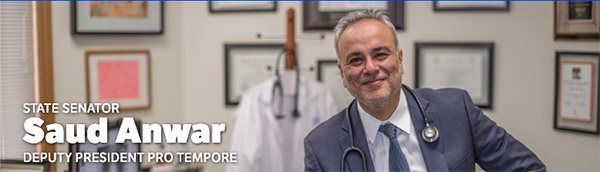
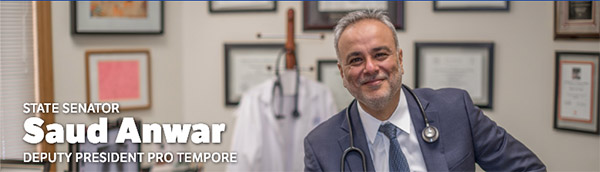
Senator Anwar

FOR IMMEDIATE RELEASE
Contact: Joe O’Leary | Joe.OLeary@cga.ct.gov | 508-479-4969

MEDIA ADVISORY – WEDNESDAY, 11AM – CONNECTICUT HEALTH PROFESSIONALS FOR CLIMATE ACTION ENDORSE KEY BILLS

When: Wednesday, March 25, 11 a.m.
Who: State Senator Saud Anwar, Connecticut Health Professionals for Climate Action representatives including Stefan Marczuk, a UConn Health medical student and Chair of the CHPCA; Dr. Mark Mitchell, founder of the Connecticut Environmental Justice Leadership Collaborative and public health and environmental physician; representatives from climate and environmental action and advocacy groups
Where: Legislative Office Building, Second Floor Atrium

On Wednesday morning, members of the Connecticut Health Professionals for Climate Action will endorse key bills that will support environmental action, reduce pollution and increase protections for members of the public. Among the concepts they will champion include increased adoption of solar technology, medical protections for utility customers and increased use of renewable energy, as well as continued support for the state’s decarbonization efforts.

MEDIA ADVISORY: WEDNESDAY, 10AM, LOB – CHILDREN’S ADVOCATES CALL FOR INCREASED CHILD CARE FUNDING

MEDIA ADVISORY: WEDNESDAY, 10AM, LOB – CHILDREN’S ADVOCATES CALL FOR INCREASED CHILD CARE FUNDING

March 24, 2026

Where: Legislative Office Building, Room 2A

When: Wednesday, March 25, 10 a.m.

Who: State Senator Ceci Maher and State Representative Corey Paris, Chairs of the Committee On Children; Eva Bermudez Zimmerman, Child Care for CT; Early Childhood Alliance executive director Merrill Gay; parents and child care center owners

On Wednesday, legislators and advocates will gather in support of Senate Bill 265, legislation that seeks to deliver as much as $70 million in additional funding for Care 4 Kids. The investment comes with dual purposes of supporting more residents currently on the program’s waitlist, especially families with other children served by the program and families whose children have special needs, and supporting child care centers in Eastern Connecticut, historically underfunded compared to those located in other regions of the state.

MEDIA ADVISORY – 2PM, CAPITOL LOBBY – “UNDER THE BRIDGE” HOMELESSNESS AWARENESS EXHIBITION

Senator Anwar

FOR IMMEDIATE RELEASE
Contact: Joe O’Leary | Joe.OLeary@cga.ct.gov | 508-479-4969

MEDIA ADVISORY – 2PM, CAPITOL LOBBY – “UNDER THE BRIDGE” HOMELESSNESS AWARENESS EXHIBITION

When: Tuesday, March 24, 2026, 2-5 p.m.
Where: State Capitol, North Lobby
Who: State Senator Saud Anwar, members of the Housing Committee, CT Coalition To End Homelessness CEO Sarah Fox, photographer Phil Farnsworth, individuals with stories of their experiences while homeless

This afternoon, the Capitol’s North Lobby will host “Under The Bridge,” a homelessness awareness exhibition featuring the work of photographer Phil Farnsworth, a documentary photographer whose work examines homelessness, humanitarian crisis, conflict and the human cost of political and social decisions.

The exhibit will feature brief remarks from invited speakers and then will remain open to the public for the remainder of the day.

SENATOR ANWAR CHEERS COMMITTEE PASSAGE OF SEVERAL KEY PUBLIC HEALTH BILLS

Senator Anwar

FOR IMMEDIATE RELEASE
Contact: Joe O’Leary | Joe.OLeary@cga.ct.gov | 508-479-4969

March 23, 2026

SENATOR ANWAR CHEERS COMMITTEE PASSAGE OF SEVERAL KEY PUBLIC HEALTH BILLS

Today, State Senator Saud Anwar (D-South Windsor), Senate Chair of the Public Health Committee, cheered and welcomed the passage of several key bills seeking to improve public health. With the bills moving through the committee, their potential passage could help identify and prevent heart issues among young athletes, advance new steps to identify and treat cancer and ensure parents and guardians receive legal information about their children in certain circumstances.

Senate Bill 194, “An Act Concerning Cardiac Screening and Sudden Cardiac Arrest Prevention For Certain Student Athletes,” would update state law to include sudden cardiac arrest screenings for youth athletes involved in intramural athletics or interscholastic athletics in a high-intensity endurance of power sport.

This is intended to reduce situations where students may push themselves during competition not knowing if they have a potential heart problem; nationally, as many as 100 high school students die each year from sudden cardiac arrest, about one death every three days.

The screening form will ask whether a student experiences chest pain with exertion, unexplained syncope or sudden cardiac arrest or a family history of sudden cardiac arrest or death. Any student who answers yes to the questions will be required to undergo an electrocardiogram test and receive written clearance from a medical professional.

“In the past, we’ve lost too many student athletes to heart conditions discovered too late. This bill directly counters that,” Sen. Anwar said. “This new screening form will connect students with medical histories indicating they could have certain conditions with the testing they need to stay safe. It’s a simple but effective step that I know will save lives.”

Senate Bill 451, “An Act Establishing An Advisory Council on Chimeric Antigen Receptor T-Cell Therapy And Other Gene Therapies,” would put a body in place to better monitor gene cell therapies for the treatment of cancer, including rare cancers. Gene therapy and chimeric antigen receptor t-cell therapy are currently in use to save lives and better treat deadly diseases like leukemia, sickle cell disease and hemophilia, with potential to expand them to more rare genetic disorders previously considered untreatable.

The advisory council will advise and make recommendations to the state Public Health department regarding availability of CAR-T therapy, its delivery, education into its use and opportunities to coordinate with researchers, largely with the intent of expanding its overall availability. While the upgrades exist, the council’s aim is partially to ensure expanded access and awareness of the new medical therapies.

“Gene therapy and CAR-T therapy used to be ideas from science fiction, but they’re reality today – and we need to make sure more people can access them,” said Sen. Anwar. “This advisory council would be better able to monitor gene cell therapies for many important rare diseases, advocate for their use and make them more accessible to all patients around Connecticut who could benefit. Lives are in the balance and this will give us opportunities to save more every year.”

Among the changes made by House Bill 5514, “An Act Concerning Various Revisions To The Public Health Statutes,” is an adjustment to how abuse or neglect of individuals with intellectual disabilities are reported. Currently, parents and guardians whose children are abused or neglected by the Department of Social Services may not receive results of investigations into their child’s care.

Under the bill’s changes, if parents or guardians are determined not to be involved with abuse or neglect, they will gain access to reports and investigations regarding their child’s condition.

“As we update and adjust our current laws, we need to account for potential improvements to current standards,” said Sen. Anwar. “This change, brief but meaningful, would simply ensure parents of children who are abused or neglected will receive information regarding the child’s condition.”

With the bills’ passage through the Public Health Committee, they will now head to the Senate and House floor for further consideration.

Senator Hartley Welcomes UK Parliament Delegation to Connecticut for Friendship Caucus Roundtable

Banner

Senator Hartley Welcomes UK Parliament Delegation to Connecticut for Friendship Caucus Roundtable

Today, state Senator Joan Hartley (D-Waterbury), member of the UK-CT Friendship Caucus, hosted members of the United Kingdom Parliament for a UK-CT Friendship Caucus roundtable.

This visit arrives at a pivotal moment. The United States and United Kingdom have negotiated a bilateral Economic Prosperity Deal (EPD) in response to sweeping 2025 tariff actions by the Trump administration.

“It was a tremendous honor to host our colleagues from the United Kingdom Parliament here in Connecticut,” said Sen. Hartley. “At a time when the U.S.-UK relationship is being redefined through the bilateral Economic Prosperity Deal, direct dialogue between our legislators has never been more important. Connecticut has long valued its deep ties with the United Kingdom, and this roundtable is a reflection of our shared commitment to strengthening that partnership.”

Members of the United Kingdom Parliament in attendance included Luke Akehurst, Oliver Ryan, Amanda Martin, Dame Caroline Dinenage, and David Clay.

The trade environment has been significantly disrupted since early 2025. Key actions affecting the UK-CT relationship:

  • March 2025: 25% tariff on all steel and aluminum imports (raised to 50% in June 2025).
  • April 2025: 10% baseline ‘reciprocal tariff’ imposed on UK goods entering the US.
  • April–May 2025: 25% tariff on passenger vehicles and parts.
  • May 2025: US-UK Economic Prosperity Deal (EPD) — first 100,000 UK auto imports tariffed at 10% (not 25%); US tariffs on UK steel and aluminum zeroed out; UK tariffs on US ethanol eliminated.
  • September 2025: US-UK Tech Prosperity Deal — cooperation on AI, quantum computing, and nuclear (partially suspended December 2025; civil nuclear cooperation restarted February 2026).
  • February 20, 2026: US Supreme Court ruled IEEPA does not authorize presidential tariff imposition — creating major legal uncertainty for the existing tariff framework.
  • March 5, 2026: Connecticut joined 23 other states filing suit to block Section 122 tariffs, reflecting acute state-level concern about trade disruption.

Connecticut, as one of America’s most trade-exposed advanced manufacturing states, has a direct stake in how that framework evolves. The UK remains a major source of foreign direct investment in Connecticut, with UK-based firms employing thousands of state workers in sectors from aerospace to financial services.

The United States and the United Kingdom share the world’s most enduring bilateral alliance, built on common language, democratic ideals, rule of law, and centuries of shared history. The relationship was forged through wartime alliance: World War I, World War II, Korea, the Gulf War, Iraq, and Afghanistan. It was institutionalized through NATO, in which the UK was a founding member. The US and UK are the world’s first and fifth largest economies. Together they trade over $260 billion in goods and services annually and represent each other’s number one source of foreign direct investment, with two-way investment exceeding $1 trillion. More than 1.2 million Americans work for UK companies in the US; more than 1.5 million Britons are employed by US firms.

Connecticut’s economic relationship with the United Kingdom is already strong. The United Kingdom is a major export market for Connecticut’s goods and services, which support thousands of U.S. jobs, and U.K.-based firms are among the leading foreign investors in Connecticut.

The UK is one of the three largest sources of foreign investment in Connecticut, alongside the Netherlands and Germany, with UK-controlled companies accounting for a significant share of the 113,200 Connecticut workers employed by foreign firms as of 2022 (7.7% of total private industry employment).

MEDIA ADVISORY – TUESDAY, 2PM, CAPITOL LOBBY – “UNDER THE BRIDGE” HOMELESSNESS AWARENESS EXHIBITION

Senator Anwar

FOR IMMEDIATE RELEASE
Contact: Joe O’Leary | Joe.OLeary@cga.ct.gov | 508-479-4969

MEDIA ADVISORY – TUESDAY, 2PM, CAPITOL LOBBY – “UNDER THE BRIDGE” HOMELESSNESS AWARENESS EXHIBITION

When: Tuesday, March 24, 2026, 2-5 p.m.
Where: State Capitol, North Lobby
Who: State Senator Saud Anwar, members of the Housing Committee, CT Coalition To End Homelessness CEO Sarah Fox, photographer Phil Farnsworth, individuals with stories of their experiences while homeless

On Tuesday, March 24, the Capitol’s North Lobby will host “Under The Bridge,” a homelessness awareness exhibition featuring the work of photographer Phil Farnsworth, a documentary photographer whose work examines homelessness, humanitarian crisis, conflict and the human cost of political and social decisions.

The exhibit will feature brief remarks from invited speakers and then will remain open to the public for the remainder of the day.

Sens. Looney, Duff, Lesser Applaud Advance of Affordable Healthcare Legislation

Banner

Sens. Looney, Duff, Lesser Applaud Advance of Affordable Healthcare Legislation

HARTFORD – Today, Senate President Martin Looney, Senate Majority Leader Bob Duff and Senate Chair of the Human Services Committee State Senator Matt Lesser applaud committee passage of Senate Bill 3, a Senate Democrats priority piece of legislation designed to make healthcare affordable.

When Donald Trump and Republicans in Congress allowed federal premium tax credits to expire, Connecticut families insured through Access Health CT saw their premiums skyrocket overnight. Additionally, 100,000 residents are projected to lose their HUSKY Medicaid coverage this year due to passage of the federal Republican budget, which also threatens the financial underpinning of Connecticut hospitals. Senate Bill 3 takes a broad approach to ensure that Connecticut residents are not forced to choose between paying rent and staying insured.

“Addressing the astronomical cost of healthcare and barriers in care is a top priority for our caucus, and this legislation addresses this issue in several ways,” said Senate President Martin Looney. “One of the most challenging pieces of healthcare for patients is the benefits cliff – lower-income folks get a raise or a better-paying job, and then they find themselves ineligible for benefits but still unable to afford coverage. Our health care markets are untenable, especially after the draconian cuts from the Republicans in Washington, D.C, and this legislation provides targeted relief for thousands of families in Connecticut.”

“Plain and simple, this bill will make Connecticut more affordable,” said Senate Majority Leader Bob Duff. “Donald Trump and Republicans are jacking up the cost of health care to give tax breaks to billionaires, and we cannot sit by and do nothing. Connecticut Senate Democrats are stepping up to bring down costs, protect access to critical services, and ensure that folks do not spiral into medical debt simply because they sought care when they needed it.”

“We have a moral imperative to protect Connecticut residents from the cruelty coming from Washington D.C.,” said State Senator Matt Lesser. “Access Health CT premiums are skyrocketing, folks are being kicked off of Medicaid, and there are long term structural issues within the hospital systems that are being exacerbated due to these Republican policies. In Connecticut, we are using every tool available to us to protect our residents and expand access to quality healthcare.”

Creating the Connecticut Affordable Health Insurance Trust Fund
The bill transfers $200 million from Connecticut’s Emergency Federal Response Fund to make health care and health insurance more affordable for Connecticut residents.

The Connecticut Option
Thousands of Connecticut residents saw their Access Health CT premiums spike due to the Republicans in Congress and the White House. Connecticut quickly acted to provide full tax credits for families earning 100–200% of the Federal Poverty Level (FPL) and partial tax credits for middle class families between 400% and 500% of poverty. This proposal funds additional health care tax credits that will cover families earning up to 600% of the FPL, so middle class families aren’t left behind.

The proposal also begins the planning process for the Governor’s Proposed Connecticut Option, creating a state designed health plan that would provide affordable healthcare options for small business owners and their employees.

Basic Health Program
In addressing the benefits cliff experienced by many working families and individuals across the state, this legislation establishes a Basic Health Program (BHP) to cover low income residents. For those who earn too much to qualify for HUSKY, but cannot afford private healthcare on Access Health CT, this would create an affordable, reliable option that could replace the more limited Covered CT.

Addressing Medical Debt + Hospital Financial Assistance
This legislation prohibits hospitals from billing patients who earn under 200% of the FPL, or receive public benefits like SNAP or WIC, reducing the number of Connecticut residents who will be saddled with medical debt. It would also require hospitals to offer payment plans for patients who do not otherwise qualify for financial assistance.

The proposal creates a state funded program that would provide payments to support hospital financial health. The bill contemplates tapping into Disproportionate Share Medicaid payments to compensate hospitals for the cost of providing health care to uninsured and under-insured residents.

Prior Authorization
Senate Bill 3 makes improvements to prior authorization by shortening the timeframe for certain review determinations and decisions. Delays in prior authorization can restrict medically necessary care, increase emergency room wait times and crowding, increase the cost of care and negatively affect patient care and experience.

SENATOR RAHMAN WELCOMES MORE THAN $80,000 IN GRANTS FIGHTING AQUATIC INVASIVE SPECIES IN LOCAL WATERS

Banner

SENATOR RAHMAN WELCOMES MORE THAN $80,000 IN GRANTS FIGHTING AQUATIC INVASIVE SPECIES IN LOCAL WATERS

Thursday, March 19, 2026

Today, State Senator MD Rahman (D-Manchester) welcomed more than $80,000 in grants awarded to the Connecticut River Watershed Council and the towns of Vernon and Bolton to fight aquatic invasive species.

The Connecticut River Watershed Council will receive a $46,205 grant to support the control and management of invasive water chestnuts in Keeney Cove and along the Connecticut River in Glastonbury, while the towns of Vernon and Bolton received a $35,135 grant for aquatic invasive plant management in Middle and Lower Bolton Lake.

“In recent years, aquatic invasive species have posed a serious threat to Connecticut waterways, as they can harm plant and marine life and even make boating and swimming difficult or impossible,” said Sen. Rahman. “That takes away natural beauty from our region, harms businesses in the area and sets our communities back. I’m grateful DEEP is taking this issue seriously and investing in our region.”

The grants come from the Department of Energy and Environmental Protection’s Aquatic Invasive Species Grant Program, which each year invests funds into projects focused on reducing the impacts of aquatic invasive species in Connecticut waters.

These species, like hydrilla and zebra mussels, can cause severe damage to water ecosystems. They can harm and kill native plants and animals and can make boating, fishing and swimming difficult or impossible, interfering with businesses and recreation alike.

The AIS program was established in 2019 through the state legislature to better protect state waters.

SENATOR NEEDLEMAN WELCOMES GRANTS FOR EAST HADDAM, PORTLAND AQUATIC INVASIVE SPECIES CLEANUP, OUTREACH

Featured Image

SENATOR NEEDLEMAN WELCOMES GRANTS FOR EAST HADDAM, PORTLAND AQUATIC INVASIVE SPECIES CLEANUP, OUTREACH


Today, State Senator Norm Needleman (D-Essex) welcomed a $30,880 grant awarded to the Bashan Lake Association, Inc. in East Haddam with the intent of improving regional education on preventing the spread of aquatic invasive species.

Additionally, the Jonah Center in Middletown received a $75,000 grant to remove invasive water chestnuts from bodies of water in the region, including Pecausett Pond in Portland.

“Aquatic invasive species pose a continued threat to our lakes, rivers and ponds, and I’m grateful to know our local communities will be better supported by these grant through new cleanup opportunities and increased education and public outreach,” said Sen. Needleman. “I’m grateful to the state for its continued investment in our region.”

The Bashan Lake Association will receive this grant with the purpose of improving outreach and education in the area, which includes monitoring boat launches and teaching the public how to prevent aquatic invasive species’ spread. The plants can quickly reproduce and spread and are often carried from body of water to body of water on boat hulls, reinforcing the need for education.

The Jonah Center will remove water chestnuts from the Pecausett Pond as well as the Mattabessett River and Connecticut River, with focus on Cromwell and Middletown.

The grant comes from the Department of Energy and Environmental Protection’s Aquatic Invasive Species Grant Program, which each year invests funds into projects focused on reducing the impacts of aquatic invasive species in Connecticut waters.

These species, like hydrilla and zebra mussels, can cause severe damage to water ecosystems. They can harm and kill native plants and animals and can make boating, fishing and swimming difficult or impossible, interfering with businesses and recreation alike.

The AIS program was established in 2019 through the state legislature to better protect state waters.

SENATOR NEEDLEMAN WELCOMES GRANTS FOR EAST HADDAM, PORTLAND AQUATIC INVASIVE SPECIES CLEANUP, OUTREACH

Featured Image

SENATOR NEEDLEMAN WELCOMES GRANTS FOR EAST HADDAM, PORTLAND AQUATIC INVASIVE SPECIES CLEANUP, OUTREACH

Today, State Senator Norm Needleman (D-Essex) welcomed a $30,880 grant awarded to the Bashan Lake Association, Inc. in East Haddam with the intent of improving regional education on preventing the spread of aquatic invasive species.

Additionally, the Jonah Center in Middletown received a $75,000 grant to remove invasive water chestnuts from bodies of water in the region, including Pecausett Pond in Portland.

“Aquatic invasive species pose a continued threat to our lakes, rivers and ponds, and I’m grateful to know our local communities will be better supported by these grant through new cleanup opportunities and increased education and public outreach,” said Sen. Needleman. “I’m grateful to the state for its continued investment in our region.”

The Bashan Lake Association will receive this grant with the purpose of improving outreach and education in the area, which includes monitoring boat launches and teaching the public how to prevent aquatic invasive species’ spread. The plants can quickly reproduce and spread and are often carried from body of water to body of water on boat hulls, reinforcing the need for education.

The Jonah Center will remove water chestnuts from the Pecausett Pond as well as the Mattabessett River and Connecticut River, with focus on Cromwell and Middletown.

The grant comes from the Department of Energy and Environmental Protection’s Aquatic Invasive Species Grant Program, which each year invests funds into projects focused on reducing the impacts of aquatic invasive species in Connecticut waters.

These species, like hydrilla and zebra mussels, can cause severe damage to water ecosystems. They can harm and kill native plants and animals and can make boating, fishing and swimming difficult or impossible, interfering with businesses and recreation alike.

The AIS program was established in 2019 through the state legislature to better protect state waters.

State Senator Norm Needleman