Maroney Introduced Legislation to Ban Styrofoam Trays in Schools and Establish Cyber Competition Pass State Senate

Maroney Introduced Legislation to Ban Styrofoam Trays
in Schools and Establish Cyber Competition Pass State Senate

HARTFORD, CT – Today, the state Senate voted to ban Styrofoam trays from all schools by a bipartisan 29 to five vote. State Senator James Maroney (D-Milford) introduced this bill at the beginning of the legislative session with the help of Milford high school students who participate in his legislative internship program. Sen. Maroney voted in support of this legislation and said getting this harmful material out of Connecticut schools will greatly benefit our students and our state’s ecosystem and thanked the Milford students for bringing this to his attention.

“Thank you to Ming-May Hu and Kruttika Gopal, the two Jonathan Law High School students for bringing to proposal to me,” said Sen. Maroney. “Due to their efforts in assisting me in drafting the original language of this bill, the hard work of the Environment Committee to take this legislation on and pass it, and the state Senate’s overwhelming support of this legislation, we are closer to having safer alternatives for trays in our schools which will not put our students or our ecosystem at risk.”

Senate Bill 229, “An act prohibiting the use of Styrofoam trays in Connecticut schools,” will ban Styrofoam, the brand name for expanded polystyrene in all Connecticut schools, colleges and universities. This material is not biodegradable and can wreak havoc on animals and sea life that might confuse the harmful material for food or shelter after it has been discarded. This bill prohibits school districts and regional school districts from entering into purchasing contracts for trays made of expanded polystyrene.

Under the bill, each school district is required to develop a plan for discontinuing the use of expanded polystyrene trays. Each plan must require the district to discontinue the use of expanded polystyrene trays by July 1, 2021. The state Senate’s passage of this legislation comes as cities across the nation are banning this harmful material. Currently, 12 cities have expanded polystyrene bans. On May 1, Maine became the first state to ban food containers made of the non-biodegradable material.

“Today we have taken a step towards ensuring our young people and our environment are safe,” said Sen. Maroney. “Chemicals in expanded polystyrene trays can leach into food presenting considerable, serious health risks. I am hopeful Senate Bill 229 will continue to advance and become law, keeping Styrofoam trays out of our schools.”

Before passing the state Senate, SB 229 made it out of the Environment Committee by a 20-8 vote on March 18. The bill now awaits action by the state House of Representatives and if passed by the House, it will head to Governor Ned Lamont.

Cyber Competition Legislation Passes State Senate

Legislation which will require the Military Department to create a cyber technology competition advanced in the state Senate with bipartisan support. The bill was introduced by the Veterans’ Affairs Committee, a committee Sen. Maroney co-chairs, and passed by a unanimous vote. Sen. Maroney said this bill is a win-win for students and the Military Department.

“This bill presents a fun and engaging method to get young people involved,” said Sen. Maroney. “Furthermore this will also enable students to learn about cyber career opportunities as well as educational and career opportunities available from the military.”

The cyber competition established by the Military Department due to Senate Bill 953, “An Act Establishing a Cyber Technology Competition for Certain Students,” will be used for the purpose of encouraging secondary school students to collaborate with government agencies and private industry to strengthen and secure information systems.

If enacted, the cyber competition will take place annually at the State Armory in Hartford and the Military Department will be responsible for promoting the cyber competition and reaching out to school districts throughout the state. The Military Department will also be responsible for establishing the rules of the competition.

On March 12, the SB 953 passed the Veterans’ Affairs Committee by a unanimous and bipartisan 16-0 vote. The bill now awaits action by the State House of Representatives. If enacted, it will go into effect on October 1, 2019.
Duff and Looney Statements on House Raising the Minimum Wage

Duff and Looney Statements on House Raising the Minimum Wage

HARTFORD, CT (May 9, 2019) – Today, Senate President Pro Tempore Martin M. Looney (D-New Haven) and Senate Majority Leader Bob Duff (D-Norwalk) released the following statements in reaction to the Connecticut House of Representatives passing House Bill 5004, An Act Increasing the Minimum Fair Wage:

“I want to thank Speaker Joe Aresimowicz, Majority Leader Matt Ritter, and Chairwoman Robyn Porter for their tremendous work during the overnight debate on raising the minimum wage,” said Senate President Pro Tempore Martin M. Looney. “The Speaker and Majority Leader worked with all willing and reasonable groups looking to give working people a fair raise. And the entire state owes Robyn Porter a debt of gratitude for her determination and stamina to debate and answer questions throughout the night in order to benefit the over 330,000 Connecticut residents that will receive more money in their paycheck.”

“The debate on the minimum wage took all night but the result was well worth the wait,” said Senate Majority Leader Bob Duff (D-Norwalk). “Hundreds of thousands of working people in Connecticut are now one step closer to receiving a much deserved and long overdue raise. Thank you Speaker Joe Aresimowicz, Majority Leader Matt Ritter, and Chairwoman Robyn Porter for your leadership and tireless effort in getting this bill passed.”

Statement of Senator Kushner on Today’s House Action Re: Minimum Wage

Statement of Senator Kushner on Today’s House Action Re: Minimum Wage

“I’m so pleased that the House has finally passed the minimum wage bill, and I look forward to the upcoming Senate debate where I will explain to my colleagues how this bill helps Connecticut families and our economy,” said state Senator Julie Kushner (D-Danbury), who is Senate Chair of the Labor Committee.

Looney and Duff Statements on House Raising the Minimum Wage

Looney and Duff Statements on House Raising the Minimum Wage

HARTFORD, CT (May 9, 2019) – Today, Senate President Pro Tempore Martin M. Looney (D-New Haven) and Senate Majority Leader Bob Duff (D-Norwalk) released the following statements in reaction to the Connecticut House of Representatives passing House Bill 5004, An Act Increasing the Minimum Fair Wage:

“I want to thank Speaker Joe Aresimowicz, Majority Leader Matt Ritter, and Chairwoman Robyn Porter for their tremendous work during the overnight debate on raising the minimum wage,” said Senate President Pro Tempore Martin M. Looney. “The Speaker and Majority Leader worked with all willing and reasonable groups looking to give working people a fair raise. And the entire state owes Robyn Porter a debt of gratitude for her determination and stamina to debate and answer questions throughout the night in order to benefit the over 330,000 Connecticut residents that will receive more money in their paycheck.”

“The debate on the minimum wage took all night but the result was well worth the wait,” said Senate Majority Leader Bob Duff (D-Norwalk). “Hundreds of thousands of working people in Connecticut are now one step closer to receiving a much deserved and long overdue raise. Thank you Speaker Joe Aresimowicz, Majority Leader Matt Ritter, and Chairwoman Robyn Porter for your leadership and tireless effort in getting this bill passed.”


Senator Hartley Named Waterbury Youth Services Advocate of the Year

Senator Hartley Named Waterbury Youth Services Advocate of the Year

Anwar

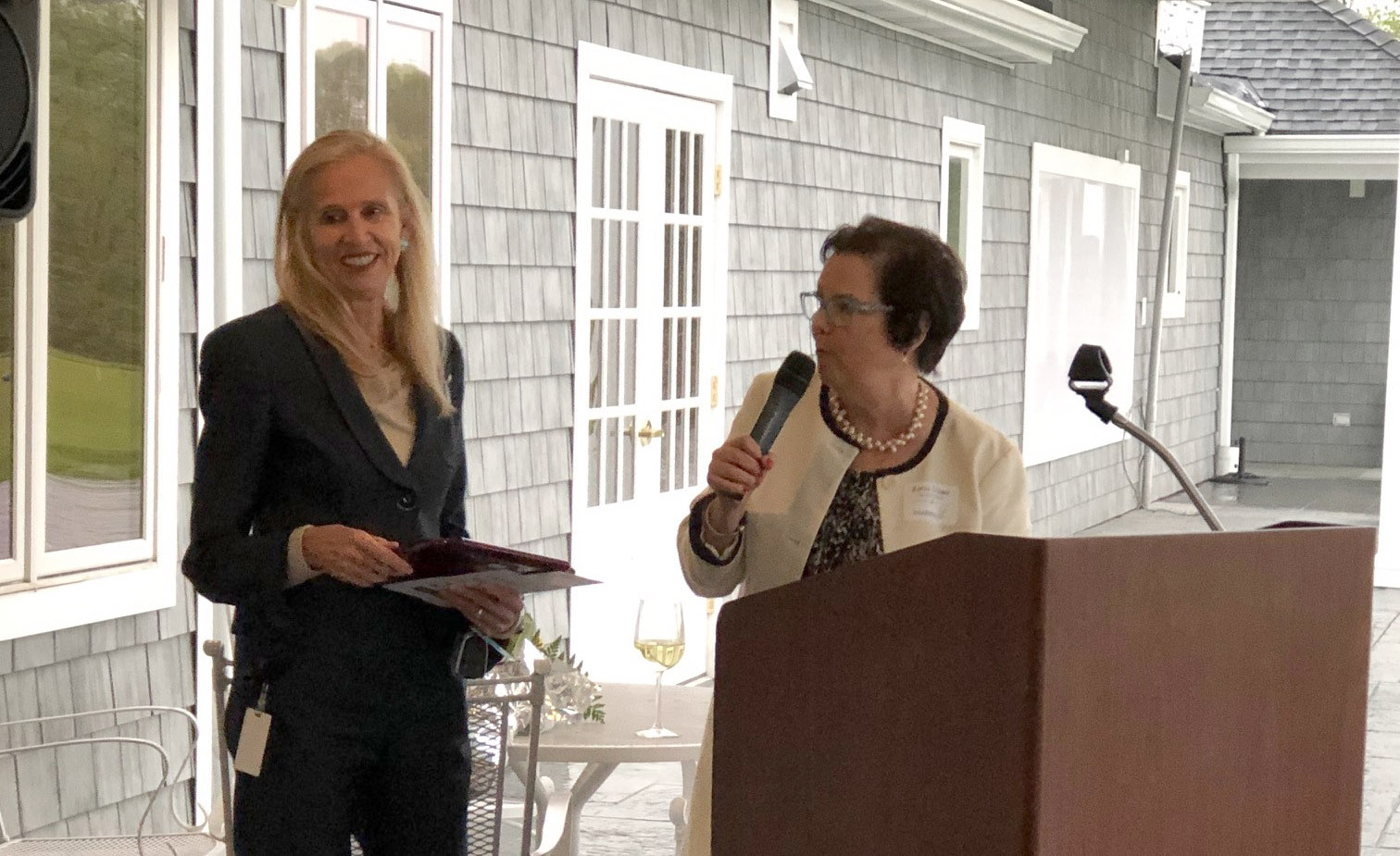
State Senator Joan Hartley receives the Waterbury Youth Services Advocate of the Year award at a fundraising event this week.

WATERBURY, CT – This week, State Senator Joan Hartley (D-Waterbury) received the Waterbury Youth Services Advocate of the Year award for her continual, unwavering and influential dedication to youth in the Greater Waterbury area. During the WYS’s recent fundraising event, Hartley was recognized for her work in helping youth throughout the city.

Sen. Hartley gave a short acceptance speech praising Waterbury Youth Services programs, specifically highlighting its “Girls Who Code” program. “This program teaches adolescent girls the 21st century skill of coding, which will provide program participants with training and background in coding, a necessary skill for future employment,” said Sen. Hartley. “This is the type of program WYS offers.”

Waterbury Youth Services Executive Director Kathi Crowe awarded Sen. Hartley, adding that “when we discussed who should receive this award, there was no one more deserving.”

Sen. Hartley has worked for years to empower and support the youth of Waterbury. Most recently, in 2018, she played an instrumental role in helping pass Public Act 18-81, which implemented the Youth Violence Prevention Initiative. As part of that, groups including the Boys & Girls Club in Waterbury received grant money to bolster anti-violence campaigns, help educate youth and improve the resources they provide.

Waterbury Youth Services, founded in 1976, works to help youth through 22 programs, including helping inspire children to pursue higher education, close the gender gap in fields like information technology, sending children to summer camps, providing crisis intervention and protecting children from abuse.

Senator Needleman Joins Senate Passage of Early Voting Amendment, Expresses Disappointment in Broad Republican Opposition

Senator Needleman Joins Senate Passage of Early Voting Amendment, Expresses Disappointment in Broad Republican Opposition

HARTFORD – Despite broad and severe Republican opposition, State Senator Norm Needleman (D-Essex) today joined majority Democrats in the state Senate passage of a resolution that could ultimately allow for early voting in Connecticut.

House Joint Resolution 161, “Resolution Proposing an Amendment to the State Constitution to Allow for Early Voting,” passed the Senate on an almost entirely partisan 23-13 vote. The Republican-influenced vote margin now means that, if approved by voters at statewide referendum, the issue of early voting would have to be voted on again by the next legislature to be elected in November 2020, and if approved, would not take effect until the 2023 election – more than four years from now.

“I joined Secretary of the State Merrill last month at a forum on early voting because I believe in empowering the public with every tool at our disposal,” said Sen. Needleman. “It is incredibly disappointing that my colleagues in the Senate do not support early voting’s benefits. They decided voters would rather wait in long lines on Election Day than visit a polling place in the days prior on their own schedule. They decided it’s fine for voters dealing with work, childcare, transportation issues and other challenges to simply become discouraged and stay home instead of gaining additional freedom to cast their ballots. Regardless, I am happy we were able to move this legislation forward, and will continue to fight to support it.”

The House joint resolution seeks to amend sections of the state constitution to allow for early voting; that is, voting outside the normal 6 a.m. to 8 p.m. time period on Election Day.

Democrats are trying to have Connecticut join the other 40 U.S. states and the District of Columbia in offering some form of early voting to its busy state residents. Connecticut is one of only 10 states in America that doesn’t have any provision for early voting.

Sen. Anwar Joins Senate Passage of Early Voting Amendment, Expresses Disappointment in Broad Republican Opposition

Sen. Anwar Joins Senate Passage of Early Voting Amendment, Expresses Disappointment in Broad Republican Opposition

HARTFORD – Despite broad and severe Republican opposition, State Senator Saud Anwar (D-South Windsor) today joined majority Democrats in the state Senate passage of a resolution that could ultimately allow for early voting in Connecticut.

House Joint Resolution 161, “Resolution Proposing an Amendment to the State Constitution to Allow for Early Voting,” passed the Senate on a largely partisan 23-13 vote. The Republican-influenced vote margin now means that, if approved by voters at statewide referendum, the issue of early voting would have to be voted on again by the next legislature to be elected in November 2020, and if approved, would not take effect until the 2023 election – more than four years from now.

“We, as policy makers, have to identify and eliminate barriers to voting. Early voting is likely to increase the opportunities to vote for a significant portion of our state’s citizens,” said Sen. Anwar. “I am disappointed that we lost an opportunity to help our citizens who have traditionally not been able to vote because of current laws.”

The House joint resolution seeks to amend sections of the state constitution to allow for early voting; that is, voting outside the normal 6 a.m. to 8 p.m. time period on Election Day.

Democrats are trying to have Connecticut join the other 40 U.S. states and the District of Columbia in offering some form of early voting to its busy state residents. Connecticut is one of only 10 states in America that doesn’t have any provision for early voting.


Senator Maroney Joins Senate Passage of Early Voting Amendment Proposal

Senator Maroney Joins Senate Passage of Early Voting Amendment Proposal

HARTFORD, CT – Wednesday, the state Senate passed House Joint Resolution 161, a proposal that will allow voters the opportunity to expand early voting in Connecticut. Though the legislation did not achieve the 75 percent supermajority required for it to appear on the ballot at the 2020 general election, its passing gives the legislature the opportunity to place it on the 2022 ballot, should legislators elected in 2020 pass an identical bill. State Senator James Maroney (D-Milford) praised its passage.

House Joint Resolution 161, “Resolution Proposing an Amendment to the State Constitution to Allow for Early Voting,” seeks to amend sections of the Constitution of the State Connecticut to allow early voting. If the Constitutional change is approved by the voters, the legislature would have the ability to enact early.

“I am proud to say I voted for early voting,” said Sen. Maroney. “We want to ensure that every eligible voter has the chance to participate in elections. Allowing for more participation will strengthen our democracy and ensure all sides are represented in our elections. It is unfortunate others do not see it this way. Although we did not achieve a supermajority, the opportunity still exists to have early voting in Connecticut, which 40 other states and the District of Columbia already have. ”

Forty states and the District of Columbia offer some form of early voting. Twenty-eight states and the District of Columbia allow any voter to vote by absentee ballot without needing an excuse, while in 19 states, an excuse is required. Connecticut is one of 12 states that does not have any provision for early voting and one of nine that requires an excuse in order to vote by absentee ballot. Neighboring states Rhode Island and New Hampshire are also in that group of 12 states that do not have early voting.

If approved in 2020, the Early Voting initiative will appear as a constitutional amendment question on the 2022 general election ballot, which will allow voters to decide whether Connecticut should expand early voting access.

Senator Needleman Lauds Democratic Budget’s Full Funding Of Education Cost Sharing Formula For Colchester

Senator Needleman Lauds Democratic Budget’s Full Funding Of Education Cost Sharing Formula For Colchester

State Senator Norm Needleman (D-Essex) today lauded the Democratic state budget approved by the Appropriations and Finance, Revenue and Bonding Committees earlier this month, citing specifically its full funding of the Education Cost Sharing formula. This ensures retention of current support given to education systems across the state, preserving current quality of education in communities like Colchester.

The budget’s full allocation to the Education Cost Sharing ten-year funding formula preserves current education quality throughout the state. That funding is required under the ten-year phase-in adopted by the General Assembly in 2017. In addition, the budget invests further in magnet and charter schools, after school programs and maintains funding for nurses at private schools.

“The Appropriations Committee putting forward a budget proposal that maintains the current Education Cost Sharing formula phase-in of ten years provides communities like Colchester, which are seeing a significant decrease in the grant, time to prepare,” said Colchester Board of Education Chairman Bradley Bernier. “While Colchester is actively pursuing additional opportunities to share services with our neighbors, something we have been doing within our Town for years, we have found that the process takes time. The commitment by Appropriations to follow the current formula will allow us to maintain the efficiencies that we have in place as we look to expand our opportunities for alternative revenue.”

“Our children can’t reach their full potential without us providing them with the optimal learning environment, and this budget does just that,” said Sen. Needleman. “Our students in Colchester, the 33rd District and the state cannot succeed without as much support as we can give them. I am heartened to see the Education Cost Sharing formula is fully funded in this budget and that my colleagues are working to change the Governor’s initial proposals.”

While the Democratic budget passed the Appropriations Committee and Finance Committee by last week’s mandated committee deadline, state Republicans failed to propose, submit, or vote on a state budget. With no budget, state Republicans have proposed $0 for state education funding for the 33rd District.

The Democratic budget now awaits a vote by the full State Senate and full House of Representatives.

Other Highlights of the Democratic State Budget

Investing in Workforce Development

  • Provides greater funding than the Governor proposed for several workforce development programs including:
  • Jobs Funnel Programs ($632K each year)
  • Manufacturing Pipeline Initiative ($1.1 M each year)
  • Healthcare Apprenticeship Initiative ($500K each year)
  • Connecticut’s Youth Employment Program ($1 M each year)
  • Cradle to Career ($100K each year)
  • Pilot Re-Entry Program ($800K each year)
  • Veteran Machinists Training ($250K each year)

Advancing Education

  • Increases funding for K-12 education by tens of millions of dollars from FY 19 ($42 million in FY 20 & $80 million in FY 21)
  • Increases funding for community colleges from FY 19 ($8 million in FY 20 & $10 million in FY 21)

Other Investments

  • Funds services for individuals with intellectual/developmental disabilities including employment and day services for new high school graduates ($6.3 M in FY 20 and $14.6 M in FY 21) as well as individuals aging out of the Department of Children and Families and residential schools ($3 M in FY 20 and $5.7 M in FY 21)
  • Preserves funding for mental health and substance abuse grants ($1.6 M in each year)
  • Provides funding for caseload growth in the Birth to Three program ($1.4 M in FY 20 and $2 M in FY 21)
  • Includes funding for a new State Trooper Class in FY 20

Senator Needleman Lauds Democratic Budget’s Funding Of Meals On Wheels, Other Vital East Haddam Community Programs

Senator Needleman Lauds Democratic Budget’s Funding Of Meals On Wheels, Other Vital East Haddam Community Programs

State Senator Norm Needleman (D-Essex) today lauded the Democratic state budget approved by the Appropriations and Finance, Revenue and Bonding Committees earlier this month, citing specifically its increased funding for social service programs such as Meals on Wheels and similar programs across towns like East Haddam.

Meals on Wheels operates in communities across the state to address senior isolation and hunger. Every day, Meals on Wheels provides two meals a day to seniors above the age of 60 and individuals under 60 with medical conditions. The Democratic state budget increases funding for Meals on Wheels by $475,000 each year in the next two years. Further funded programs include mental health and medical programs which will receive grant funding.

“Meals on Wheels is a lifesaving program for many elderly people,” said Brad Parker, Senior Center Director and Municipal Agent for the town of East Haddam. “We are talking about seniors that, in most cases, are not physically able to fix their own meals. The delivery of these meals also serves as a wellness check for these homebound seniors. What kind of a society would we be if we can’t be sure that our seniors are fed and safe?”

“By increasing funding for Meals on Wheels, we give our senior populations additional security and not only retain but improve a program many people rely on for nutrition,” said Sen. Needleman. “Meals on Wheels isn’t just a delivery service but a lifeline for many people, and I wholly support this change from the Governor’s initially proposed budget.”

While the Democratic budget passed the Appropriations Committee and Finance Committee by last week’s mandated committee deadline, state Republicans failed to propose, submit, or vote on a state budget. With no budget, state Republicans have proposed $0 for community programs around the state and in the 33rd District.

The Democratic budget now awaits a vote by the full State Senate and full House of Representatives.

Other Highlights of the Democratic State Budget

Investing in Workforce Development

  • Provides greater funding than the Governor proposed for several workforce development programs including:
  • Jobs Funnel Programs ($632K each year)
  • Manufacturing Pipeline Initiative ($1.1 M each year)
  • Healthcare Apprenticeship Initiative ($500K each year)
  • Connecticut’s Youth Employment Program ($1 M each year)
  • Cradle to Career ($100K each year)
  • Pilot Re-Entry Program ($800K each year)
  • Veteran Machinists Training ($250K each year)

Advancing Education

  • Increases funding for K-12 education by tens of millions of dollars from FY 19 ($42 million in FY 20 & $80 million in FY 21)
  • Increases funding for community colleges from FY 19 ($8 million in FY 20 & $10 million in FY 21)

Other Investments

  • Funds services for individuals with intellectual/developmental disabilities including employment and day services for new high school graduates ($6.3 M in FY 20 and $14.6 M in FY 21) as well as individuals aging out of the Department of Children and Families and residential schools ($3 M in FY 20 and $5.7 M in FY 21)
  • Preserves funding for mental health and substance abuse grants ($1.6 M in each year)
  • Provides funding for caseload growth in the Birth to Three program ($1.4 M in FY 20 and $2 M in FY 21)
  • Includes funding for a new State Trooper Class in FY 20