Looney and Duff Condemn Trump’s Executive Order on Mail-In Voting
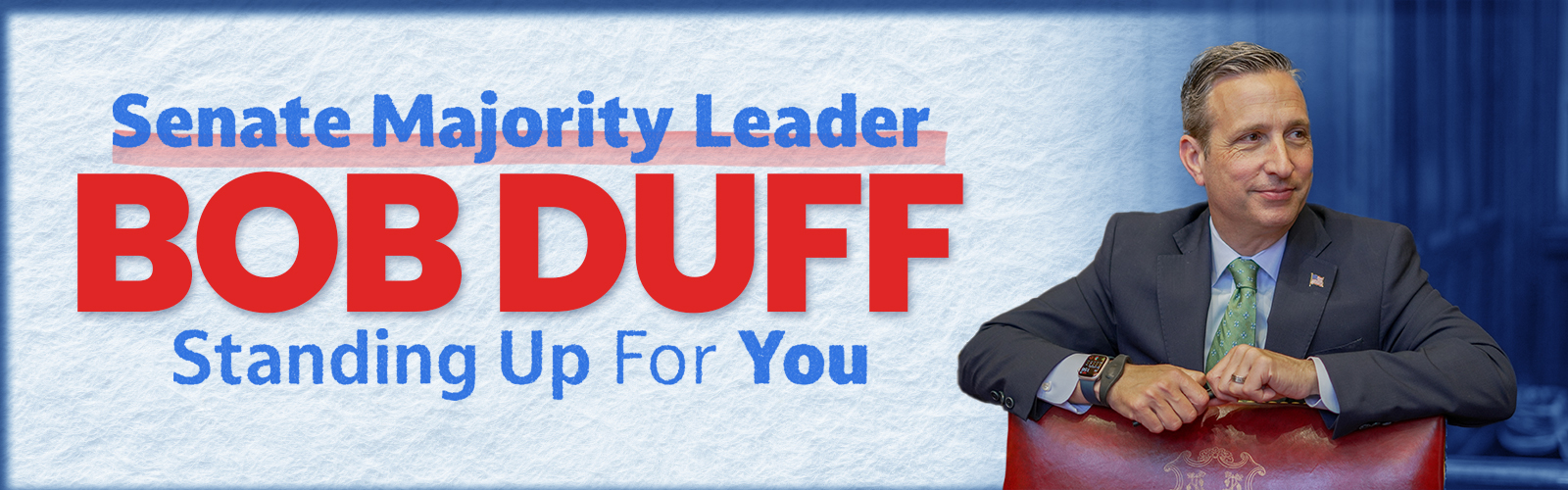
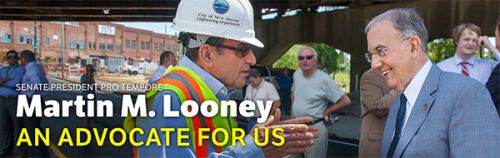
HARTFORD — Today, Senate President Pro Tempore Martin M. Looney (D-New Haven) and Senate Majority Leader Bob Duff (D-Norwalk) issued the following statement in response to President Trump’s executive order targeting mail-in voting:
“Once again, Donald Trump is trying to seize control of elections that the Constitution explicitly reserves to the states. In conjunction with the Governor and the Attorney General, we will do everything to stop this federal power grab. Trump needs to keep his hands off Connecticut’s elections. Our constitution, statutes, and traditions establish the electoral process of the states. This tradition should not be changed in such a cynical and cavalier fashion unilaterally by the executive branch. This is nothing more than a distraction from rising gas prices, a worsening economy, and the Epstein files that Trump doesn’t want anyone talking about. We call on our Republican colleagues in the General Assembly to stop enabling this assault on democracy and speak up for the voting rights of their own constituents.”
Looney and Duff Condemn Trump’s Executive Order on Mail-In Voting
HARTFORD — Today, Senate President Pro Tempore Martin M. Looney (D-New Haven) and Senate Majority Leader Bob Duff (D-Norwalk) issued the following statement in response to President Trump’s executive order targeting mail-in voting:
“Once again, Donald Trump is trying to seize control of elections that the Constitution explicitly reserves to the states. In conjunction with the Governor and the Attorney General, we will do everything to stop this federal power grab. Trump needs to keep his hands off Connecticut’s elections. Our constitution, statutes, and traditions establish the electoral process of the states. This tradition should not be changed in such a cynical and cavalier fashion unilaterally by the executive branch. This is nothing more than a distraction from rising gas prices, a worsening economy, and the Epstein files that Trump doesn’t want anyone talking about. We call on our Republican colleagues in the General Assembly to stop enabling this assault on democracy and speak up for the voting rights of their own constituents.”
SENATOR MAHER ISSUES STATEMENT REGARDING FEDERAL INVESTIGATION INTO PRIVATE EQUITY IN CHILD CARE
March 31, 2026
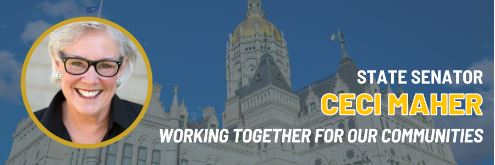
State Senator Ceci Maher (D-Wilton), Senate Chair of the Committee on Children, today issued the following statement in response to the announced federal investigation into child care center private equity ownership by U.S. Senator Jeff Merkley (D-OR). Sen. Merkley, a ranking member of the Senate Budget Committee, announced his office will investigate KinderCare Learning Companies and Learning Care Group, as well as their private equity owners, to better understand how private equity impacts child care. Merkley noted private equity’s “prioritizing investor profits over the well-being of the families and communities that depend on these services” draws direct concern regarding their conduct, with his office noting both KinderCare and Learning Care Group-owned facilities have been reported for health and safety violations in recent years.
“These concerns are extremely troubling and reinforce the need for Connecticut to take a close look at private equity ownership in childcare. We can’t accept profits-over-people in an industry we trust to care for our children and grandchildren, especially when quality early childcare is vital for setting the stage for development over a child’s lifetime. I look forward to leading the passage of Senate Bill 266 on the Senate floor in the next few weeks, as it prioritizes early childhood funding to independent providers over ones looking to profit off our youngest. I look forward to the results of Sen. Merkley’s investigation, but we know private equity’s playbook, and we can act now to prioritize our local communities.”
Sen. Matt Lesser Votes for Accountability for Victims of Fertility Fraud
HARTFORD – On Monday, State Senator Matt Lesser voted for legislation that would extend the statute of limitations for victims of fertility fraud. Sen. Lesser worked on this legislation alongside constituent Victoria Hill who has been an advocate for fertility fraud accountability after she discovered she was a victim of it.
Senate Bill 293 would extend the statute of limitations for someone who is the victim of fraud in fertility care or treatment to thirty years after the affected child turns 21, and it passed 39-1.
Victoria Hill and her mother are victims of a former Yale endocrinologist Dr. Burton Caldwell who allegedly used his own sperm to inseminate women he was treating, fathering at least 23 half-siblings without the knowledge or consent of their mothers. Caldwell died in 2024 during a lawsuit, but had admitted to donating sperm for his own patients while interning at the Yale School of Medicine in the 1970s.
“I am really grateful to my constituent Victoria for her strength and advocacy on this issue,” said Sen. Lesser. “What she and her mother went through should never happen. The abuse of power and trust of a medical professional is inexcusable and the impacts on the survivors will continue for generations. While there is certainly more to do to deliver accountability for victims of fertility fraud, this is a strong first step to ensuring an adequate timeline for them to recover damages.”
“After many years of trying, today’s vote on SB293 is a meaningful step toward justice, truth, and accountability for families affected by fertility fraud. It honors the courage of those who kept speaking out even when change, understanding and recognition of the harm came slowly,” said Victoria Hill, “I am beyond grateful to the victims, advocates, and lawmakers who have stood with me to achieve this, especially Senator Lesser.”
She continued, “When I initially discovered this truth, I attempted to seek counsel and recourse and was turned away because the legislation did not support this kind of claim and now no one else moving forward will have to feel the doors close as I did. No one should have to discover their story through a DNA test decades later and be told it’s too late for justice. Today, Connecticut took an important step forward— it clearly defines fertility fraud and ensures that future victims have a meaningful window to seek justice by recognizing fertility fraud in law and extending the time victims have to come forward due to the unique concealment that fertility fraud can be. Fertility fraud is a harm that is often discovered decades later for various reasons, this legislation begins to align our legal system with that reality.”
Senator Honig’s Middle-Class Tax Cut Advances with Bipartisan Support
HARTFORD — Senator Paul Honig, D-Harwinton, today celebrated the bipartisan advancement of Senate Bill 513 out of the legislature’s Finance, Revenue and Bonding Committee. The bill would create a new program that gives workers access to the same kind of federal tax relief that Connecticut business owners already receive through the pass-through entity tax.
“My constituents sent me to Hartford to make Connecticut more affordable, and that means finding practical ways to put money back in their pockets,” Senator Honig said. “Middle-class families are too often overlooked by the programs and tax breaks designed to help people get ahead. This bill is for them. It will save many households more than $1,100 a year, and there’s no added cost to employers or the state. I’m grateful for the committee’s bipartisan support and look forward to passing this in the full Senate.”
Under SB 513, participating employees take a voluntary reduction in salary and receive an even larger cut in taxes. The result is an increase in take-home pay. The bill is designed to benefit working and middle-class Connecticut families earning more than $50,000 a year.
SEN. CABRERA WELCOMES COMMITTEE PASSAGE OF SENATE DEMOCRATS’ AFFORDABILITY PACKAGE, SENATE BILL 1
HARTFORD – Members of the Finance, Revenue and Bonding Committee today voted in a bipartisan manner to approve Senate Bill 1, the Senate Democrats’ ambitious legislative agenda to counter rising costs in the Trump economy and make Connecticut more affordable for our state residents.
The bill now heads to the Senate floor for consideration. The 2026 legislative session ends on Wednesday, May 6.
“Under the tariffs, inflation, federal budget cuts, and gas price hikes of the Trump administration, Connecticut families are hurting. This is our way to provide some relief and keep money in the pockets of the middle-class families who drive our economy,” said Sen. Cabrera, who is Vice-Chair of the committee.
Senate Bill 1 includes more than half a billion dollars in sweeping tax relief measures designed to reduce costs for Connecticut families, including:
the elimination of the sales tax on non-electric school supplies like backpacks, lunchboxes, notebooks, pens and pencils, crayons, rulers and paper;
on prepared food purchased at grocery stores;
on clothing under $100; and
on certain major home appliances like air conditioners, boilers, furnaces, heat pumps, clothes washers, clothes dryers, standard size refrigerators, dehumidifiers and programmable thermostats, provided they meet or exceed federal Energy Star standards.
Senate Bill 1 also increases from $300 to $400 the maximum property tax credit against the state income tax, beginning in 2027; establishes a maximum $1,000 renters’ tax credit equal to 20% of their annual rent, minus four per cent of their adjusted gross income; a maximum tax credit of $2,000 a year for family members earning $50,000 a year (single) and $100,000 (couple) a year who are caring for elderly or disabled relatives; and after January 1, 2027, the elimination of the state income tax on Social Security benefits.
The projected sales tax cuts in S.B. 1 include:
School supplies – $7 million
Prepared food at grocery stores – $9 million
Clothing under $100 – $175.5 million annually
Home appliances – $12 million annually
The projected income tax cuts in S.B. 1 include:
Property tax credit – $46 million annually
Elderly care – a maximum of $8 million
Rental Tax Credit – a maximum of $202 million
Social Security – $57.5 million, aiding 225,000 Connecticut residents
Sen. Slap, Mayor Cantor Testify in Support of Proposal to Support Towns, Restaurants, Tourism
Senate Bill 2 Could Direct over $2 million in Municipal Aid to the District
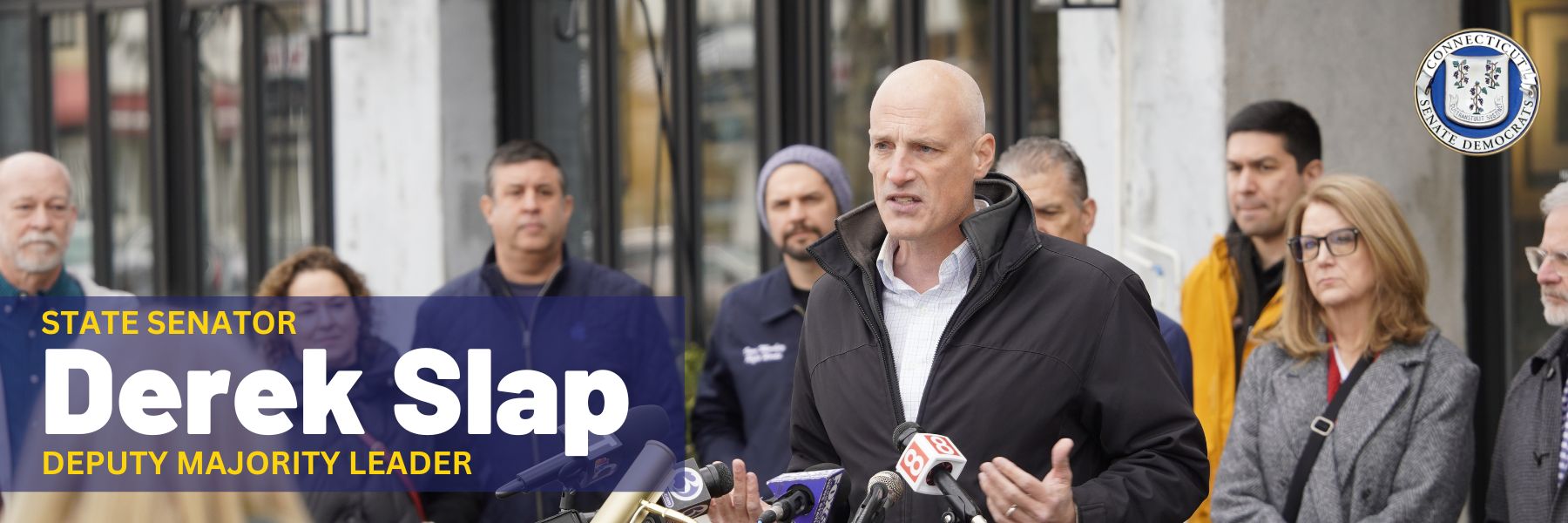
Mayor Shari Cantor and State Senator Derek Slap testify in front of the Finance, Revenue and Bonding Committee
From L to R: West Hartford Mayor Shari Cantor, State Senator Derek Slap, President & CEO of the Connecticut Restaurant & Hospitality Association Scott Dolch, Restauranteur Aubrey LaMonica and General Manager of Hotel Marcel Ben Webster
HARTFORD – Today, State Senator Derek Slap and West Hartford Mayor Shari Cantor testified in support of legislation that would provide significant municipal funding while supporting the restaurant, hospitality and tourism industries. Senate Bill 2 takes the 1% surcharge on the meals sales tax at restaurants and directs half to the municipality from which the revenue came from, and half to the Tourism Fund.
The legislation has broad support from the Connecticut Restaurant Association, municipal leaders, the hospitality and tourism industries and humanities advocates.
“This legislation takes an existing revenue stream and directs it to municipal aid and ties the success of the restaurant industry to our state’s investment into promoting tourism,” said Sen. Derek Slap. “This proposal would relieve pressure on local taxpayers and municipal budgets, encourage investment in the restaurant industry, and help Connecticut harness more tourism dollars. It really is a win-win and I’m grateful to Senate leadership for making this proposal a caucus priority.”
“Senate Bill 2 is a smart, structural fix that aligns revenue with responsibility,” said Mayor Shari Cantor. “By returning a portion of meals tax revenue to municipalities, we can support the small businesses that are the fabric of our communities, strengthen local economies, and generate long-term growth for the state.”
In FY 25 the 1% surcharge generated the following revenues in each of the towns in the 5th district:
Bloomfield: $353,695.51
Burlington: $76,547.483
Farmington: $819,469.66
West Hartford: $3,310,779.86
Half of these funds would go directly to the town from which it originated, and half would be directed to the Tourism Fund.
A draft decision published by the Public Utilities Regulatory Authority, the results of policies proposed and championed by Connecticut Democrats in recent years will help spur cuts of up to $30 per month to Connecticut ratepayers’ electric bills starting May 1, pending final approval.
Pending the final approval of the current draft decision, upcoming adjustments to the energy rates through the Public Benefits Charge will reduce the average United Illuminating customer’s bill by about $30 per month, while Eversource customers would see savings of about $26 per month.
While Connecticut utility bills are complex, this tentative rate adjustment will deliver significant relief to consumers struggling with high costs, largely due to the Public Benefits Charge delivering cost savings in the upcoming marketplace. Consumer savings are based on a baseline total of 700 kilowatt hours used per month.
An update to supply rates from July 2026 to January 2027, to be announced later this spring, is expected to drive these rates down further.
“This relief is the result of years of work by Connecticut lawmakers focused on preserving the strength of our energy grid with specific focus on improving affordability and reducing costs,” said State Senator Norm Needleman (D-Essex), Senate Chair of the Energy and Technology Committee. “It’s the result of a number of policies adopted in past sessions intended to help consumers struggling with high costs today. There’s still more work to do, of course, but this is strong progress that will provide meaningful reductions that will be notable on future bills.”
“We’re gratified that our efforts to improve the efficiency of energy programs has yielded real savings to ratepayers,” said State Representative Jonathan Steinberg (D-Westport), House Chair of the Energy and Technology Committee. “We will always champion a balanced long-term strategy which enshrines energy efficiency and renewable energy while striving to make energy more affordable. We can do both.”
Senate Bill 4/Public Act No. 25-173, with passage led by Sen. Needleman and Rep. Steinberg in 2025, created the bond funding mechanism that directly spurred much of these declines, as it shifted some hardship costs and other charges to state bonding. That bill also included a provision for storm securitization blocking what could have been a one-time $1.2 billion increase due to deferred storm repair and preparation costs from Eversource.
That bill was projected to cut nearly $800 million over several years in consumer electric charges when it was passed; these cuts are delivering on that promise.
Significant savings for consumers also come from changes to clean energy contracts. Shifts in the energy marketplace can make these contracts more or less expensive than more common fuel sources like natural gas and oil. In 2025, market pressures delivered high costs for common fuel sources, resulting in tens of millions in clean energy savings. United Illuminating and Eversource both collected excess funds under the contracts, and that money will be redistributed to ratepayers as of May 1 should the draft be approved.
Additionally, an expiring contract for a natural gas generator saves tens of millions in further costs for both Eversource and UI.
SENATOR ANWAR ISSUES STATEMENT IN RESPONSE TO MENTAL HEALTH CRISIS TRAGEDIES IN HARTFORD
Today, State Senator Saud Anwar (D-South Windsor), Senate Chair of the Public Health Committee, today released the following statement in response to multiple situations in recent weeks where Hartford police responded to reports of individuals in crisis who were then killed by police:
“These tragedies make it clear that our state still does not have the mental health resources necessary to support those in crisis. As the Senate Chair of the Public Health Committee, it’s again apparent our state needs to continue to invest in inpatient care and mental health support, especially in underserved communities. The deaths of Everard Walker and Steven Jones are evidence that we face a deep pressure that’s harming residents and worsening public health at once. We need to further our investments in mental health supports for all communities, all the better to stop prevent future tragedies.”
SEN. CABRERA JOINS BIBARTISAN VOTE TO APPROVE NEW LABOR UNION CONTRACT FOR 3,720 SERVICE & MAINTENANCE WORKERS
HARTFORD – State Senator Jorge Cabrera (D-Hamden) today joined a bipartisan and nearly unanimous vote that gave final approval to a new labor union contract that provides a 2.5% raise and other negotiated benefits to 3,720 maintenance workers, repair technicians, and cleaning and cooking staff working at state parks, hospitals, roads, and universities.
“These are the working-class jobs that keep Connecticut running. About a quarter of these folks – 800 people – are the lowest-paid state employees in Connecticut. Now they’ll have an easier time keeping their own homes and their families up and running,” Sen. Cabrera said. “I’m happy to vote to support middle-class union workers, and I’m happy to see some of my Republican Senate colleagues finally vote to support middle-class union workers, too.”
The new contract covers about 3,600 service/maintenance workers represented by CEUI/SEIU Local 511 and provides 2.5% annual raises and step increases for the first three years, with a wage re-opener for the fourth year, aiming to boost pay for the state’s lowest-paid employees. The contract also includes a $2,000 one-time payment for specific, eligible employees, such as newly added Protective Service Employees.