PUBLIC HEALTH COMMITTEE VOTES TO ADVANCE NEW RULES ALLOWING LEFTOVER FOOD DONATIONS FROM STORES TO THOSE IN NEED

Senator Anwar

FOR IMMEDIATE RELEASE
Contact: Joe O’Leary | Joe.OLeary@cga.ct.gov | 508-479-4969

March 9, 2026

PUBLIC HEALTH COMMITTEE VOTES TO ADVANCE NEW RULES ALLOWING LEFTOVER FOOD DONATIONS FROM STORES TO THOSE IN NEED

With the intention of making it more accessible to people experiencing food insecurity, the Public Health Committee today voted to advance legislation that would allow retail food establishments to donate extra edible food throughout the state.

When one in seven Connecticut residents experience food insecurity, this legislation is intended to reduce food waste and connect more residents in need with new solutions to food insecurity.

“When our state wastes more than 500,000 tons of food every year, and yet hundreds of thousands of residents can’t access the food they need, we have a real problem that seems to have an easy path to fix,” said State Senator Saud Anwar (D-South Windsor), Senate Chair of the Public Health Committee. “This bill seeks to reduce food waste in grocery stores and other foodservice businesses by connecting them with organizations fighting food insecurity. If it becomes law, we’d help kill two birds with one stone.”

Should it become law, Senate Bill 382, “An Act Concerning Edible Food Recovery,” would require the Departments of Consumer Protection and Public Health to develop and implement guidelines for retail food establishments to donate surplus amounts of edible food to distribution organizations statewide using a food recovery service by the end of 2026.

Following that, every year after would see retail establishments report their donations of edible surplus food to the Department of Consumer Protection, which would then be turned into a report to the legislature to show the effectiveness of the legislation.

The bill received strong support in public testimony, with the Connecticut League of Conservation Voters noting more than 30% of Connecticut’s waste stream consists of food. The bill “would help transform food recovery from waste reduction to a resource distribution system,” lowering costs and improving public nutrition at once, the organization said.

Yale Public Health graduate student Aron Basurto noted in testimony that food insecurity in Connecticut is now the worst in New England and this bill would utilize existing resources to feed struggling residents without spurring new food production.

BILL SUPPORTING OPIOID USE DISORDER TREATMENT CONNECTIONS PASSES PUBLIC HEALTH COMMITTEE

Senator Anwar

FOR IMMEDIATE RELEASE
Contact: Joe O’Leary | Joe.OLeary@cga.ct.gov | 508-479-4969

March 9, 2026
 

BILL SUPPORTING OPIOID USE DISORDER TREATMENT CONNECTIONS PASSES PUBLIC HEALTH COMMITTEE

Today, the Public Health Committee passed legislation out of committee seeking to connect individuals with opioid use disorder with additional strategies to improve their condition, advancing new alternative methods of care intended to help those suffering.

“We’re at a potential turning point in our battle against the opioid crisis in Connecticut, but we could lose the ground we’ve gained if we don’t continue advocating for new solutions,” said State Senator Saud Anwar (D-South Windsor), Senate Chair of the Public Health Committee. “Direct connections to opioid antagonists and treatments that can help bring people into recovery are huge advantages we can utilize – I’m encouraged by the prospect of better ensuring those in need have access to programs that can and will help them.”

Senate Bill 365, “An Act Establishing A Bridge Program For Emergency Treatment and Recovery Navigation For Persons With An Opioid Use Disorder,” would see hospitals begin to provide buprenorphine or methadone, chemicals used to treat opioid use disorder and partially reverse opioids’ effect, to patients who present to emergency departments with symptoms of opioid use disorder.

The bill would change measures to allow buprenorphine or methadone’s administration without requiring the patient’s admission to the hospital as long as the drug is medically given and the patient consents. The patient would also be offered access to opioid antagonists upon discharge from the ED and would be offered a referral to local treatment programs or community providers.

If a patient is treated with methadone, they must be referred to a methadone treatment program and provided with a letter with exact details on their most recent methadone receipt. The bill does not require provision of medication and provides flexibility for clinicians to exercise professional judgment.

This legislation received strong support in public comments from recovery experts and medical professionals. Rebecca Allen, director of recovery advocacy for the Connecticut Community for Addiction Recovery, testified that many people with substance use disorder visit emergency departments, but are discharged without receiving information about recovery care or services. CCAR’s use of a similar model in its efforts has helped thousands of people reconnect with care, which Allen said would provide further benefits when expanded to a larger audience.

The Hartford County Medical Association testified that nonfatal opioid overdoses and emergency department visits remain high in Connecticut and signal missed opportunities for intervention, even noting people who survive overdoses without connections to evidence-based treatment are more likely to overdose and die in the future. However, buprenorphine and treatment can reduce mortality and stabilize lives.

“SB 365 helps convert what too often is a missed opportunity into a moment of hope and connection to ongoing recovery supports,” the Association testified.


SENATE DEMOCRATS’ ICE OVERSIGHT BILL RECEIVES OVERWHELMING PUBLIC SUPPORT AT TODAY’S HEARING

SENATE DEMOCRATS’ ICE OVERSIGHT BILL RECEIVES OVERWHELMING PUBLIC SUPPORT AT TODAY’S HEARING

HARTFORD – By a margin of 32:1, Connecticut residents made their voices heard today at a public hearing in support of a Senate Democrats’ bill that will rein in the Constitutional abuses of federal Immigration and Customs Enforcement (ICE) agents and seek to hold them legally accountable for any crimes that they commit against Connecticut citizens.

Senate Bill 397, “AN ACT CONCERNING DEMOCRACY AND GOVERNMENT ACCOUNTABILITY,” received its public hearing today before the Judiciary Committee, and the public support for it in response to recent ICE agent murders of American citizens in Minneapoliswas broad and deep.

“Over the past year, we have seen sharp escalations in federal immigration enforcement across the country, often accompanied by a disregard for Constitutional rights and the rule of law,” said Peter Benner of West Hartford. “Senate Bill 397 is a necessary safeguard to protect all residents from federal overreach.”

“We must protect students and families from the lawlessness that we are witnessing across the country. All people deserve due process and freedom from fear of being rounded up,” testified Michele Greenburg of Greenwich. “Connecticut should be a model to establish protected areas and limit surveillance and access to immigrant communities. Connecticut needs to hold government officials accountable when they violate our constitutional rights. Please do the right thing!”

“For the safety of everyone in Connecticut, we need to ensure residents can safely and reliably pray, attend school and receive medical care. Law enforcement must protect and serve, not intimidate, injure, and murder,” testified Judith Murphy of Guilford. “Connecticut existed long before there was a federal government. Connecticut has no reason to forfeit power or authority to unaccountable federal agents.”

The written testimony can be accessed here.

Senate Bill 397 is a multi-pronged effort to contain ICE lawlessness and hold bad ICE agents accountable in ways they have not been held accountable to date. The bill:

  • Holds any federal, state, or municipal law enforcement officer liable for constitutional violations;
  • Allows Connecticut’s attorney general to bring action against any law enforcement officer violating constitutional rights;
  • Clarifies that the state inspector general has the authority to investigate any law enforcement officer who uses deadly force – including federal officers;
  • Guarantees that the state inspector general and the state Division of Criminal Justice have the right to access crime scenes and evidence related to a law enforcement officer’s use of deadly force – thereby circumventing any lack of investigation by the federal Department of Justice;
  • Creates a state database tracking ICE conduct, with various state agencies recording weekly data of immigration and enforcement actions in Connecticut;
  • Bans all law enforcement officers from wearing masks while interacting with the public;
  • Requires all law enforcement officers to clearly be identified with a badge and a name tag;
  • Requires the governor’s permission before any armed military force enters Connecticut for military purposes, and;
  • If a civil ICE arrest occurs in protected areas such as hospitals, schools, homeless shelters and churches – there must be a signed judicial warrant. If not, the victim can sue for damages in state court.

“We are living through an unprecedented time with the head of our Executive Branch having pushed our legal system to its breaking point. For the first time in American history, the Executive Branch has deployed ICE agents against American citizens and residents without regard for what were once considered inalienable, constitutional rights—the Fourth Amendment right against searches and seizures without a warrant, the First Amendment right to videotape law enforcement officers interacting with the public, the Eighth Amendment right to not endure cruel and unusual punishment, the Fifth Amendment right to due process, and the First Amendment right to peaceful protest,” testified Senate Majority leader Bob Duff (D-Norwalk), who is one of the main proponents of the bill. “For these reasons, I strongly support this critical bill which will ensure that all law enforcement officials—local, state, and federal—are equally held accountable for violating the rights of our citizens.”

.

Duff Leads Effort to Unlock Funding for Critical Police Mental Health Training

Senator Duff Leads Effort to Unlock Funding for Critical Police Mental Health Training

SB 298 Provides Enacting Language to Release $850,000 for Police Training on Interactions with People with Mental Illness and Disabilities

HARTFORD — Senate Majority Leader Bob Duff (D-Norwalk) today highlighted a key provision in Senate Bill 298, passed last week, that provides enacting language to release funding for new police training on interactions with people who have mental illness or physical disabilities.

The budget passed last year included $850,000 in FY 2026 and $2.05 million in FY 2027 to support the development of this training, but without the enacting language, the money couldn’t be spent. SB 298 fixes that. The Police Officers Standards and Training Council will now develop new curricula on crisis intervention and de-escalation, in collaboration with people on the autism spectrum, advocacy organizations, university experts, and healthcare professionals.

“Every day, police officers respond to people in mental health crises, and the outcomes of those encounters depend on training,” said Senator Duff. “When officers don’t recognize the behaviors associated with autism or mental illness, a situation that didn’t have to escalate does. This training saves lives. We funded it last year, and now we’re making sure the money actually gets spent. I would like to thank Norwalk resident Jeff Spahr and Norwalk Police Chief James Walsh for their help and support from the very beginning of this process.”

“The training provisions of this Bill represent a step in the right direction to provide the brave officers on the street with the tools they need to address an ever-increasing variety of situations that they are called upon to handle,” said Jeff Spahr, leader of Families for Autism Awareness Acceptance Information and Recognition. “This legislation is aimed at developing a training curriculum for police officers regarding their interactions with individuals with physical disabilities or cognitive impairments as well as mental disabilities, including autism spectrum disorder. These areas of training shall include, at a minimum, guidance on the nature of a variety of mental illnesses and mental or physical disability, how to identify persons who may be challenged by these conditions, and, most importantly, strategies and techniques for handling incidents involving members of these populations, including crisis intervention strategies and de-escalation techniques. It is also significant to note that the curriculum that is to be delivered is to be developed with the input of those individuals that this is designed to assist, institutions of higher education, health care professionals and advocacy organizations. Accordingly, this instruction shall be comprehensive and designed to address issues seen from both sides of any such interaction.”

Contact: Hugh McQuaid | Hugh.McQuaid@cga.ct.gov

Sen. Lesser Responds to Hospital CEOs Raises

Banner

Sen. Lesser Responds to Hospital CEOs Raises

Today, State Senator Matt Lesser, Senate Chair of the Human Services Committee, responded to reports that several Connecticut healthcare CEO’s saw million dollar raises, despite reporting significant financial pressures.
 
Yale New Haven Health CEO Christopher O’Connor will take home $6.2 million this year, a 22.1% increase compared to last year. The top 10 highest-paid executives at Yale received a 7.3% increase from last year.
 
Hartford HealthCare CEO Jeffrey Flaks received over $1 million raise, jumping from $5,064,491 in FY 2025 from $4,145,834 in FY 2024. 
 
“In the last year there have been massive federal cuts to health insurance and Medicaid that my colleagues and I in the state legislature have been working to fix. Simultaneously there are structural issues in the healthcare field that are leaving many hospitals in financially precarious situations. As we work to ensure affordable, quality healthcare for our residents without overburdening our healthcare partners, these salary hikes are raising eyebrows and seem bizarrely tone deaf.”

Looney & Duff Call on Lamont to Use Emergency Reserve for CT Dairy Farmers

Newsletter Header

Looney & Duff Call on Lamont to Use Emergency Reserve for CT Dairy Farmers

Senate Democratic Leaders Say Tariff-Driven Crisis Threatening Remaining Farms Is Precisely What State Reserve Was Built For

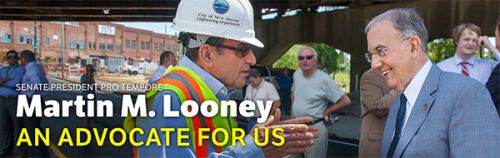
HARTFORD — Senate President Pro Tempore Martin M. Looney (D-New Haven) and Senate Majority Leader Bob Duff (D-Norwalk) today called on Governor Ned Lamont to deploy funding from the Emergency State Response Reserve to provide immediate relief to Connecticut’s dairy farmers, who face a compounding federal crisis that has pushed a structurally vulnerable industry to the edge of collapse.

Connecticut is home to fewer than 80 dairy farms which is more than a 60 percent decline over the last two decades. The Connecticut Dairy Farmer Coalition projects those remaining farms will collectively lose $20 million in 2026. That crisis has two distinct federal causes that have converged simultaneously.

The first is structural: federal milk marketing rules set minimum prices based on production conditions that favor large corporate farms over Connecticut’s family owned dairies. Connecticut farmers have, in some cases, been receiving the same price per hundredweight they received in 1995. While this is not a new problem, it has been exacerbated by Trump tariffs.

The second is also the direct consequence of federal tariff policy. Tariffs have driven up the cost of the basic inputs of dairy production like fertilizer, farm equipment, and agrochemicals while simultaneously triggering retaliatory trade actions from key export partners including Canada, Mexico, and China. Those countries have redirected dairy purchases to competitors in the European Union and New Zealand, reducing demand for American dairy exports and further suppressing the prices Connecticut farmers receive for their milk. The federal government has, in effect, squeezed Connecticut’s dairy farmers from both ends at once by raising what it costs to produce milk while reducing what farmers are paid for it.

“Connecticut’s dairy industry was already fighting to survive under a federal pricing system that was never designed with New England farms in mind,” said Senate President Pro Tempore Martin M. Looney. “Federal tariff policy has now made a difficult situation untenable. The Emergency State Response Reserve was created for exactly this kind of moment: when the actions of the Trump administration impose direct and demonstrable harm on Connecticut workers and industries. We urge the Governor to deploy it now, before more farms are lost permanently.”

“Every farm closure is irreversible,” said Senate Majority Leader Bob Duff. “Connecticut’s dairy farms generate $126 million in annual economic impact, support more than 800 jobs, and contribute nearly $17 million in state and local taxes each year. These are family operations, many of them multigenerational, that anchor rural communities across the state. Trump doesn’t care about the pain of our farmers, but we do. Time to put action behind those words.”

The Emergency State Response Reserve was established by the General Assembly in November 2025 with $500 million in state surplus funding to address the effects of federal cuts and policy changes on Connecticut residents. Senators Looney and Duff argue that the tariff-driven agricultural crisis falls squarely within the reserve’s intended purpose, and that the $20 million in immediate relief requested by the dairy coalition represents a targeted and necessary use of those funds.

FOR IMMEDIATE RELEASE

Contact: Kevin Coughlin | kevin.coughlin@cga.ct.gov | 203-710-0193
Looney & Duff Call on Lamont to Use Emergency Reserve for CT Dairy Farmers

Newsletter Header

Looney & Duff Call on Lamont to Use Emergency Reserve for CT Dairy Farmers

Senate Democratic Leaders Say Tariff-Driven Crisis Threatening Remaining Farms Is Precisely What State Reserve Was Built For

HARTFORD — Senate President Pro Tempore Martin M. Looney (D-New Haven) and Senate Majority Leader Bob Duff (D-Norwalk) today called on Governor Ned Lamont to deploy funding from the Emergency State Response Reserve to provide immediate relief to Connecticut’s dairy farmers, who face a compounding federal crisis that has pushed a structurally vulnerable industry to the edge of collapse.

Connecticut is home to fewer than 80 dairy farms which is more than a 60 percent decline over the last two decades. The Connecticut Dairy Farmer Coalition projects those remaining farms will collectively lose $20 million in 2026. That crisis has two distinct federal causes that have converged simultaneously.

The first is structural: federal milk marketing rules set minimum prices based on production conditions that favor large corporate farms over Connecticut’s family owned dairies. Connecticut farmers have, in some cases, been receiving the same price per hundredweight they received in 1995. While this is not a new problem, it has been exacerbated by Trump tariffs.

The second is also the direct consequence of federal tariff policy. Tariffs have driven up the cost of the basic inputs of dairy production like fertilizer, farm equipment, and agrochemicals while simultaneously triggering retaliatory trade actions from key export partners including Canada, Mexico, and China. Those countries have redirected dairy purchases to competitors in the European Union and New Zealand, reducing demand for American dairy exports and further suppressing the prices Connecticut farmers receive for their milk. The federal government has, in effect, squeezed Connecticut’s dairy farmers from both ends at once by raising what it costs to produce milk while reducing what farmers are paid for it.

“Connecticut’s dairy industry was already fighting to survive under a federal pricing system that was never designed with New England farms in mind,” said Senate President Pro Tempore Martin M. Looney. “Federal tariff policy has now made a difficult situation untenable. The Emergency State Response Reserve was created for exactly this kind of moment: when the actions of the Trump administration impose direct and demonstrable harm on Connecticut workers and industries. We urge the Governor to deploy it now, before more farms are lost permanently.”

“Every farm closure is irreversible,” said Senate Majority Leader Bob Duff. “Connecticut’s dairy farms generate $126 million in annual economic impact, support more than 800 jobs, and contribute nearly $17 million in state and local taxes each year. These are family operations, many of them multigenerational, that anchor rural communities across the state. Trump doesn’t care about the pain of our farmers, but we do. Time to put action behind those words.”

The Emergency State Response Reserve was established by the General Assembly in November 2025 with $500 million in state surplus funding to address the effects of federal cuts and policy changes on Connecticut residents. Senators Looney and Duff argue that the tariff-driven agricultural crisis falls squarely within the reserve’s intended purpose, and that the $20 million in immediate relief requested by the dairy coalition represents a targeted and necessary use of those funds.

FOR IMMEDIATE RELEASE

Contact: Kevin Coughlin | kevin.coughlin@cga.ct.gov | 203-710-0193
STATE SENATOR CECI MAHER ANNOUNCES SHE WILL NOT RUN FOR RE-ELECTION

STATE SENATOR CECI MAHER ANNOUNCES SHE WILL NOT RUN FOR RE-ELECTION

March 5, 2026

Today, State Senator Ceci Maher (D-Wilton) announced she will not run for re-election to the State Senate and will leave the legislature after completing her second term in office. Since her initial election in 2022, Sen. Maher serves as the Senate Chair of the Committee on Children, additionally serving as a tri-chair of the Transforming Children’s Behavioral Health Policy and Planning Committee (TCB), with a focus on serving and protecting the children of Connecticut.

“For the last four years, representing the 26th Senate District in Hartford has been a true honor,” said Sen. Maher. “I love this job, and I have the energy, will and interest to keep serving. However, as a member of the Baby Boomer generation, I'm aware of the shifting focuses and needs of our state and county. I believe my generation has a responsibility to mentor and support younger leaders. Now is the right time to step aside to let them take the reins and craft the legislation that will shape Connecticut for the coming decades. I care deeply about the future of our state, and I know new leaders will continue building upon the progress we've made.”

In her career at the State Senate, Sen. Maher is proud of many accomplishments, one of the biggest being the creation of the Early Childhood Education Endowment in 2025. The Endowment Fund is the first of its kind in the nation and overtime, with funding each year to grow capacity, it will significantly enhance childcare in Connecticut for both families and providers.

Families enrolled in Smart Start and earning under $100,000 per year will receive free childcare, while those earning above that threshold will have child care costs capped at 7% of income. It will also expand access to child care by creating more overall slots for enrollment across the state.

Through the Transforming Children’s Behavioral Health Committee, Sen. Maher played a significant role in helping the state assess its mental health resources and start to create opportunities for children and better connect those in need to the care they deserve.

Sen. Maher has further played a role in increasing protections and guidelines for protecting children through state departments, the creation of the Office of the Behavioral Health Advocate, improving educational quality and air quality in state public schools, protecting literary freedom in school and public libraries and delivering new and improved oversight of youth camps in Connecticut.

She has also supported significant advances in consumer protection, protections for victims of domestic violence, improvements to health insurance policies and access, bolstering of mental health care, defending against the opioid epidemic and expansions of worker's rights, among many other accomplishments.

Prior to serving in the State Senate, Sen. Maher worked as the executive director of Person to Person, growing it to support 25,000 people and more than 1 million meals per year and as interim director of Sandy Hook Promise, supporting gun violence prevention efforts. She holds a mater’s degree in social work from Columbia University, and before then, enjoyed success running a multi-million-dollar retail department.

With her current term expiring at the end of 2026, Sen. Maher will soon complete the fourth retirement of her careers. She looks forward to spending more time with her family, especially her new grandchildren, and is excited to have the opportunity to garden again.

FAMILY AFFORDABILITY PRIORITIES, INCLUDING CHILD TAX CREDIT AND FREE SCHOOL MEALS, PASS COMMITTEE ON CHILDREN

FAMILY AFFORDABILITY PRIORITIES, INCLUDING CHILD TAX CREDIT AND FREE SCHOOL MEALS, PASS COMMITTEE ON CHILDREN

March 5, 2026

Today, the Committee on Children voted to advance Senate Bill 6, legislation seeking to improve the well-being of children and address affordability concerns for working families. The bill, which includes a child tax credit worth up to $1,800 and universal free school meals for Connecticut schoolchildren, strives to provide relief to families amid high costs.

The bill passed by an 11-6 tally.

“We know costs keep rising for Connecticut residents, with tariffs increasing prices and, most recently, gas prices spiking by 10 cents per day,” said Sen. Maher. “Working families trying to make ends meet are struggling to deal with the pressure. This legislation seeks to provide them with direct and meaningful relief through the child tax credit, putting money back in their pockets, and universal school meals, which save families money throughout the school year while ensuring no child goes hungry while they’re trying to learn. In the interests of children’s safety, it also seeks to improve oversight in certain circumstances. With today’s passage, I’m excited to introduce it on the Senate floor this year.”

Senate Bill 6, “An Act Concerning Supports For Children And Families,” one of the priority bills for Senate Democrats this year, includes a number of provisions seeking to help working families.

The bill delivers a child tax credit worth up to $600 per child, covering up to three children for working and middle-class families, with a maximum value of $1,800 per household. Cutoffs for eligibility include $100,000 for single filers, $160,000 for heads of household and $200,000 for joint filers.

This legislation also includes a provision supporting free universal school meals for children, including breakfasts and lunches. Studies show universal school meals can boost student test scores by the equivalent of more than a month of in-classroom learning on top of the financial benefit the program would have. In addition, we know school meals boost attendance and school achievement.

When Massachusetts implemented universal school meals for all public school students, it delivered 21 million more meals in just its first year, with more than 60,000 students gaining access to free breakfast and lunch. Estimates indicate more than 160,000 Connecticut students would benefit from a free breakfast program alone.

The bill also contains provisions concerning children’s safety, preventing individuals convicted of child abuse or neglect from residing with a minor child. The Department of Children and Families would establish a notification system when those individuals are released from prison to a home where children live.

As well, in response to Connecticut having the lightest homeschooling regulations in New England, and following high-profile incidents including a girl who died and a boy who was held captive after they were removed from public school, as no one outside the families saw the child, the bill seeks to make improvements to those policies. It would allow the Department of Children and Families, if a child is withdrawn from public schools, to see if that child is currently under an order for protective supervision or services; if they are, DCF would place a note in their file.

The information of any child not involved with DCF would be destroyed by state officials, according to the bill, ensuring recordkeeping is focused solely on children already under protection.

Advisory: Sen. Slap, Rep. Haddad Join Task Force Leaders to Push for Statewide Scholarship Program

Banner

TODAY – Sen. Slap, Rep. Haddad Join Task Force Leaders to Push for Statewide Scholarship Program

Task Force Proposal Would Expand Promise Programs and Establish Statewide Scholar Success Grant

HARTFORD, CT — Today, State Senator Derek Slap, State Representative Gregg Haddad, members of the Promise Program Task Force, students, and advocates will hold a press conference in support of legislation designed to improve college affordability and strengthen Connecticut’s higher education and workforce pipeline.

Who:
State Senator Derek Slap, co-chair of the Higher Education and Employment Advancement Committee
State Representative Gregg Haddad, co-chair of the Higher Education and Employment Advancement Committee
State Representative Seth Bronko, Ranking Member of the Higher Education and Employment Advancement Committee
Richard Sugarman Co-Chair of the Promise Program Task Force
Dr. Kelvin Roldán, Co-Chair of the Promise Program Task Force
Rashaun Davis, Hartford Promise Scholar – UConn ‘22
Jocelin Quituizaca, Waterbury Promise Scholar – Current Student at CCSU
Dr. Sivan Hines, President of Hartford Promise
Jay Williams, President of Greater Hartford Gives Foundation
What: Press Conference on Legislation to Support Promise Programs
Where: Hearing Room 2D, Legislative Office Building
When: Today – Thursday, March 5 at 10 a.m.
 
The event will highlight Senate Bill 380, which implements the recommendations of the Promise Program Task Force, established during the 2025 legislative session to examine how Connecticut can expand access to higher education, improve student success, and better align education with the state’s long-term economic needs.
 
Currently, Connecticut underinvests significantly in student financial aid, spending approximately $245 per undergraduate student, compared to a national average of roughly $1,283 per student. At the same time, Connecticut exports nearly 40 percent of its college-bound students each year, with many enrolling in neighboring states.
 
Supporters say improving college affordability and building a coordinated statewide system of student support are critical steps toward keeping more students in Connecticut and preparing the state’s workforce for the future.
 
The Task Force—co-chaired by Dr. Kelvin Roldán and Richard Sugarman—recommends creating a coordinated Connecticut Ecosystem of Promise that expands local Promise programs and strengthens statewide college affordability efforts.
 
The proposal includes:

  • Establishing an Office of Postsecondary Success, a statewide leadership function responsible for coordinating Connecticut’s higher education ecosystem, aligning state policy, institutions, workforce partners, and community programs to improve college access, completion, and talent retention.
  • Providing direct state support for existing Promise programs while creating technical assistance to help additional communities develop new Promise initiatives.
  • Creating a Scholar Success Grant Program that provides need- and merit-based financial aid to Connecticut students, with award levels scaled by household income up to $110,000.
  • Pairing financial aid with proven student success supports, including high-touch advising, mentorship, financial literacy education, and career alignment.
Together, these initiatives aim to improve college affordability, expand student success, and position Connecticut to lead with a highly educated workforce in the years ahead.