
SENATOR MARX WELCOMES NEW STATE-FUNDED FOOD ASSISTANCE FOR CT RESIDENTS PUSHED OUT OF SNAP BY TRUMP, DC REPUBLICANS
There are more than 7,350 constituents receiving state SNAP benefits in Sen. Marx’s 20th State Senate District towns. Reports indicate at least 35,000 state residents have been disconnected from their benefits.
“SNAP benefits make a huge difference in families’ lives, and the rapid, confusing changes imposed last year are separating people from their benefits through no fault of their own,” Sen. Marx said. “Our state is investing and supporting them at a time when they need our support most, and we will continue reacting and protecting Connecticut against further federal cruelty.”
The $300 grocery benefits are being distributed as prepaid virtual grocery cards—not loaded onto existing EBT cards—through a partnership the Connecticut Department of Social Services (DSS) arranged with Connecticut’s network of community action agencies, with support provided by the Connecticut Association for Community Action (CAFCA). Eligible residents are expected to be able to begin accessing the benefits starting this week.
The benefits are being financed by $8.5 million in state funding that Governor Lamont approved several weeks ago using Connecticut’s Federal Cuts Response Fund. This recently created state fund was established by Governor Lamont and Democratic state legislators to ensure that Connecticut remains prepared to quickly respond to significant federal policy and funding changes affecting Connecticut residents, businesses, and communities.
“Connecticut will not stand by as the Trump administration uses hunger as a weapon against working families, veterans, and our most vulnerable populations,” Governor Lamont said. “These federal changes represent a cruel decision to pull food away from people who need it most. I am particularly troubled by the decision to eliminate the exemption for veterans who risked their lives for our country and are now having the rug pulled out from under them. Connecticut is providing this food assistance as a bridge to prevent people from going hungry as we help them navigate these federal changes. I am urging Congress to reverse these inhumane cuts so we can get groceries back on the tables of those who need it.”
Any individual in a household who lost SNAP eligibility due to the new federal changes—commonly referred to as ABAWD, or Able-Bodied Adults Without Dependents requirements—since December 1, 2025, and who is no longer receiving SNAP, qualifies for the benefit. The benefit is available per individual, not per household, and the amount is the same for every eligible recipient.
Connecticut residents who received a DSS notice stating they do not meet the ABAWD requirements and who are identified in that notice as having reached their three-month SNAP benefit limit should reach out to their local community action agency about how to request the benefit. Eligibility will be confirmed at the time of request.
The new grocery benefit functions like a prepaid Mastercard or Visa and can be used at any food retailer that accepts standard credit cards. It does not expire, and any unused balance remains on the card until spent. The benefit is intended for SNAP-eligible food purchases.
Duff & Maroney Call for Pause on New Flock Cameras as Privacy Concerns Mount
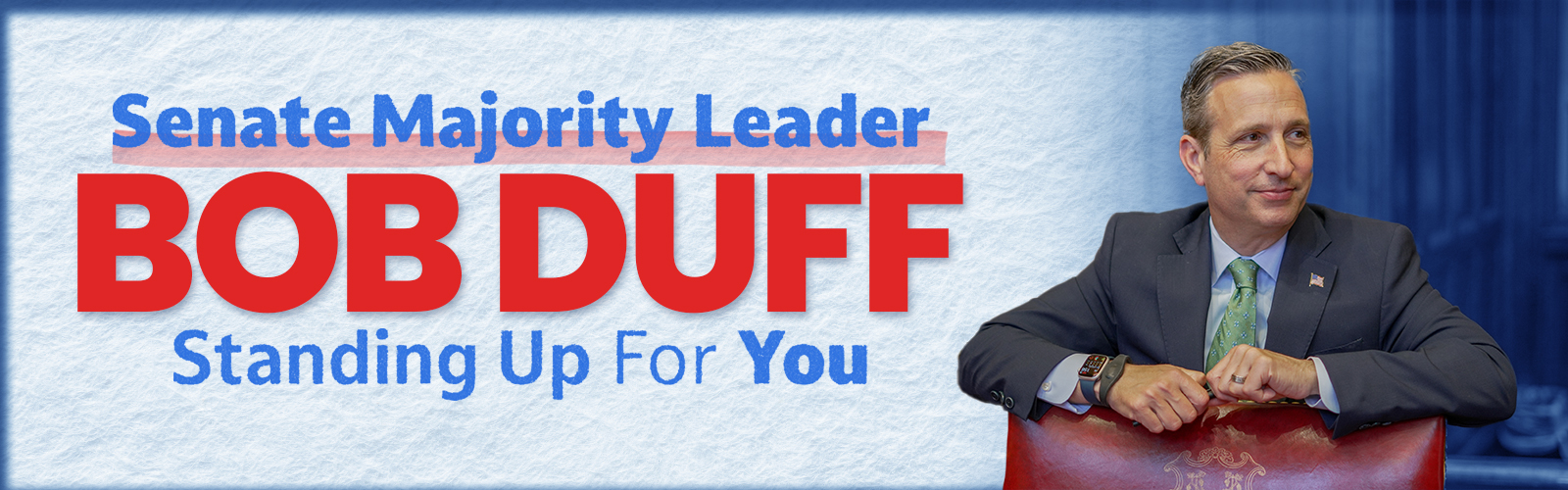
Duff & Maroney Call for Pause on New Flock Cameras as Privacy Concerns Mount
HARTFORD – Senate Majority Leader Bob Duff (D-Norwalk) and Senator James Maroney (D-Milford) today called for cities and towns to voluntarily pause the installation of all new automated license plate readers (ALPRs) and Flock cameras. The senators pledged to introduce legislation in 2027 to further strengthen privacy protections for residents and tighten how Connecticut regulates the technology.
Additionally, Senators Duff and Maroney will ask the Department of Emergency Services and Public Protection (DESPP) to survey every city and town in Connecticut for the number and location of Flock cameras within its borders, giving the state and the public a clear picture of how far the technology has spread.
The call comes as communities across the state raise questions about the reach of these cameras and the surveillance they enable. Connecticut has led the nation in reining in this technology. Under Public Act 26-14, signed by Governor Lamont this year, the state set new rules on ALPRs as part of a broader law on government accountability and federal immigration enforcement. The framework set a default retention period of 21 days, down from 30, restricted real-time and bulk access to the data unless tied to a documented, case-specific request, and barred the use of the technology to enforce immigration laws or to monitor people based on protected characteristics. It also limited data sharing to neighboring states that agree not to use the information for immigration, reproductive care, or gender-affirming health care investigations.
“Communities across Connecticut are taking a hard look at these cameras and deciding they don’t want them, and they’re right to ask the question,” said Senate Majority Leader Bob Duff (D-Norwalk). “Flock cameras track the movements of ordinary people going about their lives, and that kind of surveillance carries real dangers. Town after town is saying they don’t want a permanent record of every car that drives down their streets. We’re calling for a pause because residents deserve real answers about who is watching them and why before a single new camera goes up.”
“This is invasive technology, and people are right to be concerned about it,” said Senator James Maroney (D-Milford). “We’ve led the country in protecting people’s privacy, and we’re not going to stop now. When we see towns rejecting these cameras and questioning whether they need this kind of surveillance at all, that tells us the public is ahead of the law. We intend to keep it that way by strengthening these protections in 2027.”
The data collected from DESPP will directly inform that legislative work, giving Duff and Maroney a full picture of where these cameras are and how they’re being used as they write the next round of protections.
SEN. NEEDLEMAN WELCOMES NEW STATE-FUNDED FOOD ASSISTANCE FOR CT RESIDENTS WHO WERE PUSHED OUT OF SNAP BY TRUMP AND DC REPUBLICANS


SEN. NEEDLEMAN WELCOMES NEW STATE-FUNDED FOOD ASSISTANCE FOR CT RESIDENTS WHO WERE PUSHED OUT OF SNAP BY TRUMP AND DC REPUBLICANS
FOR IMMEDIATE RELEASE
Contact: Joe O’Leary | Joe.OLeary@cga.ct.gov | 508-479-4969
August 4, 2026
State Senator Norm Needleman (D-Essex) welcomed an announcement by Governor Ned Lamont that beginning August 4, new one-time grocery benefits in the amount of $300 each are being distributed to low-income Connecticut residents who have been pushed out of the Supplemental Nutrition Assistance Program (SNAP) due to new changes implemented by the Trump regime in the Republican federal budget.
There are more than 2,770 constituents receiving state SNAP benefits in Sen. Needleman’s 33rd State Senate District towns. Reports indicate at least 35,000 state residents have been disconnected from their benefits in the last year, nearly 10% of all state recipients. Although not every single SNAP recipient in the district will receive the new benefit card, a number will.
“These changes were confusing and restrictive when they were first announced, and we know as many as 35,000 state residents have lost SNAP access in the last year through no fault of their own,” said Sen. Needleman. “Connecticut Democrats are committed to supporting and bolstering everyone in our communities, especially those struggling.”
The $300 grocery benefits are being distributed as prepaid virtual grocery cards—not loaded onto existing EBT cards—through a partnership the Connecticut Department of Social Services (DSS) arranged with Connecticut’s network of community action agencies, with support provided by the Connecticut Association for Community Action (CAFCA).
Eligible residents are expected to be able to begin accessing the benefits starting today.
The benefits are being financed by $8.5 million in state funding that Governor Lamont approved several weeks ago using Connecticut’s Federal Cuts Response Fund. This recently created state fund was established by Governor Lamont and Democratic state legislators to ensure that Connecticut remains prepared to quickly respond to significant federal policy and funding changes affecting Connecticut residents, businesses, and communities.
“Connecticut will not stand by as the Trump administration uses hunger as a weapon against working families, veterans, and our most vulnerable populations,” Governor Lamont said. “These federal changes represent a cruel decision to pull food away from people who need it most. I am particularly troubled by the decision to eliminate the exemption for veterans who risked their lives for our country and are now having the rug pulled out from under them. Connecticut is providing this food assistance as a bridge to prevent people from going hungry as we help them navigate these federal changes. I am urging Congress to reverse these inhumane cuts so we can get groceries back on the tables of those who need it.”
Any individual in a household who lost SNAP eligibility due to the new federal changes—commonly referred to as ABAWD, or Able-Bodied Adults Without Dependents requirements—since December 1, 2025, and who is no longer receiving SNAP, qualifies for the benefit. The benefit is available per individual, not per household, and the amount is the same for every eligible recipient.
Connecticut residents who received a DSS notice stating they do not meet the ABAWD requirements and who are identified in that notice as having reached their three-month SNAP benefit limit should reach out to their local community action agency about how to request the benefit. Eligibility will be confirmed at the time of request.
The new grocery benefit functions like a prepaid Mastercard or Visa and can be used at any food retailer that accepts standard credit cards. It does not expire, and any unused balance remains on the card until spent. The benefit is intended for SNAP-eligible food purchases.
SEN. CABRERA WELCOMES NEW STATE-FUNDED FOOD ASSITANCE FOR CT RESIDENTS WHO WERE PUSHED OUT OF THE SNAP PROGRAM BY DONALD TRUMP AND D.C. REPUBLICANS

SEN. CABRERA WELCOMES NEW STATE-FUNDED FOOD ASSISTANCE FOR CT RESIDENTS WHO WERE PUSHED OUT OF THE SNAP PROGRAM BY DONALD TRUMP AND D.C. REPUBLICANS
August 4, 2026
State Senator Jorge Cabrera (D-Hamden) today welcomed an announcement by Governor Ned Lamont that beginning today, new one-time grocery benefits in the amount of $300 each are being distributed to low-income Connecticut residents who have been pushed out of the Supplemental Nutrition Assistance Program (SNAP) due new changes implemented by the Trump regime in the Republican federal budget.
There are nearly 13,000 constituents receiving state SNAP benefits in Sen. Cabrera’s 17th State Senate District towns of Ansonia, Beacon Falls, Bethany, Derby, Hamden, Naugatuck, and Woodbridge, or about one in every eight residents. Although not every single SNAP recipient in the district will receive the new benefit card, many will.
“What Donald Trump and Washington Republicans are doing in the name of tax cuts for rich is unconscionable. Fortunately, Democrats in Connecticut are in charge of our state and are doing everything necessary to protect our residents from Trump’s cruel and careless budget cuts,” Sen. Cabrera said. “Today’s action is just the latest in a long line of investments Democrats have made in our citizens since the Republican budget landed on us with both feet.”
The $300 grocery benefits are being distributed as prepaid virtual grocery cards—not loaded onto existing EBT cards—through a partnership the Connecticut Department of Social Services (DSS) arranged with Connecticut’s network of community action agencies, with support provided by the Connecticut Association for Community Action (CAFCA). Eligible residents are expected to be able to begin accessing the benefits starting today.
The benefits are being financed by $8.5 million in state funding that Governor Lamont approved several weeks ago using Connecticut’s Federal Cuts Response Fund. This recently created state fund was established by Governor Lamont and Democratic state legislators to ensure that Connecticut remains prepared to quickly respond to significant federal policy and funding changes affecting Connecticut residents, businesses, and communities.
“Connecticut will not stand by as the Trump administration uses hunger as a weapon against working families, veterans, and our most vulnerable populations,” Governor Lamont said. “These federal changes represent a cruel decision to pull food away from people who need it most. I am particularly troubled by the decision to eliminate the exemption for veterans who risked their lives for our country and are now having the rug pulled out from under them. Connecticut is providing this food assistance as a bridge to prevent people from going hungry as we help them navigate these federal changes. I am urging Congress to reverse these inhumane cuts so we can get groceries back on the tables of those who need it.”
Who qualifies for the new grocery benefit?
Any individual in a household who lost SNAP eligibility due to the new federal changes—commonly referred to as ABAWD, or Able-Bodied Adults Without Dependents requirements—since December 1, 2025, and who is no longer receiving SNAP, qualifies for the benefit. The benefit is available per individual, not per household, and the amount is the same for every eligible recipient.
Connecticut residents who received a DSS notice stating they do not meet the ABAWD requirements and who are identified in that notice as having reached their three-month SNAP benefit limit should reach out to their local community action agency about how to request the benefit. Eligibility will be confirmed at the time of request.
The new grocery benefit functions like a prepaid Mastercard or Visa and can be used at any food retailer that accepts standard credit cards. It does not expire, and any unused balance remains on the card until spent. The benefit is intended for SNAP-eligible food purchases.
The $8.5 million in state funds used to support these new grocery benefits are just part of a broader $33 million Democratic investment in state-funded food assistance that Connecticut has released from its Federal Cuts Response Fund over the last several months. This includes $24.55 million used to expand capacity at food banks, pantries, and the Local Food Purchase Assistance Cooperative Agreement Program. An additional $4.1 million from the fund is supporting outreach and community health worker capacity for community action agencies to help residents navigate SNAP and Medicaid changes.
Contact: Lawrence Cook / lawrence.cook@cga.ct.gov / 860-604-9279
Sen. Gaston Welcomes New State-Funded Food Assistance

Senator Gaston Welcomes New State-Funded Food Assistance
State Senator Herron Keyon Gaston (D-Bridgeport) welcomed Governor Ned Lamont’s announcement that, starting today, Connecticut is distributing one-time $300 grocery benefits to low-income residents cut from SNAP under new changes in the Republican federal budget.
In Senator Gaston’s district, there are around 17,294 constituents receiving state SNAP benefits. Although not every single SNAP recipient in the district will receive the new benefit card, many will.
“No family in Bridgeport should have to choose between paying rent and putting food on the table because of a budget decision made in Washington,” Sen. Gaston said. “I’m grateful that Governor Lamont and our state agencies moved quickly to get this support into the hands of the people who need it most. This isn’t a long-term fix, but it’s a lifeline for thousands of families in my district who were counting on SNAP and got caught in the crossfire of federal cuts.”
The $300 grocery benefits are being distributed as prepaid virtual grocery cards—not loaded onto existing EBT cards—through a partnership the Connecticut Department of Social Services (DSS) arranged with Connecticut’s network of community action agencies, with support provided by the Connecticut Association for Community Action (CAFCA). Eligible residents are expected to be able to begin accessing the benefits starting today.

SENATOR ANWAR RELEASES STATEMENT AS TRUMP ADMINISTRATION ENDS MEDICARE DRUG SUBSIDY PROGRAM


FOR IMMEDIATE RELEASE
Contact: Joe O’Leary | Joe.OLeary@cga.ct.gov | 508-479-4969
July 31, 2026
State Senator Saud Anwar (D-South Windsor) released the following statement today in response to the announcement that the Centers for Medicare and Medicaid Services plans to end a Medicare prescription drug subsidy program at the end of 2026 that reduced consumer prescription drug costs for millions in the last two years. As many as 25 million Americans are enrolled in Medicare Part D plans, in which the subsidy program reduced the average monthly premium by $16 in 2026.
“This decision to end the Medicare Part D premium stabilization program is a step in the wrong direction. It places millions of seniors and people with disabilities at risk of higher prescription drug costs and greater financial security. At a time when families are already struggling with the cost of living, this decision makes essential healthcare less affordable for those who need it most.
As a physician, I have cared for far too many patients who skip medications, cut pills in half or delay treatment because they cannot afford their prescriptions. Policies that increase financial barriers do not save money. They lead to more illness, more emergency room visits, more hospitalizations and ultimately higher healthcare costs.
I believe we should be strengthening protections that make medications affordable, not dismantling them. Our seniors deserve stability, dignity and the peace of mind that they will never have to choose between filling a prescription, buying groceries or paying their utility bills. We must put patients before politics and protect access to lifesaving medications.”
Senator Slap Welcomes $1.615 Million Investment Supporting West Hartford, Burlington Bridge Replacements
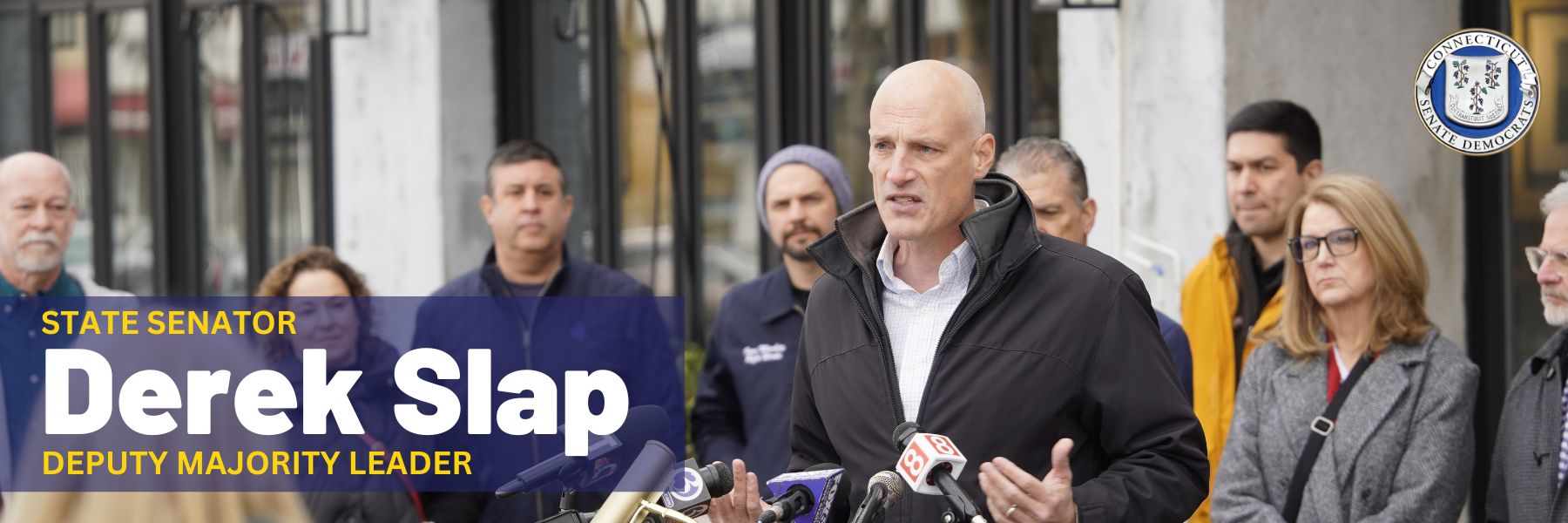
Senator Slap Welcomes $1.615 Million Investment Supporting West Hartford, Burlington Bridge Replacements
“The safety of our local infrastructure is vital for our communities, but its cost can be challenging for municipalities to meet, making this state support hugely beneficial,” said Sen. Slap. “I’m grateful to Governor Lamont and state leaders for their commitment to our state and our communities.”
In West Hartford, the state will invest $978,075 to replace the bridge carrying Old Brook Road over Mountain Farms Brook.
In Burlington, the state’s commitment of $636,750 will support the replacement of the bridge carrying Alto Road over a local brook.
Connecticut legislators established the State Local Bridge Program in 1984, supporting town and cities with the costs of upgrading and maintaining 4,200 bridges statewide. In the last decade, Connecticut made a total of approximately $180 million in grant investments supporting bridges.
Senator Maher Welcomes $1.143 Million Investment Supporting New Canaan Bridge Replacement
Senator Maher Welcomes $1.143 Million Investment Supporting New Canaan Bridge Replacement

FOR IMMEDIATE RELEASE
July 29, 2026
Today, State Senator Ceci Maher (D-Wilton) welcomed the state’s announced commitment of $1,142,750 through the Department of Transportation’s State Local Bridge Program. The funds in question will help with replacement efforts for a New Canaan bridge.
“Our local infrastructure gets us where we need to go, but it needs to be properly maintained to keep our communities safe,” said Sen. Maher. “I’m grateful for the state’s investment in New Canaan and thank Governor Lamont and state leaders for their continued support.”
In New Canaan, the funds will support the replacement of the bridge carrying Lakeview Avenue over an unnamed stream.
Connecticut legislators established the State Local Bridge Program in 1984, supporting town and cities with the costs of upgrading and maintaining 4,200 bridges statewide. In the last decade, Connecticut made a total of approximately $180 million in grant investments supporting bridges.
Senator Miller Welcomes $3.73 Million to Rehabilitate Stamford’s West Broad Street Bridge


Senator Miller Welcomes $3.73 Million to Rehabilitate Stamford’s West Broad Street Bridge
Senator Pat Billie Miller (D-Stamford) welcomed $3,731,250 in state funding to help Stamford rehabilitate the West Broad Street bridge over the Rippowam River, easing the cost of the project for local taxpayers.
The funding, awarded through the Connecticut Department of Transportation’s State Local Bridge Program, will support the rehabilitation of the West Broad Street bridge, which carries traffic over the Rippowam River in Stamford. The bridge was built in 1954 and reconstructed in 1990, with repairs made to a section of the structure in 2022.
“This bridge is a vital transportation link for our community and I regularly travel over it myself, personally witnessing the significant amount of both vehicular and pedestrian traffic it accommodates,” Senator Miller said. “Keeping it in good repair is essential to protecting everyone who uses it. State funding like this offsets what would otherwise fall more heavily on Stamford taxpayers to maintain it. I’m grateful the Department of Transportation approved this funding, and pleased to see the state continuing to invest in Stamford’s infrastructure.”
The funding is part of a larger, $16.8 million round of the State Local Bridge Program, which is supporting the reconstruction of 13 bridges across 11 Connecticut towns and cities. The program operates as a cost-matching grant, covering 50% of project costs, with municipalities administering the design and construction while CTDOT oversees project milestones.
“Whether it’s kids going to school, people heading to work, or traveling to visit friends and family, every community depends on bridges that are safe and built to last,” Governor Ned Lamont said. “This grant program provides significant relief to our towns and cities, helping them tackle costly infrastructure projects they couldn’t take on alone.”
Senator Honig Welcomes $1.2 Million in State Funding for Harwinton Bridge Projects

Senator Honig Welcomes $1.2 Million in State Funding for Harwinton Bridge Projects
Senator Paul Honig (D-Harwinton) today welcomed more than $1.2 million in state funding to help Harwinton replace two aging bridges, easing the cost of the projects for local taxpayers.
The funding, awarded through the CT Department of Transportation’s State Local Bridge Program, includes $600,750 for the full replacement of the Gale Road Bridge over a stream and $600,750 for the full replacement of the Birch Hill Road Bridge over Pickett Brook, for a combined state award of $1,201,500.
“Gale Road and Birch Hill Road bridges both needed replacement, and this $1.2 million in state funding means Harwinton taxpayers aren’t left to cover that cost alone,” Senator Honig said. “A bridge replacement is expensive for a town this size, and state funding is what makes projects like these possible without raising local taxes. I’m grateful to the Department of Transportation for recognizing Harwinton’s need, and for making sure our bridges stay safe for those of us who rely on them every day.”
The funding is part of a larger, $16.8 million round of the State Local Bridge Program, which is supporting the reconstruction of 13 bridges across 11 Connecticut towns and cities. The program operates as a cost-matching grant, covering 50% of project costs, with municipalities administering the design and construction while CTDOT oversees project milestones.
“Whether it’s kids going to school, people heading to work, or traveling to visit friends and family, every community depends on bridges that are safe and built to last,” Governor Ned Lamont said. “This grant program provides significant relief to our towns and cities, helping them tackle costly infrastructure projects they couldn’t take on alone.”
FOR IMMEDIATE RELEASE
Contact: Hugh McQuaid | hugh.mcquaid@cga.ct.gov |