|
||||
|
Author: Devin James
Legislative Democrats Earn Top Marks in 2024 Environmental Scorecard

Legislative Democrats Earn Top Marks in 2024 Environmental Scorecard
By Hugh McQuaid
October 25 @ 12:45 pm

Senate Democrats earned an average of 97% in an annual environmental scorecard, released Tuesday by the Connecticut League of Conservation Voters, which evaluated state legislators based on their votes related to more than a dozen environmental policies.
All told, 18 Senate Democrats received perfect scores of 100% in CTLCV’s 32-page scorecard, which assigned every Connecticut legislator an numerical grade based on their support or opposition to proposals to reduce pollution, promote climate resilience, or preserve natural resources.
This year’s scorecard evaluated votes on more than a dozen environmental bills including policies to prohibit the use of toxic PFAS chemicals, finance energy efficiency projects in public schools, and protect water sources from herbicides.
In addition to awarding 18 perfect scores to Democratic senators, CTLCV specifically recognized Sens. Saud Anwar, D-South Windsor, Christine Cohen, D-Guilford, and Ceci Maher, D-Wilton, as Environmental Champions for their “unwavering commitment to environmental advocacy.”
“We extend our gratitude to these leaders for their dedication to the protection of our land, air, water, wildlife, and climate,” the environmental group said of the Environmental Champions.
The senators said they were honored to receive the distinction.
“This year, my colleagues and I worked to prevent pollution from the forever-chemical PFAS, support increased access to solar and renewable energies statewide and take action against invasive plants, among other actions,” Anwar said in a statement. “The CTLCV’s focus on voting rights is a further reminder of the way our world is interconnected, reinforcing its overall mission.”
The environmental advocacy group awarded Democrats in the House an average score of 97%, mirroring their Senate colleagues.
Meanwhile, Republican legislators in both chambers generally earned failing grades as a result of their voting records. Members of the Senate Republican Caucus earned an average score of 50%, while members of the House Republican Caucus scored an average of 37%, according to the CTLCV scorecard.
The Senate’s lowest score on environmental policies went to Sen. Ryan Fazio, a Greenwich Republican, whose voting record earned him a 25%. The lowest score in the House went to Rep. John Piscopo, R-Thomaston, who scored 23% on his environmental votes.
Senator Gaston Receives a Perfect Grade on 2024 Environmental Scorecard

Senator Gaston Receives a Perfect Grade on 2024 Environmental Scorecard
This week, State Senator Herron Keyon Gaston (D-Bridgeport), received a perfect score of 100% from the Connecticut League of Conservation Voters (CTLCV) based on his support of pro-environment legislation during the 2024 legislative session.
The CTLCV’s annual scorecard, released Tuesday, assigned Connecticut legislators numerical grades based on their support or opposition to proposals to reduce pollution, promote climate resilience, or preserve natural resources. This year’s scorecard evaluated votes on more than a dozen environmental bills to generate the overall score.
“Supporting our environment means we are ensuring the health of today, tomorrow, and future generations,” said Sen. Gaston. “I am delighted to receive this recognition for my efforts during this past legislative session for prioritizing efforts to protect energy efficiency, prohibit the use of toxic PFAS chemicals and work to update Connecticut’s energy efficiency standards for consumer products.”
Some new policies highlighted in this year’s scorecard included:
-SB 292, PFAS Ban: This law prohibits the use of toxic PFAS chemicals in a wide range of consumer products such as textiles, carpets and children’s items.
-HB 5052, Supporting Solar Energy in Schools: This policy, adopted through state bonding, creates financing for solar energy and energy efficiency projects in public schools, reducing both energy costs and carbon emissions.
-HB 5219, Herbicides Along Railroads: This new law requires railroads to adhere to standards on the application of herbicides in railroad rights-of-way to protect water sources and wetlands.
-SB 301, Energy Efficiency Standards: This policy, adopted through state bonding, updates Connecticut’s energy efficiency standards for consumer products and provides grants for retrofitting projects to reduce energy use and costs.
Senator Gaston was one of 18 senators to receive a perfect score in this year’s environmental report card.
SENATOR LESSER EARNS 100% SCORE ON 2024 ENVIRONMENTAL REPORT CARD
 less
less
Thursday, October 24, 2024
SENATOR LESSER EARNS 100% SCORE ON 2024 ENVIRONMENTAL REPORT CARD
MIDDLETOWN – State Senator Matt Lesser (D-Middletown) has received a perfect score of 100% from the Connecticut League of Conservation Voters (CTLCV) based on his support of pro-environment legislation during the recently concluded 2024 legislative session.
The CTLCV’s annual scorecard, released Tuesday, assigned Connecticut legislators numerical grades based on their support or opposition to proposals to reduce pollution, promote climate resilience, or preserve natural resources. This year’s scorecard evaluated votes on more than a dozen environmental bills to generate the overall score.
“Every day we see the challenges facing the environment that we live in, whether it be massively destructive rainstorms, brush fires, the hottest summers on record, a lack of snow, chemicals in our clothing, chemicals on our grass – it all affects our quality of life here in Connecticut. I’m proud to stand up and cast votes to protect and improve the environment for the families who live and work here and who call Connecticut their home,” Sen. Lesser said.
Sen. Lesser was one of just 18 senators — all Democrats — to receive a perfect score on this year’s environmental report card. Democratic state senators scored an average grade of 97% (an A+) for their votes to protect Connecticut’s environment, while Republican senators scored an average of 50% (an F), according to the CTLCV.
Some new policies highlighted in this year’s scorecard include:
-SB 292, PFAS Ban: This law prohibits the use of toxic PFAS chemicals in a wide range of consumer products such as textiles, carpets, and children’s items.
-HB 5052, Supporting Solar Energy in Schools: This policy, adopted through state bonding, creates financing for solar energy and energy efficiency projects in public schools, reducing both energy costs and carbon emissions.
-HB 5219, Herbicides Along Railroads: This new law requires railroads to adhere to standards on the application of herbicides in railroad rights-of-way to protect water sources and wetlands.
-SB 301, Energy Efficiency Standards: This policy, adopted through state bonding, updates Connecticut’s energy efficiency standards for consumer products and provides grants for retrofitting projects to reduce energy use and costs.
SENATOR OSTEN EARNS 100% SCORE ON 2024 ENVIRONMENTAL REPORT CARD

Thursday, October 24, 2024
SENATOR OSTEN EARNS 100% SCORE ON 2024 ENVIRONMENTAL REPORT CARD
State Senator Cathy Osten (D-Norwich) has received a perfect score of 100% from the Connecticut League of Conservation Voters (CTLCV) based on her support of pro-environment legislation during the recently concluded 2024 legislative session.
The CTLCV’s annual scorecard, released Tuesday, assigned Connecticut legislators numerical grades based on their support or opposition to proposals to reduce pollution, promote climate resilience, or preserve natural resources. This year’s scorecard evaluated votes on more than a dozen environmental bills to generate the overall score.
“Out here in eastern Connecticut, the environment is our livelihood. There was just a report out this week that agriculture employs 31,000 people and generates $4 billion in revenue every year to the state. And agriculture relies on a stable, clean environment to be successful,” Sen. Osten said. “I’m going to keep voting for the interests of the people of Eastern Connecticut, and those interests include farmers and parents with children who want a clean and safe environment to earn a living and raise a family.”
Sen. Osten was one of just 18 senators — all Democrats — to receive a perfect score on this year’s environmental report card.
Some new policies highlighted in this year’s scorecard include:
-SB 292, PFAS Ban: This law prohibits the use of toxic PFAS chemicals in a wide range of consumer products such as textiles, carpets, and children’s items.
-HB 5052, Supporting Solar Energy in Schools: This policy, adopted through state bonding, creates financing for solar energy and energy efficiency projects in public schools, reducing both energy costs and carbon emissions.
-HB 5219, Herbicides Along Railroads: This new law requires railroads to adhere to standards on the application of herbicides in railroad rights-of-way to protect water sources and wetlands.
-SB 301, Energy Efficiency Standards: This policy, adopted through state bonding, updates Connecticut’s energy efficiency standards for consumer products and provides grants for retrofitting projects to reduce energy use and costs.
Connecticut Regulators Deny Verizon Request for Deregulation
Connecticut Regulators Deny Verizon Request for Deregulation
By Hugh McQuaid
October 24 @ 9:30 am

Verizon will remain subject to Connecticut regulations and consumer protections under a ruling issued last week by the Public Utilities Regulatory Authority, which denied the company’s request to reclassify its remaining services in the state.
In its final decision on Oct. 18, PURA refused to approve a request by the New York-based company, which would have changed the classification of its services to “competitive.” Among the reasons for denying the request, the regulators cited the effect such a reclassification would have on the application of state regulations.
“[T]he Authority assigns considerable weight to the impact reclassification would have on the public interest, particularly how the loss of certain consumer protections may impact customers,” the agency’s three commissioners wrote.
The decision mirrored points raised in a September letter to PURA by Senate President Martin Looney and Majority Leader Bob Duff, who detailed concerns that Verizon’s deregulation could deprive customers of key consumer protections. The senators also raised questions related to the company’s obligations under its ownership interest in utility poles and its proposed purchase of Frontier.
PURA cited the senators’ letter in its denial of Verizon’s request.
Both senators applauded the agency’s move to block the deregulation when PURA issued a proposed decision several weeks ago. The potential risk of reclassification came as Verizon sought to acquire Frontier, the senators noted.
“This decision will ensure continued oversight of that acquisition and we urge PURA to thoroughly examine whether the purchase will genuinely serve the public’s best interests, or whether it will simply benefit the companies and their investors,” Looney said. “Deregulation almost always entails diminished accountability and compromised safeguards for consumers.”
Meanwhile, Duff argued that companies with an ownership interest in utility poles had an obligation to Connecticut consumers and needed to be subject to continued regulation.
“Given that reports already suggest that Verizon is failing to meet its obligations to replace double poles, this is no time to relieve the company of other critical safeguards involving public safety and outage response in the aftermath of storms,” Duff said.
PURA’s final decision denying the request received praise from Connecticut Consumer Counsel Clair E. Coleman, who told CTNewsJunkie that the decision would benefit consumers.
“Verizon, as a public service company, must adhere to certain standards and consumer protection regulations while utilizing Connecticut’s public infrastructure,” Coleman said. “PURA correctly ruled that reclassifying Verizon’s services would have jeopardized protections, particularly our state’s most vulnerable and elderly residents.”
SENATOR KUSHNER EARNS 100% SCORE ON 2024 ENVIRONMENTAL REPORT CARD

Wednesday, October 23, 2024
SENATOR KUSHNER EARNS 100% SCORE ON 2024 ENVIRONMENTAL REPORT CARD
DANBURY – State Senator Julie Kushner (D-Danbury) has received a perfect score of 100% from the Connecticut League of Conservation Voters (CTLCV) based on her support of pro-environment legislation during the recently concluded 2024 legislative session.
The CTLCV’s annual scorecard, released Tuesday, assigned Connecticut legislators numerical grades based on their support or opposition to proposals to reduce pollution, promote climate resilience, or preserve natural resources. This year’s scorecard evaluated votes on more than a dozen environmental bills to generate the overall score.
“Rainstorms and wildfires, hurricanes and heatwaves, rising insurance and building costs are all a reminder of the role that the environment plays in our daily lives. That’s why I am committed to supporting smart, pro-environment policies in Connecticut – so we can protect what we have now and preserve it for our children and grandchildren to enjoy in the decades to come,” Sen. Kushner said.
Sen. Kushner was one of just 18 senators — all of them Democrats — to receive a perfect score on this year’s environmental report card. Democratic state senators scored an average grade of 97% (an A+) for their votes to protect Connecticut’s environment, while Republican senators scored an average of 50% (an F), according to the CTLCV
Some new policies highlighted in this year’s scorecard include:
-SB 292, PFAS Ban: This law prohibits the use of toxic PFAS chemicals in a wide range of consumer products such as textiles, carpets, and children’s items.
-HB 5052, Supporting Solar Energy in Schools: This policy, adopted through state bonding, creates financing for solar energy and energy efficiency projects in public schools, reducing both energy costs and carbon emissions.
-HB 5219, Herbicides Along Railroads: This new law requires railroads to adhere to standards on the application of herbicides in railroad rights-of-way to protect water sources and wetlands.
-SB 301, Energy Efficiency Standards: This policy, adopted through state bonding, updates Connecticut’s energy efficiency standards for consumer products and provides grants for retrofitting projects to reduce energy use and costs.
SENATOR MAHER NAMED ENVIRONMENTAL CHAMPION BY CT LEAGUE OF CONSERVATION VOTERS
|
|
|
|
SENATOR MARX RECEIVES PERFECT SCORES ON CT LEAGUE OF CONSERVATION VOTERS SCORECARD
October 23, 2024
SENATOR MARX RECEIVES PERFECT SCORES ON CT LEAGUE OF CONSERVATION VOTERS SCORECARD
State Senator Martha Marx (D-New London) received perfect scores from the Connecticut League of Conservation Voters for her advocacy for policies supporting the state’s land, air, water, wildlife, climate and electoral integrity in the 2024 legislative session. The 100% scores reflect her work to prevent pollution and support expanded use of solar energy in Connecticut, among other environmental priorities.
“Our coastlines and our forests are beautiful, vital resources in our local communities, and I’m committed to protecting them for the good of all of us – including our children and grandchildren,” said Sen. Marx. “It’s an honor to receive this recognition from the League of Conservation Voters, who are working hard to hold lawmakers accountable and keep us focused on keeping our rivers clear and the air in our schools cleaner for students.”
Sen. Marx received perfect 100% scores from the CTLCV for her advocacy for environmental issues and democracy issues, with the latter metric primarily focused on voting rights. Among the policies Sen. Marx supported were bills expanding access to solar energy, including easier access to the renewable energy source for schools, working toward cleaner air in schools statewide, and advancing and enhancing the state’s ban on use of products containing PFAS, a “forever chemical” tied to negative health outcomes through pollution.
Sen. Marx received further support as she supported legislation strengthening election integrity, security and transparency by increased monitoring of absentee ballot drop boxes and safeguarding election workers’ personal information.
Sen. Marx was one of 18 Democratic State Senators to receive perfect scores from the CTLCV. Democratic State Senators averaged a score of 97% from the CTLCV in environmental support, while Republican State Senators averaged a score of just 50%.
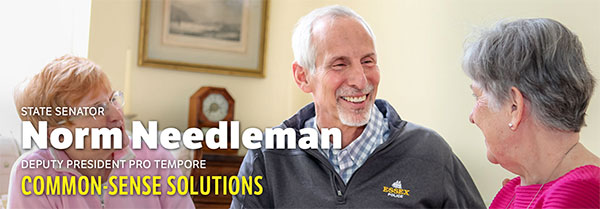
SENATOR NEEDLEMAN RECEIVES HIGH MARKS ON CT LEAGUE OF CONSERVATION VOTERS SCORECARD
|
|