
|
|||||
|
Author: Devin James

SENATOR NEEDLEMAN WELCOMES NEW STAMP HONORING CONSTANCE BAKER MOTLEY, COMMEMORATING LOCAL BLACK HISTORY

|
||||||||||||||||||||
|


SENS. KUSHNER & LOONEY, REP. SANCHEZ & ADVOCATES BACK EXPANSION OF PAID SICK DAYS IN CONNECTICUT

Friday, February 2, 2024
SENS. KUSHNER & LOONEY, REP. SANCHEZ & ADVOCATES BACK EXPANSION OF PAID SICK DAYS IN CONNECTICUT
HARTFORD – State Senator Julie Kushner (D-Danbury), state legislators and advocates for working people today announced their intention to introduce legislation in the 2024 legislative session to expand Connecticut’s paid sick leave law to cover all private-sector employees working in all occupations – a change that is expected to benefit an estimated 1.6 million people in Connecticut.
Right now, Connecticut’s 13-year-old paid sick leave law applies only to private-sector employers with more than 50 employees, mostly in “service worker” occupations – about 12% of Connecticut’s entire private-sector workforce.
This year’s legislation will be modeled after 2023’s Senate Bill 1178. Connecticut passed its first paid sick leave law in 2011 as Senate Bill 913, “An Act Mandating Employers Provide Paid Sick Leave to Employees.” Currently, eight states and Washington, D.C. require paid sick leave for any business with one or more employees: Arizona, California, Illinois, Massachusetts, Minnesota, New Jersey, Vermont and Washington.
“Last year during the public hearing on this bill we heard from auto mechanics and school bus drivers, librarians and elderly advocates, domestic violence survivors and busy moms and people who had experienced multiple illnesses back-to-back. They all had a story to tell, and they all supported an expansion of our current sick leave law, which I’m sad to say is now horribly outdated when compared with other states,” said Sen. Kushner, who is Senate Chair of the Labor and Public Employees Committee. “Connecticut’s private sector is growing by leaps and bounds, driven by people who are hardworking. We owe it to them to make Connecticut an even better place to work as well as a great place to live and raise a family.”
“None of us knows what tomorrow may bring, from a sudden illness, family tragedy, or a life-changing event. Dealing with life’s challenges shouldn’t include worrying about work,” said Rep. Manny Sanchez (D-New Britain). “As the co-chair of the Labor and Public Employees Committee, I fully support the efforts to expand paid sick days for all Connecticut workers, and I look forward to its passage this session.”
“The private-sector workplace is rapidly evolving, with salaries and benefits becoming more and more competitive as unemployment rates drop and our economy continues to expand,” Senate President Martin Looney said. “The expansion of paid sick days to more workers makes sense, both from an economic and a societal standpoint. For low- and moderate-income people, the loss of even a couple of day’s pay is a real hardship; it could mean the difference between having the rent that month or not. Connecticut’s pro-employee policies are also bringing more young workers into the state, and keeping them here, for the quality of life they can experience. That’s also a boon to employers to have a broader pool of prospective employees and a happier, healthier, more productive workforce.”
“As a small-business owner, with fewer than 10 employees, paid time off is one of the only benefits that I can easily afford to offer my employees, versus health insurance or a 401k. It’s very important to my employees and it’s very valued by them. It’s something I have always offered, said Liz Ceppos, owner of Cross-Culture Kombucha of Danbury, which opened six years ago. “There are a lot of costs that go into a business, but valuing your employees so they can stick around and grow with you is super-important. Paid time off is a very easy thing to offer.”
“Expanding paid sick days is good policy that helps to create more economic security for Connecticut workers and protects public health,” said Tonishia A. Signore, Policy Director for
She Leads Justice. “Too many workers, especially workers in low-wage and part-time jobs, are forced to choose between going to work sick for the paycheck they need to survive and caring for themselves or their loved ones. We were the first state to pass a paid sick days law in 2011, but other states – including our neighbors – now offer more comprehensive policies. Connecticut is overdue in ensuring that all workers have access to paid sick days, and it’s imperative that we pass strong legislation this session because Connecticut workers have been waiting too long.”
###
SENATOR ANWAR VISITS GOODWIN UNIVERSITY TO TOUR FUTURE HOME OF SCHOOL’S LPN PROGRAM LAB

|
|||||||||||||||||||||
|


SENATOR NEEDLEMAN RECEIVES 2023 AARP LEGISLATIVE ACHIEVEMENT AWARD
|
||||||||||||||||||||||||
|

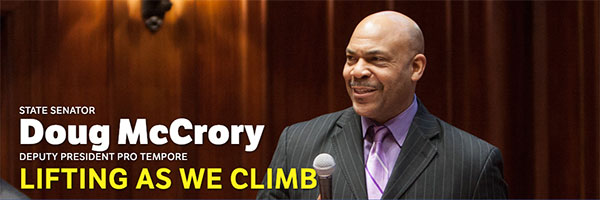
State Senator Doug McCrory Welcomes Hartford School Renovations as School Building Project Priorities
|
||||||||||||||||||
|

SENATOR NEEDLEMAN WELCOMES $782,916 IN STATE INVESTMENTS IN HADDAM CENTER SIDEWALKS
|
||||||||||||||||||||
|
SEN. KUSHNER, MAYOR ALVES WELCOME DANBURY HIGH SCHOOL SCIENCE LAB UPDATES APPROVED AS A 2024 SCHOOL PROJECT PRIORITY
FOR IMMEDIATE RELEASE
Tuesday, January 30, 2024
SEN. KUSHNER, MAYOR ALVES WELCOME DANBURY HIGH SCHOOL SCIENCE LAB UPDATES APPROVED AS A 2024 SCHOOL PROJECT PRIORITY
DANBURY – State Senator Julie Kushner (D-Danbury) and Mayor Roberto Alves today welcomed the news that a $16.5 million plan to update and reconfigure Danbury High’s School’s science labs has made the 2024 School Building Project Priority List and will now be reviewed by the legislature’s Education and Finance Committees for further consideration.
The Danbury High project was approved last week by the School Construction Project Priority List Review Committee. The project will update and reconfigure 28,400 square feet of science labs at Danbury High School on the 4th and 5th floors of the C Building. Other interior spaces will also be affected, including the associated prep rooms, work rooms, and storage areas for each lab, and modifications to classroom doors as needed to comply with building code requirements. All labs will receive new doors and equipment.
The project is expected to cost $16.5 million, of which the state is scheduled to cover 63.21%, or $10,429,650.
“Making it on to the 2024 priority list is the first step in a multi-step process to getting these upgrades over the finish line,” Sen. Kushner said. “I am committed to working with my colleagues on the Education and Finance Committees to ensuring that the students at Danbury High School will benefit from these science lab upgrades, even as we transition into the future to the Danbury Career Academy and the tens of millions of dollars in state support for that project as well. We’re certainly moving in a good direction.”
“I’m grateful to the School Construction Project Priority List Review Committee for choosing this important project at Danbury High School so we can fix and upgrade science labs that haven’t been operational for a long time, and I thank Senator Kushner and Danbury’s entire legislative delegation for their continued hard work, collaboration, and dedication to delivering for Danbury schools,” said Mayor Roberto Alves.
The 2024 legislative session begins February 7 and adjourns on May 8.
###
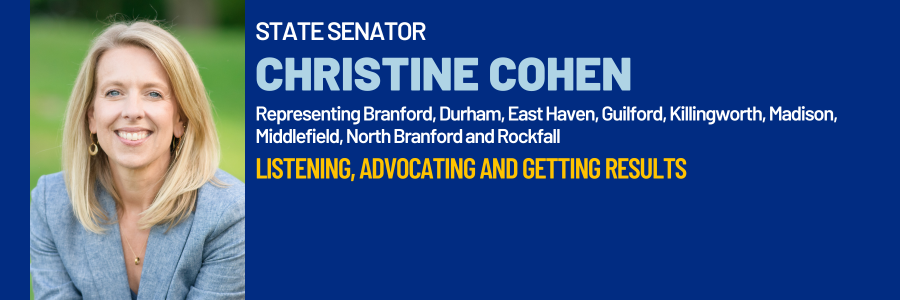
SENATOR COHEN ISSUES STATEMENT ON SENATE GOP CLEAN AIR PLAN
|
|||||||||||||||
|

CT Democratic Senators Sign Supreme Court Brief Defending Right To Medical Abortion

HARTFORD – Today, Senate President Pro Tempore Martin Looney, Senate Majority Leader Bob Duff, and members of the Connecticut Senate Democratic caucus signed on to an amicus brief in FDA v. Alliance for Hippocratic Medicine, joining more than 600 state legislators from across the country to stand in defense of abortion rights. This amicus brief opposes a Fifth Circuit holding from last year that overruled the FDA’s actions modifying conditions where the drug mifepristone can be prescribed for abortion.
These actions come after, in 2023, the Fifth Circuit Court of Appeals ruled that access to mifepristone, which is often used as an abortion pill, must be restricted. The pill was banned from being used in telemedicine prescriptions and mail shipments. While the ban has not yet gone into place, it is dependent on the Supreme Court’s review.
Mifepristone’s ban was brought about by a lawsuit by anti-abortion groups and anti-abortion doctors, and their action and the subsequent ruling bars access to a drug that has been available for use for more than 20 years and has safely been used by millions. In a January 2024 brief to the Supreme Court, the Biden administration argued that as these plaintiffs do not prescribe the drug, they shouldn’t have legal standing to make such a challenge, adding that if the decision stands it would have “disruptive consequences” for women and the FDA.
This comes as mifepristone is widely acknowledged and accepted as an abortion drug. As of 2020, medication abortion using mifepristone accounted for more than half of all abortions in the United States, according to the Guttmacher Institute, displaying the significance and widespread nature of the drug’s use nationwide. Research shows that medication abortion is effective at ending early pregnancies with very low rates of serious complications.
Since the Supreme Court in 2022 overturned Roe v Wade, a ruling that legalized abortion nationwide and stood as effective policy for about a half-century, at least 14 states have banned abortion outright with more placing prohibitions on it after certain lengths of pregnancy. Many states did so with very limited exceptions to policies, leading to high-profile instances including a nine-year-old girl who was a victim of rape in Ohio being forced to travel to Indiana to receive care and a woman who was forced to travel outside of Texas to deliver a baby with no chance of survival at birth.
In fact, many of these policies are likely harming women’s health and autonomy. A recent study found that of the 14 states outright banning abortion, as many as 64,565 women who experienced sexual assault likely became pregnant, with an estimated 26,313 occurring solely in the state of Texas. While these figures are likely overestimated, they underscore the reality these abortion bans have forced upon victims in these states.
The complete amicus brief can be found here.
|
|