SENATOR HOCHADEL VOTES TO APPROVE FOURTH YEAR OF LABOR CONTRACT FOR 45,000 STATE EMPLOYEES

SENATOR HOCHADEL VOTES TO APPROVE FOURTH YEAR OF LABOR CONTRACT FOR 45,000 STATE EMPLOYEES

HARTFORD –  Senator Jan Hochadel, D-Meriden, joined Senate Democrats today in voting to approve the fourth year of the state employees’ SEBAC labor union contract, giving 45,000 state employees a 2.5% wage increase and some others an additional “step” increase – on par with what private-sector employees have been seeing in Connecticut over the past year and similar to what municipal governments have been approving for their labor unions.

The fourth-year wage reopener was negotiated by the Lamont administration in late March and as required by state law, had to be voted on by the General Assembly.

Senator Hochadel spoke in favor of the contract during a floor debate in the Senate Tuesday.

“State government has recently struggled to fill vacant positions and I believe if we truly want to fill these positions, what we have to do is pay people a fair wage and fair pensions,” Senator Hochadel said. “I was proud to vote for this labor contract and want to thank our state workers for everything they do every day for the state of Connecticut.”

“Years of wage concessions and reduced fringe benefits have taken their toll on the dedicated professionals who make up Connecticut state government. To protect essential services for our residents, we need to retain and reward the tens of thousands of state employees – from social workers and nurses to national guardsmen and correctional officers – who serve the people of our state,” Senate President Pro Tem Martin Looney, D-New Haven, said today.

“We’ve lost nearly a quarter of our state workforce over the past decade and a half. Government-sector employment is the only job sector in Connecticut that still hasn’t recovered from the 2008 recession. Meanwhile, private-sector employees in Connecticut saw their wages rise on average almost 4.5 percent last year. Just like we did last year for our state police, we’ve got to grow our state workforce and stay competitive with the private sector,” Senate Majority Leader Bob Duff, D-Norwalk, said.

Funding for the contract was included in last year’s bipartisan state budget.

###

SENATOR MARONEY LEADS SENATE PASSAGE OF BILL AIDING PHARMACISTS, IMPROVING REGULATIONS OF PRESCRIPTION DRUGS

FOR IMMEDIATE RELEASE
Contact: Joe O’Leary | Joe.OLeary@cga.ct.gov | 508-479-4969

SENATOR MARONEY LEADS SENATE PASSAGE OF BILL AIDING PHARMACISTS, IMPROVING REGULATIONS OF PRESCRIPTION DRUGS

Today, State Senator James Maroney (D-Milford), Senate Chair of the General Law Committee, led the State Senate’s passage of legislation seeking to enhance regulations of prescription drugs and help overworked pharmacists.

If made law, the bill would authorize dispensing of prescription drugs in compliance packaging, meaning individual components by dose; allow pharmacy technician students to engage in official duties if they are under direct supervision of a pharmacist instructing in the program; and allows pharmacists to order and administer vaccines, among other changes.

“We’re seeing more pressure on pharmacists than ever, and this bill will help relieve that stress,” said Sen. Maroney. “This will provide more staff to help with busy technicians, add more options for simpler care improving patient outcomes and take steps to monitor the rising issue of pharmacy closures without warning. All of these will help both pharmacists and patients and I’m encouraged to see this bill become law.”

“I have been concerned about small pharmacies closing by larger retail pharmacies, followed by national chains leaving areas and creating health care deserts,” said State Senator Saud Anwar (D-South Windsor), who co-sponsored the bill. “This issue needs to be studied and better handled; this bill will create a group to better monitor this issue and protect access to health care.”

Senate Bill 133, “An Act Concerning Regulation of Prescription Drugs and Related Professions,” would make changes to current pharmaceutical laws including establishing advanced pharmacy technician and clerk occupational categories, authorize pharmacists and advanced pharmacy technicians to dispense drugs to patients in packaging that separates drugs by dose, allow for repackaging of compliance packaging and make it a punishable offense for pharmacy staff to return sold or delivered drug stock or inventory to general inventory.

Additionally, the bill would establish a task force for legislators and industry professionals to study the impact of unannounced or sudden retail pharmacy closures.

The bill would further allow for pharmacy technician students to engage in pharmacy technician duties under direct supervision of pharmacist instructors, allow pharmacists to order and administer vaccines for certain patients.

Department of Consumer Protection Commissioner Bryan Cafferelli testified in February that this bill’s support of compliance packaging would be a tremendous step toward improving medication compliance among patients, reducing medication errors and improving patient outcomes. Cafferelli also said the legislation’s establishment of advanced pharmacy technician registration will provide pharmacy technicians opportunities to expand their roles in pharmacies and relieve the burden faced by overworked pharmacists.

Christina Hatfield, Director of Pharmacy at Hartford Hospital, testified that the bill’s development of Advanced Pharmacy Technician roles will aid in the provision of safer care and counter a shortage of trained pharmacists in the state amid larger industry struggles.

The bill previously passed the General Law Committee by a unanimous 22-0 vote. It now heads to the House for further consideration.

Caption: Senator Maroney discusses the bill on the Senate floor Tuesday.

Share Share
Tweet Tweet

SENATE DEMOCRATS APPROVE FOURTH YEAR OF LABOR CONTRACT FOR 45,000 STATE EMPLOYEES

FOR IMMEDIATE RELEASE

Tuesday, April 23, 2024

SENATE DEMOCRATS APPROVE FOURTH YEAR OF LABOR CONTRACT FOR 45,000 STATE EMPLOYEES


HARTFORD – Senate Democrats today voted to approve the fourth year of the state employees’ SEBAC labor union contract, giving 45,000 state employees a 2.5% wage increase and some others an additional “step” increase – on par with what private-sector employees have been seeing in Connecticut over the past year and similar to what municipal governments have been approving for their labor unions.


The fourth-year wage reopener was negotiated by the Lamont administration in late March and as required by state law, had to be voted on by the General Assembly.


“Years of wage concessions and reduced fringe benefits have taken their toll on the dedicated professionals who make up Connecticut state government. To protect essential services for our residents, we need to retain and reward the tens of thousands of state employees – from social workers and nurses to national guardsmen and correctional officers – who serve the people of our state,” Senate President Pro Tem Martin Looney (D-New Haven) said today.


“We’ve lost nearly a quarter of our state workforce over the past decade and a half. Government-sector employment is the only job sector in Connecticut that still hasn’t recovered from the 2008 recession. Meanwhile, private-sector employees in Connecticut saw their wages rise on average almost 4.5 percent last year. Just like we did last year for our state police, we’ve got to grow our state workforce and stay competitive with the private sector,” Senate Majority Leader Bob Duff (D-Norwalk) said.


Funding for the contract was included in last year’s bipartisan state budget.

Duff Applauds New Norwalk Traffic and Safety Improvements from DOT

Senator Bob Duff

Duff Applauds New Norwalk Traffic and Safety Improvements from DOT

TODAY – Senate Majority Leader Bob Duff (D-Norwalk) thanked the Connecticut Department of Transportation for four recent measures to alleviate traffic, improve safety, and clean up on state roads in the city of Norwalk.

The actions include:

  • New left turn arrow on West Rocks Road at I-Park Driveway
    • Revised the traffic control signal Int. 102-228 on Route 7 (Main Ave.) at West Rocks Road and I-Park Driveway.
    • This provides a dedicated left turn phase for West Rocks Road. Motorists will now see a five-faced traffic signal with dedicated green and yellow turn arrows, instead of the previous three face signal.
    • This revised timing and dedicated left-turn signal helps alleviate traffic congestion and backups in this area.
  • New LED lights on Route 7 expressway
    • Route 7 was upgraded with new light poles and bases to hold the new high-efficient LED lights.
    • The brighter lights help improve night visibility.
    • Replaces lights which frequently shorted out and compromised safety.
  • Litter removal on embankments and median of Route 7 expressway
  • Fixing sidewalk on Grumman Avenue bridge over Merritt Parkway
    • Sidewalk repairs ensure pedestrians can travel safely through the area.

“As I drive around Norwalk, I understand the frustration traffic backup can cause all of us,” said Senator Duff. “Thankfully, the new left turn arrow on West Rocks Road has already streamlined traffic flow and commuters, myself included, are feeling the benefits. This measure, along with the three others, will improve the overall quality of life for our residents as they get around town. I would like to extend my gratitude to the Department of Transportation for their dedication to enhancing our city’s transportation infrastructure. I look forward to continued collaboration to ensure Norwalk remains a vibrant and thriving hub for all who call it home.”

“The Connecticut Department of Transportation is committed to improving safety and mobility throughout the state, including in Norwalk. Whether it’s multi-year, multi-million-dollar projects or smaller and more immediate actions, the CTDOT is working every day to ensure our infrastructure is safe and accessible for all roadway users,” said Connecticut Department of Transportation Commissioner Garrett Eucalitto.

Senate Democrats, Business Leaders, Students Advocate For Senate Bill 2’s Advances In AI Regulation

FOR IMMEDIATE RELEASE
Contact: Joe O’Leary | Joe.OLeary@cga.ct.gov | 508-479-4969
April 22, 2024

Senate Democrats, Business Leaders, Students Advocate For Senate Bill 2’s Advances In AI Regulation

Today, a coalition of Senate Democrats including Senate President Martin M. Looney, Senate Majority Leader Bob Duff, State Senator James Maroney, State Senator Norm Needleman and State Senator Cathy Osten, as well as business leaders including Dr. Kevin Carr, CEO of the National Coordination Center, and Matthew Wallace, CEO of VRSIM, and student advocate Naja Bennett of LiveGirl, gathered in the Legislative Office Building in advocacy of Senate Bill 2, a lead priority for the caucus this year.

Senate Bill 2 reflects and recognizes the importance and burgeoning uses of artificial intelligence in daily life and seeks to both encourage and guide the technology’s use. It seeks to prevent some negative uses of AI, such as deepfake pornography, while promoting others, with support for AI usage in health care and in workforce training, recognizing its transformative potential in any number of industries. Legislators spoke Monday before the Judiciary Committee’s approval of the latest version of Senate Bill 2.

“This bill really consists of three parts with reasonable safeguards – promoting economic development, building an online AI academy in the state of Connecticut and soliciting ideas from state government to use AI to make our services better for individuals and constituents,” said Sen. Maroney. “One of the things most important to note is that AI decisions impact us all. Algorithms are used every day to make important decisions. It’s important when we’re looking at these algorithms to make sure there are not disparate impacts. This is something we’ve been looking at through state and national task forces. We’re not saying not to do these things; we’re saying we need to look at things, make sure they are safe and then release them to the public.”

“I am proud the Judiciary Committee approved SB 2 so it can move to the floor for the full Senate to consider the bill,” said State Senator Gary Winfield (D-New Haven), Senate Chair of the Judiciary Committee. “This legislation will put in place critical protections for all Connecticut residents, especially for our young people, to combat the troubling trend of AI generated deepfake pornography. Additionally, much of the conversation around this technology has been about innovation but not enough has focused on AI’s ability to invent new ways to discriminate. Senate Bill 2 includes important anti-discrimination protections to safeguard people from AI’s biases that are having real detrimental impacts right now in our society. I’d like to thank Senator Maroney for his tireless efforts on this bill.”

“At one point, when I asked for a copy of my credit score, I was shocked to find my credit score was much lower than expected. When I called, I was told that because I use my credit cards frequently, and my debt-to-credit ratio at times was high, the algorithm determined my credit score was lower,” said Sen. Needleman. “I was told ‘the algorithm is my supervisor, you can talk to other people but it won’t fix anything.’ That is not healthy for society. We are living in a very disruptive time, and we need to be aware of the impact this technology has on people, including its having an inequitable impact on people’s lives. We need to make sure we have guardrails. We have to balance our economy and protecting residents from predatory practices and things that can hurt people.”

“As we leap forward with innovation in health information technology, there is always a need to be able to continue to push the envelope,” said Carr. “There are times when that technology moves too quickly, where innovators leap forward without clinical advisors in place to oversee and test algorithms. They were doing it on things important to a lot of us, like cancer treatment and prevention and prior authorization of benefits in health plans. If you look at ways evidence-based medicine is applied today, there’s a rigorous process to provide high quality of care, and when you circumvent that, it’s a huge opportunity but a huge risk. The Hippocratic Oath is vital in health care and there needs to be something that applies to AI as well. This bill supports that.”

“AI is very much ink spreading in water right now,” said Wallace. “It’s influencing everything we touch from Netflix to bank rates. It needs to be thought about; it should not be the social media of the next 10 years. You want to be thoughtful of how we would regulate and to know that impact. Regulation is an important way to avoid unintended impact of technologies. The balancing act of mixing forward-looking technology and keeping it from becoming the thing that eats itself is important. From a business perspective, we like the concept of regulation and certainty, the concept of understanding requirements and guidelines to support our customers and those who buy our product. This will foster growth, not impede it. We need to know what’s going on in a regulatory sense. I give much praise to the lawmakers who are trying to put Connecticut on the regulatory forefront of this. It’s needed, it’s wanted, it’s not going to slow us down; it might make us do a better job.”

“I raise my voice in support of this bill specifically in its protections against deepfake nonconsensual images and videos,” said Bennett, representing LiveGirl, a Connecticut nonprofit focused on creating and supporting female leaders. “It should be noted that 96% of deepfake videos are pornography and nearly all involve women and girls. Imagine waking up and seeing your face on a video you didn’t consent to, or the image of a loved one. We don’t know how far this can go. However, I hope we can take a stand and ensure that this legislation is passed as a protection against this.”

“There’s a lot of money to be made [in AI] but our job is to protect consumers. Back in the 1990s, when the Internet was new, the approach was to be hands-off to protect a burgeoning industry. Since then, consumers have experienced data privacy, social media, listening devices, deepfake porn and more issues where there were relatively few regulatory guardrails,” said Sen. Duff. “Our job here is not to repeat the sins of the past but to put necessary guardrails and parameters around this technology. AI has been used for decades, but we are seeing now that with a thirst for information and knowledge, companies are literally scraping the Internet for information without consumers’ protection or permission. It’s predicted by 2026 that the companies scraping the Internet for information will run out of things to scrape. Next, there will be ‘synthetic AI,’ where AI will create AI. That’s why we’re here today – to put those necessary parameters around the industry. We shouldn’t be afraid of tech, but we also shouldn’t be afraid to put rules of the road in place.”

“This is a highly complex piece of legislation and is absolutely necessary,” said Sen. Looney. “I believe that government regulation is important in places where there is a broad benefit or threat to the public, as we see here. Ultimately, enlightened government keeps our society working. We need to regulate in this area in an informed way that recognizes the complexities. The right kind of algorithm with the right kind of data can lead to the best possible medical treatment, which would be a great benefit; there are also the nightmare sides of AI if it’s not properly controlled, regulated or enhanced. This is something of great hope and promise but also of great threat, and therefore there is a responsibility of government to regulate.”

Caption: Sen. Maroney speaks Monday with Sen. Needleman to his right.

Share Share
Tweet Tweet
Forward Forward

Senate Passes Legislation To Improve Eligibility For Automatic College Admissions

FOR IMMEDIATE RELEASE
Contact: Joe O’Leary | Joe.OLeary@cga.ct.gov | 508-479-4969

Senate Passes Legislation To Improve Eligibility For Automatic College Admissions

This week, State Senator Saud Anwar (D-South Windsor) voted with the Senate to change the eligibility requirements for the Connecticut Automatic Admission Program (CAAP) to increase equity and access for students. The bill passed unanimously and now heads to the House.

“Connecticut high schoolers will now be able to know whether they can receive direct admissions to a number of state colleges with just their GPAs thanks to this legislation,” said Sen. Anwar. “I’m happy to vote for it and hope to see it become law.”

CAAP allows graduating Connecticut high school seniors who meet identified thresholds to be notified of their eligibility for automatic admission to participating colleges and universities. SB 109, passed today, changes the requirement for admission from a minimum class rank percentile to a minimum, unweighted grade point average (GPA).

This legislation seeks to make the pre-qualification threshold more transparent for students by relying on a GPA as opposed to class rank, which is not readily available to students. By using an unweighted GPA, the legislation seeks to make the program more equitable by reducing the importance of heavily weighted Advanced Placement (AP) courses. This is important because lower resourced school districts often have less AP courses available.

According to Connecticut State Colleges & University (CSCU), this year, the total number of CAAP applicants has increased by 70%, and the total number of applicants to the CSCU schools going up by 400%, or 3,259 students.

A student who qualifies is required to complete a simplified, free application for the participating colleges and universities that they wish to attend. The student will automatically receive a letter of acceptance and details about financial aid awarded. Participating universities include:

  • Central Connecticut State University
  • Eastern Connecticut State University
  • Southern Connecticut State University
  • Western Connecticut State University
  • Mitchell College
  • University of Bridgeport
  • University of New Haven
  • University of Saint Joseph
Share Share
Tweet Tweet
Forward Forward

Senate Passes Legislation To Improve Eligibility For Automatic College Admissions

Senate Passes Legislation To Improve Eligibility For Automatic College Admissions

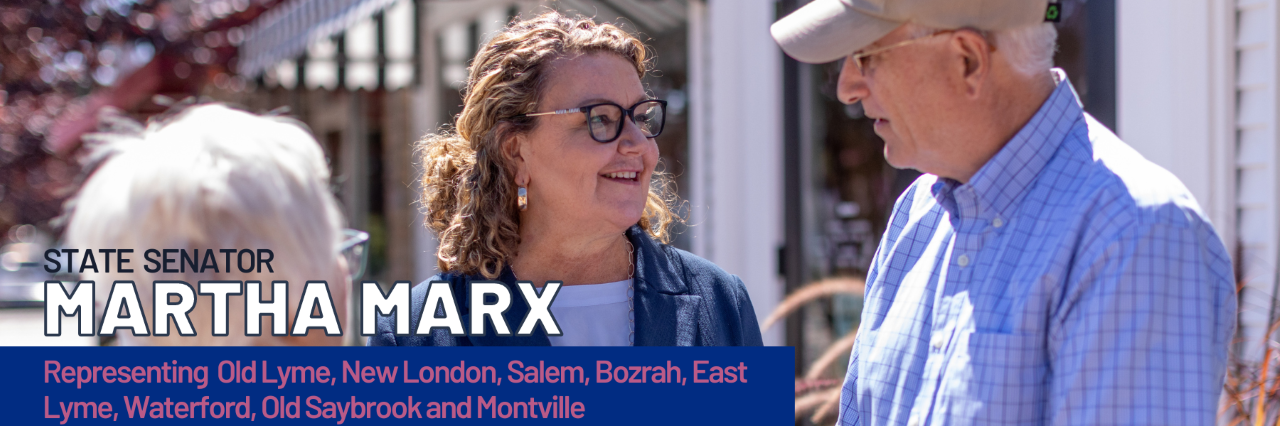
This week, State Senator Martha Marx (D-New London) voted with the Senate to change the eligibility requirements for the Connecticut Automatic Admission Program (CAAP) to increase equity and access for students. The bill passed unanimously and now heads to the House.

“This bill makes an easy and welcome change to state college admissions processes, simplifying it for students and helping them with their applications,” said Sen. Marx. “Students will now have a much simpler time moving on to college in-state as long as they meet GPA thresholds.”

CAAP allows graduating Connecticut high school seniors who meet identified thresholds to be notified of their eligibility for automatic admission to participating colleges and universities. SB 109, passed today, changes the requirement for admission from a minimum class rank percentile to a minimum, unweighted grade point average (GPA).

This legislation seeks to make the pre-qualification threshold more transparent for students by relying on a GPA as opposed to class rank, which is not readily available to students. By using an unweighted GPA, the legislation seeks to make the program more equitable by reducing the importance of heavily weighted Advanced Placement (AP) courses. This is important because lower resourced school districts often have less AP courses available.

According to Connecticut State Colleges & University (CSCU), this year, the total number of CAAP applicants has increased by 70%, and the total number of applicants to the CSCU schools going up by 400%, or 3,259 students.

A student who qualifies is required to complete a simplified, free application for the participating colleges and universities that they wish to attend. The student will automatically receive a letter of acceptance and details about financial aid awarded. Participating universities include:

  • Central Connecticut State University
  • Eastern Connecticut State University
  • Southern Connecticut State University
  • Western Connecticut State University
  • Mitchell College
  • University of Bridgeport
  • University of New Haven
  • University of Saint Joseph
Contact: Joe O’Leary | 508-479-4969 | Joe.OLeary@cga.ct.gov

Senate Passes Legislation To Improve Eligibility For Automatic College Admissions

FOR IMMEDIATE RELEASE
Contact: Joe O’Leary | Joe.OLeary@cga.ct.gov | 508-479-4969
April 19, 2024

Senate Passes Legislation To Improve Eligibility For Automatic College Admissions

This week, State Senator James Maroney (D-Milford) voted to change the eligibility requirements for the Connecticut Automatic Admission Program (CAAP) to increase equity and access for students. The bill passed unanimously and now heads to the House.

“This bill makes a simple but effective change, allowing students to know based on their GPAs that they can automatically be approved to attend a number of great Connecticut colleges and universities,” said Sen. Maroney. “I’m glad to have voted for it and hope to see it become law.”

CAAP allows graduating Connecticut high school seniors who meet identified thresholds to be notified of their eligibility for automatic admission to participating colleges and universities. SB 109, passed today, changes the requirement for admission from a minimum class rank percentile to a minimum, unweighted grade point average (GPA).

This legislation seeks to make the pre-qualification threshold more transparent for students by relying on a GPA as opposed to class rank, which is not readily available to students. By using an unweighted GPA, the legislation seeks to make the program more equitable by reducing the importance of heavily weighted Advanced Placement (AP) courses. This is important because lower resourced school districts often have less AP courses available.

According to Connecticut State Colleges & University (CSCU), this year, the total number of CAAP applicants has increased by 70%, and the total number of applicants to the CSCU schools going up by 400%, or 3,259 students.

A student who qualifies is required to complete a simplified, free application for the participating colleges and universities that they wish to attend. The student will automatically receive a letter of acceptance and details about financial aid awarded. Participating universities include:

  • Central Connecticut State University
  • Eastern Connecticut State University
  • Southern Connecticut State University
  • Western Connecticut State University
  • Mitchell College
  • University of Bridgeport
  • University of New Haven
  • University of Saint Joseph
Share Share
Tweet Tweet
Forward Forward

Senate Passes Legislation To Improve Eligibility For Automatic College Admissions

State Senator Norm Needleman
FOR IMMEDIATE RELEASE
Contact: Joe O’Leary | Joe.OLeary@cga.ct.gov | 508-479-4969

Senate Passes Legislation To Improve Eligibility For Automatic College Admissions

This week, State Senator Norm Needleman (D-Essex) voted with the Senate to change the eligibility requirements for the Connecticut Automatic Admission Program (CAAP) to increase equity and access for students. The bill passed unanimously and now heads to the House.

“With one simple change, this bill will make it much easier for high school students across Connecticut to advance their educations to any number of state universities,” said Sen. Needleman. “It’s a welcome change and I’m looking forward to it becoming law.”

CAAP allows graduating Connecticut high school seniors who meet identified thresholds to be notified of their eligibility for automatic admission to participating colleges and universities. SB 109, passed today, changes the requirement for admission from a minimum class rank percentile to a minimum, unweighted grade point average (GPA).

This legislation seeks to make the pre-qualification threshold more transparent for students by relying on a GPA as opposed to class rank, which is not readily available to students. By using an unweighted GPA, the legislation seeks to make the program more equitable by reducing the importance of heavily weighted Advanced Placement (AP) courses. This is important because lower resourced school districts often have less AP courses available.

According to Connecticut State Colleges & University (CSCU), this year, the total number of CAAP applicants has increased by 70%, and the total number of applicants to the CSCU schools going up by 400%, or 3,259 students.

A student who qualifies is required to complete a simplified, free application for the participating colleges and universities that they wish to attend. The student will automatically receive a letter of acceptance and details about financial aid awarded. Participating universities include:

  • Central Connecticut State University
  • Eastern Connecticut State University
  • Southern Connecticut State University
  • Western Connecticut State University
  • Mitchell College
  • University of Bridgeport
  • University of New Haven
  • University of Saint Joseph
Share Share
Tweet Tweet
Forward Forward

SENATOR NEEDLEMAN RELEASES STATEMENT FOLLOWING DECISION IN UTILITY RATE REQUESTS

State Senator Norm Needleman
FOR IMMEDIATE RELEASE
Contact: Joe O’Leary | Joe.OLeary@cga.ct.gov | 508-479-4969

SENATOR NEEDLEMAN RELEASES STATEMENT FOLLOWING DECISION IN UTILITY RATE REQUESTS

Today, State Senator Norm Needleman (D-Essex), Senate Chair of the Energy & Technology Company, released the following statement in response to the Public Utilities Regulatory Authority’s decision this week approving rate increase requests from state utility companies Eversource and United Illuminating, and related comments made this week by utility and political leaders:

“How does a company with an underlying profit of more than $1.5 billion plead unfair treatment the day after Connecticut’s regulators gave them everything they requested? Worse, they threatened the state of Connecticut, saying they will not fulfill their obligations to build out improvements to the electric grid necessary to support our policy goals. This week, Eversource received every penny it requested, but it’s still complaining. This behavior is threatening, vindictive and irresponsible, not to mention disrespectful to ratepayers facing another increase to their monthly bills. When you get what you want and you’re still whining, one has to wonder, is there something else going on under the hood?

If Eversource does not want to make green energy investments in our grid, for which it receives full reimbursement and an additional profit on top of out-of-pocket costs, maybe we should consider a review of their franchise agreement, which allows them to operate as a monopoly with no competition. The only thing protecting ratepayers from corporate greed is a regulatory authority that does its job appropriately and acts as a proxy for ratepayers and the free market. If they are unwilling to honor that agreement, then maybe the state needs to reconsider its commitment to allow them to operate as a monopoly.

The General Assembly will continue to enable our regulators to provide appropriate oversight in the best interest of Connecticut’s ratepayers and won’t be threatened or intimidated by a company whose primary interest is shareholder profit and compensation for senior executives.

More baffling is the Republicans’ apparent change of heart and their support of this behavior. In recent years, bills passed by broad bipartisan majorities with the intent of holding these utilities accountable. It appears Republicans are having buyer’s remorse after having done the right thing by supporting those bills.

Amid all this noise and fury, it appears the Republicans are parroting the utilities, creating an echo chamber that constantly supports the interests of the utilities and not the ratepayers. Democrats will continue to support the interests of the ratepayers while doing everything we can to advance our energy goals, looking to the future for generations to come.”

Share Share
Tweet Tweet
Forward Forward