Sen. Duff, Mayor Rilling, Lt. Gov. Bysiewicz, Deputy Commissioner Hewes, Dr. Estrella and Community Leaders Complete the Groundbreaking of the First South Norwalk Neighborhood School in Over 40 Years

Sen. Duff, Mayor Rilling, Lt. Gov. Bysiewicz, Deputy Commissioner Hewes, Dr. Estrella and Community Leaders Complete the Groundbreaking of the First South Norwalk Neighborhood School in Over 40 Years
(Norwalk, Conn.) Today, April 8, 2024, Senate Majority Leader Bob Duff, Mayor Rilling and Dr. Estrella, Superintendent of Norwalk Public Schools were joined by Lieutenant Governor Susan Bysiewicz, Deputy Commissioner Charles Hewes of the CT State Department of Education, Darlene Young, President of Norwalk Common Council, Rev. Roosevelt Ewell, Senior Pastor of Canaan Institutional Baptist Church of Norwalk and other state, local and community leaders to break ground on the new South Norwalk School. This school will be the South Norwalk community’s first neighborhood school in over 40 years.
The ceremony took place at 1 Meadow St. Ext., where the new neighborhood school is being constructed. It is the City’s first new school construction project under the new state reimbursement rate of 60%.
“As we break ground on the first new South Norwalk neighborhood school in over 40 years, we mark a significant milestone in Norwalk’s educational landscape,” said Senator Bob Duff. “This school, a cornerstone of our 25-year plan for Norwalk schools, signifies a renewed commitment to providing quality education to our community. With the support of a 60% reimbursement rate from the state of Connecticut, we are also able to build this school at a significant savings for local taxpayers. I extend my deepest gratitude to the passionate members of our local community who tirelessly advocated for the realization of this school. Your dedication and partnership with officials have been instrumental in making this vision a reality. I am thrilled South Norwalk will have a neighborhood school to locally access an exceptional education and a bright future.”
“The young students in South Norwalk have not had a neighborhood school in over 40 years, and not having a neighborhood school has been a tremendous hindrance to them,” said Mayor Harry Rilling. “They have to wake up in the morning, get on a bus and drive all the way across town to go to school, and their neighbor may go to a different school than them. But that is all about to change. When this school is finally completed in August 2025, up to 680 students from the community, ages PreK to 5 th grade, will be able to attend. This school will be the City’s first new construction project under our new state reimbursement rate of 60%, saving Norwalk taxpayers millions of dollars. I want to thank our State Delegation and State leaders for their commitment to education and partnership in making that reimbursement rate possible. The new 60% reimbursement rate from the State was made possible in large part thanks to the incredible leadership of Senator Duff.”
“Today’s groundbreaking and the construction of a new neighborhood school for South Norwalk students – it’s first in 40 years – will ensure our state’s most precious resources, our students, can learn and grow right in their own neighborhood,” said Lt. Governor Susan Bysiewicz. “This project will remove obstacles that parents and students were forced to face by having to enroll in various schools outside of their neighborhood and throughout the city. When we invest in the wellbeing of our students, teachers, and schools, the returns on our investment will be seen for generations to come.”
“The opening of the new South Norwalk School represents a wonderful opportunity for Norwalk’s children and families. It’s not just about bricks and mortar; it’s about creating a nurturing environment where every child can thrive and reach their full potential,” Connecticut State Department of Education Deputy Commissioner Charles Hewes said. “We all know the importance of education in shaping the future. By investing in this new school, Norwalk is investing in the success and well-being of generations to come. It’s a decision that speaks volumes about this city’s commitment to excellence and progress.”
In the late 1970s, South Norwalk lost its neighborhood school when the district closed Nathaniel Ely School on Ingalls Avenue to desegregate schools. Ever since, South Norwalk children have enrolled in various schools throughout the City outside of South Norwalk and have had to endure long bus rides to and from school. South Norwalk children have missed out on the benefits afforded to students that are generally provided by a neighborhood school and many South Norwalk parents have also been subject to limitations as a result of this condition. Based on the current minority student population in the City of Norwalk, children in South Norwalk are no longer required by law to attend schools outside of their community. This new neighborhood school will allow Norwalk Public Schools to provide all South Norwalk children, ages PreK to 5 th grade, with the option to attend a brand new, first-class neighborhood school once the project is complete. The building’s design will incorporate the community’s feedback, fostering an inclusive and welcoming environment for students and their families and the building will have safe, effective and flexible learning spaces for students.
“In many cases, many of our families don’t have private transportation to be able to visit their school sites and engage in the community in ways that others have been able to do throughout Norwalk,” said Dr. Alexandra Estrella, Superintendent of Norwalk Public Schools. “So I want that to sit in a little bit for people here, because what’s happening around us right now is going to be transformational for the families and children of Norwalk, to have a place that they can come to engage, celebrate, during the school day, but also after school see this as a place of community convening and coming together, which is critical in any community.”
“Growing up in South Norwalk, I understand the challenges of not having a neighborhood school,” said Diana Carpio, Board of Education Chair. “I am thankful for all the hard work that Norwalk Public Schools, the City of Norwalk, and the South Norwalk community has done to make this school a reality. It’s been more than 40 years, a very long time, and I’m proud to be a part of this project and seeing us all dedicate ourselves to provide the best education possible for our children.”
“We all know schools and neighborhoods create community and that’s what you need,” said Darlene Young, President of the Norwalk Common Council. “We were missing that for a very, very long time — decades.”
“I think Norwalk needs to understand how much this means to the minority community, to see the commitment of a city that cares about the people of the city, that they would invest into a school in the community that our students can be able to have less time traveling and more time being educated,” said the Rev. Roosevelt Ewell, Senior Pastor of Canaan Institutional Baptist Church of Norwalk. “This project, this movement, have come about from the hard labor of so many in the minority community.”
“If there was a school in my neighborhood, I could have walked home from school,” said Lincoln Almonte Martinez, 5th grader at Marvin Elementary School and South Norwalk resident. “Instead, I have spent 40 minutes each day for six years straight riding the bus, and while I like riding the bus because it gives me time to talk to my friends, it sometimes gets me in trouble. Kids growing up in South Norwalk will soon have a brand-new school in their neighborhood and they will attend with the lucky kids who live near them. They are the lucky ones.”
The anticipated completion of the new school is scheduled for late summer 2025 and will be ready to welcome students for the 2025-26 school year.

SENATOR MARONEY DISCUSSES DATA PRIVACY AT GLOBAL PRIVACY SUMMIT IN WASHINGTON, D.C.

FOR IMMEDIATE RELEASE
Contact: Joe O’Leary | Joe.OLeary@cga.ct.gov | 508-479-4969
April 5, 2024

SENATOR MARONEY DISCUSSES DATA PRIVACY AT GLOBAL PRIVACY SUMMIT IN WASHINGTON, D.C.

State Senator James Maroney (D-Milford) this week joined technology industry professionals at the International Association of Privacy Professionals’ Global Privacy Summit in Washington D.C. to discuss his ongoing efforts to support youth data privacy in Connecticut and beyond. Sen. Maroney joined experts including Manmeet Dhindsa, an attorney for the Federal Trade Commission’s division of Privacy and Identity Protection and Sarah Holland, public policy manager at Google, to discuss trends and patterns in state privacy and safety in tech and data spaces.

“Connecticut is becoming a national leader in passing data protections supporting youth, and it’s great to have this opportunity to address industry leaders and minds on our successes here,” said Sen. Maroney. “I’m glad to discuss our efforts to impose proper guardrails on use of artificial intelligence, as well as recent years’ bills supporting children’s privacy and government use of AI. This technology is important and can represent significant breakthroughs; we need to make sure those breakthroughs are positive.”

On Wednesday, Sen. Maroney participated in “The State of Play: an Overview of Kids’ and Teens’ Privacy in the US,” a panel that delved into the online privacy and safety landscape for youth in the United States, what federal decisions may be made in the future and how state legislatures are delving into the issue.

Sen. Maroney addressed current legislation in consideration during the 2024 legislative session in Connecticut intended to provide guidance and direction on how artificial intelligence can and can’t be used, and his discussion also centered 2023’s Senate Bill 3. That overarching bill set requirements for how certain online services, products and features manage personal data for minors, including supporting the prevention of risk of harm to a minor, as well as prohibiting services from processing youth personal data without consent.

The IAPP Global Privacy Summit is the world’s largest forum for discussions and explorations of privacy and data protection laws, intended for industry leaders, technologists and entrepreneurs to delve into the ways data is increasingly used and collected around the world.

Share Share
Tweet Tweet
Forward Forward

Sen. Lesser Welcomes Additional Funding for Elderly Nutrition Programs

FOR IMMEDIATE RELEASE
Contact: Garnet McLaughlin | Garnet.McLaughlin@cga.ct.gov

 Sen. Lesser Welcomes Additional Funding for Elderly Nutrition Programs

Today, State Senator Matt Lesser, Senate Chair of the Human Services Committee, welcomed news that the Connecticut Department of Aging and Disability Services will provide an additional $500,000 to the Community Renewal Team, delaying planned cuts to elderly nutrition services. Due to a shortfall in funding, the service which provides congregate and home delivered “Meals on Wheels” to elderly residents in the greater Hartford area was looking at a reduction in meal options. Meals on Wheels was facing a reduction of 2 meals a day to 1, and congregate meals would only be offered 2 or 3 days a week, as opposed to 5 or 4 days. This funding is set to last through July 1.

“As Chair of the Elderly Nutrition Task Force, this is welcome news that the State is able to provide funding to stave off the proposed cuts in the Hartford region,” said State Senator Matt Lesser. “I know these services are a lifeline for many elderly constituents, and I have been calling for additional state support for these essential benefits. While funding pressure will still remain, this funding is welcome relief for many in our district.”

Share Share
Tweet Tweet
Forward Forward

LOONEY, PAOLILLO APPLAUD COMMITTEE PASSAGE OF BILL CONCERNING TOBACCO DEALER LICENSE RENEWALS

LOONEY, PAOLILLO APPLAUD COMMITTEE PASSAGE OF BILL CONCERNING TOBACCO DEALER LICENSE RENEWALS

SB 340 would allow municipalities to adopt an ordinance requiring a person applying for tobacco dealer license renewals to inform and allow comments on the application

Senate President Pro Tem Martin Looney and State Representative Al Paolillo (D-New Haven) are applauding the Public Safety Committee for passing Senate Bill 340 out of committee recently. It will now be considered by the full House and Senate in the coming weeks.

Senate Bill 340, “An Act Concerning Tobacco Dealer License Renewals” passed unanimously out of the Public Safety Committee. The bill would permit municipalities to adopt an ordinance requiring a person applying for renewal of a tobacco dealer’s license to inform the chief law enforcement official, or such official’s designee, of the application. It would permit such chief or designee to submit comments regarding the application and require the Commissioner of Revenue Services to consider such comments before approving such an application.

“The legislation would deter tobacco license violations, illegal activity, and violence in and around establishments that sell tobacco,” said Senator Looney. “I would support adding a provision that allows residents to object to tobacco license renewals in their communities which would empower community members to raise public health and quality of life concerns.”

“The bill involves stricter enforcement and more municipal police involvement when it comes to approvals of tobacco permit license renewals. Especially for businesses who have consistent non-compliance issues such as selling to minors and other illegal activities that negatively impact our community,” said Rep. Paolillo, who is a member of the Public Safety Committee and served as an introducer on the bill. “I thank Senator Looney for his support on this issue and members of the New Haven community for submitting testimony or testifying in person on this bill. I look forward to the next steps as the bill makes its way through the legislative process.”

“This legislation will allow us to maintain our responsibility to the community to uphold law and order and provide safer and healthier communities by holding those establishments that habitually violate state statutes accountable,” said New Haven Police Chief Karl Jacobson. “The responsibility of review of liquor permits through my office, has been an efficient tool of managing problem establishments that sell liquor. I believe this legislation will be one additional tool that we can use to manage problem establishments.”

“The broad range of New Haveners who provided oral and written testimony -including more than twenty City of New Haven health, safety, and economic development officials; education leaders; health advocates and researchers; small businesses; community activists; and members of the Board of Alders — speaks to the broad support for protecting our neighborhoods and especially our kids from underage tobacco sales and other illegal activities in and around some tobacco dealers, including some corner stores and smoke shops,” said New Haven Alderman Sarah Miller. “Reliance on state enforcement findings alone misses the opportunity to fully utilize the knowledge of local law enforcement and residents. I am so grateful to Representative Paolillo and Senator Looney for working to enhance tobacco dealers’ accountability to our communities.”

In his testimony before the Public Safety Committee, Mayor Justin Elicker concluded, “The passage of this legislation is not just a matter of regulatory reform; it is an important step towards prioritizing the health, safety, and future of our communities. Let us seize this opportunity to enact meaningful change and protect the well-being of all Connecticut residents.”

Senator Duff, Mayor Rilling, Governor Lamont, Commissioner Gilman and Norwalk Public Schools Celebrated the Groundbreaking of the New School Construction for Norwalk High School and P-TECH Norwalk

Senator Duff, Mayor Rilling, Governor Lamont, Commissioner Gilman and Norwalk Public Schools Celebrated the Groundbreaking of the New School Construction for Norwalk High School and P-TECH Norwalk

(Norwalk, Conn.) Today, April 1, 2024, Senate Majority Leader Bob Duff (D-Norwalk) joined Mayor Rilling, Norwalk Public Schools, Governor Ned Lamont, Michelle Gilman, Commissioner of the CT State Department of Administrative Services (DAS) and other state, local and school leaders to celebrate the official groundbreaking for the Norwalk High School and P-TECH Norwalk building.

The City of Norwalk is receiving an unprecedented 80% reimbursement rate from the State, saving local taxpayers $138 million. The reimbursement rate was primarily made possible thanks to Senator Duff’s advocacy and hard work.

Norwalk High School and the P-TECH building are projected to be move-in ready by the fall of 2027, with all site work completed by the fall of 2028. The construction project will include the two schools, the P-TECH program and the comprehensive Norwalk High School, with a total enrollment of 2,000 students.

“It would be easy to keep the status quo,” said Senator Bob Duff, Senate Majority Leader. “We have great teachers, administrators and staff who persevere and demand excellence despite the challenges of a 1971 learning facility. We have awesome students who work hard and succeed despite leaks, cold and hot rooms, unusable courtyards, a library that is so functionally out of date that some of the middle schools are better equipped and a cafeteria that can’t keep up with the student population. Let alone the security challenges that I won’t go into. There’s a pool with air quality problems, locker rooms that are not ADA compliant and bathrooms on all floors with plumbing encased in concrete, making it virtually impossible to repair or update. If we were not here today at this groundbreaking, the City of Norwalk and the State of Connecticut would need to invest $20 million dollars at a minimum to maintain the status quo. That would still leave us with a third-rate auditorium, a gymnasium with mold and termite damage, classrooms without elevator access and a substandard physical plant. The worst part – after tens of millions of dollars, the money invested would be invisible. Barely any of the work would be noticed. That’s why it’s time for a new school.”

“To fulfill our mission of continuing to provide an excellent and equitable education for all students, it’s imperative that we create a learning environment conducive to 21st-century demands,” said Mayor Rilling. “This new state-of-the-art learning environment would not be possible without the unprecedented 80% reimbursement rate from the State, thanks in large part to the incredible leadership of Senator Duff. This extraordinary reimbursement rate will save taxpayers millions upon millions of dollars while making sure our students and future generations are best equipped for the future.”

“Education is our secret sauce,” said Governor Ned Lamont. “Connecticut has the best and most productive workforce in the world. The skills you need going forward are much more sophisticated in order to manage a lot of computerization and manufacturing across all different industry sectors. Our investments in these new schools show that we really care about our students and are invested in their education and their futures.”

“It’s a really phenomenal process and partnership that the DAS team and the community has working together, especially when you look at the end product and the result of a beautiful new school that will meet the needs of the students, the faculty and the community because we know that our schools are parts of our community, they’re community centers,” said Michelle Gilman, Commissioner of the CT State Department of Administrative Services. “So being able to be a part of that in our small way up at the State and then working with the Governor, the Department of Education and our other partners, looking at the opportunities that our school systems have created and the importance of them to pathways and various careers.”

The current building, completed in 1971, lacks the infrastructure required to meet modern educational standards. The existing building is a pour-in-place concrete structure. The exposed waffle slab and concrete columns present significant challenges for necessary repairs and utility upgrades and impede wireless signal transmission, disrupting the educational process and compromising safety and security measures.

Many of the bathrooms are outdated and need major repairs. The libraries are also antiquated and not usable as multi-use spaces, with no quiet rooms or conference spaces for students. Several facilities within the schools, including the second floor of the library, also need to become ADA-compliant and accessible to people with mobility challenges.

“When I look back at the tour that Sen. Duff gave us some time ago about all the things that were wrong and needed to be fixed at the school, there was a laundry list of things,” said Darlene Young, Common Council President for the City of Norwalk. “I’m so proud that we are moving forward with a new school on behalf of our students and future generations.”

A new high school and P-TECH building will be equipped with updated infrastructure and technology that will not only support educational advancements but will also help ensure NPS adequately prepares students to thrive in an ever-evolving world and graduate future-ready.

“We have to ensure that we have facilities equipped to provide experiences that prepare scholars for the future and in order for us to do that we need more projects like the one seen here today,” said Dr. Alexandra Estrella, Superintendent of Norwalk Public Schools.

Although we may not be here to completely enjoy it, I am eager to see the direction the school will be taken in,” said Christian Pierre, senior at Norwalk High School. “Personally, I am most excited for the new music department. From experience, we’ve practiced everywhere from remote parts of the school to the cafeteria to the gym, which hasn’t been, it’s been a struggle.”

During Mayor Rilling’s Administration, the City has prioritized the first major school construction projects in decades. In 2023, the City of Norwalk welcomed students to a brand-new, state-of-the-art Cranbury Elementary School, the City’s first new school in over 50 years. Later this month, the City and NPS will also break ground on the South Norwalk School, which will be the community’s first neighborhood school in over 40 years and is projected to open in the fall of 2025. In 2022, the City and NPS welcomed students to the completely renovated Jefferson Marine Science Elementary School and in 2020, they welcomed students to a newly renovated Ponus Ridge School campus, which included renovations of an existing middle school and the construction of an elementary school.

Senator Rahman Welcomes Public Testimony on Bill to Phase Out the Car Tax

Advisory: Senator Rahman Welcomes Public Testimony on Bill to Phase Out the Car Tax

On Monday, April 1, the Finance, Revenue and Bonding Committee will hear public testimony on Senate Bill 450, a proposal to phase out the local motor vehicle property tax over the course of five years, while increasing municipal assessment ratios on real property to make up the lost revenue.

The legislation, which will be vetted during the public hearing beginning at 10 a.m. in room 2E of the Legislative Office Building, follows the work of the Motor Vehicle Property Tax Taskforce, a working group chaired by Sen. MD Rahman, D-Manchester.

Senator Rahman, who is a member of the Finance Committee, has been a staunch advocate of repealing Connecticut’s car tax, which is widely considered to be one of the most unpopular and regressive taxes on the books due in part to its disparate impact depending on where taxpayers reside.

“Nearly everyone in Connecticut grumbles about our unfair motor vehicle property tax, but it does not have to be this way,” Senator Rahman said. “This bill charts a five-year course toward repealing this complicated tax while keeping town budgets whole.”

The proposal would begin to take effect during the assessment year that begins this October, when it would exempt the first $5,000 of a motor vehicle’s assessed value. This exemption would gradually increase over the subsequent four years from a $9,000 assessment exemption in 2025, to $14,000 in 2026, $21,000 in 2027, until motor vehicles are completely exempt from property taxes after Oct. 1, 2028.

Each assessment exemption increase covers about 20% of Connecticut’s total number of registered motor vehicles, resulting in about one fifth of the state’s cars and trucks becoming fully exempt during each year of the proposed timeline.

Lost municipal revenue resulting from these exemptions would be offset under Senate Bill 450 by a gradual increase in the real property assessment ratio. Currently, state law requires towns and cities to assess property at 70% of its actual value.

Senate Bill 450 would increase that percentage incrementally to 75% for the assessment year beginning this October. The percentage would continue to increase over the subsequent four years to 80% in 2025, 83% in 2026, 87% in 2027, and 90% after October 2028.

“This bill transitions our state away from a tax that imposes unfair financial burdens on residents in some of our communities and catches many new Connecticut residents by surprise,” Senator Rahman said. “When I first moved here from Bangladesh, 25 years ago, I was caught off-guard when I learned about the car tax. I had not budgeted for this cost and the additional expense put purchasing a car out of reach for me. It is time to apply practical measures to ensure our tax system’s fairness, regardless of our town of residence.”

Senator Hartley, Representative Meskers, Senator Martin and Representative Harrison listen to debate during a Committee Meeting


Senator Hartley, Representative Meskers, Senator Martin and Representative Harrison listen to debate during a Committee Meeting

On Tuesday, State Senator Joan Hartley, Senate Chair of the Commerce Committee celebrated the committee’s success as members advanced their final bills to the Senate and House floors.

“In the years since our state and the entire world was halted by COVID, the work of the Commerce Committee has been critical in developing a post-pandemic plan,” said State Sen. Joan Hartley. “The pandemic shined a light on existing issues and exacerbated others, and we now have an opportunity to take a comprehensive approach to not just rebuild, but to meaningfully support the business environment here in Connecticut. I am eager to now discuss these proposals with the General Assembly at large as we continue to prepare our state to welcome the unfolding future business climate through focused tax credits, developing our workforce and investing in affordable and quality childcare. I am so grateful to my co-Chair Representative Meskers, Ranking Members Senator Martin and Representative Harrison and the incredibly hardworking committee staff for their work this session.”

HB 5432 establishes a working group to develop a plan to expand Mystic Seaport tourism, investing dollars into eastern Connecticut’s well established yet rapidly growing tourism industry.

SB 248 establishes the CT-Ireland Trade Commission. This initiative aims to enhance bilateral trade and investment between our governments, facilitating the free exchange of business and academic ideas without imposing additional costs on taxpayers.

SB 249 expands the Early Childhood Business Incubator program to allow providers operating outside a private residence to receive family childcare home licenses if they’ve partnered with a childcare organization. Early childhood education is an economic issue; parents cannot work if they cannot access childcare, and the lack of sufficient infant-toddler care costs our state $1.5 billion in economic productivity annually.

SB 250 requires the Department of Economic and Community Development to establish a pilot global entrepreneur in residence (GEIR) program to facilitate partnerships between Connecticut institutions of higher education, student entrepreneurs and private employers. This proposal seeks to increase our state’s talent diversity through a public private partnership for universities and businesses, spurring economic development and keeping talent in our state.

Manufacturing and bioscience are two industries that the Commerce Committee has a particular interest in. The manufacturing industry has a long history of success here in Connecticut, and the bioscience industry is seeing explosive growth here in our state. Both industries require significant investment into research, development and infrastructure, and with SB 379 and SB 157 we establish important tax credits and incentives to attract these businesses to our state, and promote growth in existing businesses here in Connecticut. Both of these bills now head to the Finance, Bonding and Revenue Committee.

Aside from the two bills that have been referred to the Finance, Revenue and Bonding Committee, these proposals now head to the Senate or House floors for deliberation among the General Assembly as a whole.

Share Share
Tweet Tweet
Forward Forward

SEN. ANWAR RELEASES STATEMENT AS OFFICE OF HEALTH STRATEGY, YALE NEW HAVEN HEALTH, PROSPECT CT REACH AGREEMENT

FOR IMMEDIATE RELEASE
Contact: Joe O’Leary | Joe.OLeary@cga.ct.gov | 508-479-4969
March 27, 2024

SEN. ANWAR RELEASES STATEMENT AS OFFICE OF HEALTH STRATEGY, YALE NEW HAVEN HEALTH, PROSPECT CT REACH AGREEMENT

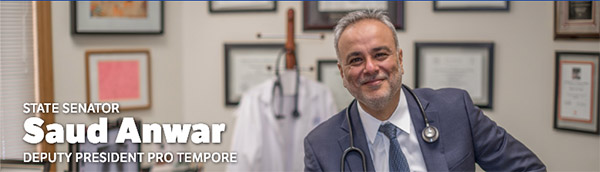
Today, State Senator Sand Anwar (D-South Windsor), Senate Chair of the Public Health Committee, released the following statement after the Office of Health Strategy announced it, Yale New Haven Health and Prospect CT reached an agreement regarding certificate of need applications for Yale New Haven Health’s acquisition of three Prospect-owned Connecticut hospitals, allowing for the acquisition to progress.

“It is relieving, and promising, that Yale New Haven Health’s acquisition of Manchester Memorial, Rockville General and Waterbury Hospitals will now be able to move forward with this important settlement being reached,” said Sen. Anwar. “I’m grateful that the hundreds of thousands of patients within these hospitals’ area of care will not have that care compromised. Yale New Haven Health’s commitment to thorough, non-profit, academic medicine will provide benefits to the countless people these hospitals serve, and I am confident that the settlement in question meets their needs and demands. With a focus on keeping costs affordable, investing in mental health and substance use disorder care and meeting the demands of the community at large, as the agreement stands, I’m confident that this long-awaited acquisition will reach its next steps.”

Share Share
Tweet Tweet
Forward Forward

Senator McCrory Celebrates Agricultural Grant for the Hartford County 4-H Fair

Senator McCrory

Senator McCrory Celebrates Agricultural Grant for the Hartford County 4-H Fair

Sen. Doug McCrory, D-Hartford, celebrated news this week that the Connecticut Department of Agriculture had awarded the Hartford County 4-H Fair a $36,900 grant to promote agricultural education.

The grant is intended to support an effort to use the 4-H fair as a venue to raise youth awareness of farm-related careers in Connecticut through initiatives like guest speakers from the agricultural community and hands-on training and competitions.

“This funding will enhance the Hartford County 4-H program’s capacity to highlight viable farming careers for our youth and will complement the important work of our region’s vocational and agricultural schools,” Senator McCrory, co-chair of the legislature’s Education Committee, said. “I welcome this grant and look forward to educational programming that will help inspire a generation of future farmers.”

The award comes from the agency’s 2024 Agricultural Enhancement Program and was one of 21 projects to receive funding as part of a statewide effort totaling more than $531,000 to improve agricultural viability.

The grant program, formerly known as Farm Viability Grants, supports municipalities, regional councils of governments, and nonprofit organizations that bolster the agricultural sector’s strength and productivity.

Contact: Hugh McQuaid | Hugh.McQuaid@cga.ct.gov | 860-634-4651
Share Share
Tweet Tweet
Forward Forward

Senator Needleman Welcomes Department of Agriculture Grant To Help Support Local Veteran Farmers

State Senator Norm Needleman
FOR IMMEDIATE RELEASE
Contact: Joe O’Leary | Joe.OLeary@cga.ct.gov | 508-479-4969
March 26, 2024

Senator Needleman Welcomes Department of Agriculture Grant To Help Support Local Veteran Farmers

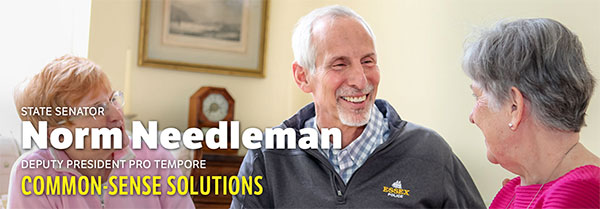
The Connecticut Department of Agriculture recently announced its latest distribution of agricultural enhancement grants released to 21 different projects across the state, including the release of $49,999 to Connecticut Resource Conservation and Development in Haddam. State Senator Norm Needleman (D-Essex) welcomed the funding in his district, which will allow for direct aid supporting veteran farmers and veterans interested in agriculture careers.

“I’m so glad our communities and our state will benefit from local veteran farmers and prospective farmers’ fresh produce in years to come through this grant,” said Sen. Needleman. “These funds will directly support current and future farmers who served our country and will increase local agricultural offerings so families throughout Connecticut can eat fresh and healthy.”

The $49,999 grant is a contract with the Farmer Veteran Coalition to conduct one-on-one consultations with prospective Connecticut veterans interested in agriculture and consultations to current farming veterans looking to expand operations or enhance offerings.

It will provide stipends to assist 20 veterans in moving forward with registering farm businesses and obtaining Farm Tax Exemption permits. It will also support the coordination and provision of one-on-one grant writing assistance.

More than $500,000 in grant funding was released through the program in this allocation, with funds supporting youth agricultural education, farmers’ market promotion, food supply chains and urban agriculture. The program as a whole is designed to improve agricultural viability in the state.

Share Share
Tweet Tweet
Forward Forward