Senator Honig Introduces Legislation to Reduce Energy Costs

Senator Honig Introduces Legislation to Reduce Energy Costs

In an effort to lower energy costs in Connecticut, Sen. Paul Honig, D-Harwinton, has proposed legislation to authorize the state to utilize tax-exempt municipal bonding to finance energy infrastructure improvements.

The proposal, Senate Bill 1040, would provide relief to ratepayers by reducing interest rates on borrowing for projects to modernize the energy grid. Currently, utility companies like Eversource and United Illuminating finance infrastructure improvements by borrowing from the corporate bond market, where those companies receive a guaranteed return on their investments.

“For too long, Connecticut ratepayers have shouldered the burden of financing energy projects at inflated interest rates that benefit corporate utility monopolies,” Senator Honig said. “Families wouldn’t choose a high-interest loan when lower-cost financing is available, and our state shouldn’t either. By leveraging municipal bonding, we can significantly reduce the cost of critical energy infrastructure upgrades and deliver real relief to ratepayers while modernizing our grid. Although no single proposal will slash energy prices overnight, I believe it’s time to prioritize Connecticut residents over corporate profits and I hope this legislation will be part of the conversation.”

Senate Bill 1040 was introduced by Senator Honig and referred to the legislature’s Planning and Development Committee. The bill would allow municipalities to issue bonds for energy grid modernization projects.

FOR IMMEDIATE RELEASE
Contact: Hugh McQuaid | Hugh.McQuaid@cga.ct.gov 

Senator Rahman Introduces Bill to Eliminate Car Taxes over Five Years

Senator Rahman Introduces Bill to Eliminate Car Taxes over Five Years

Today, state Senator MD Rahman (D-Manchester), Chair of the Planning and Development Committee, raised three bills in the Planning and Development Committee including a proposal to phase out the motor vehicle tax over five years.

The three bills introduced by Senator Rahman include:

-An Act Concerning Property Tax Exemptions for Motor Vehicles

-An Act Concerning Personal Property Tax Exemptions for Motor Vehicles Used Exclusively for Farming

-An Act Concerning the Conversion of Commercial Real Property for Residential Use

An Act Concerning Property Tax Exemptions for Motor Vehicles:
Currently in Connecticut, municipalities have the authority to levy property taxes on motor vehicles. These taxes are assessed based on the vehicle’s value and can vary widely from town to town. The tax burden can vary significantly depending on the municipality, causing disparities between urban and rural areas.

The bill proposed by Senator Rahman will allow towns to phase out the motor vehicle tax over a period of up to five years while increasing the assessment value on real property to make up the revenue difference. Towns would have the flexibility to implement the changes at their own pace, with some towns opting for the full five-year phase-out period while others may move faster or slower depending on their local financial needs and conditions.

“Eliminating car taxes in Connecticut will address the regional disparities in how towns currently tax vehicles,” said Senator Rahman. “This could lead to greater fairness across the state as tax burdens would be reduced for vehicle owners.”

An Act Concerning Personal Property Tax Exemptions for Motor Vehicles Used Exclusively for Farming:
Senator Rahman intends to create a tax exemption for motor vehicles used strictly for farming. Farmers invest heavily in each crop they plant in the ground and their efforts supply fresh produce for our families and communities.

Farming is a vital industry, often subject to market volatility, changing weather patterns, and fluctuating commodity prices. Providing tax exemptions for vehicles used in farming helps reduce operating costs for farmers, which can lead to increased stability and sustainability in the industry.

Farming operations often require specialized motor vehicles (such as tractors, trucks, and other agricultural vehicles) that are integral to planting, harvesting, and transporting goods. These vehicles are essential to the efficiency and productivity of farming activities. Since these vehicles are used almost exclusively for farm-related tasks, it is unfair to tax them the same way as general vehicles are. These exemptions help strengthen rural economies, ensure the stability of the agricultural sector, and promote fairness in how different types of vehicles are taxed.

“An exemption for tax on vehicles used exclusively for farming would aim to lessen the economic burdens placed on farmers, allowing them to focus on maintaining efficient, sustainable, and competitive farming operations,” said Senator Rahman.

An Act Concerning the Conversion of Commercial Real Property:
Senator Rahman intends to create a law that will allow the conversion of any commercial building into a residential development, provided that the residential development meets applicable health and safety requirements after the conversion. It will also prohibit the revaluation of any commercial building subject to a conversion over the course of three years and require that municipal inspections of any commercial building be completed within a reasonable time.

The pandemic dramatically altered commercial real estate dynamics. With the rise of remote work, many businesses in Connecticut are downsizing office spaces or closing physical locations altogether. As a result of these changes, many commercial properties, such as office buildings, malls, and retail centers, are sitting vacant or underused. Converting underused or vacant commercial properties into residential units, such as apartments or affordable housing is one solution that will not only help meet housing demand but also revitalize areas with vacant or outdated commercial buildings.

“Like many other states, Connecticut navigates shifts in work patterns, retail environments, and urban development and the need to adapt and repurpose existing commercial properties is becoming more critical,” said Senator Rahman. “By incentivizing the conversion of commercial properties into residential spaces, the act could help increase the availability of affordable units, particularly in urban areas where demand is high.”

All three bills will now head to a public hearing.

GOP Lies: Senate Minority Leader Tells Reporters Natural Gas Has ‘No Carbon Emissions’

GOP Lies: Senate Minority Leader Tells Reporters Natural Gas Has ‘No Carbon Emissions’

By Joe O’Leary
January 27 @ 1:25 pm

Senate Minority Leader Stephen Harding speaks at a Jan. 22 press conference. Credit: screenshot courtesy of CT-N


Senate Republican Minority Leader Stephen Harding told a reporter at a Wednesday press conference on energy proposals that natural gas, a type of fossil fuel, has “no carbon emissions.”

“We’re talking about an affordable energy resource that has no carbon emissions,” Harding said during the press conference.

According to scientific fact, Harding is wrong.

The World Nuclear Association reported in September 2024 that more than 40% of all energy-related carbon dioxide emissions are due to the burning of fossil fuels for electricity generation.

That number jumps to about 80% for emissions in the United States and the European Union. It also said 45% of global carbon emissions from fossil fuels come from coal, 35% come from oil and 20% come from gas.

According to NASA, in 2023, total global fossil emissions rose by more than 1 percent, representing more than 36 billion metric tons of carbon dioxide created from the burning of fossil fuels.

The Environmental Protection Agency said that “the largest source of greenhouse gas emissions from human activities in the United States is from burning fossil fuels for electricity, heat and transportation.”

The EPA said in 2022, 60% of US electricity generation came from the burning of fossil fuels, primarily coal and natural gas. In 2021 and 2022, a national increase in total greenhouse gas emissions was driven primarily by fossil fuel combustion including coal and natural gas, the EPA added.

The U.S. Energy Information Administration said in 2023 that natural gas and coal represented 99% of electric power sector carbon dioxide emissions.

The United Nations said that fossil fuels – coal, oil and gas – represent more than 75% of global greenhouse emissions and nearly 90% of all carbon dioxide emissions.

The National Oceanic and Atmospheric Administration said in late 2023 that a record rate of carbon dioxide emissions was impacting efforts to reduce pollution and the impact of climate change.

State and Federal Investments Drive Improvements to Hartford Rail Line

State and Federal Investments Drive Improvements to Hartford Rail Line

By Joe O’Leary
January 25 @ 5:00 am

Credit: Oscar Portan / Canva


As the CTrail Hartford Line continues to grow, seeing more than 750,000 passenger trips just in 2024, federal and state organizations continue to invest in the trains.

This month, Gov. Ned Lamont and Connecticut’s congressional delegation announced that new infusions of $11.6 million from the Federal Railroad Administration and $13.4 million from the state Department of Transportation will help the Hartford Line expand its services, providing increased reliability for anyone looking to travel from New Haven to Springfield, Massachusetts.

Under the Federal Railroad Administration’s Restoration and Enhancement Program, the Hartford Line will gain several additions to its schedule, most prominently a new weekday round trip from New Haven to Hartford. That will serve to support a service gap along the Hartford Line that can leave up to three hours between train trips.

In addition, four weekend trains that currently only operate schedules from Hartford to New Haven, two each on Saturdays and Sundays, will see service expanded to Windsor Locks in both directions. One weekday train that currently stops at Windsor Locks will also have its service expanded to Springfield.

There’s more to the new funding opportunities than just service expansions. Customer service hours at Hartford Union Station will increase by 75%, while there’s continued funding to maintain two weekday trains between New Haven and Springfield. Funds will also enhance connectivity of the existing rail services along the Northeast Corridor.

“The Hartford Line is not only providing a valuable and convenient public transit resource for people who live in central Connecticut, but it is also helping create new opportunities for economic growth and development in the towns it serves,” Lamont said. “Expanding service on this line will further make travel on this rail line even more convenient, and I appreciate President Biden and the FRA for partnering with our state to make this happen.”

Sen. Christine Cohen, a Guilford Democrat who co-chairs the legislature’s Transportation Committee, said the expansion would have benefits for the entire state.

“As we pursue new transit options to benefit Connecticut’s residents, I’m thrilled that we have secured these vital federal dollars and we can cheer their benefits to our state as a whole,” Cohen said. “This funding will cut down on traffic on our highways, reduce our state’s carbon footprint and provide transit opportunities that will help businesses, workers and municipalities increase connectivity.”

Since the CTrail Hartford Line went into service in 2018, it’s provided economic opportunities for residents and communities alike, with several train stations built and renovated to reflect its connectivity from Springfield to New Haven and the five additional municipalities served on its route.

Expanding and enhancing the Hartford Line is projected to increase ridership by up to 90,000 people per year, save motorists more than 100 million miles, reduce fuel emissions by 3.5 million gallons and reduce carbon emissions by 25,000 metric tons per year.

Senate Democrats Announce Two Priority Bills for Patient Protections & Rx Affordability

Senate Democrats Announce Two Priority Bills for Patient Protections & Rx Affordability

HARTFORD – Senate Democrats today unveiled two more priority bills for the 2025 legislative session: Senate Bills 10 and 11, concepts which seek to enhance health insurance patient protections and prescription drug affordability.

Senate President Pro Tem Martin Looney (D-New Haven), Senate Majority Leader Bob Duff (D-Norwalk), and Senators Jorge Cabrera (D-Hamden) and Matt Lesser (D-Middletown) said the two bills are among the Top 12 legislative goals for Senate Democrats this session, which ends at midnight on Wednesday, June 4.

“Onerous insurance company burdens and the ever-increasing cost of prescription drugs are a constant thorn in the side of consumers, and we must do our utmost in the General Assembly to contain these where we can,” said Sen. Looney.

“We know that only about one percent of people who are denied a claim or prior authorization will ever fight that denial – but when they do, they’ll win about 75% of the time. That tells me there’s a lot of room for improvement in the way that health insurance and the people it insures is managed in this state,” said Sen. Duff. “Hundreds of thousands of people are covered by insurance in Connecticut, and insurance companies employ about 60,000 people in the state. It’s a big business with a direct, personal impact on most everyone.”

“With each passing day, people have a better understanding of the life-changing effects that insurance company decisions can have on them and their families. Connecticut has a responsibility to step in where it can and level the playing field when it comes to these patient/insurance company relationships,” said Sen. Cabrera, who is Senate Chair of the Insurance and Real Estate Committee.

“Prescription drug costs are absolutely unsustainable and there is a strong, bipartisan coalition ready to tackle this incredibly complex issue,” said Sen. Matt Lesser, Chair of the Human Services Committee. “This is tough but important work and it is essential that we center the voices of perspectives of Connecticut patients. I am grateful to Senators Looney and Duff for making this a priority piece of legislation and I am eager to work together with my colleages to deliver real, tangible relief for Connecticut residents.”


Senate Bill 10: An Act Concerning Heath Insurance and Patient Protection

Senate Bill 10, “An Act Concerning Heath Insurance and Patient Protection,” will include several components, including:

Mental Health Parity Enforcement

In July 2019, Connecticut passed a mental health parity law which received unanimous and bipartisan support. But the actual enforcement of that law has been slow, leaving some residents with coverage denials and inadequate care. A recent Office of Health Strategy report found that four of seven major commercial insurance providers in Connecticut are meeting federal warning signs for parity noncompliance, highlighting the urgent need for stronger enforcement. SB 10 would establish a penalty for any health carrier in Connecticut that doesn’t comply with the legal requirements for mental health and substance use disorder benefit parity.

A Prohibition on Automatic ‘Downcoding’

Downcoding is when an insurance company decides to pay for a lower level of care than what a doctor ordered or provided. The end result is that doctors are paid less than the cost of their service, and over time may be forced to suggest a less-effective procedure to ensure that the care is covered. Automatic downcoding is when the downcode decision is made by an insurance company’s algorithm or artificial intelligence, as opposed to review by physicians in the same speciality, which is Connecticut state law when it comes to denial of claims. SB 10 would extend mandatory human review to downcoding decisions.

Further Restrictions on an Insurance Company’s Ability to Implement Less-Expensive “Step Therapies”

Step Therapy, sometimes called a ‘fail first’ policy, is when an insurance company requires doctors and patients to try less-expensive, less-effective medical procedures or drugs to address a medical issue before moving on to the next “step” in treatment. This is a particularly problematic insurance policy when it comes to  degenerative chronic diseases for which patients can suffer irreversible disability during the time they are denied the proper treatment. A state law passed in 2014 (Public Act 14-118) bars certain health insurers that use prescription drug step therapy regimens from requiring their use for more than 60 days. That law has since been updated, reducing the 60 days to 30 and prohibiting step therapy until January 1, 2027 for drugs used to treat schizophrenia, major depressive disorder, or bipolar disorder. SB10 will further restrict an insurance company’s attempt to use step therapy.

Senate Bill 11: An Act Concerning Prescription Drug Access and Affordability

Residents across Connecticut and the nation are struggling under the unaffordable cost of prescription drug prices. Senator Lesser chairs the bipartisan, bicameral Prescription Drug Task Force which brings together a broad coalition of legislators, doctors, nurses, pharmacists, experts from the pharmaceutical industry, advocates and patients to determine a legislative solution to protecting and expanding patient care. Senate Bill 11 will include recommendations from the bipartisan task force.

According to a 2022 study of more than 1,300 Connecticut adults from the Healthcare Value Hub found that:

-Over half (55%) experienced at least one healthcare affordability burden in the past year;

-Nearly 4 in 5 (78%) worry about affording healthcare in the future;

-Over 1 in 4 (28%) of those surveyed with household incomes under $50,000 had rationed medication in the last 12 months due to cost.

-Lower-income respondents and respondents with disabilities are more likely to go without care and incur debt due to healthcare costs; and

-Across party lines, respondents express strong support for government-led solutions.

Connecticut Democrats have worked to address various barriers in access to prescription drugs, including capping the out-of-pocket cost of insulin at $25, allowing pharmacists to prescribe birth control, and authorizing the ArrayRx discount drug program, Senate Bill 11 will build upon this work through a number of initiatives:

Address Pharmacy Benefit Managers (PBMs)

PBMs administer prescriptions or services of a health benefit plan on the behalf of plan sponsors. These third party middle men drive up costs for insurers, pharmacies, and ultimately patients. In Connecticut, three PBMs make up 64% of the market and the top 5 cover 95% of residents.

Senate Bill 11 seeks to establish a fiduciary responsibility of PBMs to ensure they pass along any savings to their plan sponsors.

Bulk Purchasing

Pooling state agencies to increase buying power to bring down the cost of prescription drugs.

Increasing Nursing Home Investment into Patient Care

SB11 seeks to increase quality of care in Connecticut nursing homes by requiring care providers reinvest 80% of their revenue back into patient care.

Expand Emergency Medicaid Coverage

Currently, Connecticut state statute has a narrow definition of “emergency services” as it relates to Medicaid coverage and SB 11 seeks to expand the definition to include a greater range of outpatient coverage. Expanding coverage for certain emergency services will bridge gaps in healthcare access and address disparities in health outcomes.

Senate Bill 11 will also require that any changes to the Medicaid care and delivery model must go be approved by the legislature.

Senate Democrats Announce Two Priority Bills for Patient Protections & Rx Affordability

Senate Democrats Announce Two Priority Bills for Patient Protections & Rx Affordability

HARTFORD – Senate Democrats today unveiled two more priority bills for the 2025 legislative session: Senate Bills 10 and 11, concepts which seek to enhance health insurance patient protections and prescription drug affordability.

Senate President Pro Tem Martin Looney (D-New Haven), Senate Majority Leader Bob Duff (D-Norwalk), and Senators Jorge Cabrera (D-Hamden) and Matt Lesser (D-Middletown) said the two bills are among the Top 12 legislative goals for Senate Democrats this session, which ends at midnight on Wednesday, June 4.

“Onerous insurance company burdens and the ever-increasing cost of prescription drugs are a constant thorn in the side of consumers, and we must do our utmost in the General Assembly to contain these where we can,” said Sen. Looney.

“We know that only about one percent of people who are denied a claim or prior authorization will ever fight that denial – but when they do, they’ll win about 75% of the time. That tells me there’s a lot of room for improvement in the way that health insurance and the people it insures is managed in this state,” said Sen. Duff. “Hundreds of thousands of people are covered by insurance in Connecticut, and insurance companies employ about 60,000 people in the state. It’s a big business with a direct, personal impact on most everyone.”

“With each passing day, people have a better understanding of the life-changing effects that insurance company decisions can have on them and their families. Connecticut has a responsibility to step in where it can and level the playing field when it comes to these patient/insurance company relationships,” said Sen. Cabrera, who is Senate Chair of the Insurance and Real Estate Committee.

“Prescription drug costs are absolutely unsustainable and there is a strong, bipartisan coalition ready to tackle this incredibly complex issue,” said Sen. Matt Lesser, Chair of the Human Services Committee. “This is tough but important work and it is essential that we center the voices of perspectives of Connecticut patients. I am grateful to Senators Looney and Duff for making this a priority piece of legislation and I am eager to work together with my colleages to deliver real, tangible relief for Connecticut residents.”


Senate Bill 10: An Act Concerning Heath Insurance and Patient Protection

Senate Bill 10, “An Act Concerning Heath Insurance and Patient Protection,” will include several components, including:

Mental Health Parity Enforcement

In July 2019, Connecticut passed a mental health parity law which received unanimous and bipartisan support. But the actual enforcement of that law has been slow, leaving some residents with coverage denials and inadequate care. A recent Office of Health Strategy report found that four of seven major commercial insurance providers in Connecticut are meeting federal warning signs for parity noncompliance, highlighting the urgent need for stronger enforcement. SB 10 would establish a penalty for any health carrier in Connecticut that doesn’t comply with the legal requirements for mental health and substance use disorder benefit parity.

A Prohibition on Automatic ‘Downcoding’

Downcoding is when an insurance company decides to pay for a lower level of care than what a doctor ordered or provided. The end result is that doctors are paid less than the cost of their service, and over time may be forced to suggest a less-effective procedure to ensure that the care is covered. Automatic downcoding is when the downcode decision is made by an insurance company’s algorithm or artificial intelligence, as opposed to review by physicians in the same speciality, which is Connecticut state law when it comes to denial of claims. SB 10 would extend mandatory human review to downcoding decisions.

Further Restrictions on an Insurance Company’s Ability to Implement Less-Expensive “Step Therapies”

Step Therapy, sometimes called a ‘fail first’ policy, is when an insurance company requires doctors and patients to try less-expensive, less-effective medical procedures or drugs to address a medical issue before moving on to the next “step” in treatment. This is a particularly problematic insurance policy when it comes to  degenerative chronic diseases for which patients can suffer irreversible disability during the time they are denied the proper treatment. A state law passed in 2014 (Public Act 14-118) bars certain health insurers that use prescription drug step therapy regimens from requiring their use for more than 60 days. That law has since been updated, reducing the 60 days to 30 and prohibiting step therapy until January 1, 2027 for drugs used to treat schizophrenia, major depressive disorder, or bipolar disorder. SB10 will further restrict an insurance company’s attempt to use step therapy.

Senate Bill 11: An Act Concerning Prescription Drug Access and Affordability

Residents across Connecticut and the nation are struggling under the unaffordable cost of prescription drug prices. Senator Lesser chairs the bipartisan, bicameral Prescription Drug Task Force which brings together a broad coalition of legislators, doctors, nurses, pharmacists, experts from the pharmaceutical industry, advocates and patients to determine a legislative solution to protecting and expanding patient care. Senate Bill 11 will include recommendations from the bipartisan task force.

According to a 2022 study of more than 1,300 Connecticut adults from the Healthcare Value Hub found that:

-Over half (55%) experienced at least one healthcare affordability burden in the past year;

-Nearly 4 in 5 (78%) worry about affording healthcare in the future;

-Over 1 in 4 (28%) of those surveyed with household incomes under $50,000 had rationed medication in the last 12 months due to cost.

-Lower-income respondents and respondents with disabilities are more likely to go without care and incur debt due to healthcare costs; and

-Across party lines, respondents express strong support for government-led solutions.

Connecticut Democrats have worked to address various barriers in access to prescription drugs, including capping the out-of-pocket cost of insulin at $25, allowing pharmacists to prescribe birth control, and authorizing the ArrayRx discount drug program, Senate Bill 11 will build upon this work through a number of initiatives:

Address Pharmacy Benefit Managers (PBMs)

PBMs administer prescriptions or services of a health benefit plan on the behalf of plan sponsors. These third party middle men drive up costs for insurers, pharmacies, and ultimately patients. In Connecticut, three PBMs make up 64% of the market and the top 5 cover 95% of residents.

Senate Bill 11 seeks to establish a fiduciary responsibility of PBMs to ensure they pass along any savings to their plan sponsors.

Bulk Purchasing

Pooling state agencies to increase buying power to bring down the cost of prescription drugs.

Increasing Nursing Home Investment into Patient Care

SB11 seeks to increase quality of care in Connecticut nursing homes by requiring care providers reinvest 80% of their revenue back into patient care.

Expand Emergency Medicaid Coverage

Currently, Connecticut state statute has a narrow definition of “emergency services” as it relates to Medicaid coverage and SB 11 seeks to expand the definition to include a greater range of outpatient coverage. Expanding coverage for certain emergency services will bridge gaps in healthcare access and address disparities in health outcomes.

Senate Bill 11 will also require that any changes to the Medicaid care and delivery model must go be approved by the legislature.

FOR IMMEDIATE RELEASE
Contact: Kevin Coughlin | 203-710-0193 | kevin.coughlin@cga.ct.gov

Senate Democrats Announce Two Priority Bills for Patient Protections & Rx Affordability

Senate Democrats Announce Two Priority Bills for Patient Protections & Rx Affordability

HARTFORD – Senate Democrats today unveiled two more priority bills for the 2025 legislative session: Senate Bills 10 and 11, concepts which seek to enhance health insurance patient protections and prescription drug affordability.

Senate President Pro Tem Martin Looney (D-New Haven), Senate Majority Leader Bob Duff (D-Norwalk), and Senators Jorge Cabrera (D-Hamden) and Matt Lesser (D-Middletown) said the two bills are among the Top 12 legislative goals for Senate Democrats this session, which ends at midnight on Wednesday, June 4.

“Onerous insurance company burdens and the ever-increasing cost of prescription drugs are a constant thorn in the side of consumers, and we must do our utmost in the General Assembly to contain these where we can,” said Sen. Looney.

“We know that only about one percent of people who are denied a claim or prior authorization will ever fight that denial – but when they do, they’ll win about 75% of the time. That tells me there’s a lot of room for improvement in the way that health insurance and the people it insures is managed in this state,” said Sen. Duff. “Hundreds of thousands of people are covered by insurance in Connecticut, and insurance companies employ about 60,000 people in the state. It’s a big business with a direct, personal impact on most everyone.”

“With each passing day, people have a better understanding of the life-changing effects that insurance company decisions can have on them and their families. Connecticut has a responsibility to step in where it can and level the playing field when it comes to these patient/insurance company relationships,” said Sen. Cabrera, who is Senate Chair of the Insurance and Real Estate Committee.

“Prescription drug costs are absolutely unsustainable and there is a strong, bipartisan coalition ready to tackle this incredibly complex issue,” said Sen. Matt Lesser, Chair of the Human Services Committee. “This is tough but important work and it is essential that we center the voices of perspectives of Connecticut patients. I am grateful to Senators Looney and Duff for making this a priority piece of legislation and I am eager to work together with my colleages to deliver real, tangible relief for Connecticut residents.”


Senate Bill 10: An Act Concerning Heath Insurance and Patient Protection

Senate Bill 10, “An Act Concerning Heath Insurance and Patient Protection,” will include several components, including:

Mental Health Parity Enforcement

In July 2019, Connecticut passed a mental health parity law which received unanimous and bipartisan support. But the actual enforcement of that law has been slow, leaving some residents with coverage denials and inadequate care. A recent Office of Health Strategy report found that four of seven major commercial insurance providers in Connecticut are meeting federal warning signs for parity noncompliance, highlighting the urgent need for stronger enforcement. SB 10 would establish a penalty for any health carrier in Connecticut that doesn’t comply with the legal requirements for mental health and substance use disorder benefit parity.

A Prohibition on Automatic ‘Downcoding’

Downcoding is when an insurance company decides to pay for a lower level of care than what a doctor ordered or provided. The end result is that doctors are paid less than the cost of their service, and over time may be forced to suggest a less-effective procedure to ensure that the care is covered. Automatic downcoding is when the downcode decision is made by an insurance company’s algorithm or artificial intelligence, as opposed to review by physicians in the same speciality, which is Connecticut state law when it comes to denial of claims. SB 10 would extend mandatory human review to downcoding decisions.

Further Restrictions on an Insurance Company’s Ability to Implement Less-Expensive “Step Therapies”

Step Therapy, sometimes called a ‘fail first’ policy, is when an insurance company requires doctors and patients to try less-expensive, less-effective medical procedures or drugs to address a medical issue before moving on to the next “step” in treatment. This is a particularly problematic insurance policy when it comes to  degenerative chronic diseases for which patients can suffer irreversible disability during the time they are denied the proper treatment. A state law passed in 2014 (Public Act 14-118) bars certain health insurers that use prescription drug step therapy regimens from requiring their use for more than 60 days. That law has since been updated, reducing the 60 days to 30 and prohibiting step therapy until January 1, 2027 for drugs used to treat schizophrenia, major depressive disorder, or bipolar disorder. SB10 will further restrict an insurance company’s attempt to use step therapy.

Senate Bill 11: An Act Concerning Prescription Drug Access and Affordability

Residents across Connecticut and the nation are struggling under the unaffordable cost of prescription drug prices. Senator Lesser chairs the bipartisan, bicameral Prescription Drug Task Force which brings together a broad coalition of legislators, doctors, nurses, pharmacists, experts from the pharmaceutical industry, advocates and patients to determine a legislative solution to protecting and expanding patient care. Senate Bill 11 will include recommendations from the bipartisan task force.

According to a 2022 study of more than 1,300 Connecticut adults from the Healthcare Value Hub found that:

-Over half (55%) experienced at least one healthcare affordability burden in the past year;

-Nearly 4 in 5 (78%) worry about affording healthcare in the future;

-Over 1 in 4 (28%) of those surveyed with household incomes under $50,000 had rationed medication in the last 12 months due to cost.

-Lower-income respondents and respondents with disabilities are more likely to go without care and incur debt due to healthcare costs; and

-Across party lines, respondents express strong support for government-led solutions.

Connecticut Democrats have worked to address various barriers in access to prescription drugs, including capping the out-of-pocket cost of insulin at $25, allowing pharmacists to prescribe birth control, and authorizing the ArrayRx discount drug program, Senate Bill 11 will build upon this work through a number of initiatives:

Address Pharmacy Benefit Managers (PBMs)

PBMs administer prescriptions or services of a health benefit plan on the behalf of plan sponsors. These third party middle men drive up costs for insurers, pharmacies, and ultimately patients. In Connecticut, three PBMs make up 64% of the market and the top 5 cover 95% of residents.

Senate Bill 11 seeks to establish a fiduciary responsibility of PBMs to ensure they pass along any savings to their plan sponsors.

Bulk Purchasing

Pooling state agencies to increase buying power to bring down the cost of prescription drugs.

Increasing Nursing Home Investment into Patient Care

SB11 seeks to increase quality of care in Connecticut nursing homes by requiring care providers reinvest 80% of their revenue back into patient care.

Expand Emergency Medicaid Coverage

Currently, Connecticut state statute has a narrow definition of “emergency services” as it relates to Medicaid coverage and SB 11 seeks to expand the definition to include a greater range of outpatient coverage. Expanding coverage for certain emergency services will bridge gaps in healthcare access and address disparities in health outcomes.

Senate Bill 11 will also require that any changes to the Medicaid care and delivery model must go be approved by the legislature.

FOR IMMEDIATE RELEASE
Contact: Kevin Coughlin | 203-710-0193 | kevin.coughlin@cga.ct.gov

Treasurer’s Annual Report Details Investment Returns For Connecticut Taxpayers

Treasurer’s Annual Report Details Investment Returns For Connecticut Taxpayers

By Joe O’Leary
January 24 @ 2:53 pm

The 2024 Annual Report from Connecticut Treasurer Erick Russell detailed significant investment returns for taxpayers across the state while celebrating the first year of the state’s Baby Bonds program.

The report’s biggest takeaway shows that Connecticut’s portfolio of funds and trusts saw returns of approximately $7.5 billion during the 2024 fiscal year, representing gains of 11.5%. That reflects efforts to mitigate risk and lower fees, among other gains.

“Beyond any single program or accomplishment, we are proud of our role in helping build a future for our state where every person has the resources, knowledge, and opportunities they need to shape the future they want for themselves,” Russell said in a letter to Gov. Ned Lamont regarding the annual report.

The Treasurer’s Office celebrated the completion of its CT Baby Bonds program’s first year. More than 16,000 children have been enrolled in that program and received $3,200 each invested on their behalf; when enrolled children reach adulthood, they’ll be able to access those funds to support higher education, property ownership or other life experiences.

The report also focused on a variety of new achievements accomplished by Russell’s office, ranging from bond sales of $2.2 billion to support school and transportation construction, as well as refunding more than $61 million in existing bonds to save taxpayers money, to the state’s overhauled unclaimed property system.

More than 44,000 people have received $82 million in unclaimed property via www.CTBigList.gov, a web platform developed to significantly ease the process of connecting residents with funds or property they may not be aware of.

The Connecticut Higher Education Trust’s Dream Big! competition, now in its 11th year, delivered nearly half a million dollars in prizes to students and schools, bringing its total of submitted funds to more than $4.5 million supporting future education expenses. In 2024, more than 17,000 new CHET accounts were opened through the college savings program.

Russell’s office also touted the improvement of Connecticut transportation bonds, which climbed from a rating of AA+ to AAA, the highest possible, supporting future projects to support infrastructure improvements on highways, roads, bridges and waterway access.

Sens. Gadkar-Wilcox, Gaston Statement on State Board of Education Decision

Sens. Gadkar-Wilcox, Gaston Statement on State Board of Education Decision

Today, State Senators Sujata Gadkar-Wilcox and Herron Gaston issued a statement on the State Board of Education initiative to address the stability of operations in Bridgeport Public Schools. The proposal passed unanimously and details can be found here.

“We took a constitutional oath to adequately fund our school districts across Connecticut, and Bridgeport students are not exempt from that. We believe that the state should work together with the Bridgeport Board of Education and school leadership to provide adequate funding and appropriate guidance to create a stronger and more financially stable path forward for Bridgeport students.

Our local Board of Education is a group of dedicated public servants who are members of their community and are intimately familiar with the needs of the students, teachers, parents and school staff. The challenges faced by Bridgeport schools is not the failing of a Board of Education, administration or students – it is the result of a district that has historically been underfunded and overburdened.

For this initiative to be productive and best serve the students and community, the state must work collaboratively with the democratically elected Board of Education and ensure the district has the resources it needs to provide quality education to its students – particularly students with disabilities and ESL students who require additional funding, while maintaining local control and influence.”

State Leaders Move to Shield Connecticut Residents from Trump Health Care Policies

State Leaders Move to Shield Connecticut Residents from Trump Health Care Policies

By Hugh McQuaid
January 23 @ 9:25 am

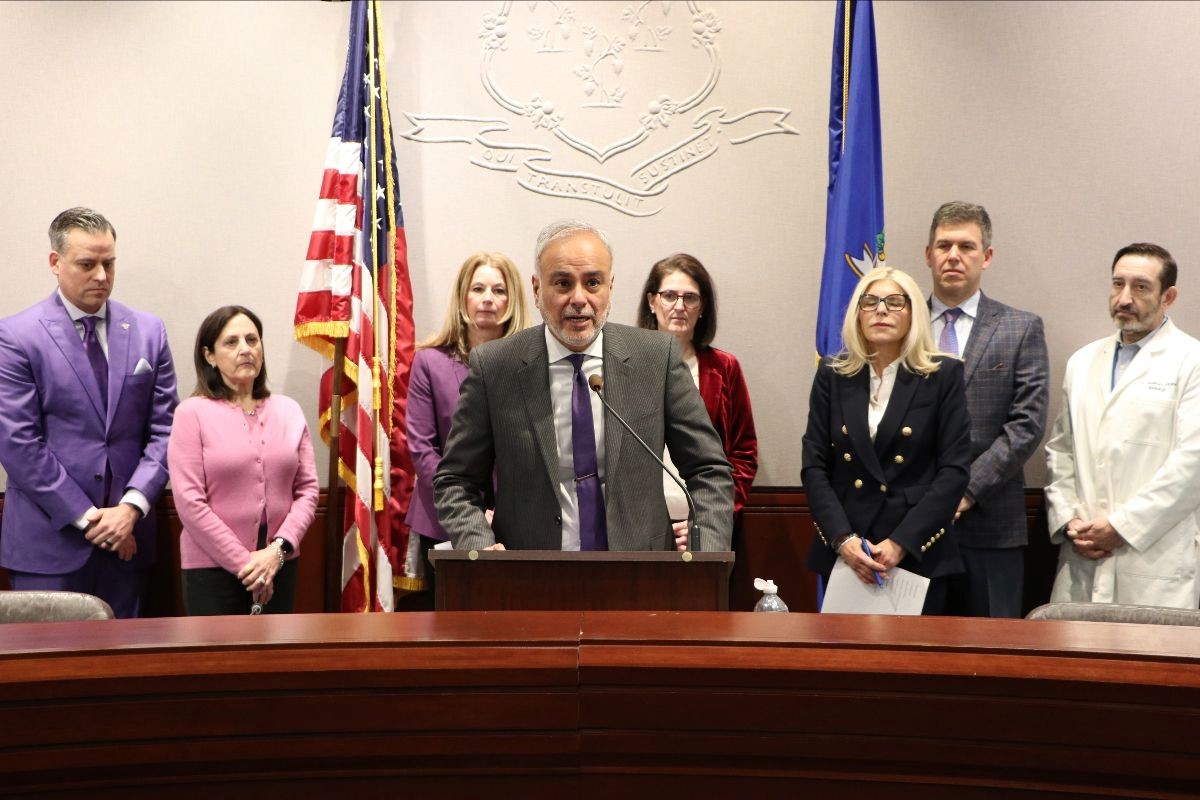
Sen. Saud Anwar, D-South Windsor, discussion public health policy on Jan. 21. Credit: Joe O’Leary / Senate Democrats


As the Trump administration considers sweeping public health shifts on issues like vaccines and fluoridated water, Senate Democrats proposed new legislation this week, intended to shield Connecticut residents from potentially dangerous health policies.

Sen. Saud Anwar, a South Windsor doctor who serves as co-chair of the legislature’s Public Health Committee, described the proposal with Senate leaders during a Tuesday press conference in the Legislative Office Building.

“Public health is not a luxury. It’s the backbone of every thriving community,” Anwar said. “It’s not a policy. It’s a promise. And this is the time for us to have a bold stand, especially if you’re listening to what is being said by individuals who are given the responsibility to look at our public health in the new federal government.”

Anwar’s comments came just one day after President Donald Trump was sworn into office for a second term. Trump has nominated Robert F. Kennedy Jr. to serve as a secretary of the Department of Health and Human Services.

Kennedy is a longtime vaccine skeptic, who the Associated Press referred to as a “one of the world’s most influential spreaders of fear and distrust around vaccines.” Kennedy has also set his sights on removing fluoride from drinking water and suggested on social media that the Trump administration would advise all American water systems to remove it from drinking water.

Fluoride has been added to U.S. water systems since the 1940s and has helped to prevent tooth decay in children and adults, leading the Centers for Disease Control and Prevention to name it one of the Ten Great Public Health Achievements of the 20th century.

On Tuesday, Senate Democrats said their wide-ranging public health legislation, called Senate Bill 7, would preserve current fluoride levels in Connecticut water supplies, protecting residents in the event that the federal agency changes its standards.

Anwar said current state law was based on an assumption that the federal government would continue to follow commonly accepted health principals.

“This has been true all these years except it no longer is,” Anwar said. “Just to put this in perspective, all these years, this law has worked. But now … if we mirror what the federal government is saying, then we may not even have fluoride in our water.”

Other provisions of the legislation would create a $30 million emergency fund to support the Connecticut Department of Public Health in the event that the Trump administration cuts funding for public health initiatives.

During his first term, Trump proposed in 2017 and 2019 to cut billions from health programs and took steps to end health insurance coverage for millions of Americans. If adopted, both proposals would put added strain on Connecticut’s public health systems.

The bill also seeks to set aside $5 million to create a Public Health Urgent Communication Fund, designed to fund the communication of clear and accurate information related to public health. Trump’s first administration contributed to the erosion of trust in public health institutions, according to a 2020 study from Cornell University, which found that nearly 38% of all misinformation during the early pandemic related to statements by Trump.

Senate Democrats said their legislation would also seek to ensure access to abortion medication like levonorgestrel, mifepristone and misoprostol by amending state law to allow for the import of their active ingredients.

Anwar said Connecticut policymakers were working to enact these types of policies based on statements from incoming Trump administration officials.

“We are going to be prepared to be able to address this,” he said. “Now, some people may say, ‘Is this a panic?’ No, it’s not a panic. We are just listening to what people are saying. And we are preparing to make sure that we are ready to protect the citizens.”