Treasurer’s Annual Report Details Investment Returns For Connecticut Taxpayers

Treasurer’s Annual Report Details Investment Returns For Connecticut Taxpayers

By Joe O’Leary
January 24 @ 2:53 pm

The 2024 Annual Report from Connecticut Treasurer Erick Russell detailed significant investment returns for taxpayers across the state while celebrating the first year of the state’s Baby Bonds program.

The report’s biggest takeaway shows that Connecticut’s portfolio of funds and trusts saw returns of approximately $7.5 billion during the 2024 fiscal year, representing gains of 11.5%. That reflects efforts to mitigate risk and lower fees, among other gains.

“Beyond any single program or accomplishment, we are proud of our role in helping build a future for our state where every person has the resources, knowledge, and opportunities they need to shape the future they want for themselves,” Russell said in a letter to Gov. Ned Lamont regarding the annual report.

The Treasurer’s Office celebrated the completion of its CT Baby Bonds program’s first year. More than 16,000 children have been enrolled in that program and received $3,200 each invested on their behalf; when enrolled children reach adulthood, they’ll be able to access those funds to support higher education, property ownership or other life experiences.

The report also focused on a variety of new achievements accomplished by Russell’s office, ranging from bond sales of $2.2 billion to support school and transportation construction, as well as refunding more than $61 million in existing bonds to save taxpayers money, to the state’s overhauled unclaimed property system.

More than 44,000 people have received $82 million in unclaimed property via www.CTBigList.gov, a web platform developed to significantly ease the process of connecting residents with funds or property they may not be aware of.

The Connecticut Higher Education Trust’s Dream Big! competition, now in its 11th year, delivered nearly half a million dollars in prizes to students and schools, bringing its total of submitted funds to more than $4.5 million supporting future education expenses. In 2024, more than 17,000 new CHET accounts were opened through the college savings program.

Russell’s office also touted the improvement of Connecticut transportation bonds, which climbed from a rating of AA+ to AAA, the highest possible, supporting future projects to support infrastructure improvements on highways, roads, bridges and waterway access.

Sens. Gadkar-Wilcox, Gaston Statement on State Board of Education Decision

Sens. Gadkar-Wilcox, Gaston Statement on State Board of Education Decision

Today, State Senators Sujata Gadkar-Wilcox and Herron Gaston issued a statement on the State Board of Education initiative to address the stability of operations in Bridgeport Public Schools. The proposal passed unanimously and details can be found here.

“We took a constitutional oath to adequately fund our school districts across Connecticut, and Bridgeport students are not exempt from that. We believe that the state should work together with the Bridgeport Board of Education and school leadership to provide adequate funding and appropriate guidance to create a stronger and more financially stable path forward for Bridgeport students.

Our local Board of Education is a group of dedicated public servants who are members of their community and are intimately familiar with the needs of the students, teachers, parents and school staff. The challenges faced by Bridgeport schools is not the failing of a Board of Education, administration or students – it is the result of a district that has historically been underfunded and overburdened.

For this initiative to be productive and best serve the students and community, the state must work collaboratively with the democratically elected Board of Education and ensure the district has the resources it needs to provide quality education to its students – particularly students with disabilities and ESL students who require additional funding, while maintaining local control and influence.”

State Leaders Move to Shield Connecticut Residents from Trump Health Care Policies

State Leaders Move to Shield Connecticut Residents from Trump Health Care Policies

By Hugh McQuaid
January 23 @ 9:25 am

Sen. Saud Anwar, D-South Windsor, discussion public health policy on Jan. 21. Credit: Joe O’Leary / Senate Democrats


As the Trump administration considers sweeping public health shifts on issues like vaccines and fluoridated water, Senate Democrats proposed new legislation this week, intended to shield Connecticut residents from potentially dangerous health policies.

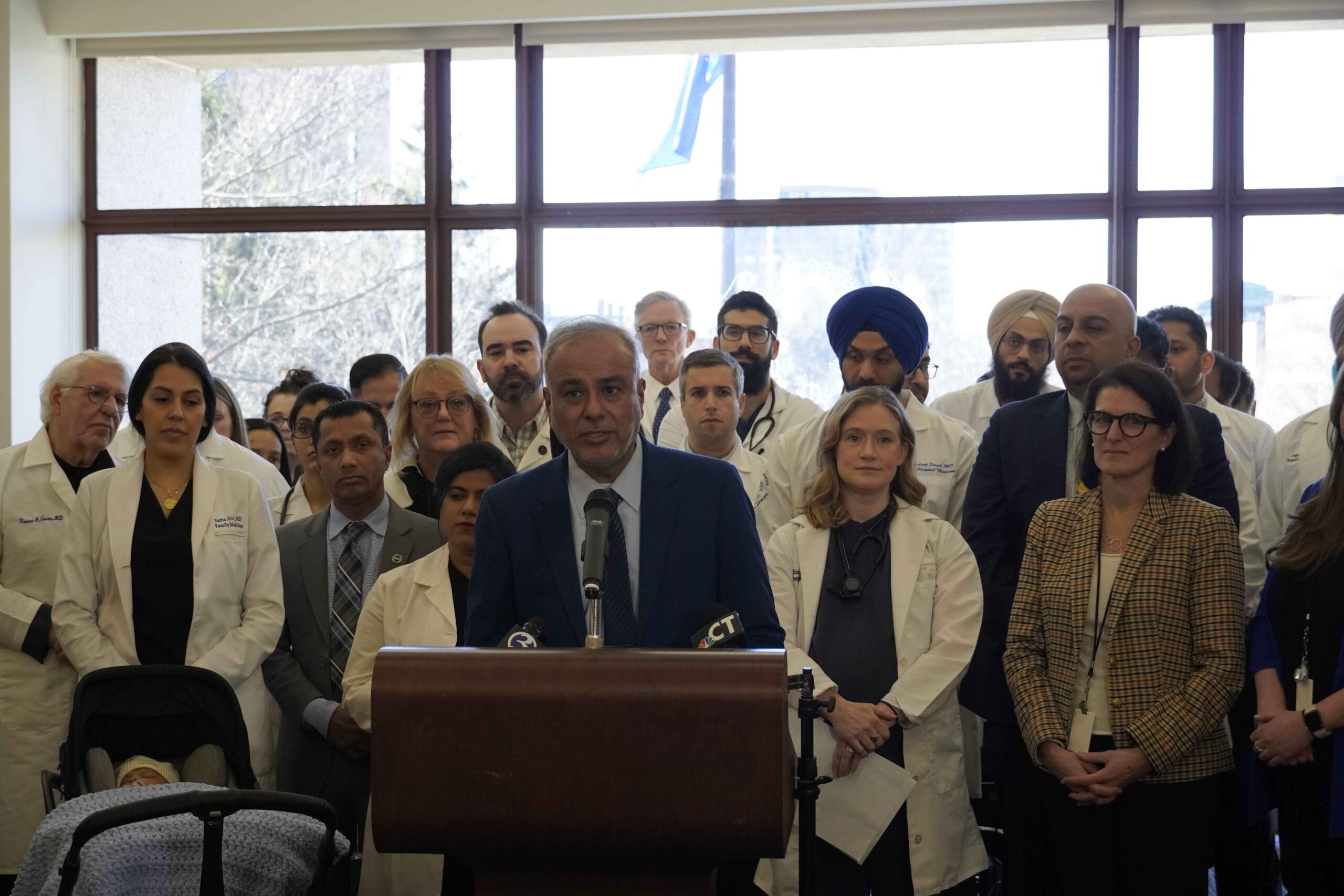
Sen. Saud Anwar, a South Windsor doctor who serves as co-chair of the legislature’s Public Health Committee, described the proposal with Senate leaders during a Tuesday press conference in the Legislative Office Building.

“Public health is not a luxury. It’s the backbone of every thriving community,” Anwar said. “It’s not a policy. It’s a promise. And this is the time for us to have a bold stand, especially if you’re listening to what is being said by individuals who are given the responsibility to look at our public health in the new federal government.”

Anwar’s comments came just one day after President Donald Trump was sworn into office for a second term. Trump has nominated Robert F. Kennedy Jr. to serve as a secretary of the Department of Health and Human Services.

Kennedy is a longtime vaccine skeptic, who the Associated Press referred to as a “one of the world’s most influential spreaders of fear and distrust around vaccines.” Kennedy has also set his sights on removing fluoride from drinking water and suggested on social media that the Trump administration would advise all American water systems to remove it from drinking water.

Fluoride has been added to U.S. water systems since the 1940s and has helped to prevent tooth decay in children and adults, leading the Centers for Disease Control and Prevention to name it one of the Ten Great Public Health Achievements of the 20th century.

On Tuesday, Senate Democrats said their wide-ranging public health legislation, called Senate Bill 7, would preserve current fluoride levels in Connecticut water supplies, protecting residents in the event that the federal agency changes its standards.

Anwar said current state law was based on an assumption that the federal government would continue to follow commonly accepted health principals.

“This has been true all these years except it no longer is,” Anwar said. “Just to put this in perspective, all these years, this law has worked. But now … if we mirror what the federal government is saying, then we may not even have fluoride in our water.”

Other provisions of the legislation would create a $30 million emergency fund to support the Connecticut Department of Public Health in the event that the Trump administration cuts funding for public health initiatives.

During his first term, Trump proposed in 2017 and 2019 to cut billions from health programs and took steps to end health insurance coverage for millions of Americans. If adopted, both proposals would put added strain on Connecticut’s public health systems.

The bill also seeks to set aside $5 million to create a Public Health Urgent Communication Fund, designed to fund the communication of clear and accurate information related to public health. Trump’s first administration contributed to the erosion of trust in public health institutions, according to a 2020 study from Cornell University, which found that nearly 38% of all misinformation during the early pandemic related to statements by Trump.

Senate Democrats said their legislation would also seek to ensure access to abortion medication like levonorgestrel, mifepristone and misoprostol by amending state law to allow for the import of their active ingredients.

Anwar said Connecticut policymakers were working to enact these types of policies based on statements from incoming Trump administration officials.

“We are going to be prepared to be able to address this,” he said. “Now, some people may say, ‘Is this a panic?’ No, it’s not a panic. We are just listening to what people are saying. And we are preparing to make sure that we are ready to protect the citizens.”

As Presidential Priorities Shift to Billionaires, Senate Democrats Focus on Affordability

As Presidential Priorities Shift to Billionaires, Senate Democrats Focus on Affordability

By Hugh McQuaid
January 22 @ 9:30 am

Senate President Martin Looney speaks about price gouging at a Jan. 21 press conference. Credit: Joe O’Leary / Senate Democrats


Highlighting the start of a presidential administration intent on prioritizing the interests of billionaires at the federal level, Connecticut Senate Democrats announced legislation Tuesday aimed at reducing the cost of essential goods for working families.

Leaders of the Senate’s Democratic majority outlined the bill during a late morning press conference just one day after President Donald Trump’s Monday inauguration, in which he surrounded himself with some of the world’s wealthiest men, according to the Associated Press.

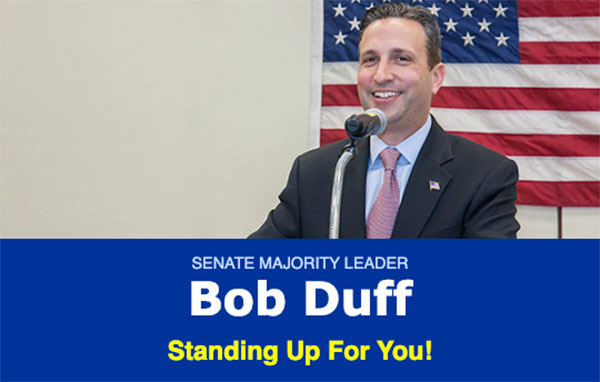
Connecticut Senate Majority Leader Bob Duff said the proposal, aimed at making life more affordable for Connecticut families, was meant to underscore the working class priorities of the caucus.

“Yesterday, we saw an inauguration of a president that was of the billionaires, by the billionaires, and for billionaires,” Duff said. “Here in the state of Connecticut, we’re going to make sure that we continue to focus ‘of the people, by the people, and for the people,’ which is why we have these bills today and we will continue to roll out legislation that impacts working families and working people for the positive all across the state of Connecticut.”

The bill aims to reduce costs by enhancing the state’s ability to fight instances of price gouging — inflated prices that are passed down to consumers.

Although Connecticut currently has laws to prevent price gouging, Senate leaders said these policies had two critical limitations: they can only be enforced against retailers, and they only apply during major disasters or when an emergency has been declared. In other words, price gouging is essentially permitted in all but the most dire circumstances.

The bill, titled Senate Bill 3, seeks to target price gouging that drives up costs behind the scenes as manufacturers, distributors, wholesalers and suppliers artificially inflate prices to pad their bottom lines, legislative leaders said.

Senate President Martin Looney said the idea was to prevent price gouging that occurs before retailers receive a product. Retailers, Looney said, “are in some cases, not the source of the price gouging, but are merely passing along something that has been imposed on them within the supply chain of their suppliers.”

Sen. James Maroney, co-chair of the legislature’s General Law Committee, said the bill would also increase the ability of the attorney general to investigate price gouging that occurs when there has been no emergency declaration.

Maroney said the legislation was inspired by feedback senators heard from Connecticut residents while meeting with constituents during last year’s campaign season.

“So many times you’re hearing stories of the struggles that people are having, especially the senior citizens who are on fixed income where they’re choosing whether or not they’re going to pay for their groceries or their medicine or families who are struggling to put food on the table. What the price gouging statute will do is empower the attorney general to go up the supply chain. Often, it’s not the grocery store,” Maroney said. “We’ll also expand the times when this will be in effect. Not just a declared national emergency.”

The legislation will allow the attorney general to issue notices of abnormal economic disruption, Maroney said. These notices would apply to significant interferences in the production, distribution, supply, sale or availability of necessary consumer goods like diapers, baby formula, or prescription medications.

The bill includes other new consumer protection measures, like a disclosure requirement to address “shrinkflation,” a practice used by manufacturers to reduce a product’s contents without changing its packaging size or price, as well as new disclosure requirements meant to ensure that Connecticut residents are not caught off guard by junk fees.

Duff said Connecticut Democrats would continue to find ways to improve life for everyday people, even as the Trump administration set different priorities.

“I want to make sure that we are using all tools necessary, especially as we enter this new administration, that we use our voices, we use our bully pulpits, we use our power of changing laws,” he said. “We’re here to change things for the positive for the people to represent.”

On Day One of Trump 2.0, Senate Democrats Announce Protections for Public Health and Consumers

On Day One of Trump 2.0, Senate Democrats Announce Protections for Public Health and Consumers

On the first full day of the new President Trump administration, Connecticut Senate Democrats announced a priority bill intended to enact new consumer protections aimed at affordability and a public health proposal designed to shield Connecticut from impending federal policy changes that could threaten the health of state residents.

Senate President Martin Looney (D-New Haven) and Senate Majority Leader Bob Duff (D-Norwalk) joined Sen. James Maroney (D-Milford) and Sen. Saud Anwar, D-South Windsor, in announcing Senate Bill 3, An Act Concerning Consumer Protection and Safety, and Senate Bill 7, An Act Concerning Protections for Access to Health Care and the Equitable Delivery of Health Care Services in the State. More details on both bills are below.

Senate Bill 3: An Act Concerning Consumer Protection and Safety

Connecticut families have struggled with the affordability of goods and services for the last several years as a result of inflation and supply chain disruptions related to the pandemic. However, some corporations have used these conditions as a pretense to extract additional profits from hardworking families through a form of price gouging that occurs before the product is ever placed on a store shelf.

Although Connecticut currently has laws to prevent price gouging, these policies have two critical limitations: they can only be enforced against retailers, and they only apply during major disasters or when an emergency has been declared. In other words, price gouging is essentially permitted in all but the most dire circumstances.

Through Senate Bill 3, Senate Democrats plan to target the kinds of price gouging that drive up costs behind the scenes as manufacturers, distributors, wholesalers and suppliers artificially inflate prices to pad their bottom lines.

The legislation will also expand the scope of Connecticut’s price gouging prohibition beyond emergency situations by allowing the attorney general to issue notices of abnormal economic disruption. These notices would apply to significant interferences in the production, distribution, supply, sale or availability of necessary consumer goods like diapers, baby formula, or prescription medications.

The proposal gives the attorney general the authority to enforce the new price gouging prohibition under the Connecticut Unfair Trade Practices Act.

“We are committed to making life more affordable for Connecticut families by addressing the practices that unfairly drive up costs,” Senator Looney said. “Price gouging shouldn’t be prohibited only during declared emergencies—it’s a harmful practice that burdens consumers at any time. This legislation will ensure fairness and accountability up and down the supply chain, so that residents aren’t exploited when they shop for essential goods.”

“We spent months knocking on doors, listening to the concerns of our constituents, and the message was clear: Connecticut residents are deeply frustrated with the rising cost of goods and services,” Senator Duff said. “Rather than just talking about the problem—or worse, proposing tariffs that economists agree would make life even more expensive—Senate Democrats are taking decisive action. With this bill, we’re ensuring that consumers aren’t exploited by corporations taking advantage of economic disruptions to pad their profits.”

“Connecticut families are struggling with the rising costs of everyday essentials, and it’s clear that affordability isn’t just a problem during emergencies,” said Senator Maroney, co-chair of the legislature’s General Law Committee. “This bill will help prevent unfair price hikes year-round by holding corporations accountable for driving up prices when they aren’t justified. It ensures that families won’t have to bear the burden of inflated costs, especially when they’re already stretched thin.”

This year’s legislation represents a continuation of anti-price gouging work begun in 2024, when Senate Democrats drafted amendment language to Senate Bill 3, which would have prohibited distributors, manufacturers, suppliers and retailers from increasing their prices if the new rate would have been grossly disproportionate compared to previous prices or the hike could not be attributed to costs incurred by the vendor.

The bill includes other new consumer protection measures, like a disclosure requirement to address “shrinkflation,” a practice used by manufacturers to reduce a product’s contents without changing its packaging size or price. For example, a box of cornflakes may contain less cereal but generally appear the same, leaving consumers unaware that they are paying more per ounce for the product. Senate Bill 3 would require clear and conspicuous disclosures of such reductions to ensure Connecticut families are informed about price increases.

Additional provisions of Senate Bill 3 will:

-Protect consumers from junk fees by generally requiring advertisements to present customers with upfront pricing that does not hide additional fees.

-Address eavesdropping by preventing companies from using their products to listen to or view consumers without their express permission.

-Create a right to repair products by requiring companies to make consumer tools and parts available to ensure their products can be repaired by people who are not associated with the company.

-Address security concerns related to drones manufactured in China and Russia by prohibiting state agencies from purchasing or using the technology unless they have applied for certain limited waivers.

-Require Connecticut municipalities to use “.gov” web domains by July 1, 2026 and connect towns and cities with federal grants to assist with this transition.

Senate Bill 7: An Act Concerning Protections for Access to Health Care and the Equitable Delivery of Health Care Services in the State

Senate Bill 7, “An Act Concerning Protections For Access To Health Care And The Equitable Delivery Of Health Care Services In The State,” seeks to serve as a shield to preserve Connecticut public health against potential significant shifts in the direction of federal health agencies with the new Presidential administration taking power. Officials newly in power have made a number of claims and statements regarding their intended direction for American public health, which may operate in contrast to and in opposition to the best interests of Connecticut residents.

Fluoridation

The United States first began adding fluoride to drinking water in the 1940s, an approach that by 1999 was named one of the ten greatest public health achievements of the 20th century by the Centers for Disease Control and Prevention by reaching more than 140 million Americans. Fluoride prevents tooth decay in children and adults, with reduction rates of up to 70% for children and 60% for adults, and, as oral health has consequences for overall physical health, its use has saved lives and improved health outcomes for countless individuals.

Robert F. Kennedy Jr., nominated to become the Secretary of the federal Department of Health and Human Services, has previously stated his interest in removing fluoride from drinking water as a main priority if confirmed. He has cited studies that claim fluoride exposure harms children’s health and development, though those studies have been challenged Trump and disputed by medical professionals. Cities including Juneau, Alaska and Canada’s Windsor, Ontario have previously removed fluoride from community drinking water, and in following years saw increased need for dental care among children. In Windsor, Ontario, tooth decay increased by as much as 51%.

Announced plans to remove fluoride from drinking water led to stocks rising among dental services companies, CBS News reported in November.

Senate Bill 7 seeks to maintain the amount of fluoride in Connecticut water supplies. Current state law is to maintain an average monthly fluoride content that is not more or less than 0.15 mg/l different than the United States Department of Health and Human Services’ (HHS) most recent recommendation which is currently .7. Senate Bill 7 would simply preserve that standard in state statutes in the event HHS removes or changes that standard.

Public Health Urgent Communication Fund

Misinformation and disinformation related to the previous Trump administration have contributed to erosion in public trust regarding public health communications. In 2020, a research study at Cornell University found that nearly 38% of all misinformation in the first five months of the global spread ofCOVID-19 was related to statements or comments published by President Trump. Alarm continues over individuals including Robert F. Kennedy Jr. and statements they’ve made regarding commonly accepted medical advances and treatments; most prominently, Kennedy has cited long-debunked claims that vaccines are tied to increased diagnoses of autism spectrum disorder and he has earned millions of dollars from a nonprofit he founded that publicly opposes vaccines.

Senate Bill 7 seeks to establish a public health urgent communication fund to provide clear and rapid release of urgent health information to the general public, with an initial funding total of $5 million.

Emergency Public Health Safeguard Fund

Concerns that the new Trump Administration will slash public health support nationally and for states are based on his first term. His proposed budgets for 2017 and 2019 sought to slash billions from health funding programs and sought to end insurance coverage for millions of Americans, which would have cumulative effects adding increased pressure to public health needs.

Senate Bill 7 would establish an emergency public health financial safeguard fund that would be used in cases of emergency to address unexpected shortfalls in public health funding and to ensure the state Department of Public Health can continue to respond to residents’ health care needs and provide essential health care services. An initial proposed amount for this fund would be $30 million.

Active Ingredient Imports

Concerns about the legality of abortion drugs and other medications in the new Trump administration stem from uncertainty. A lawsuit brought by Idaho, Missouri and Kansas lawmakers seeking to restrict access to mifepristone, often used in reproductive healthcare that can induce abortion, is ongoing despite a previous Supreme Court rejection; Trump said in June 2024 he does not want to ban the drug, said in August 2024 that he would support banning it, and said in December 2024 that he does not support a ban. Kennedy has additionally discussed creating “wellness farms” where people using drugs to treat conditions including ADHD and depression would be sent while casting scorn on the medications.

Under SB7, the general statutes would be amended to authorize the import of active ingredients of drugs like levonorgestrel, mifepristone and misoprostol to ensure production can occur locally and access can be retained in the event of a larger ban. The bill may also seek to allow compounding pharmacies to compound ingredients for the purpose of ensuring residents may access them.

Public Health Advisory Body

In addition to misinformation spread during the COVID-19 pandemic by Trump, further concerns about public health messaging and decision-making relates to his past history of comments on health concerns. CNN reported in 2020 that Trump has spread debunked claims and false information about public health issues including AIDS, flu vaccines and autism, swine flu, Ebola and the spread and impact of illnesses from the 1990s to the 2020s.

Senate Bill 7 would establish a Public Health Advisory Body within the Department of Public Health, providing current DPH Commissioner Manisha Juthani with a board of trusted, experienced public health experts who could provide advice and guidance should future national public health decisions counter widely accepted medical advice.

FOR IMMEDIATE RELEASE
Contact: Kevin Coughlin | 203-710-0193 | kevin.coughlin@cga.ct.gov

On Day One of Trump 2.0, Senate Democrats Announce Protections for Public Health and Consumers

On Day One of Trump 2.0, Senate Democrats Announce Protections for Public Health and Consumers

On the first full day of the new President Trump administration, Connecticut Senate Democrats announced a priority bill intended to enact new consumer protections aimed at affordability and a public health proposal designed to shield Connecticut from impending federal policy changes that could threaten the health of state residents.

Senate President Martin Looney (D-New Haven) and Senate Majority Leader Bob Duff (D-Norwalk) joined Sen. James Maroney (D-Milford) and Sen. Saud Anwar, D-South Windsor, in announcing Senate Bill 3, An Act Concerning Consumer Protection and Safety, and Senate Bill 7, An Act Concerning Protections for Access to Health Care and the Equitable Delivery of Health Care Services in the State. More details on both bills are below.

Senate Bill 3: An Act Concerning Consumer Protection and Safety

Connecticut families have struggled with the affordability of goods and services for the last several years as a result of inflation and supply chain disruptions related to the pandemic. However, some corporations have used these conditions as a pretense to extract additional profits from hardworking families through a form of price gouging that occurs before the product is ever placed on a store shelf.

Although Connecticut currently has laws to prevent price gouging, these policies have two critical limitations: they can only be enforced against retailers, and they only apply during major disasters or when an emergency has been declared. In other words, price gouging is essentially permitted in all but the most dire circumstances.

Through Senate Bill 3, Senate Democrats plan to target the kinds of price gouging that drive up costs behind the scenes as manufacturers, distributors, wholesalers and suppliers artificially inflate prices to pad their bottom lines.

The legislation will also expand the scope of Connecticut’s price gouging prohibition beyond emergency situations by allowing the attorney general to issue notices of abnormal economic disruption. These notices would apply to significant interferences in the production, distribution, supply, sale or availability of necessary consumer goods like diapers, baby formula, or prescription medications.

The proposal gives the attorney general the authority to enforce the new price gouging prohibition under the Connecticut Unfair Trade Practices Act.

“We are committed to making life more affordable for Connecticut families by addressing the practices that unfairly drive up costs,” Senator Looney said. “Price gouging shouldn’t be prohibited only during declared emergencies—it’s a harmful practice that burdens consumers at any time. This legislation will ensure fairness and accountability up and down the supply chain, so that residents aren’t exploited when they shop for essential goods.”

“We spent months knocking on doors, listening to the concerns of our constituents, and the message was clear: Connecticut residents are deeply frustrated with the rising cost of goods and services,” Senator Duff said. “Rather than just talking about the problem—or worse, proposing tariffs that economists agree would make life even more expensive—Senate Democrats are taking decisive action. With this bill, we’re ensuring that consumers aren’t exploited by corporations taking advantage of economic disruptions to pad their profits.”

“Connecticut families are struggling with the rising costs of everyday essentials, and it’s clear that affordability isn’t just a problem during emergencies,” said Senator Maroney, co-chair of the legislature’s General Law Committee. “This bill will help prevent unfair price hikes year-round by holding corporations accountable for driving up prices when they aren’t justified. It ensures that families won’t have to bear the burden of inflated costs, especially when they’re already stretched thin.”

This year’s legislation represents a continuation of anti-price gouging work begun in 2024, when Senate Democrats drafted amendment language to Senate Bill 3, which would have prohibited distributors, manufacturers, suppliers and retailers from increasing their prices if the new rate would have been grossly disproportionate compared to previous prices or the hike could not be attributed to costs incurred by the vendor.

The bill includes other new consumer protection measures, like a disclosure requirement to address “shrinkflation,” a practice used by manufacturers to reduce a product’s contents without changing its packaging size or price. For example, a box of cornflakes may contain less cereal but generally appear the same, leaving consumers unaware that they are paying more per ounce for the product. Senate Bill 3 would require clear and conspicuous disclosures of such reductions to ensure Connecticut families are informed about price increases.

Additional provisions of Senate Bill 3 will:

-Protect consumers from junk fees by generally requiring advertisements to present customers with upfront pricing that does not hide additional fees.

-Address eavesdropping by preventing companies from using their products to listen to or view consumers without their express permission.

-Create a right to repair products by requiring companies to make consumer tools and parts available to ensure their products can be repaired by people who are not associated with the company.

-Address security concerns related to drones manufactured in China and Russia by prohibiting state agencies from purchasing or using the technology unless they have applied for certain limited waivers.

-Require Connecticut municipalities to use “.gov” web domains by July 1, 2026 and connect towns and cities with federal grants to assist with this transition.

Senate Bill 7: An Act Concerning Protections for Access to Health Care and the Equitable Delivery of Health Care Services in the State

Senate Bill 7, “An Act Concerning Protections For Access To Health Care And The Equitable Delivery Of Health Care Services In The State,” seeks to serve as a shield to preserve Connecticut public health against potential significant shifts in the direction of federal health agencies with the new Presidential administration taking power. Officials newly in power have made a number of claims and statements regarding their intended direction for American public health, which may operate in contrast to and in opposition to the best interests of Connecticut residents.

Fluoridation

The United States first began adding fluoride to drinking water in the 1940s, an approach that by 1999 was named one of the ten greatest public health achievements of the 20th century by the Centers for Disease Control and Prevention by reaching more than 140 million Americans. Fluoride prevents tooth decay in children and adults, with reduction rates of up to 70% for children and 60% for adults, and, as oral health has consequences for overall physical health, its use has saved lives and improved health outcomes for countless individuals.

Robert F. Kennedy Jr., nominated to become the Secretary of the federal Department of Health and Human Services, has previously stated his interest in removing fluoride from drinking water as a main priority if confirmed. He has cited studies that claim fluoride exposure harms children’s health and development, though those studies have been challenged Trump and disputed by medical professionals. Cities including Juneau, Alaska and Canada’s Windsor, Ontario have previously removed fluoride from community drinking water, and in following years saw increased need for dental care among children. In Windsor, Ontario, tooth decay increased by as much as 51%.

Announced plans to remove fluoride from drinking water led to stocks rising among dental services companies, CBS News reported in November.

Senate Bill 7 seeks to maintain the amount of fluoride in Connecticut water supplies. Current state law is to maintain an average monthly fluoride content that is not more or less than 0.15 mg/l different than the United States Department of Health and Human Services’ (HHS) most recent recommendation which is currently .7. Senate Bill 7 would simply preserve that standard in state statutes in the event HHS removes or changes that standard.

Public Health Urgent Communication Fund

Misinformation and disinformation related to the previous Trump administration have contributed to erosion in public trust regarding public health communications. In 2020, a research study at Cornell University found that nearly 38% of all misinformation in the first five months of the global spread ofCOVID-19 was related to statements or comments published by President Trump. Alarm continues over individuals including Robert F. Kennedy Jr. and statements they’ve made regarding commonly accepted medical advances and treatments; most prominently, Kennedy has cited long-debunked claims that vaccines are tied to increased diagnoses of autism spectrum disorder and he has earned millions of dollars from a nonprofit he founded that publicly opposes vaccines.

Senate Bill 7 seeks to establish a public health urgent communication fund to provide clear and rapid release of urgent health information to the general public, with an initial funding total of $5 million.

Emergency Public Health Safeguard Fund

Concerns that the new Trump Administration will slash public health support nationally and for states are based on his first term. His proposed budgets for 2017 and 2019 sought to slash billions from health funding programs and sought to end insurance coverage for millions of Americans, which would have cumulative effects adding increased pressure to public health needs.

Senate Bill 7 would establish an emergency public health financial safeguard fund that would be used in cases of emergency to address unexpected shortfalls in public health funding and to ensure the state Department of Public Health can continue to respond to residents’ health care needs and provide essential health care services. An initial proposed amount for this fund would be $30 million.

Active Ingredient Imports

Concerns about the legality of abortion drugs and other medications in the new Trump administration stem from uncertainty. A lawsuit brought by Idaho, Missouri and Kansas lawmakers seeking to restrict access to mifepristone, often used in reproductive healthcare that can induce abortion, is ongoing despite a previous Supreme Court rejection; Trump said in June 2024 he does not want to ban the drug, said in August 2024 that he would support banning it, and said in December 2024 that he does not support a ban. Kennedy has additionally discussed creating “wellness farms” where people using drugs to treat conditions including ADHD and depression would be sent while casting scorn on the medications.

Under SB7, the general statutes would be amended to authorize the import of active ingredients of drugs like levonorgestrel, mifepristone and misoprostol to ensure production can occur locally and access can be retained in the event of a larger ban. The bill may also seek to allow compounding pharmacies to compound ingredients for the purpose of ensuring residents may access them.

Public Health Advisory Body

In addition to misinformation spread during the COVID-19 pandemic by Trump, further concerns about public health messaging and decision-making relates to his past history of comments on health concerns. CNN reported in 2020 that Trump has spread debunked claims and false information about public health issues including AIDS, flu vaccines and autism, swine flu, Ebola and the spread and impact of illnesses from the 1990s to the 2020s.

Senate Bill 7 would establish a Public Health Advisory Body within the Department of Public Health, providing current DPH Commissioner Manisha Juthani with a board of trusted, experienced public health experts who could provide advice and guidance should future national public health decisions counter widely accepted medical advice.

FOR IMMEDIATE RELEASE
Contact: Kevin Coughlin | 203-710-0193 | kevin.coughlin@cga.ct.gov

Senate Democrats Prioritize Ratepayers in New Energy Legislation

Senate Democrats Prioritize Ratepayers in New Energy Legislation

By Hugh McQuaid
January 21 @ 9:50 am

Sen. Norm Needleman, D-Essex, discusses energy policy during a Jan. 16 press conference. Credits: Lukas Houle


In response to rising energy costs burdening state residents, Senate Democrats announced plans Thursday to advance a “Ratepayers First Act,” aimed at lowering electricity prices and prioritizing the interest of Connecticut families over utility company shareholders.

Legislative leaders outlined the bill’s goals during a midday press conference in the Legislative Office Building. Sen. Norm Needleman, an Essex Democrat who co-chairs the Energy and Technology Committee, said the legislation would be designed to bring down costs and give regulators the tools to hold utilities accountable.

“Certainly the aspects of accountability and making sure that the performance that the utilities provide in exchange for an exclusive monopoly to provide us not only distribution but transmission of electricity — that is something that is very complicated,” Needleman said.

“There’s been no desire to hurt these companies, but if we have to bring them a little bit around to understanding that the way it was for their prior 20 years is not the way it’s going to be,” he said. “I think we’ve found a willing partnership with our regulators. And it’s been pretty much war ever since then. I’m not excited about that, but I’m here to fight the battle for the ratepayers.”

Needleman was joined by Senate President Martin Looney and Majority Leader Bob Duff. The leaders of the Senate’s Democratic majority said the bill was a response to warranted complaints from state residents about the cost of energy.

“It will seek to address cost, enhance the reliability of Connecticut’s power grid, increase energy production, and ensure the utilities prioritize ratepayers and recognize their responsibility as public utilities,” Looney said. “We have obviously heard many, many complaints about rates, about the volatility of rates, and we are, of course, very sensitive to that.”

Leaders of the legislature’s energy committee plan to consider a variety of ideas for reducing the energy burden on ratepayers, Needleman said. The bill is expected to be crafted by the panel and refined by feedback from members of the public and other stakeholders through the public hearing process.

“This bill is an open book,” Needleman said. “There are no specific things that we’re going to talk about at this moment. We’re going to listen to all the bills that are coming in, and they’re coming in at a rate much higher and faster than the energy committee has ever seen. We’re going to listen to ideas from across the spectrum,—that’s Republicans and Democrats, that’s cities and rural areas, that’s everybody that we can hear from.”

On Thursday, Senate Democrats discussed a number of ideas including shifting the costs of electric vehicle charging programs to transportation bonding, ensuring better accountability of public utility companies by making them subject to Connecticut’s Freedom of Information Act, and increasing power supply through broader adoption of generation options like solar and nuclear power.

Duff said that any effort to acquire more supply from nuclear facilities had to be done on a regional basis.

“We’ve gone it alone too many times at high cost for our ratepayers,” he said. “By doing more on a regional basis, I think that helps to level set and helps to make sure that we are taking on the risk that we need to but not more risk than we have to.”


“We want to make sure that we provide the most reliable, best priced energy to the state of Connecticut “

“We expect from our partners in the utilities a response that is reasonable and not aggressive. The amount of money lobbying, the amount of money spent to influence everybody involved in this process is astounding.

“This bill is an open book. There are no specific things that we’re going to talk about at this moment, we’re going to listen to all the bills that are coming in and they’re coming in at a rate much higher and faster than the energy committee has ever seen. We’re going to listen to ideas from across the spectrum, that’s republicans and democrats, that’s cities and rural areas, that’s everybody that we can here from and then decide what belongs in this bill.”

“We want to strengthen the regulators and give them more options in terms of holding utilities accountable.”

“Corporate profits continue to grow, even in the face of some bad business decisions that they’ve made, where they’ve had to take write offs.”

Duff & Fairfield County Senators Urge Altice and MSG to Turn on Sports or Pay Customers Back

Duff & Fairfield County Senators Urge Altice and MSG to Turn on Sports or Pay Customers Back

“Time for both sides to play ball so our residents can get back to the game.”

Hartford, CT—Today, Senate Majority Leader Bob Duff (D-Norwalk) and fellow Democratic State Senators from Fairfield county issued a joint call to Altice and MSG Entertainment, urging them to resolve their ongoing dispute that has left Connecticut sports fans unable to watch their favorite teams.

In a letter addressed to Altice Chairman and CEO Dennis Mathew and MSG Entertainment Executive Chairman and CEO James Dolan, the senators expressed frustration with the prolonged negotiations, which have blocked access to critical sports programming. Fans of the New York Rangers, Knicks, Devils, and other teams remain caught in the crossfire as the companies fail to come to terms. Joining Senator Duff were Senator James Maroney (D-Milford), Senator Sujata Gadkar-Wilcox (D-Trumbull), Senator Herron Keyon Gaston (D-Bridgeport), Senator Julie Kushner (D-Danbury), Senator Ceci Maher (D-Wilton), and Senator Patricia Billie Miller (D-Stamford).

“We will not take any side in this dispute except that of our constituents, who pay significant amounts of money for the content you both provide but cannot view the athletic events that give them joy,” the Senators stated in their letter.

The senators demanded that customers regain access to the Madison Square Garden channel through Optimum while negotiations continue. Additionally, they called for refunds or reduced bills if customers remain unable to access the content for which they are paying.

“The constant gamesmanship by all sides in the television wars must stop,” the senators wrote. “Time for both sides to play ball so our residents can get back to the game.”

The senators highlighted the potential for both companies to lose customers if the issue remains unresolved, as frustrated fans may turn to alternative entertainment options.


A PDF of the full letter can be found here and the text of the letter is below.
Mr. Dennis Mathew

Chairman and Chief Executive Officer

Altice

1 Court Square

Long Island City, NY 11101

Mr. James L. Dolan

Executive Chairman and Chief Executive Officer

MSG Entertainment

2 Pennsylvania Plaza

New York, NY 10121


Dear Messrs. Mathew and Dolan:

We are writing to ask you to put your customers first and come to an agreement that will benefit all parties regarding this current disagreement between your companies. We will not take any side in this dispute except that of our constituents, who pay significant amounts of money for the content you both provide but cannot view the athletic events that give them joy.

Fans of the Rangers, Knicks, Devils and many other teams in Connecticut are unable to watch their teams as the competition heats up in both leagues. The constant gamesmanship by all sides in the television wars must stop. We need to put customers first. With the escalating costs we are all paying, there is no excuse for viewers to be without access to their sports teams.

We ask that you immediately begin giving viewers access to the Madison Square Garden channel through Optimum while your negotiations continue. If this does not happen, we demand that they receive refunds and reduced bills in the future for the content that they are paying for but are not receiving. Your customers are not the only potential losers in your disagreement. This disagreement will result in both of your companies losing paying customers who decide they are better off finding their entertainment and relaxation in other ways.

Time for both sides to play ball so our residents can get back to the game.

State Senator Bob Duff, Majority Leader

State Senator James Maroney, 14th Senatorial District

State Senator Sujata Gadkar-Wilcox, 22nd Senatorial District

State Senator Herron Keyon Gaston, 23rd Senatorial District

State Senator Julie Kushner, 24th Senatorial District

State Senator Ceci Maher, 26th Senatorial District

State Senator Patricia Billie Miller, 27th Senatorial District


Contact: Kevin Coughlin | Kevin.Coughlin@cga.ct.gov | 203-710-0193

SENATOR ANWAR WELCOMES NEW STATE SUPPORT FOR EAST HARTFORD’S VETERANS TERRACE

FOR IMMEDIATE RELEASE
Contact: Joe O’Leary | Joe.OLeary@cga.ct.gov | 508-479-4969

SENATOR ANWAR WELCOMES NEW STATE SUPPORT FOR EAST HARTFORD’S VETERANS TERRACE

State Senator Saud Anwar (D-South Windsor) today welcomed this week’s announcement by the state Department of Housing and Connecticut Housing Finance Authority that they are supporting nine developments across the state to create and preserve more than 650 housing units, including investments in the East Hartford community to redevelop and preserve the affordability of 51 local units of housing.

In East Hartford, the Department of Housing will provide $4.5 million in financing for the Veterans Terrace III project, with the CHFA providing low-income housing tax credits expected to generate more than $12 million in private investment. Along with $6.43 million in taxable bond financing and $1 million in Opportunity Fund financing, this will support the preservation of 51 housing units to be made affordable to households earning between 25 and 60% of area median income.

“It’s great news for the East Hartford community that this new funding will further support affordable housing units and support local residents,” said Sen. Anwar. “I’m very encouraged that Connecticut continues to invest in East Hartford and am encouraged by the positive benefits this will have for our town.”

This investment comes as part of more than $75 million in loans, grants and low-income housing tax credits in this round of funding statewide. Nine communities will receive funds to preserve 658 housing units, with 381 designated as affordable for low- and moderate-income renters.

SENATOR ANWAR INTRODUCES BILLS TARGETING PRIVATE EQUITY HOSPITAL, HEALTHCARE OWNERSHIP

FOR IMMEDIATE RELEASE
Contact: Joe O’Leary | Joe.OLeary@cga.ct.gov | 508-479-4969

SENATOR ANWAR INTRODUCES BILLS TARGETING PRIVATE EQUITY HOSPITAL, HEALTHCARE OWNERSHIP

Following years of controversy in Connecticut regarding the acquisition of several hospitals by a private equity firm that has contributed to concerns about the hospitals’ operation, State Senator Saud Anwar (D-South Windsor) has introduced several proposed bills this year seeking to limit future private equity firm acquisitions of hospitals, enhance regulation in such ownership of health care facilities and study the impacts of private equity involvement in provision of some services.

The January 11 announcement that Prospect Medical Holdings, the owner of hospitals in Waterbury, Manchester and Vernon, filed for bankruptcy was the latest in a series of issues that have impacted care at those hospitals for years. While Prospect said it will provide uninterrupted patient care at its facilities as it undergoes the bankruptcy process, the announcement came after Prospect has suffered financial issues, as well as a cyberattack in the summer of 2023, that have harmed its hospitals’ finances and potentially jeopardized the planned sale of the three hospitals to Yale New Haven Health.

“For years, my colleagues and I have warned about Prospect’s precarious financial and organizational issues that have impacted patient care at Waterbury Hospital, Manchester Memorial Hospital and Rockville General Hospital,” said Sen. Anwar. “Many of our concerns were legitimate and the patients and medical workers who rely on those institutions are our foremost priority. We can’t let this happen again. Private equity, which all too often squeezes assets out of institutions and puts profits over people, has no place in a field dedicated to recovery and healing. I’m dedicated to protecting public health in Connecticut.”

Senate Bill 469 would take direct action to prevent private equity ownership in healthcare by restricting their ability to purchase private equity firms, further prohibiting hospitals from participating in real estate investment trust transactions – which firms can utilize for financial gain while jeopardizing hospital finances – and establish physician-led ownership requirements for medical groups and ambulatory surgical centers. It was co-introduced by State Senator Jeff Gordon (R-Woodstock).

Senate Bill 567 would expand the authority of the state Attorney General and Commissioner of Health Strategy to regulate health care facilities owned by private equity and restrict property transactions deemed as “self-dealing,” with firms seeking to enrich themselves from the transactions.
Senate Bill 489 would establish a task force to study private equity involvement in providing radiology services to a patient and how that involvement can contribute to negative patient, care or business impacts.

Prospect Medical Holdings’ journey from purchasing Waterbury Hospital in 2015 and the Eastern Connecticut Health Network, representing Manchester Memorial and Rockville General, in 2016 to its recently announced bankruptcy comes three years after Yale New Haven Health agreed to purchase its facilities in 2022, with the deal running into constant delays shortly after. The August 2023 cyberattack hampered operations for weeks, with the hospitals experiencing additional financial and operational concerns before and after; since then, there have been reports of delayed payments to physicians and issues with patient services, among other complaints.

A 2020 ProPublica report on Prospect Medical found its issues do not only apply to its Connecticut locations. It detailed hospital elevator breakdowns, lack of medical supplies, bedbugs and water leaks in patient rooms as part of a pattern of potential fraud and financial mismanagement before revealing all but one hospital owned by Prospect were ranked in the bottom 20% of all hospitals in the United States, hampering patient care and worsening patient outcomes.

“At the end of the day, about half a million people – one in seven Connecticut residents – live in the service area of these three impacted hospitals,” said Sen. Anwar. “Interruptions and issues with their care can worsen their health outcomes and create knock-on effects that hamper our medical systems statewide. These bills are meant to prevent the consequential mistakes we’ve seen with Prospect from being repeated in the future.”