SENATE DEMOCRATS ANNOUNCE THE ‘RATEPAYERS FIRST ACT’

SENATE DEMOCRATS ANNOUNCE THE ‘RATEPAYERS FIRST ACT’

Today, Senate Democrats unveiled the “Ratepayers First Act,” their flagship energy legislation in the 2025 legislative session. The bill seeks to address costs, enhance the reliability of Connecticut’s power grid, increase energy production, and ensure utilities prioritize ratepayers ahead of shareholders. Legislators have heard constituents’ frequent and warranted complaints about the cost of energy in Connecticut and are seeking substantial changes to state energy practices that relieve those costs while still working within the state’s long-term energy goals.

“The future is complicated, to say the least, when it comes to Connecticut’s energy grid,” said Senate President Martin M. Looney. “Future demand on the power grid, fluctuations in energy markets, new growth and investments in our communities all represent increased consumption, and as a result, we’re pursuing more options in generation to make sure our state can meet future challenges. Reliability, trust and quality service are all musts to protect citizens’ best interests. Senate Democrats and Senator Needleman have been adamant for years that ratepayers deserve the best services our state can provide, and together we will once again lead on this important issue.”

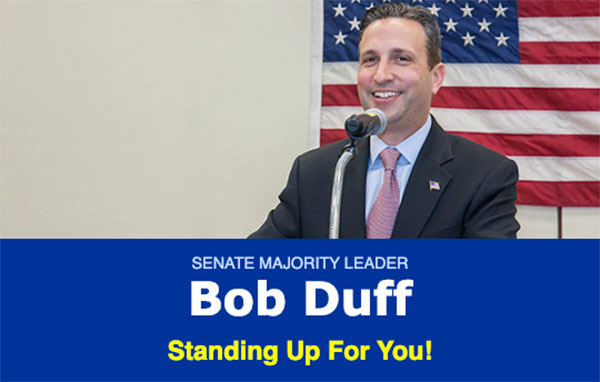
“High costs remain a major source of frustration for Connecticut ratepayers, and rightfully so,” said Senate Majority Leader Bob Duff. “To address this, we are planning to review all of our state energy policies to find areas of improvement. I’m grateful for Senator Needleman’s constant and meaningful focus on how our power grid impacts Connecticut residents and his approach toward beneficial improvements.”

“Connecticut’s energy needs and market are changing faster than most of us can keep up with, but my colleagues and I remain committed to working for the best interests of ratepayers and businesses,” said State Senator Norm Needleman. “We need a multi-pronged approach that’s cutting costs, enhancing our grid, and looking to the future, where more sources of energy generation will be increasingly necessary. Addressing these issues now, rather than a half-decade down the line, represents our work to keep the lights on for years to come.”

The bill seeks to address the high cost of energy in Connecticut, ensure and retain reliability of services, enhance and support energy production in-state and ensure that utilities consider ratepayer needs as much as quarterly dividends for their shareholders.

Reducing Costs For Ratepayers

The legislation seeks to evaluate any and all mechanisms to reduce costs for ratepayers. One potential example of this includes the potential shift of electric vehicle charging programs into transportation bonding, reducing future costs and ending ratepayer subsidization of EV infrastructure and installation.

Improving Power Grid Reliability

Under this bill, lawmakers will seek to build upon accountability measures achieved in past legislative efforts, including those earned in 2020’s Take Back Our Grid Act and 2023’s Senate Bill 7, that emphasize the performance of utilities in order to ensure preventable power outages become less frequent while supporting the tireless efforts of line workers across the state.

Increasing Power Production In Connecticut

Lawmakers aim to increase the power supply available to Connecticut in order to meet demand that is ever-growing across the state. Strategies to achieve this may include increased focus on the adoption of a variety of generation options, including but not limited to solar and nuclear power. New use of solar could include new opportunities and incentives to support residential and business adoption on an individual basis up to large-scale regulatory shifts that would allow for large solar energy arrays, whether on unused or underutilized land or by utilizing state-owned land. New nuclear sources of energy would largely involved incentivization of deploying small modular reactors, which would require changes to the state’s nuclear moratorium.

Long-term views of the state’s power grid continue to become more necessary, especially regarding diversification of supply. According to the U.S. Energy Information Administration, natural gas represents as much as 60% of electricity generation in Connecticut as of 2023; as the natural gas market has faced spikes in cost and supply in recent years due to global pressures, ensuring alternative sources remain in place will play a significant role in ensuring reliability in decades to come.

Ratepayers Over Shareholders

Finally, they seek to ensure ratepayers and customers remain utilities’ primary interest over quarterly profits and shareholder payouts. In doing so, they will continue to pursue pro-ratepayer measures achieved in the Take Back Our Grid Act and SB7, while pursuing new options that can better ensure accountability for utilities; one such measure could involve requiring state utilities, due to their statewide roles, lack of competition and close relationship with state government, to comply with state Freedom of Information Act laws.

FOR IMMEDIATE RELEASE
Contact: Kevin Coughlin | 203-710-0193 | kevin.coughlin@cga.ct.gov

AS INVASIVE SPECIES REACH SALEM’S GARDNER LAKE, SENATOR MARX INTRODUCES BILL TO CREATE BOAT WASHING STATION PILOT PROGRAM

January 16, 2025

AS INVASIVE SPECIES REACH SALEM’S GARDNER LAKE, SENATOR MARX INTRODUCES BILL TO CREATE BOAT WASHING STATION PILOT PROGRAM

Following reports in summer and autumn 2024 that the invasive aquatic plant species Hydrilla reached Gardner Lake State Park in Salem, leading to significant localized pollution and impacting local ecosystems, and following the plant’s increased presence in waterways around the state, State Senator Martha Marx (D-New London) introduced legislation to create a new pilot program at the state park to fight spread of invasive species.

The bill, if passed, would create a pilot program for the creation of boat washing stations at the lake. That would allow local boaters to utilize high-pressure hot water or compressed air to clear their vessels before or after boating in the lake.

“For years, Connecticut has worked to educate and inform the public about the dangers and impacts aquatic invasive species can have on our state’s waterways, but as they continue to spread, there’s more we can do,” said Sen. Marx. “Washing stations for boats are a simple and effective way to prevent hydrilla and other invasive species from spreading to further bodies of water throughout our state. We can achieve progress in the fight against these species and, once the pilot program is inevitably successful, further its use to waterways across Connecticut.”

Such stations have been implemented in other locations, including New York state’s Adirondack region, utilizing water or air to decontaminate vessels or ensure their cleanliness without causing damage to boats, their components, or any associated equipment.

As the U.S. Fish and Wildlife Service recommends the “clean, drain, dry” approach to fighting aquatic invasive species – cleaning off all equipment, draining water from water-containing devices of a boat and drying the boat for at least five days or wiping it before next use – installation of boat washing stations can play a strong role in furthering the fight against invasive species.

These stations have been implemented in additional regions to battle aquatic species. For instance, in May 2024, Washington’s Olympic National Park introduced boat washing stations at two lakes within the park to fight invasive New Zealand mudsnails and Asian clams.

Advocates, Lawmakers Call for Budgetary Flexibility

Advocates, Lawmakers Call for Budgetary Flexibility

By Hugh McQuaid
January 16 @ 11:23

Sen. Gary Winfield D-New Haven, stands with advocates during a Jan. 14, 2025, press conference. Credit: Hugh McQuaid / Senate Democrats


A coalition of Connecticut advocates, labor leaders, and state legislators crowded into a Hartford conference room Tuesday to make a case for more budgetary flexibility to fund critical investments in education, housing and health care.

The group, called Connecticut For All, argued for modifications to a set of budgetary constraints that include caps on state spending and a requirement that certain revenues be set aside to eventually be used to pay down state debt. In recent years, these restrictions have resulted in supplemental debt payments totaling more than $8.5 billion.

Proponents of modifying these rules argue that these fiscal guardrails have captured a greater share of state revenue than intended and forced Connecticut to underfund certain critical services despite years of budget surpluses.

“It doesn’t matter where you live in this state, this issue affects you,” Sen. Gary Winfield, D-New Haven, said. “This is an issue that makes it harder for people all across the state, who never imagined this would touch them, to do the things they need to do — the necessary things they need to do.”

The coalition outlined an agenda for this year’s legislative session, during which lawmakers will craft a two-year state budget. The group called for a variety of investments including additional state funding for Connecticut school districts and the restoration of a child tax credit, as well as fair wages and benefits for a range of publicly funded workers.

Rob Baril, president of health care workers’ union, SEIU 1199, said the group would seek improvements in how budget dollars are allocated.

“We formed this coalition because we believe that we shouldn’t have to make choices between funding health care and funding education, between funding child care and making sure that we have the infrastructure that all people in Connecticut need,” Baril said.

Jenny Graves, a special education teacher who serves as vice president of the New Haven Federation of Teachers, called for changes to the state’s Education Cost Sharing formula — a program the state uses to offset the costs of local school districts — as well as livable wages for paraeducators.

“Year after year, we see billions in surplus from our fiscal policies,” she said. “It’s time to modify the fiscal roadblocks and invest in equitable education for all, especially our students with special education needs. The time for action is now.”

The event followed a Monday press conference, where Democratic leaders in the House and Senate announced their plans to prioritize education funding and housing policy during this year’s legislative session.

Senate Democrats have also argued for modifications to Connecticut’s fiscal guardrails. Last month, Senate President Martin Looney told the Connecticut Mirror that the chamber’s majority Democrats intended to make changes to the budgetary constraints.

“We won’t call any budget for a vote in the 2025 session if it doesn’t include some changes to the guardrails,” Looney said. “The guardrails are staying, but their parameters need to be updated. The guardrails aren’t a straitjacket.”

Connecticut Legislature to Tackle Housing Affordability

Connecticut Legislature to Tackle Housing Affordability

By Hugh McQuaid
January 15 @ 3:08 pm

Senate Majority Leader Bob Duff and House Majority Leader Jason Rojas discuss housing policy on Jan. 13, 2025. Credit: Hugh McQuaid / Senate Democrats


Addressing Connecticut’s persistent housing shortage will be among this year’s top priorities for the state legislature’s Democratic majorities, leaders of the House and Senate announced during a rare joint press conference this week.

“We know that the lack of housing is holding our economy back,” Senate Majority Leader Bob Duff said during a Monday afternoon press conference in the Legislative Office Building. “We know that too many people are spending too much money every month on their rent or their mortgage because house prices are so high and one of the ways we can tackle that is a supply and demand issue: we need more supply to meet the demand.”

Duff, D-Norwalk, and his House counterpart, Rep. Jason Rojas, D-East Hartford, have led a working group aimed at addressing Connecticut’s longstanding housing shortage, which has inflated costs.

A 2021 Urban Institute study commissioned by the state Departments of Housing and Social Services identified a 86,000-unit gap in affordable housing available to low income families. Meanwhile, Connecticut had roughly 73,000 unfilled jobs, according to statistics from the Department of Labor. The two numbers were not unrelated, legislative leaders said.

Sen. Martha Marx, D-New London, speaks at a press conference on Jan. 13, 2025. Credit: Joe Hamann / Senate Democrats


“We do need a lot more affordable housing and it’s workforce housing,” said Sen. Martha Marx, a New London Democrat who co-chairs the legislature’s Housing Committee. “It’s the housing for the teachers, for the nurses, for even the young engineers at Electric Boat.”

A 2024 Consumer Affairs report ranked Connecticut among the worst states for renters, in part due its high income-to-rent ratio, which found many residents paying 32%, or nearly one-third, of their income in rental costs.

Rojas said he expected lawmakers would focus on a combination of policies designed to encourage the construction of new housing units and protections for renters. Senate President Martin Looney, D-New Haven, said legislative efforts would include policies to encourage the construction of a broad range of housing types in communities across Connecticut.

“We need to build up the populations of the cities and to do that, we need a combination of some single family houses, we need more apartment houses, where people can rent at reasonable rates, we also need more two and three family houses that are owner-occupied with resident incoming coming in as well,” Looney said.

Despite long standing obstacles to enacting effective policy, Duff said the affordability of housing was a pressing issue among many Connecticut residents. He encouraged lawmakers and advocates to find common ground.

“We need everybody to kinda be on the same page so we can make a big difference for people in the state of Connecticut and that’s what I think is going to be very, very important: is actually finding the things that we can do — and it’s not just the answer of building more apartments or we need to build houses,” Duff said. “We can do all those things, because that’s how we’re going to grow our economy.”

SENATE LEADERS ANNOUNCE PRIORITY LEGISLATION SUPPORTING WORKERS

FOR IMMEDIATE RELEASE

Wednesday, January 15, 2025

SENATE LEADERS ANNOUNCE PRIORITY LEGISLATION SUPPORTING WORKERS

Protecting Warehouse Workers, Unemployment for Striking Workers Top the List

HARTFORD – State Senate leadership today announced their intent to protect warehouse workers and allow longtime striking workers to collect unemployment benefits as part of their 2025 legislative agenda to support working people in Connecticut.

Senate President Pro Tem Martin Looney (D-New Haven), Senate Majority Leader Bob Duff (D-Norwalk), and state Senator Julie Kushner (D-Danbury), who is Senate Chair of the Labor and Public Employees Committee, announced their support today for these two concepts as incorporated in Senate Bill 8 – one of the Top 12 public policy priorities for Senate Democrats in 2025.

“There’s an insidious nature to modern fulfillment centers where employee safety often takes a back seat to corporate greed. Nowhere have we seen this exemplified more clearly than in the business practices of online retailers like Amazon, whose workplace rules and expectations seem straight out of the Gilded Age. We’ll address that this session,” Sen. Looney said. “At the same time, despite years of trying to adjust the scale, labor law in America continues to be weighted in favor of corporations over their employees. That’s where the concept of unemployment benefits for workers who are forced into extended strikes by the intransigence of their employer comes into play. Connecticut will be a leader on this issue as well.”

“So much of our modern economy is built on speed and convenience, but I wonder how often we stop and ask ourselves, at what cost?” Sen. Duff said. “The cost is in the draconian working conditions so many people experience in retail fulfillment centers, or on the increasingly frequent strike lines we see where people are advocating for better pay and working conditions. That’s who these bills are intended to benefit – average working folks in Connecticut, working for a living, just trying to get by, but who need a more level playing field to make ends meet.”

“The number one rule for Amazon and other online retailers is to maximize speed and profits at any cost, including worker health and safety. We’ve received evidence that there is a very high incidence of injuries at Amazon, and we have an obligation as a state to ensure that we are protecting workers at these jobs,” Sen. Kushner said. “What we’re doing with the striking workers bill is we’re providing them with the opportunity – through the extension of unemployment benefits – to exercise their rights under federal law, without the fear of being starved out. Other states have already done this, and it’s working.”

The concepts in Senate Bill 8 are not new.

Last year, Senate Bill 412 sought to protect warehouse workers (like those at Amazon) by requiring employers to give their employees a written description of the quotas they must meet, and any possible adverse employment actions they may face for failing to do so. The bill passed out of the Labor and Judiciary Committees on party-line votes but was never raised in the Senate for a vote.

Amazon has 16 warehouse facilities in Connecticut and is planning to build another 650,000-square-foot distribution warehouse on 183 acres at the Waterbury/Naugatuck Industrial Park. The corporation employs about 17,000 people in Connecticut.

The issue of warehouse worker safety in America was recently highlighted by U.S. Senator Bernie Sanders of Vermont. Sanders launched an 18-month investigation into Amazon’s “abysmal workplace safety practices” that resulted in a 300-page report which found that in each of the past seven years, Amazon workers were nearly twice as likely to be injured as workers in other warehouses, and that more than two-thirds of Amazon’s warehouses have injury rates that exceed the industry average.

The Sanders report concludes that Amazon knows its productivity standards are the reason why workers are frequently injured, and that while Amazon developed proposals to lower worker injuries, they chose not to implement them due to financial considerations.

Senate Bill 8 also addresses the issue of striking workers that was raised last year in House Bill 5164, and in Substitute House Bill 5431, which sought to create a $3 million fund in the state comptroller’s office which could be used to assist low-income families and workers, including those who had been out on strike for at least 14 days (New York and New Jersey already have such laws). HB 5431 passed the House and Senate but was vetoed by Governor Lamont.

Under current state law, striking workers are only entitled to unemployment benefits if a company locks them out of the worksite – but not if a company negotiates in bad faith to cause a strike, or negotiates in bad faith to prolong a strike.

Many Connecticut resident remember the 11-day Stop & Shop union strike in April 2019 that involved more than 31,000 workers at 240 Stop & Shop stores in New England, including 92 in Connecticut. The striking workers received just $100 a week from their strike fund and had to resort to GoFundMe pages and food donations to eat and pay their bills. At the same time, Stop & Shop shareholders gave themselves an $880 million raise in stock dividends and were asking employees to contribute hundreds of dollars more a year to their health care premiums. It’s estimated that Stop & Shop lost $20 million a day in revenue during that 11-day strike.

SENATE LEADERS ANNOUNCE PRIORITY LEGISLATION SUPPORTING WORKERS

FOR IMMEDIATE RELEASE

Wednesday, January 15, 2025

SENATE LEADERS ANNOUNCE PRIORITY LEGISLATION SUPPORTING WORKERS

Protecting Warehouse Workers, Unemployment for Striking Workers Top the List

HARTFORD – State Senate leadership today announced their intent to protect warehouse workers and allow longtime striking workers to collect unemployment benefits as part of their 2025 legislative agenda to support working people in Connecticut.

Senate President Pro Tem Martin Looney (D-New Haven), Senate Majority Leader Bob Duff (D-Norwalk), and state Senator Julie Kushner (D-Danbury), who is Senate Chair of the Labor and Public Employees Committee, announced their support today for these two concepts as incorporated in Senate Bill 8 – one of the Top 12 public policy priorities for Senate Democrats in 2025.

“There’s an insidious nature to modern fulfillment centers where employee safety often takes a back seat to corporate greed. Nowhere have we seen this exemplified more clearly than in the business practices of online retailers like Amazon, whose workplace rules and expectations seem straight out of the Gilded Age. We’ll address that this session,” Sen. Looney said. “At the same time, despite years of trying to adjust the scale, labor law in America continues to be weighted in favor of corporations over their employees. That’s where the concept of unemployment benefits for workers who are forced into extended strikes by the intransigence of their employer comes into play. Connecticut will be a leader on this issue as well.”

“So much of our modern economy is built on speed and convenience, but I wonder how often we stop and ask ourselves, at what cost?” Sen. Duff said. “The cost is in the draconian working conditions so many people experience in retail fulfillment centers, or on the increasingly frequent strike lines we see where people are advocating for better pay and working conditions. That’s who these bills are intended to benefit – average working folks in Connecticut, working for a living, just trying to get by, but who need a more level playing field to make ends meet.”

“The number one rule for Amazon and other online retailers is to maximize speed and profits at any cost, including worker health and safety. We’ve received evidence that there is a very high incidence of injuries at Amazon, and we have an obligation as a state to ensure that we are protecting workers at these jobs,” Sen. Kushner said. “What we’re doing with the striking workers bill is we’re providing them with the opportunity – through the extension of unemployment benefits – to exercise their rights under federal law, without the fear of being starved out. Other states have already done this, and it’s working.”

The concepts in Senate Bill 8 are not new.

Last year, Senate Bill 412 sought to protect warehouse workers (like those at Amazon) by requiring employers to give their employees a written description of the quotas they must meet, and any possible adverse employment actions they may face for failing to do so. The bill passed out of the Labor and Judiciary Committees on party-line votes but was never raised in the Senate for a vote.

Amazon has 16 warehouse facilities in Connecticut and is planning to build another 650,000-square-foot distribution warehouse on 183 acres at the Waterbury/Naugatuck Industrial Park. The corporation employs about 17,000 people in Connecticut.

The issue of warehouse worker safety in America was recently highlighted by U.S. Senator Bernie Sanders of Vermont. Sanders launched an 18-month investigation into Amazon’s “abysmal workplace safety practices” that resulted in a 300-page report which found that in each of the past seven years, Amazon workers were nearly twice as likely to be injured as workers in other warehouses, and that more than two-thirds of Amazon’s warehouses have injury rates that exceed the industry average.

The Sanders report concludes that Amazon knows its productivity standards are the reason why workers are frequently injured, and that while Amazon developed proposals to lower worker injuries, they chose not to implement them due to financial considerations.

Senate Bill 8 also addresses the issue of striking workers that was raised last year in House Bill 5164, and in Substitute House Bill 5431, which sought to create a $3 million fund in the state comptroller’s office which could be used to assist low-income families and workers, including those who had been out on strike for at least 14 days (New York and New Jersey already have such laws). HB 5431 passed the House and Senate but was vetoed by Governor Lamont.

Under current state law, striking workers are only entitled to unemployment benefits if a company locks them out of the worksite – but not if a company negotiates in bad faith to cause a strike, or negotiates in bad faith to prolong a strike.

Many Connecticut resident remember the 11-day Stop & Shop union strike in April 2019 that involved more than 31,000 workers at 240 Stop & Shop stores in New England, including 92 in Connecticut. The striking workers received just $100 a week from their strike fund and had to resort to GoFundMe pages and food donations to eat and pay their bills. At the same time, Stop & Shop shareholders gave themselves an $880 million raise in stock dividends and were asking employees to contribute hundreds of dollars more a year to their health care premiums. It’s estimated that Stop & Shop lost $20 million a day in revenue during that 11-day strike.

SENATE LEADERS ANNOUNCE PRIORITY LEGISLATION SUPPORTING WORKERS

FOR IMMEDIATE RELEASE

Wednesday, January 15, 2025

SENATE LEADERS ANNOUNCE PRIORITY LEGISLATION SUPPORTING WORKERS

Protecting Warehouse Workers, Unemployment for Striking Workers Top the List

HARTFORD – State Senate leadership today announced their intent to protect warehouse workers and allow longtime striking workers to collect unemployment benefits as part of their 2025 legislative agenda to support working people in Connecticut.

Senate President Pro Tem Martin Looney (D-New Haven), Senate Majority Leader Bob Duff (D-Norwalk), and state Senator Julie Kushner (D-Danbury), who is Senate Chair of the Labor and Public Employees Committee, announced their support today for these two concepts as incorporated in Senate Bill 8 – one of the Top 12 public policy priorities for Senate Democrats in 2025.

“There’s an insidious nature to modern fulfillment centers where employee safety often takes a back seat to corporate greed. Nowhere have we seen this exemplified more clearly than in the business practices of online retailers like Amazon, whose workplace rules and expectations seem straight out of the Gilded Age. We’ll address that this session,” Sen. Looney said. “At the same time, despite years of trying to adjust the scale, labor law in America continues to be weighted in favor of corporations over their employees. That’s where the concept of unemployment benefits for workers who are forced into extended strikes by the intransigence of their employer comes into play. Connecticut will be a leader on this issue as well.”

“So much of our modern economy is built on speed and convenience, but I wonder how often we stop and ask ourselves, at what cost?” Sen. Duff said. “The cost is in the draconian working conditions so many people experience in retail fulfillment centers, or on the increasingly frequent strike lines we see where people are advocating for better pay and working conditions. That’s who these bills are intended to benefit – average working folks in Connecticut, working for a living, just trying to get by, but who need a more level playing field to make ends meet.”

“The number one rule for Amazon and other online retailers is to maximize speed and profits at any cost, including worker health and safety. We’ve received evidence that there is a very high incidence of injuries at Amazon, and we have an obligation as a state to ensure that we are protecting workers at these jobs,” Sen. Kushner said. “What we’re doing with the striking workers bill is we’re providing them with the opportunity – through the extension of unemployment benefits – to exercise their rights under federal law, without the fear of being starved out. Other states have already done this, and it’s working.”

The concepts in Senate Bill 8 are not new.

Last year, Senate Bill 412 sought to protect warehouse workers (like those at Amazon) by requiring employers to give their employees a written description of the quotas they must meet, and any possible adverse employment actions they may face for failing to do so. The bill passed out of the Labor and Judiciary Committees on party-line votes but was never raised in the Senate for a vote.

Amazon has 16 warehouse facilities in Connecticut and is planning to build another 650,000-square-foot distribution warehouse on 183 acres at the Waterbury/Naugatuck Industrial Park. The corporation employs about 17,000 people in Connecticut.

The issue of warehouse worker safety in America was recently highlighted by U.S. Senator Bernie Sanders of Vermont. Sanders launched an 18-month investigation into Amazon’s “abysmal workplace safety practices” that resulted in a 300-page report which found that in each of the past seven years, Amazon workers were nearly twice as likely to be injured as workers in other warehouses, and that more than two-thirds of Amazon’s warehouses have injury rates that exceed the industry average.

The Sanders report concludes that Amazon knows its productivity standards are the reason why workers are frequently injured, and that while Amazon developed proposals to lower worker injuries, they chose not to implement them due to financial considerations.

Senate Bill 8 also addresses the issue of striking workers that was raised last year in House Bill 5164, and in Substitute House Bill 5431, which sought to create a $3 million fund in the state comptroller’s office which could be used to assist low-income families and workers, including those who had been out on strike for at least 14 days (New York and New Jersey already have such laws). HB 5431 passed the House and Senate but was vetoed by Governor Lamont.

Under current state law, striking workers are only entitled to unemployment benefits if a company locks them out of the worksite – but not if a company negotiates in bad faith to cause a strike, or negotiates in bad faith to prolong a strike.

Many Connecticut resident remember the 11-day Stop & Shop union strike in April 2019 that involved more than 31,000 workers at 240 Stop & Shop stores in New England, including 92 in Connecticut. The striking workers received just $100 a week from their strike fund and had to resort to GoFundMe pages and food donations to eat and pay their bills. At the same time, Stop & Shop shareholders gave themselves an $880 million raise in stock dividends and were asking employees to contribute hundreds of dollars more a year to their health care premiums. It’s estimated that Stop & Shop lost $20 million a day in revenue during that 11-day strike.

SENATOR ANWAR RELEASES STATEMENT REGARDING PROPOSED BILLS TO ELIMINATE OR DISINCENTIVIZE CRUMBLING FOUNDATION POLICIES

FOR IMMEDIATE RELEASE
Contact: Joe O’Leary | Joe.OLeary@cga.ct.gov | 508-479-4969

January 15, 2025

SENATOR ANWAR RELEASES STATEMENT REGARDING PROPOSED BILLS TO ELIMINATE OR DISINCENTIVIZE CRUMBLING FOUNDATION POLICIES

Today, State Senator Saud Anwar (D-South Windsor) released the following statement in response to two proposed bills introduced to the legislature that seek to respectively end and disincentivize state policies that fund the state’s crumbling foundation relief program. The bills, if passed, respectively fully remove a $12 annual surcharge on homeowner insurance policies or make it voluntary.

“Crumbling foundations have impacted thousands of homeowners across north-central Connecticut. They don’t discriminate based on political affiliation or identity; the free market has decided those who suffer damages are on their own. We have a collective responsibility in our state to support every resident, not just some, especially in the event of disaster, which is why the crumbling foundations policies exist and have provided tens of millions of dollars of aid. These bills to remove those programs would harm homeowners, municipalities, tax collection and our communities as a whole. Short-sighted, selfish policies that provide a whopping $12 in savings to homeowners in exchange for allowing countless people to continue to suffer without support should not receive an ounce of consideration. I’m disappointed that they were even considered, much less submitted, in this legislative session.”

Education Funding, Reforms Among Leading Legislative Priorities

Education Funding, Reforms Among Leading Legislative Priorities

by Hugh McQuaid
January 14 @ 9:35 am

Senate President Pro Tempore Martin Looney speaks at a Jan. 13, 2025, press conference on legislative priorities. Credit: Joe Hamann / Senate Democrats


Legislative leaders from the House and Senate signaled Monday their intent to bolster funding for Connecticut schools, assist municipalities with the growing need for special education services, while enacting reforms to ensure state dollars are spent in Connecticut classrooms.

Leaders of the Democratic majorities in both legislative chambers offered a glimpse of their top priorities during a rare joint news conference in the Legislative Office Building. School funding — particularly support for special education services — represented a leading priority for both.

“We all know that we need to do all that we can to increase the resources for our entire education system,” Senate President Martin Looney said. “We need to work on preparation for quality preschool and daycare, for our K-12 system, for higher ed and for special ed. So there will be a focus on education throughout the entire spectrum of age from childhood into early adulthood and college graduation.”

Looney was joined by House Speaker Matt Ritter, the majority leaders of the House and Senate, as well as the co-chairs of legislative panels education and special education. The event signaled consensus between the two chambers, which often have distinct priorities.

Connecticut has made consistent and deliberate strides to increase its support of education over the last several years. State budgets adopted by the General Assembly have boosted funding for education by a total of $364 million since fiscal year 2023. The legislature supplemented this support with an additional $150 million dedicated to Education Cost Sharing Grants.

Lawmakers said they would seek to build on that progress during this year’s session by continuing to bolster funding for Connecticut schools. However, those investments will be paired with reforms to enhance state oversight of boards of education and improve transparency in how education dollars are allocated and spent, legislators said.

“We’re going to enact reforms to ensure that these dollars are spent in the classroom on the children directly,” said Sen. Doug McCrory, a Hartford Democrat who co-chairs the Education Committee, “on the children — our resources should be directed towards the children, whose families are looking for a quality education.”

The Monday press conference followed the session’s first meeting of the Education Committee, where lawmakers raised legislative concepts including Senate Bill 1, a priority bill that will eventually contain many of the ideas discussed at the news conference.

The growing need for special education services will be a primary focus, leaders said.

Senator Doug McCory, D-Hartford, discusses education policy during Jan. 13, 2025, press conference on legislative priorities. Credit: Joe Hamann / Senate Democrats


Special education programs are essential but costly, placing a significant financial strain on municipalities. The enrollment of a student with special needs can create unexpected challenges for local budgets.

The state helps to offset the cost of special education services, in part, through an initiative called Excess Cost Grants. These grants are designed to reimburse towns and cities for special education costs when costs associated with a special needs student exceeds 4.5 times the district’s per-pupil expenditures.

In 2022, the legislature amended the Excess Cost Grant program to create a tiered reimbursement structure to ensure that the state’s poorest municipalities were given funding priority. Since then, state budgets have increased funding for the grants by $50 million over the last two fiscal years.

On Monday, legislators said those efforts had not been enough to keep pace with the rapid increase in the need for additional special education funding experienced by Connecticut towns and cities. From fiscal year 2022 to fiscal year 2023, the estimated cost of fully funding the Excess Cost Sharing Grant program surged from $175.7 million to $203.8 million, according to legislative estimates. That number climbed to $255.1 million in fiscal year 2024.

“At some point there’s a moral obligation in the state of Connecticut,” Ritter said. “We need to help towns, also to support these families so they’re not forum shopping from town to town on where they can get the best services, when they’re already dealing with the fact that they have a child going through, probably, some serious intellectual and physical disabilities and their struggle to get a public education.”

Sen. Hartley Releases Statement Following Gov. Lamont Press Conference Addressing Prospect Medical Holding’s Recent Bankruptcy Filing

Sen. Hartley Releases Statement Following Gov. Lamont Press Conference Addressing Prospect Medical Holding’s Recent Bankruptcy Filing

State Senator Joan Hartley, 15 District, who represents Waterbury Naugatuck and Middlebury, was in attendance at Governor Ned Lamont and Attorney General Tong’s press conference today addressing Prospect Medical Holding’s recent Chapter 11 Bankruptcy filing.

“This is a deeply troubling and heartbreaking development for Waterbury and the Greater Waterbury area, especially for the hardworking staff and their patients,” said Sen. Hartley. “I want to reassure our community that patient care remains a top priority and the hospital is committed to continuing to provide high-quality services. While the full impact of this development is not yet clear, I will work closely with the Mayor, Waterbury Delegation, and all stakeholders to ensure that our residents continue to receive the excellent care they deserve. Waterbury’s resilience will guide us through these challenging times.”

FOR IMMEDIATE RELEASE
Contact: Michelle Rappaport | Michelle.Rappaport@cga.ct.gov