
| FOR IMMEDIATE RELEASE Contact: Michelle Rappaport | Michelle.Rappaport@cga.ct.gov | 860-304-2319
|
Author: Devin James
Senator Gaston Welcomes $10 Million to Bridgeport to Address Flooding

Senator Gaston Welcomes $10 Million to Bridgeport to Address Flooding
Today, state Senator Herron Keyon Gaston (D-Bridgeport) is welcoming $10 million in funding approved by the State Bond Commission for the Rebuild by Design pilot project. The funds will be used to make improvements to address flooding in the south end of Bridgeport at the Marina Village/Windward Apartments.
“This has been an issue for years for residents living in the south end of Bridgeport,” said Sen. Gaston. “I am hopeful with this funding we can provide a sense of relief to many of our neighbors at the Marina Village and Windward Apartments. I am grateful to the State Bond Commission for approving this much needed funding that will lower the risk of the chronic flooding while improving the health and safety of the community.”
The South End neighborhood experiences flooding resulting from both coastal and inland flooding and regular rainfall events. These chronic flooding issues are the result of both an aged and combined stormwater sewer system. These funds will help support stormwater and resiliency improvements to address these flooding issues. The Rebuild by Design project includes installing diverse types of stormwater detention methods and flooding prevention methods.
The Rebuild project will continue in the South End of Bridgeport, which experienced the most significant impacts during Superstorm Sandy and has also faced acute challenges in other storms (e.g., Hurricane Irene) and chronic flooding challenges posed by an aged and combined stormwater sewer system. The intended combined effect of these project components is to create flood resiliency within the study area including residents and businesses, during typical rain events as well as more intense storms, improving overall health and safety for the area.
SENATOR MARX WELCOMES MILLIONS IN STATE BOND COMMISSION SUPPORT IN NEW LONDON, WATERFORD, MONTVILLE
|
|
WEST HARTFORD DELEGATION SECURES $2 MILLION FOR TRANSIT-ORIENTED AFFORDABLE HOUSING

October 22, 2024
WEST HARTFORD DELEGATION SECURES $2 MILLION FOR TRANSIT-ORIENTED AFFORDABLE HOUSING
Today, the West Hartford delegation of lawmakers including State Senator Derek Slap, State Representative Tammy Exum, State Representative Kate Farrar, State Representative Bobby Gibson, State Representative Jillian Gilchrest and State Representative James Sanchez supported the State Bond Commission’s approval of $2 million in grant money for West Hartford to support affordable housing development. This grant to the town is the result of their advocacy and work with the Lamont administration and legislative leaders.
“We know that affordable housing is so important for our economy and our town so that’s why I’m so excited about these projects,” said Sen. Slap. “High-end housing is fine, but we also need options for middle class families, retired folks, and younger professionals. Thanks to the Lamont administration for supporting these projects and placing them on the bond agenda.”
“I am incredibly grateful to Governor Lamont and the State Bond Commission for their continued and crucial support in expanding housing options and enhancing West Hartford’s affordability, connectivity and walkability,” said Rep. Tammy Exum (D-West Hartford, Avon).
“This $2 million allocation will support the important efforts to create more affordable housing options in West Hartford’s transit-oriented development zone,” said Rep. Kate Farrar, who represents the 20th District where the two proposed housing developments are located. “I appreciate Governor Lamont and the State Bond Commission’s approval of this funding that recognizes the importance of creating a vibrant and inclusive community by better connecting housing, transit and economic development.”
“Developing affordable housing near transit hubs is an excellent step towards building equity in our community. Everyone deserves a form of reliable transportation, and this funding will provide several residents with easy access to our area’s robust public transportation system. Thank you to Governor Lamont and the State Bond Commission for their investment in West Hartford,” said Rep. Gibson.
“Transit-oriented development can create more housing options in areas that are accessible to pedestrian and public transportation,” Rep. Gilchrest said. “And, functional, thriving neighborhoods bring individual and community benefits. I thank Governor Lamont and the State Bond Commission for prioritizing these important initiatives.”
“Providing affordable housing with easy access to the greater Hartford area on public transportation, such as CTFastrak, is vital for creating inclusive communities where everyone can thrive,” Rep. James Sánchez (D – Hartford, West Hartford) said. “It enables families to benefit from job opportunities, quality education, and essential services while having an affordable place to live. By investing in accessible housing, we build a stronger, more equitable future for everyone.”
The $2 million for West Hartford on the State Bond Commission agenda will further aid projects in the town’s transit-oriented development zone create more diverse housing options. West Hartford’s transit-oriented development zone is located along the CTfastrak busway, providing easy access to Hartford and New Britain and further connections throughout the state.
The two projects under development are the mixed-use Elmwood Lofts at the former Puritan Furniture site on New Britain Avenue, which seeks to have 117 residential units and The Jayden on New Park Avenue with a proposed 70 units. Both projects will offer market-rate and affordable units.
In 2022, the West Hartford Town Council established the Transit-Oriented Development District Zone immediately in the area of CTfastrak stations to promote mixed-use, higher-density, pedestrian-friendly development supporting both the streetscape and mass transit access.
SENATOR NEEDLEMAN WELCOMES $500,000 SUPPORTING COLCHESTER PUBLIC SCHOOLS

|
|
Senator Duff, Norwalk Delegation Welcome State Funding for Projects in Norwalk and Darien

|
|
|
|
|
|
|
|
|
|
Addressing Housing Shortages: Meriden Breaks Ground on Historic Factory Conversion

Addressing Housing Shortages: Meriden Breaks Ground on Historic Factory Conversion
By Hugh McQuaid
October 22 @ 2:00 pm
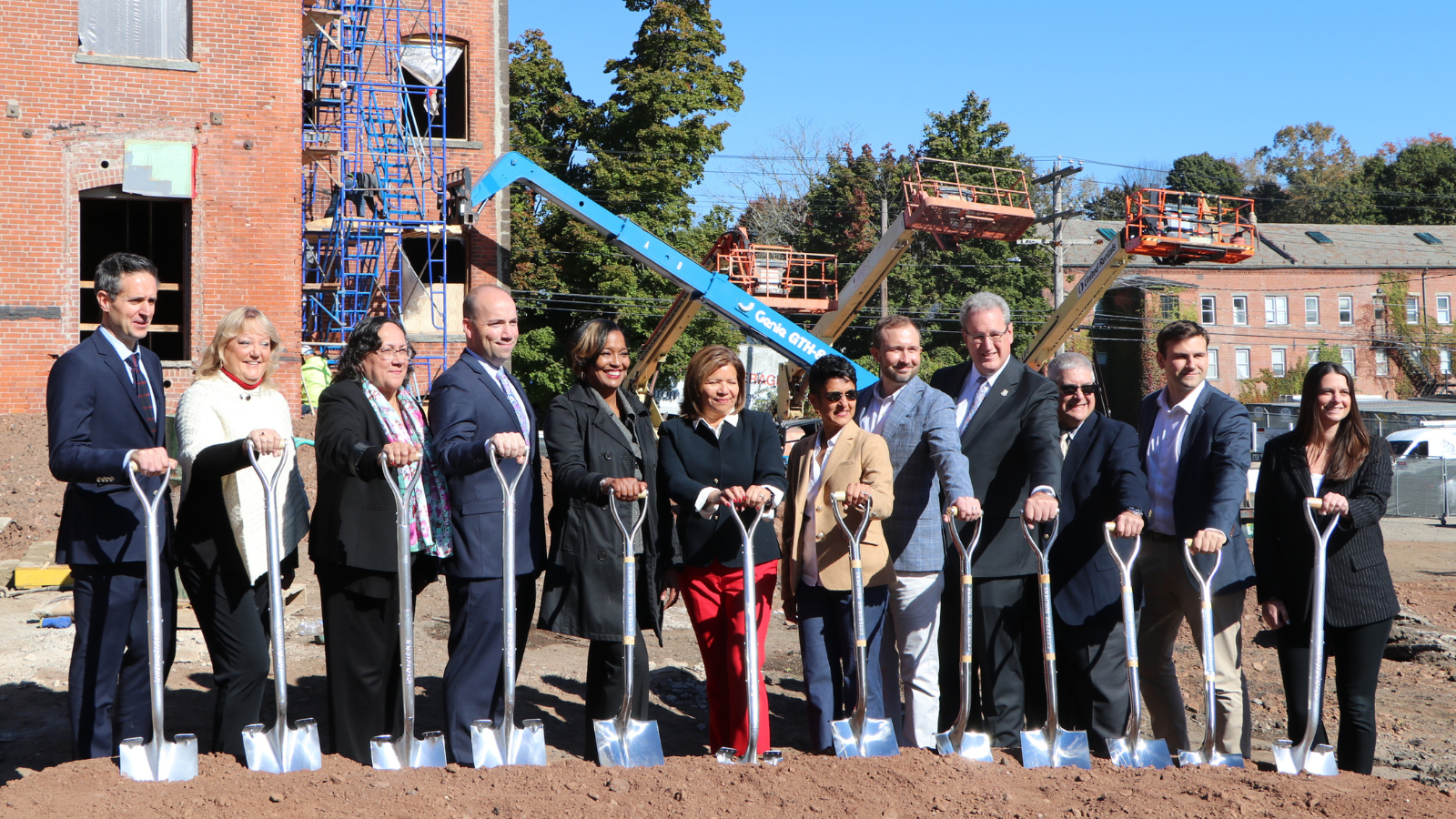
Developers and public officials representing Meriden broke ground last week on a project to convert the historic Aeolian Organ and Music Company factory into a mixed-income apartment building, which will provide 82 new housing units in the city’s North End.
During a groundbreaking ceremony on Thursday, town officials and members of Meriden’s legislative delegation said the adaptive reuse of the 140-year-old factory complex would provide housing solutions for new residents in a variety of income brackets.
“It’s a great opportunity,” Sen. Jan Hochadel, D-Meriden, said, “not only for the residents but the community and Meriden as a whole, because Meriden is known as a great place to live and raise your family and I think this project exemplifies that so I cannot wait to see this final project finished. I hope it becomes a model for everywhere in this state because this project will change lives while revitalizing those communities.”
Of the 82 housing units that will be created by the project, 71 units will be affordably priced for household making at or below 80% of the area’s median income. The project is located within walking distance of public transportation and will include amenities like a fitness center, kids’ playroom, indoor bike storage, and a community room.
Dan Drazen, a vice president at developer Trinity Financial, described the factory’s storied history as a one-time leading producer of automated organs and pianos. The Meriden-based facility produced high-end musical instruments between 1887 and 1930, he said.
Trinity’s “adaptive reuse” project seeks to preserve much of the facility’s historical charm by including original features like exposed beams or new energy-efficient windows built in an historically accurate style. Drazen joked that the project’s developers had settled on a new name, Tremont Flats at the Piano Factory, because “it’s easier to say.”
The redevelopment of the 123,000 square-foot building at 85 Tremont St. has been funded in part by $9.5 million in financing from the Connecticut Department of Housing and $4.78 million in financing from the Connecticut Housing Finance Authority.
U.S. Rep. Jahana Hayes, D-5th District, said the project came at a perfect time, as Connecticut seeks to address an ongoing shortage of available housing units, and served the dual purpose of repurposing a long-vacant property.
“This community has had to live with this blighted property for so long that I can imagine the excitement and the anticipation of seeing it transform,” she said.
Early Voting Begins in Connecticut
Early Voting Begins in Connecticut
By Hugh McQuaid
October 21 @ 12:15 pm

Early voting in the 2024 general election began Monday in Connecticut — a milestone for the state which, until this year, was among a tiny minority of jurisdictions that did not allow voters to cast ballots in-person before Election Day.
Voters in each of Connecticut’s 169 municipalities have access to at least one location to vote early until Sunday, Nov. 3. Early voting hours will run most days from 10 a.m. until 6 p.m. However, these hours will be expanded from 8 a.m. to 8 p.m. on both Oct. 29 and Oct. 31.
The option to vote early follows a constitutional amendment, which was approved by Connecticut voters in 2022, and subsequent legislation crafted by state lawmakers last year.
Although residents had the opportunity to vote early in primary elections earlier this year, Monday marks the first time Connecticut voters will have the option to vote early in a presidential general election, when turnout is typically higher.
In a press release last week, Gov. Ned Lamont said the new policy would provide voters with an early option that mirrored the traditional in-person Election Day voting process.
“Connecticut is finally joining the rest of the nation by having a system of early voting, and our hope is that the convenience this creates will encourage more people to vote,” Lamont said.
Connecticut’s adoption of an early voting policy leaves voters in only Alabama, Mississippi, and New Hampshire without the option to cast ballots ahead of Election Day.
After residents voted to amend the state constitution to permit early voting in Connecticut, legislators approved a policy allowing 14 days of in-person voting.
The two-week period is shorter than the early voting window in many other states, according to the National Conference of State Legislatures, which found the national average was 20 days. However, voting periods in U.S. states ranged from three to 46 days, the NCSL found.
Secretary of the State Stephanie Thomas said the start of Connecticut’s early voting window followed months of efforts by her office and local administrators across the state to ensure a safe and secure election.
“After years of waiting, voters will no longer need to worry that an emergency or unexpected event could prevent them from casting their vote,” Thomas said.
In many municipalities, local election officials are conducting early voting at the town or city hall. However, municipalities with populations exceeding 20,000 residents have the option of operating additional early voting locations.
Voters can visit myvote.ct.gov for a list of early voting locations in each Connecticut town and city.
Senator Hochadel Celebrates $125 Million in Federal Funding for Meriden Highway Reconfiguration

|
|
|
SEN. LESSER CHASTISES ROCKY HILL DEVELOPER FOR LABOR VIOLATIONS, CHEATING WORKERS AND STATE TAXPAYERS

Friday, October 18, 2024
SEN. LESSER CHASTISES ROCKY HILL DEVELOPER FOR LABOR VIOLATIONS, CHEATING WORKERS AND STATE TAXPAYERS
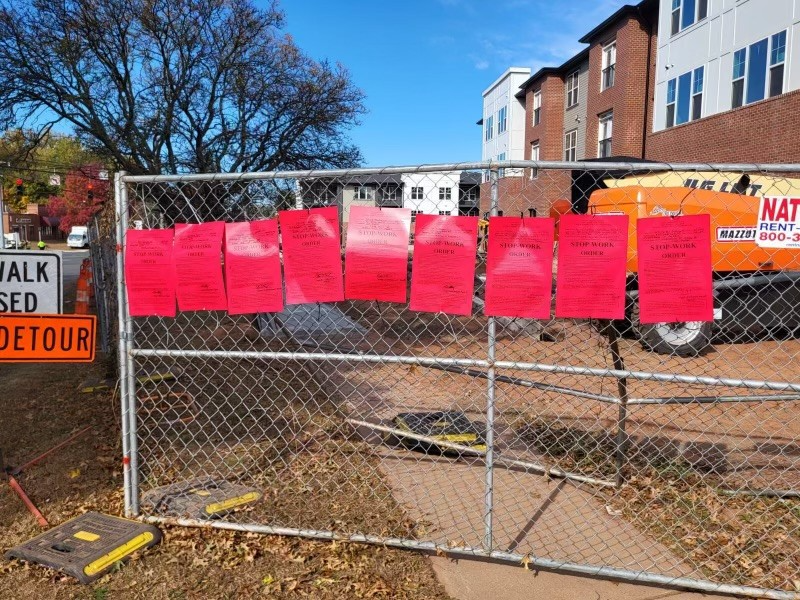
Stop-work orders posted Thursday at the site of the $60 million redevelopment of the former Ames department store headquarters in Rocky Hill
ROCKY HILL – State Senator Matt Lesser (D-Middletown) expressed outrage today that a number of serious labor violations have been found at the site of a large, $60 million real estate development at 2418 Main Street in Rocky Hill.
The Connecticut Department of Labor and the Connecticut Department of Consumer Protection conducted a joint investigation of the site on Thursday, and nine separate subcontractors were issued “stop-work” orders for a variety of serious labor violations, including worker misclassification and maintaining no or insufficient worker’s compensation coverage.
The project is being built on the site of the former Ames department store headquarters in Rocky Hill. The original plan for the 12-acre property was to knock down the roughly 225,000-square-foot building and replace it with 213 apartments in 11 buildings, 11,067 square feet of office space and 9,959 square feet of retail.
Since the project is partly funded by Connecticut taxpayers – the developers received $999,000 in brownfield remediation funding from the state Department of Economic and Community Development – Sen. Lesser says the contractors were not just stealing from their own workers, but also short-changing state taxpayers.
“Connecticut is desperate for more housing and cleaning up blighted properties is a top priority for Connecticut. But we need contractors to bid fairly, pay their taxes and follow the law. And how are these companies paying back the State of Connecticut? By cheating their own workers and short-changing state taxpayers,” Sen. Lesser said. “I want to thank the Departments of Labor and Consumer Protection for being on top of this. I know DOL in particular has been critically understaffed. It’s violations of the public trust like this by private, profit-making companies that should prompt the legislature to increase the size of the Wage and Workplace Standards Division in the state Department of Labor.”
“The legislature may also want to consider examining our prevailing wage threshold on DECD-funded or assisted projects like this one. That threshold is $1 million. This developer was able to skirt the prevailing wage requirement on this project after receiving a $999,000 brownfield remediation grant that’s just $1,000, or one-tenth of one percent, below the threshold. We must ensure that workers are getting paid correctly and that taxpayers aren’t left holding the bag for workplace injuries because some multi-millionaire isn’t paying for workers’ comp insurance.”