Lawmakers and Labor Leaders Seek Support for Workers Struggling with Addiction

Lawmakers and Labor Leaders Seek Support for Workers Struggling with Addiction

A group of Senate Democrats and Connecticut labor leaders called Tuesday for substance use disorders to be considered occupational hazards in some fields in an effort to provide support for impacted workers while reducing turnover-related costs for employers.

Sen. Saud Anwar, a South Windsor Democrat who co-chairs the legislature’s Public Health Committee, pitched the change during an afternoon press conference in the Legislative Office Building.

Backed by Sen. Jan Hochadel, D-Meriden, and representatives of several labor unions, Anwar described a link between common work-related injuries and addictions that often result from use of pain management drugs.

“They take pain medicines to try to continue to do their shift and whatever work is in front of them,” Anwar, a medical doctor, said. “This is a vicious cycle and before you know it they are dependent on these medications — highly addictive chemicals — and then they are seeking heroin and things that they can get relatively, unfortunately, more easy access to.”

Moving these conditions under the umbrella of occupational diseases would make affected employees eligible for prevention and treatment options as well as workers compensation. Anwar and Hochadel said they hoped to see the legislature address the matter during next year’s session.

Hochadel shared the divergent stories of two teachers who struggled with substance use stemming from stresses and injuries associated with their jobs. One, who was met with a punitive response from his employer, sank deeper into addiction and eventually died. The other, who was supported by her employer, recovered, remained on the job and has now been sober for 10 years.

“These are the kind of results that we should aspire to,” Hochadel said. “Results that end with workers back on the job rather than dying in a hospital bed. We have to recognize that substance abuse is an illness and an occupational hazard.”

Workers whose jobs require them to perform strenuous and repetitive tasks are often at heightened risk of on-the-job injuries and eventual substance use disorder.

Construction workers are injured at a rate 77% higher than the national average and more than half of workers’ compensation claims involve opioid prescriptions for on-job injuries, according to the Midwest Economic Policy Institute.

Kyle Zimmer serves as the director of health & safety and director of the members assistance program for the International Union of Operating Engineers Local 478. During Tuesday’s press conference, he said the effort to classify substance use disorder as an occupational hazard was long overdue. Zimmer described substance use as a safety issue impacting both workers and employers.

“It’s costing labor, it’s costing management a huge amount of money for lost time worked, insurance costs, replacing somebody that is either disabled or, God forbid, a fatal injury on the job site, which has happened,” Zimmer said. “I’m sick and tired of burying fellow tradespeople.”

Posted by Hugh McQuaid

SENATOR ANWAR, ORGANIZED LABOR ORGANIZATIONS CALL FOR SUBSTANCE USE DISORDER TO BE CONSIDERED OCCUPATIONAL HAZARD WITH STRONGER SUPPORTS FOR WORKERS

SENATOR ANWAR, ORGANIZED LABOR ORGANIZATIONS CALL FOR SUBSTANCE USE DISORDER TO BE CONSIDERED OCCUPATIONAL HAZARD WITH STRONGER SUPPORTS FOR WORKERS

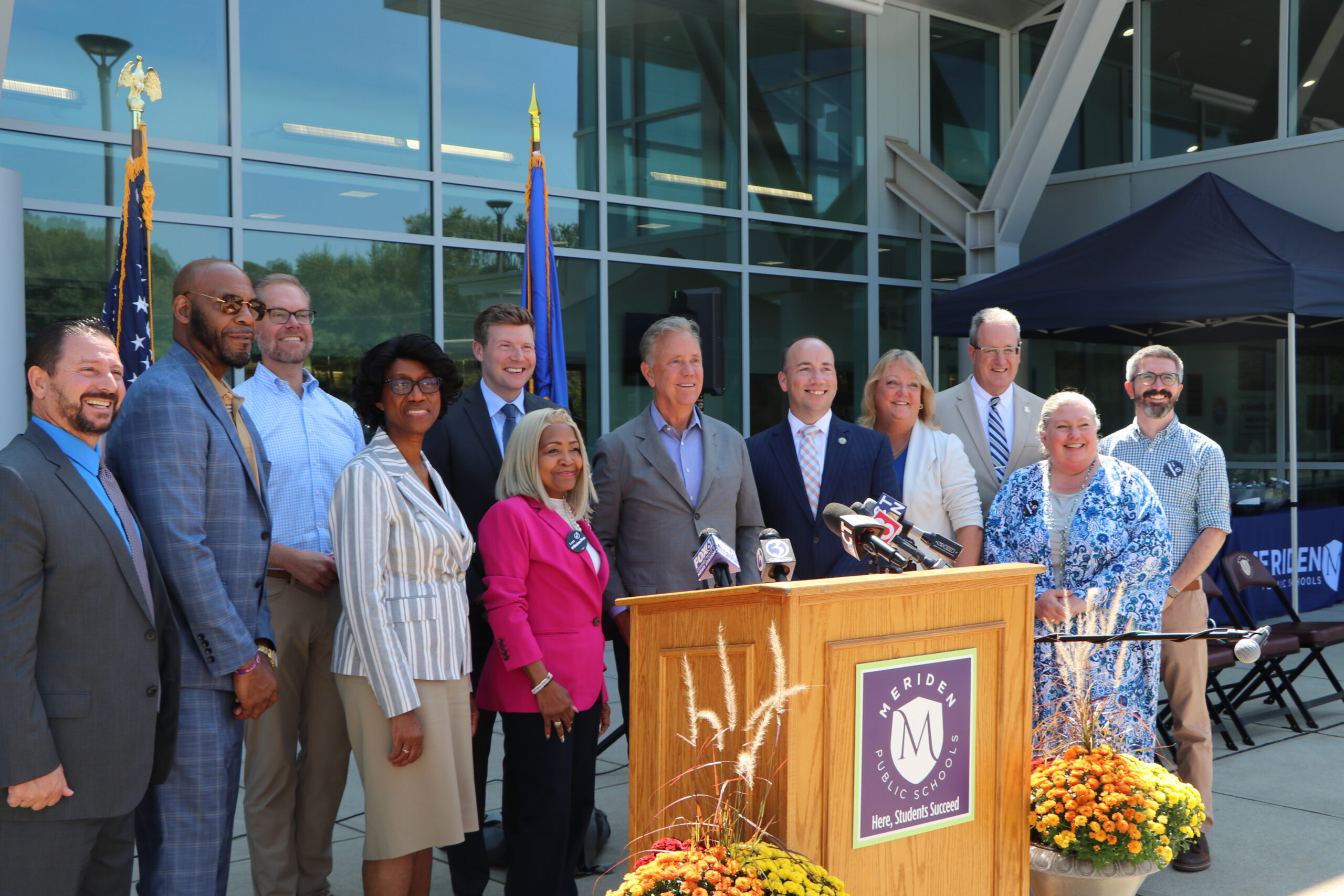
Today, State Senator Saud Anwar (D-South Windsor), Senate Chair of the Public Health Committee, and State Senator Jan Hochadel (D-Meriden) joined representatives of the International Union of Operating Engineers and the Connecticut State Council of Machinists to to advocate for treating substance use disorder as an occupational hazard, aiming for a more worker- and business-friendly approach to the condition.

Such an action would provide benefits to both workers and businesses, as studies have confirmed workers receiving treatment for such conditions are more reliable workers than the general workforce while their employers see significant cost-savings due to reduced worker turnover and lower costs of training.

“If a worker is injured on the job, they receive treatment, but if that job pushes them toward seeking relief through substances, that’s considered a personal failing. That disconnect in perception prevents people from getting the treatment they need and stigmatizes substance use disorder and mental health,” Senator Anwar said. “Accepting these conditions makes it easier for individuals to pursue care, especially if we can recognize that laborious, stressful and repetitive jobs are more likely to lead to injury – and possibly self-medication. Workers who receive treatment are more productive and stable in their careers; employers who take their needs seriously experience better productivity from their employees. This is a situation where we can provide strong benefits in our industries, and I would like to see the legislature pursue this policy next session.”

“As an advocate for teachers and tradespeople, I’ve seen firsthand how a compassionate approach to addiction can not only be life saving, but benefit both workers and employers,” Senator Hochadel said. “When we prioritize treatment and view addiction as an illness and occupational hazard, we give our colleagues a real chance at recovery all while reducing turnover and creating a more stable and productive work environment.”

“Connecticut State Building trades in conjunction with IUOE local 478 is providing Naloxone to all trade unions in Connecticut,” said Kyle Zimmer, Local 478 Health and Safety Director and Members Assistant Program Director, and Ashley Dwyer, Local 478 Members Assistant Program Coordinator. “This has been made possible due to partnership with the Department of Mental Health and Addiction Services. 5000 doses have been provided so far. We view this as a life saving device, much like AEDS ( Automated External Defibrillator) . We will continue to provide training and Naloxone as needed”

A number of industries are impacted by substance use disorder and opioid use, especially those with long, repetitive tasks, those with increased risks of on-job injury and ones with greater exposure to risk. The Midwest Economic Policy Institute said injury rates for construction workers were 77% higher than the national average and more than half of workers’ compensation claims involved opioid prescriptions for on-job injuries. The American Farm Bureau Federation said nearly 75% of farmers and farmworkers were directly impacted by opioids. Manufacturing and nonprofits also see increased rates of injury, access and risk of opioid use.

Approaching substance use disorder in a different light is vital to improve the health and safety of workers in the field. According to the National Safety Council, this approach may aid workers’ health as well as employer productivity; studies found that workers in recovery from substance use disorder miss fewer days of work than the average worker, while those self-medicating or with untreated disorders miss a significant number of days more than the average worker.

Further connecting these ties between workers and employers on the issue at hand, workers with substance use disorder are 40% more likely to have multiple employers in a year. When training and retraining replacement workers can cost up to half of a worker’s annual salary, a more hands-on, supportive approach can benefit patient outcomes and business productivity alike.

Reevaluating substance use disorder is even more pressing in the light of the continuing opioid crisis, as some fields see significant opioid abuse on the job. According to the National Association of Home Builders, construction workers as one example represent about one-quarter of all fatal opioid overdoses among workers – and opioid addiction often begins after someone is injured and prescribed opioids for pain management, further intertwining these issues. When a worker dies, their colleagues struggle with mental health concerns and the loss of a treasured colleague, while businesses lose $5 billion a year from lost production and pain and suffering after construction-related deaths, the Midwest Economic Policy Institute found.

By considering substance use disorder as an occupational hazard or occupational condition, we can connect workers directly to the resources they need and allow our business environment to shift to one focused on reducing injury or damage to workers, which can increase productivity and benefit workers and employers all at once. Substance use disorder doesn’t discriminate and reorienting how we consider it can lead to significant improvements for everyone involved.

Contact: Hugh McQuaid | Hugh.McQuaid@cga.ct.gov | 860-634-4651

Share Share
Tweet Tweet
Forward Forward

STATEMENT OF SEN. CABRERA ON TODAY’S INSURANCE DEPARTMENT PUBLIC HEARING ON PROPOSED INDIVIDUAL AND SMALL GROUP INSURANCE RATES FOR 2025

FOR IMMEDIATE RELEASE

Tuesday, August 20, 2024


STATEMENT OF SEN. CABRERA ON TODAY’S INSURANCE DEPARTMENT PUBLIC HEARING ON PROPOSED INDIVIDUAL AND SMALL GROUP INSURANCE RATES FOR 2025

Senator Jorge Cabrera (D-Hamden) is Senate Chair of the Insurance and Real Estate Committee.

“I understand insurance company arguments that they are simply passing along higher pharmacy and hospital costs via premium rate increases onto their customers, but this annual rate review process has sounded like a broken record for several years now. Connecticut sets price targets, insurance companies come in way above these targets, the Insurance Department cuts the rate requests in half, but consumers still end up paying more every year. As was stated today, a third of state residents are struggling to pay their medical bills, and nearly half are forgoing medical care because of the high cost.

“What we need to do is re-double our efforts to pass a public option here in Connecticut, where individuals and businesses can buy into the state’s health insurance plan. We’ve raised several public option bills in recent years, and they’ve all received vehement opposition from Republicans. But the segment of Connecticut’s healthcare consumers who are in these small group and individual markets – about 200,000 people – need another high-quality, affordable health insurance option. And that option is the public option. This should be a priority for the General Assembly in 2025.”

Governor Declares State of Emergency in Response to Flooding

Governor Declares State of Emergency in Response to Flooding

Gov. Ned Lamont declared a state of emergency Monday as historic flooding resulted in significant infrastructure and property damage as well as at least two deaths in southwestern Connecticut.

In a press release, the governor said the declaration could help to expedite the arrival of federal resources to assist state and local crews managing the response to the severe rainfall and flash flooding responsible for extensive damage in the southwest region of the state.

“The sudden and severe flooding has caused significant damage to infrastructure in the western portion of the state, resulting in evacuations, rescues, and more than two dozen road closures that we anticipate will need to be closed for an extended period,” Lamont said.

Meanwhile, state and local officials staged a midday press conference in Oxford, where crews had been working to assist residents and visitors stranded by infrastructure damage like washed out roads and bridges.

George Temple, the town’s first selectman, reported that two residents had died after they were swept away in severe flood waters.

“This is a tragic and devastating day for Oxford,” Temple said.

State officials described extensive rescue and response efforts, including the evacuation of around 50 campers who were stranded in Southbury’s Kettletown State Park after flood waters washed out access routes.

As rescue operations began to shift to damage assessment and repair efforts, the Department of Energy and Environmental Protection was working to ensure the viability of dams across the affected area, DEEP Commissioner Katie Dykes said.

The rainfall and subsequent flood damage fit a pattern of more extreme weather events that have become increasingly common in recent years, Dykes said.

“This is a very historic and unprecedented rainfall event and it’s consistent with the accelerating impacts of climate change,” she said.

Officials advised motorists in the area to exercise caution on local roads. Department of Transportation Commissioner Garrett Eucalitto said that at least 27 state roads were closed in the area. Road closures could increase as crews continue to evaluate infrastructure damage, he said.

Eucalitto encouraged drivers to obey all posted road closures and avoid flooded routes.

“If there are cones or barrels or caution tape up, I strongly am encouraging everyone to adhere to those signs,” he said. “Do not cross those roadways. We don’t necessarily know what is underneath the pavement. The pavement could have been undermined, the bridges could have been impacted by scouring.”

Motorists can find updates on road closures at CTroads.org.

Posted by Hugh McQuaid

Senator Gaston Calls for an End to Gun Violence Following Deadly Bridgeport Shootings

Senator Gaston Calls for an End to Gun Violence Following Deadly Bridgeport Shootings

This morning, state Senator Herron Keyon Gaston (D-Bridgeport), Chair of the Public Safety Committee, is calling for an end to gun violence following two deadly shootings in Bridgeport. The most recent shooting happened the morning of August 17 and one woman is now dead. This is three days after a 45-year-old man was shot and killed in Bridgeport.

“28-years-old is too young to lose a life,” said Sen. Gaston. “My condolences are with the victim’s family. Both these shootings are terrible and bring a sense of sadness to those in our society. It is always so hard to hear of someone being killed in our community. This gun violence needs to stop. It has a devastating impact on individuals and their families. It tears apart our community leaving behind grief and loss. I will always be an advocate for common-sense gun laws and support initiatives that address the root causes of this violence.”

Senator Gaston plans to continue to advocate to end gun violence. Recently, Sen. Gaston was invited to the White House to discuss gun violence prevention. During the event, he was able to hear from senior White House officials and other state leaders and then participate in discussions about what public policies elected officials should be pursuing.

At a local level, Senator Gaston has secured several grants for gun violence prevention programs in his district. These grants will help to provide enrichment programs and activities, create safe environments for students to learn and bolster new skills, promote positive police and community interactions and more.

This legislative session, Senator Gaston will be focused on continuing to advocate for gun violence prevention and will work to bring justice to families who have been affected by it.

Looney and Duff Applaud Vice President Kamala Harris’s Proposal to Ban Grocery Price Gouging

Looney and Duff Applaud Vice President Kamala Harris’s Proposal to Ban Grocery Price Gouging

Today, Senate President Martin M. Looney (D-New Haven) and Senate Majority Leader Bob Duff (D-Norwalk) issued the following statement in response to Vice President Harris’s proposal to ban grocery store price gouging.

“We applaud Vice President Kamala Harris for tackling corporate price gouging in the grocery store industry. Senate Democrats put a spotlight on this issue last spring and worked to combat it here in Connecticut through investigations and support for stronger enforcement tools. Democrats are committed to protecting consumers and unafraid of holding corporations accountable. We encourage Congress to follow this lead by supporting the vice president’s common sense proposal and ensuring that Americans are protected from the types of greedy business practices that have burdened families across the nation especially in the wake of the COVID pandemic.”

FOR IMMEDIATE RELEASE

Contact: Kevin Coughlin | 203-710-0193 | kevin.coughlin@cga.ct.gov

Looney and Duff Applaud Vice President Kamala Harris’s Proposal to Ban Grocery Price Gouging

Looney and Duff Applaud Vice President Kamala Harris’s Proposal to Ban Grocery Price Gouging

Today, Senate President Martin M. Looney (D-New Haven) and Senate Majority Leader Bob Duff (D-Norwalk) issued the following statement in response to Vice President Harris’s proposal to ban grocery store price gouging.

“We applaud Vice President Kamala Harris for tackling corporate price gouging in the grocery store industry. Senate Democrats put a spotlight on this issue last spring and worked to combat it here in Connecticut through investigations and support for stronger enforcement tools. Democrats are committed to protecting consumers and unafraid of holding corporations accountable. We encourage Congress to follow this lead by supporting the vice president’s common sense proposal and ensuring that Americans are protected from the types of greedy business practices that have burdened families across the nation especially in the wake of the COVID pandemic.”

FOR IMMEDIATE RELEASE

Contact: Kevin Coughlin | 203-710-0193 | kevin.coughlin@cga.ct.gov

STATE AND WINDHAM OFFICIALS CELEBRATE MONEY FOR BEFORE- AND AFTER-SCHOOL PROGRAMS

FOR IMMEDIATE RELEASE

Thursday, August 15, 2024

STATE AND WINDHAM OFFICIALS CELEBRATE MONEY FOR BEFORE- AND AFTER-SCHOOL PROGRAMS

Superintendent Youngberg, Sen. Flexer, Rep. Johnson, Principal Jeannine Enamait

WINDHAM – Just two weeks before classes are set to begin for the 2024-2025 school year, State Senator Mae Flexer, state Representative Susan Johnson, and Superintendent of Schools Tracy A. Youngberg today welcomed $140,000 in new state funding for before-and after-school programs in Windham.

The money was secured in the state budget adjustment in May by Sen. Flexer, Rep. Johnson and other Democratic legislators using unspent federal ARPA dollars.

“State investments in our students are critical if we want to see them be confident and succeed.  I was committed to restoring the funding to maintain these critical before- and after-school programs and am thrilled that our fight for these resources will result in hundreds of students and their families having access to the great support of these programs,” Sen. Flexer said. “I am so proud of the Windham public schools and all they have to offer and all of their dedication to our children, especially right here at the Natchaug Elementary School, which is the 2024 Connecticut Association of Schools Elementary School of the Year. That’s the kind of success possible with a committed staff and teachers.”

“I am extremely pleased that Senator Flexer was able to work with the House, Senate, and Executive Branch to take care of the families as well as Windham’s Before and After School Programs,” said Rep. Johnson. “This will give our students additional time for educational opportunities and socialization.”

“Windham Public Schools is incredibly thankful for the funds that have been allocated for our Before and After School (BASP) programs for the 2024-2025 school year,” said Superintendent Youngberg. “These programs, which provide a safe, structured and engaging environment for our students are absolutely necessary for our working families. We are often asked when we might be able to expand our offerings and include more students in our Before and After School Programs. We would like to extend a very big thank you to Senator Mae Flexer, and her colleagues in the Democratic legislature, for going to bat for Windham’s families.”

Windham’s before-school program runs from 7 a.m. to 8:15 a.m., and students have different recreational activities to choose from, including open gym, games, puzzles, and coloring activities. The after-school program runs from 3:10 p.m. to 5:30 p.m. and offers academic support, recreational activities, snacks, learning centers providing extra tutoring, homework assistance, access to books and technology, and family events and field trips several times a year.

Today’s announcement was held at the Natchaug Elementary School on Jackson Street; Natchaug was just named the 2024 Connecticut Association of Schools Elementary School of the Year, underscoring Natchaug’s unwavering commitment to excellence in education and its dedication to fostering a vibrant, inclusive learning environment. The before- and after-school programs are so popular that Natchaug’s program is already fully enrolled for the year.

###

Senator Maroney Upholds Perfect Voting Record in 2024 Session

Senator Maroney Upholds Perfect Voting Record in 2024 Session

According to a report by the Office of Legislative Management, state Senator James Maroney, (D-Milford) upheld a perfect voting record during the 2024 legislative session.

“Every single vote was a reflection of my commitment to my principals, my community, and my duty to those I represent,” said Senator Maroney. “I am proud I had the privilege this year to have my voice heard and vote consistently. Every vote counts and I made sure mine did.”

This distinction reflects that Senator Maroney was one of 12 senators to participate in 100% of votes taken on bills this year.

FOR IMMEDIATE RELEASE
Contact: Michelle Rappaport | Michelle.Rappaport@cga.ct.gov| 508-479-4969
Share Share
Tweet Tweet
Forward Forward

Senator Rahman Maintains Perfect Voting Record in 2024 Legislative Session

Senator Rahman Maintains Perfect Voting Record in 2024 Legislative Session

Senator MD Rahman, D-Manchester, achieved a perfect voting record during the 2024 legislative session, according to a report from the Office of Legislative Management.

“As someone who is dedicated to the well-being of Andover, Bolton, Glastonbury, and Manchester, ensuring my constituents are represented in every decision is a responsibility I take seriously. This year, my resolve was evident in my participation in every vote before the state Senate,” Senator Rahman said. “I believe this consistency is important and it reflects my commitment to the people of my district.”

Senator Rahman was one of 12 senators — including nine Democrats — to participate in 100% of votes taken on bills this year.

Contact: Hugh McQuaid | Hugh.McQuaid@cga.ct.gov | 860-634-4651