ADVISORY: Sen. Lesser, Advocates, Impacted Residents to Promote Statewide SNAP Proposal

Banner

Sen. Lesser, Advocates, Impacted Residents to Promote Statewide SNAP Program

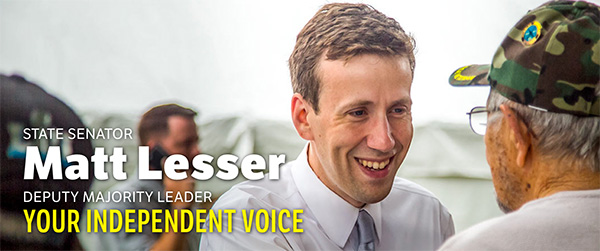
Today, State Senator Matt Lesser, Senate Chair of the Human Services Committee, will hold a press conference alongside legislators, advocates and impacted residents to support legislation that would address food insecurity and shortfalls in the federal Supplemental Nutrition Assistance Program (SNAP), due to funding cuts passed by the Trump administration in the federal republican budget. 
 
The legislation will be receiving a public hearing shortly after the press conference.
 
Senate Bill 497 moves $40 million from the Federal Cuts Response Fund, established in Special Act 26-1, to create a transitional assistance fund. This fund would be used for a state-funded SNAP program for residents impacted by the new federal eligibility requirements:

  • A homeless person or person at risk of homelessness
  • An adult diagnosed with Autism Spectrum Disorder (ASD) who is not otherwise classified as disabled
  • A young adult who is aging out of the foster care system
  • An adult who is a caretaker for a child between the ages of 14-18
  • An adult ages 55-64
  • An asylum-seeker, refugee or other immigrant with a visa or pending visa with a immigrant status as victim of human trafficking or domestic abuse

The proposal also ensures that veterans who are not able to meet the new federal work requirements do not risk having their SNAP benefits reduced, it increases reimbursement rates for Meals on Wheels, a critical senior nutrition program and creates a Medicaid waiver program.
 
Who:
State Senator Matt Lesser, Senate Chair of Human Services Committee
State Senator Paul Honig, Senate Chair of Veterans Committee
State Representative Jaime Foster, House Chair of the Veterans Committee
Coralys Santana, The Connecticut Project Action Fund
Barbara Gandia, impacted resident from Bristol
Alison Weir, Executive Director, Connecticut Veterans Legal Center
Matthew Dillon, Attorney, Connecticut Legal Services
Marisa Rodriguez, impacted resident from New Britain
Dr. Molly Markowitz, Pediatrician, CT-American Academy of Pediatrics Chapter
What: Press Conference on a Statewide SNAP Proposal
Where: Hearing Room 1D in the Legislative Office Building
When: Today – Tuesday, March 17 at 10 a.m.

ADVISORY: Sen. Lesser, Advocates, Impacted Residents to Promote Statewide SNAP Proposal

Banner

ADVISORY:

ADVISORY:

Sen. Lesser, Advocates, Impacted Residents to Promote Statewide SNAP Program

Tomorrow, State Senator Matt Lesser, Senate Chair of the Human Services Committee, will hold a press conference alongside legislators, advocates and impacted residents to support legislation that would address food insecurity and shortfalls in the federal Supplemental Nutrition Assistance Program (SNAP), due to funding cuts passed by the Trump administration in the federal republican budget. 
 
The legislation will be receiving a public hearing shortly after the press conference.
 
Senate Bill 497 moves $40 million from the Federal Cuts Response Fund, established in Special Act 26-1, to create a transitional assistance fund. This fund would be used for a state-funded SNAP program for residents impacted by the new federal eligibility requirements:

  • A homeless person or person at risk of homelessness
  • An adult diagnosed with Autism Spectrum Disorder (ASD) who is not otherwise classified as disabled
  • A young adult who is aging out of the foster care system
  • An adult who is a caretaker for a child between the ages of 14-18
  • An adult ages 55-64
  • An asylum-seeker, refugee or other immigrant with a visa or pending visa with a immigrant status as victim of human trafficking or domestic abuse

The proposal also ensures that veterans who are not able to meet the new federal work requirements do not risk having their SNAP benefits reduced, it increases reimbursement rates for Meals on Wheels, a critical senior nutrition program and creates a Medicaid waiver program.
 
Who:
State Senator Matt Lesser, Senate Chair of Human Services Committee
State Senator Paul Honig, Senate Chair of Veterans Committee
State Representative Jaime Foster, House Chair of the Veterans Committee
Coralys Santana, The Connecticut Project Action Fund
Barbara Gandia, impacted resident from Bristol
Alison Weir, Executive Director, Connecticut Veterans Legal Center
Matthew Dillon, Attorney, Connecticut Legal Services
Marisa Rodriguez, impacted resident from New Britain
Dr. Molly Markowitz, Pediatrician, CT-American Academy of Pediatrics Chapter
What: Press Conference on a Statewide SNAP Proposal
Where: Hearing Room 1D in the Legislative Office Building
When: Tuesday, March 17 at 10 a.m.

Senate Priority Legislation Supporting Commuters and Microtransit Passes Committee

Senate Priority Legislation Supporting Commuters and Microtransit Passes Committee

For Immediate Release
Contact: Garnet McLaughlin – Garnet.McLaughlin@cga.ct.gov – 860-304-2319

Today, Senate Chair of the Transportation Committee State Senator Christine Cohen led committee passage of senate priority legislation that will support commuters and extend microtransit services across the state.
 
“This legislation tackles connectivity, accessibility and clean air goals while providing business-friendly tax credits that help commuters,” said Senator Christine Cohen. “Sound, inclusive and commuter-centered policies like this one really have the power to move Connecticut forward and I look forward to getting this proposal across the finish line.”
 
Senate Bill 9 allocates $10.5 million through FY 27 to extend a successful microtransit program that was first established in 2024 and serves nine transit districts and 17 municipalities in Connecticut. These programs offer accessible and affordable on-demand transportation, allowing seniors, students, the disabled community and those without personal transportation to get to their destinations safely.
 
The legislation also establishes a tax credit for businesses. Previous legislation allowed businesses with over 100 employees to create incentives for their employees to travel to work by means of carpooling, public transit or employer-based commuting alternatives. The legislation passed today lowers the threshold to 5 employees and increases the credit from $250 to $500 per employee per year. There is a statewide cap on the program of $1.5 million and the credits are offered on a first-come first-serve basis.
 
The legislation also requires the Department of Transportation (DOT) to work with local organizations like chambers of commerce to develop a public service campaign, ensuring employers are made aware of the benefit.
 
Senate Bill 9 also identifies opportunities for transit-oriented development by requiring the Department of Transportation to report back to the Transportation Committee on any state-owned land near public transportation hubs that could be developed into housing.
 
The legislation next heads to the Senate floor.

General Law Committee Advances Bills to Strengthen Consumer Privacy and Online Safety Protections

General Law Committee Advances Bills to Strengthen Consumer Privacy and Online Safety Protections

General Law Committee Advances Bills to Strengthen Consumer Privacy and Online Safety Protections

Today, two senate democratic caucus bills, Senate Bill 4, ‘An Act Concerning Consumer Privacy’ and Senate Bill 5, ‘An Act Concerning Online Safety’, was passed out of the General Law Committee. Both bills would advance critical protections for Connecticut residents in the digital age.
 
“Real harms are happening to Connecticut residents right now, and we cannot wait for Washington to act,” said State Senator James Maroney (D-Milford), Chair of the General Law Committee. “With these bills, we are saying: if Washington won’t protect us, we will protect ourselves. We want to ensure our residents are safe, especially our children, and equip them with the skills they need to succeed in the modern economy.”
 
“These bills reflect our commitment as Senate Democrats to making sure Connecticut families are protected,” said Senate Majority Leader Bob Duff (D-Norwalk). “Whether it’s keeping personal data out of the hands of those who would steal it, companies that would make vast profits from the information, federal overreach that is concerning many Americans or ensuring
or ensuring that the AI tools our kids are using aren’t putting their lives at risk, we are proud to be leading the nation on these issues.”
 
Senate Bill 4: Consumer Privacy
Senate Bill 4 introduces comprehensive privacy measures that address emerging threats to consumer data. The bill tackles critical privacy concerns, including the lightly regulated sale of geolocation data, the proliferation of license plate readers and facial recognition technology, and the exploitative practices of data brokers.
 
Specifically, Senate Bill 4 will:
 

  • Regulate data brokers by allowing consumers to request, at no cost, the deletion of any personal data collected by a data broker
  • Prohibit automated license plate reader entities that have contracted with the Department of Transportation, the Department of Motor Vehicles, or law enforcement agencies from selling or sharing information gathered from those readers
  • Require businesses using facial recognition technology to clearly disclose such use at each public entrance and provide consumers with a way to request removal of their facial images from any resulting database
  • Regulate dynamic pricing, also known as surge pricing or personalized algorithmic pricing, by creating strict disclosure requirements for consumers
  • Require manufacturers of motor vehicles manufactured overseas to affix a label to vehicles reflecting the cost attributable to tariffs
  • Ban controllers and processors from selling or sharing precise geolocation data

 
These protections are a direct response to real-world harm. In Minnesota, Vance Boelter obtained personal information through data broker websites that he used to assassinate Minnesota Speaker Emerita Melissa Hortman and her husband, Mark. Connecticut’s legislation will help prevent tragedies like this from happening here.

Given federal law enforcement’s current overreach and violations of civil rights, this bill will also help prevent third-party vendors from retaining or providing data that tracks individuals’ movements and locations to federal agencies, including ICE.
 
Senate Bill 5: Online Safety
Senate Bill 5 advances critical artificial intelligence legislation to protect Connecticut residents from emerging digital harms, with a primary focus on preventing AI-driven threats to mental health and youth safety.
 
The bill will require AI chatbot operators to make reasonable efforts to detect suicidal ideation or indicators of self-harm expressed by users and to have a protocol in place to respond with appropriate mental health resources.
 
Over 70% of teenagers use AI companions, with roughly half using them regularly. There have been numerous cases across the country of teenagers who disclosed suicidality to AI chatbots that not only failed to offer mental health resources, but actively encouraged and assisted minors in attempting or completing suicide.
 
Adults have been harmed as well. In in Greenwich, Connecticut, a man killed his elderly mother and then himself after an AI chatbot repeatedly validated his delusions, encouraged him to distrust others, and never once directed him to mental health resources.
 
This bill will also require that individuals be provided with a disclosure when AI is used in a decision-making process affecting their employment, ensuring transparency as AI becomes an increasingly powerful force in hiring and workplace decisions.
 
The legislation will also hold technology companies responsible when their AI systems promote dangerous content or behaviors.
 
Senate Bill 5 also invests in Connecticut’s AI future by promoting responsible AI use and equipping residents with the skills and knowledge needed to thrive in a modern AI economy. Through workforce training initiatives and partnerships with state agencies, the bill ensures that Connecticut workers and businesses are not left behind as technology rapidly transforms our economy.


FOR IMMEDIATE RELEASE
Contact: Michelle Rappaport | Michelle.Rappaport@cga.ct.gov| 860-240-8671

MEDIA ADVISORY: TUESDAY, 11AM, CAPITOL SOUTH LOBBY – JUST CAUSE ADVANCES, LAWMAKERS PLAN WHAT’S NEXT

Banner

MEDIA ADVISORY: TUESDAY, 11AM, CAPITOL SOUTH LOBBY – JUST CAUSE ADVANCES, LAWMAKERS PLAN WHAT’S NEXT

MEDIA ADVISORY: TUESDAY, 11AM, CAPITOL SOUTH LOBBY – JUST CAUSE ADVANCES, LAWMAKERS PLAN WHAT’S NEXT
 

Where: State Capitol, South Lobby Portico (facing Capitol Avenue)
When: Tuesday, March 17, 11 a.m.
Who: Lawmakers championing Senate Bill 257, including State Senator Martha Marx and State Representative Antonio Felipe, Chairs of the Senate Housing Committee, State Rep. Kevin Brown and State Rep. Anthony Nolan; advocates with Connecticut Tenants Union, CT Fair Housing Center, Make The Road CT and the Just Cause Coalition
 
Following its passage from the Housing Committee on March 10, lawmakers and advocates seeking to support and protect tenants will celebrate Senate Bill 257’s Just Cause protections, seeking to better protect the rights and stability of countless Connecticut renters.

SB257 seeks to require a listed reason in the event of an eviction, trying to reduce housing instability, unfair evictions and homelessness among tenants who can be exposed to abuses of power. The policy does not bar evictions but seeks to end the practice of no-fault evictions, representing more than 10% of all evictions.

SENATOR CABRERA WELCOMES $49,999 FOR WOODBRIDGE FARM TO ENHANCE LOCAL AGRICULTURAL EDUCATION

Banner

SENATOR CABRERA WELCOMES $49,999 FOR WOODBRIDGE FARM TO ENHANCE LOCAL AGRICULTURAL EDUCATION

As part of the state Department of Agriculture’s latest round of Agricultural Enhancement Grant awards, distributing more than $500,000 around the state to support farm viability, Woodbridge’s Massaro Community Farm received a $49,999 grant supporting “Hands In The Soil,” an immersive agricultural education for local youth.

According to its website, the Massaro Community Farm’s “Hands In The Soil” program sees volunteer groups work directly in its farmlands to help grow vegetables while they learn about the impacts of local farmwork and how they serve the local community.


“This investment means local students and organizations will have more opportunities to learn directly about the hard work that takes place on our farms every day, and the impact that work delivers into our local communities,” said State Senator Jorge Cabrera (D-Hamden). “It’s a valuable resource that will continue to deliver dividends for our residents and I’m grateful to the Department of Agriculture for their  local support.”


The Agricultural Enhancement Grant Program strengthens local farm opportunities through supporting projects designed to improve or expand agricultural activity and promote long-term viability.

TODAY, 11:30 A.M., LOB SECOND FLOOR ATRIUM – RARE DISEASE DAY BRINGS ADVOCATES TO DISCUSS SOLUTIONS, NEW MAPPING PROJECT

Senator Anwar

FOR IMMEDIATE RELEASE
Contact: Joe O’Leary | Joe.OLeary@cga.ct.gov | 508-479-4969

TODAY, 11:30 A.M., LOB SECOND FLOOR ATRIUM – RARE DISEASE DAY BRINGS ADVOCATES TO DISCUSS SOLUTIONS, NEW MAPPING PROJECT

Who:

  • State Senator Saud Anwar (D-South Windsor)
  • State Representative Cristin McCarthy-Vahey
  • Members of the Connecticut Rare Disease Advisory Board

Where: Legislative Office Building, Second Floor Atrium

When: Monday, March 16, 2026; Press conference scheduled for 11:30 a.m., advocacy, RDAC meeting, forum featuring individuals with rare diseases, medical professionals, research professionals starting at 9 a.m.

 
On Monday, March 16, advocates will call for awareness regarding rare diseases in Connecticut and discuss a new mapping project through the Rare Disease Advisory Board intended to improve the research, diagnosis and treatment of rare diseases. Rare diseases are defined as those impacting fewer than 200,000 Americans; more than 300,000 state residents live with rare diseases today.

MONDAY – RARE DISEASE DAY BRINGS ADVOCATES TO DISCUSS SOLUTIONS, NEW MAPPING PROJECT

Senator Anwar

FOR IMMEDIATE RELEASE
Contact: Joe O’Leary | Joe.OLeary@cga.ct.gov | 508-479-4969

MONDAY – RARE DISEASE DAY BRINGS ADVOCATES TO DISCUSS SOLUTIONS, NEW MAPPING PROJECT

Who: State Senator Saud Anwar (D-South Windsor)
State Representative Cristin McCarthy-Vahey
Members of the Connecticut Rare Disease Advisory Board

Where: Legislative Office Building, Second Floor Atrium

When: Monday, March 16, 2026; Press conference scheduled for 11:30 a.m., advocacy, RDAC meeting, forum featuring individuals with rare diseases, medical professionals, research professionals starting at 9 a.m.

On Monday, March 16, advocates will call for awareness regarding rare diseases in Connecticut and discuss a new mapping project through the Rare Disease Advisory Board intended to improve the research, diagnosis and treatment of rare diseases. Rare diseases are defined as those impacting fewer than 200,000 Americans; more than 300,000 state residents live with rare diseases today.

$4.3 Million Passes at CIF Board Meeting for New Haven

Newsletter Header

$4.3 Million Passes at CIF Board Meeting for New Haven

Funding to support recreation, child care, community health, and green space across the city

HARTFORD—Senate President Pro Tempore Martin M. Looney, Senator Gary Winfield, and State Representatives Pat Dillon, Roland Lemar, Juan Candelaria, Al Paolillo, Steve Winter, and Toni Walker today announced that five New Haven projects received a combined $4.3 million in state funding through Round 8 of the Community Investment Fund 2030 at the recent CIF board meeting.

Senator Looney serves as co-chair of the 21-member CIF Board which was created by the Connecticut General Assembly to direct state bond funding to municipalities and nonprofits for community development, housing, health services, and economic revitalization projects.

The funded projects are:

  • Albertus Magnus College will receive $500,000 to modernize its Recreation and Swimming Center, upgrading facilities that serve students and the surrounding New Haven community.
  • The City of New Haven will receive $250,000 for planning of Mill River Park at Ball Island, advancing green space and waterfront access in the city.
  • Friends Center for Children, Inc. will receive $2 million to expand its Flint Street Campus, supporting the organization’s early childhood education and child care programs serving New Haven families.
  • Leadership, Education, and Athletics in Partnership, Inc. (LEAP) will receive $1.3 million to renovate the Roslyn M. Meyer Community Center, a cornerstone youth development facility in the city.
  • Leeway, Inc. will receive $250,000 for planning to advance integrated care and housing for individuals with disabilities in New Haven.

“These investments reflect the exact mission that the Community Investment Fund was created to address,” said Senator Looney. “These meaningful resources will support organizations and institutions that anchor our neighborhoods and serve our most vulnerable residents. From early childhood education at the Friends Center to youth development at LEAP to expanded housing and care options through Leeway, these projects strengthen the fabric of New Haven. I am proud to lead passage of these items as co-Chair and grateful to my colleagues on the CIF Board for their partnership in delivering this funding.”

“The Community Investment Fund exists to direct resources to the places and people who need them most, and this round of funding does exactly that,” said Senator Gary Winfield. “Early childhood education, youth development, green space, expanded care for individuals with disabilities: these are not abstractions. They are the foundations on which families build their lives and on which communities sustain themselves. I am proud to support these investments in New Haven and grateful to my colleagues on the CIF Board for their commitment to this work.”

“These funds make significant improvements for our students and childcare providers, help provide housing for those that need it most, and upgrade our local parks,” Rep. Juan Candelaria said. “Thank you to the CIF for their approval of these funds, and to my legislative colleagues for their continued advocacy for New Haven.”

“Investing in New Haven means investing in the heart of our community. These funds will empower critical projects in housing, health services, and economic revitalization, ensuring that every resident has the opportunity to thrive. I’m proud to support initiatives that strengthen our neighborhoods and create a brighter, more equitable future for all,” said Rep. Roland Lemar.

“Thank you to the Community Investment Fund, Senator Looney, and the New Haven delegation for believing in these projects, including the funding to expand the Friends Center for Children’s Flint Street campus, the modernization of the recreation and swimming center at Albertus Magnus, and the funds to renovate the Roslyn M. Meyer Community Center,” said Rep. Paolillo. “These projects will directly benefit the children, youth, and families of New Haven, as well as other projects approved that will benefit open space at Mill River Park and Integrated Care and Housing for individuals with disabilities with Leeway, Inc.”

“I would like to thank Senator Looney and the CIF Board for their continued leadership and commitment to funding important priorities in New Haven. Their support for initiatives that strengthen our community, particularly those focused on childcare and youth development, is critical to ensuring that families have the resources they need and that young people have opportunities to learn, grow, and succeed,” Rep. Winter said.

Senator Duff Sends Letter Warning Congress Not to Strip States of Authority to Protect Kids Online

Senator Duff Sends Letter Warning Congress Not to Strip States of Authority to Protect Kids Online

As VP of NCSL, Duff Raises Alarm Over Federal Preemption in House Children’s Online Safety Package

HARTFORD — Senate Majority Leader Bob Duff (D-Norwalk) sent a letter from the National Conference of State Legislatures (NCSL) as NCSL Vice President, urging Congress to address serious concerns with the Kids Internet and Digital Safety (KIDS) Act, a package of children’s online safety bills advanced by the House Energy and Commerce Committee on a party-line vote last week.

The NCSL letter, addressed to Committee Chairman Brett Guthrie and Ranking Member Frank Pallone, acknowledges the importance of protecting children from the harms of social media, online platforms, and digital content — while warning that the House package’s broad federal preemption language would strip states of the authority to enact stronger protections for kids.

“Washington Republicans are handing Big Tech exactly what it wants,” said Senate Majority Leader Bob Duff. “Connecticut has been out in front on protecting children online. We’re already moving legislation this session to safeguard kids from the harms of social media and AI. The last thing we need is Congress locking in weaker standards that shield these companies from accountability. If Congressional Republicans aren’t going to protect kids online the least they can do is let the states do their job for them.”

The KIDS Act, advanced 28-24 along party lines, packages together a dozen bills including the Kids Online Safety Act (KOSA) — but removes a key “duty of care” provision that would have required platforms to act in the best interests of children. The bill also includes preemption language that would override existing state laws and block states from enacting stronger protections. Multiple technology safety organizations, parent advocacy groups, and civil society coalitions have raised alarms about the package, arguing it prioritizes industry interests over child safety.

Connecticut is currently advancing Senate Bill 5, which addresses artificial intelligence-driven threats to mental health and youth safety online.

The NCSL is a bipartisan organization representing state legislatures across the country. Its letter reflects a broad, cross-partisan consensus among state lawmakers that federal preemption of children’s online safety standards would undermine the progress states have made.

The full letter can be found here or below.

Dear Chairman Guthrie and Ranking Member Pallone:

On behalf of the National Conference of State Legislatures (NCSL), the bipartisan organization representing the legislatures of our nation’s states, territories and commonwealths, we write to express our appreciation for the House Energy and Commerce Committee’s leadership and continued attention to protecting children from the harms associated with unfettered access to social media platforms, online services and digital content. At the state level, we see firsthand how these technologies can impact the health, safety and well-being of children and families, and we welcome Congress’s engagement on these critical issues.

We commend the committee for recognizing the urgency of strengthening protections for children online and for advancing serious, bipartisan discussions on online safety, privacy and accountability. These challenges are complex and evolving, and we value the committee’s efforts to develop solutions that reflect the importance of child safety in the digital age.

At the same time, we write to express concern and disappointment that several bills under consideration, including proposals such as the Kids Online Safety Act and the Children’s Online Privacy Protection Act, would broadly preempt stronger or more protective state laws. From our perspective as state policymakers, this approach raises significant concerns.

States have long played a central role in responding to emerging harms, particularly where new technologies outpace federal action. Many states have enacted online safety and privacy laws based on the specific experiences of children, parents, educators and health professionals in their communities. Broad federal preemption risks undermining these existing protections and limiting states’ ability to respond quickly and effectively to new or unforeseen risks as technology continues to evolve.

We are particularly concerned that federal legislation could preempt existing state online safety and privacy laws, as well as constrain states’ authority to protect children from future harms that may not yet be fully understood. Given the rapid pace of technological change, preserving state flexibility is essential to ensuring that children remain protected as new platforms, features and business models emerge.

As state legislators, we strongly believe that protecting children, respecting states’ rights and supporting innovation are not mutually exclusive goals. A federal framework can provide important national standards while still preserving the ability of states to enact and enforce stronger protections where necessary. Maintaining this balance is critical to upholding the principles of federalism while ensuring meaningful safeguards for children and families.

We remain committed to working collaboratively with members of the House Energy and Commerce Committee to develop bipartisan legislation that protects children online, respects state authority, preserves existing state laws and allows states to continue serving as partners and innovators in addressing emerging harms without compromising innovation or economic growth.

Thank you for your leadership and for considering the perspectives of state policymakers. We look forward to continued dialogue and collaboration as this important work moves forward. For further discussion or information, please contact any one of us or NCSL Senior Legislative Director, Barrie Tabin.

Sincerely,
Rep. Marcus C. Evans, Jr.
NCSL President
Illinois House of Representatives

Sen. Barry Usher, Utah
NCSL President-Elect
Montana State Senate

Sen. Bob Duff, Connecticut
NCSL Vice President
Connecticut State Senate

Sen. Wayne Harper
NCSL President Emeritus
Utah State Senate

Rep. Cindy Ryu
NCSL Co-Chair Standing Committee on Technology and Communications
Washington House of Representatives

Rep. Paul Cutler
NCSL Co-Chair Standing Committee on Technology and Communications
Utah House of Representatives