Senator MD Rahman Leads Passage of Nonresident Landlord Accountability Bill

Banner

Senator MD Rahman Leads Passage of Nonresident Landlord Accountability Bill

HARTFORD — Senator MD Rahman (D-Manchester), Senate Chair of the Planning and Development Committee, led the passage Tuesday of SB 274, legislation strengthening tenant protections by requiring nonresident landlords to register with municipalities and increasing penalties for repeat building and fire code violations.

“Too often, Connecticut tenants are stuck in unsafe housing because the system makes it too easy for absentee landlords to stay invisible,” Senator Rahman said. “This bill changes that by requiring nonresident property owners to register with municipalities, so that when there is a code violation, local officials and prosecutors can find the responsible party and hold them accountable. Every tenant in Connecticut deserves to know that if their home is unsafe, someone is going to answer for it.”

Under current law, municipalities may ask nonresident property owners to register their contact information, but are not required to. That gap allows absentee landlords, particularly those who own property through corporate entities, to remain difficult to identify and contact when code violations arise. SB 274 makes registration mandatory for larger municipalities, requires landlords to provide current residential addresses and identifying information, and ensures that service of a compliance order to that address constitutes valid legal notice. The bill takes effect October 1, 2026.

The bill also increases penalties for repeat violations of the State Building Code and State Fire Safety Code. For a first offense, landlords face fines between $200 and $1,000, imprisonment of up to six months, or both. Repeat offenders face fines of up to $2,000 for building code violations and up to $1,000 for fire code violations, with imprisonment of up to six months also available as a penalty.

Senator MD Rahman represents the 4th Senate District covering Manchester, Glastonbury, Andover, and Bolton.

ALONGSIDE FORMER BIDEN DRUG CONTROL POLICY DIRECTOR, CONNECTICUT LAWMAKERS AND ADVOCATES CALL FOR MORE HARM REDUCTION SUPPORT

Senator Anwar

FOR IMMEDIATE RELEASE
Contact: Joe O’Leary | Joe.OLeary@cga.ct.gov | 508-479-4969

April 14, 2026

ALONGSIDE FORMER BIDEN DRUG CONTROL POLICY DIRECTOR, CONNECTICUT LAWMAKERS AND ADVOCATES CALL FOR MORE HARM REDUCTION SUPPORT

As the opioid epidemic hits an inflection point – overdose deaths have declined 45% in Connecticut in recent years, but the state still sees more than two drug overdose deaths per day in its communities – advocates called for continued investment and change at the state level, including the development of a comprehensive plan to better address state opioid use.

Joined by Dr. Rahul Gupta, who served as director of the Office of National Drug Control Policy under the Biden Administration, advocates and lawmakers including State Senator Saud Anwar (D-South Windsor) and State Representative Cristin McCarthy Vahey (D-Fairfield), who chair the Public Health Committee, Dr. Scott Burris, director of Temple University’s Center for Public Health Law Research, Professor Robert Heimer, professor of epidemiology and pharmacology at Yale Institute for Global Health, Liz Evans of Liberation Systems and advocates including Dita Bhargawa and Diane Santos, who both lost children to overdoses, and Cameron Breen, a street outreach case manager and drug checking technician, called for the state to renew and improve on its investments in harm reduction, including pursuit of new models of care including overdose prevention centers.

“If we took the start of 2019 and looked at the number of people who died in motor vehicle accidents, firearms, homicide, natural disasters and serving in the military, if you put all of their deaths together, you would get to half of all deaths caused by opioids. It’s the number one preventable cause of death in our country,” said Sen. Anwar. “We’ve lost enough people that it equates to the entire population of a community in half of our state. Other parts of the country are aggressively addressing this while we are still above the national average. We need serious change in how we address this continuing disaster. Our state must invest more to address this continuing crisis and tragedy.”

“This is a really sobering moment, reflecting on more than 8,000 individuals lost in less than a decade,” said Dr. Gupta, who described the federal government’s investment of hundreds of millions of dollars into test strips, Narcan and overdose reversal drugs, risk reduction programs and treatment expansion. “This is important because we can’t save every life we can unless we do what evidence tells us. Every death from overdose is preventable. We need to take action now.”

“There has never been a new thing in harm reduction someone didn’t say was illegal,” said Dr. Burris, who has extensively studied overdose prevention centers and other overdose response strategies. “Harm reduction has always moved forward and won legal cases because it’s part of the spectrum of clinical services we need to have a comprehensive treatment plan of controlled substance use disorder. You’ll hear people tell you you can’t do that, it’s illegal, but the answer is to see them in court. Passing laws allowing health services to be given to those who need them is how we fix the health care system we have now.”

From a peak of 1,524 overdose deaths in 2021 to 836 deaths according to data from 2025, overdose deaths in the state have plummeted 45% in the last five years, a more significant decline than the national average. While that’s significant progress, it still means 836 family members and friends are dying each year throughout the state.

Public outreach, public service announcements, increased access to anti-opioid agents like Narcan and increased investment in state services have helped reduce the damage, but more can be done. Housing assistance, expanding treatment access and operating mobile opioid treatment programs are among the successful strategies adopted by the state, but with tens of millions of dollars in opioid settlement funds available as well as potential increases in funding at the state level, more investment is possible.

Connecticut needs funding to continue increasing public access to medication countering opioid use disorder, reducing overdose risks and newfound investment in training to support and expand the workforce fighting addiction.

TODAY: SENATE DEMOCRATS WILL PASS BILL REINING IN ICE ABUSES IN CONNECTICUT

Newsletter Header

TODAY: SENATE DEMOCRATS WILL PASS BILL REINING IN ICE ABUSES IN CONNECTICUT

Sue ICE agents in state court, ban masks, give AG and IG broad new powers; Bill also addresses responsible use of license plate readers

HARTFORD – Democratic state senators today will debate and pass Senate Bill 397, “AN ACT CONCERNING DEMOCRACY AND GOVERNMENT ACCOUNTABILITY,” that could help reduce in Connecticut some of the horrific human rights and Constitutional abuses already committed by federal Immigration and Customs Enforcement (ICE) agents in multiple cities and towns across America.

In May 2025, Deputy White House Chief of Staff Stephen Miller and former Department of Homeland Security Secretary Kristi Noem ordered ICE to arrest up to 3,000 immigrants every day. Since then, rogue federal ICE agents have mounted an unprecedented national fear campaign of attacks on American citizens – including murder, kidnappings, assaults, violations of Constitutional rights, the vilification of all immigrants, and the politicized enforcement of the law.

Briefly, S.B. 397 creates a much-needed cause of action to sue federal officials that violate our constitutional rights; bans masks for federal, state, and local law enforcement, with some exceptions; gives Connecticut residents the best chance to convict federal officers who commit crimes by clarifying, expanding, and strengthening the authority of our state Inspector General; empowers Connecticut (through the Attorney General and the IG) to seek emergency injunctions against federal law enforcement that violate a person’s rights or obstruct an investigation; prohibits ICE arrests for civil offenses in sensitive areas like schools, hospitals and places of worship; and ensures that lightly-trained ICE agents do not become police officers in Connecticut.

S.B. 397 also tackles the growth of government use (not just by law enforcement) of automated license plate reader systems (ALPR) to ensure that driver data is being handled in a responsible way and not abused by those with bad intent. The bill allows ALPRs to be used for license plates on a “hot list,” but data cannot be held for more than 21 days without an active criminal investigation. License plate data cannot be used to determine race/ethnicity; any activity protected under the First Amendment; suspected immigration status; reproductive health care or gender affirming care; and it protects facilities that provide the above from having a fixed ALPR near them so that patients cannot be tracked for receiving care.

S.B. 397 will be debated, voted on, and passed today in the state Senate. All but one of its sections become effective upon its signature into law.

“There was not a single Republican vote in the Judiciary Committee in favor of the ICE bill, which is absolutely critical to the health of our state and our democracy. In my opinion this is the most consequential bill that the General Assembly has addressed so far this session,” said Senate President Martin Looney (D-New Haven). “Despite our decades-long reputation as a moderate and somewhat politically bipartisan state, I think the Republican Senate Caucus will be hard-pressed today to vote against this bill and still be able to claim that they are not completely aligned with Donald Trump’s MAGA movement.”

“After the murder of Renee Good in Minneapolis in early January, Senate Democrats vowed that we’d work on legislation to prevent these types of ICE abuses in Connecticut. Today we’re keeping that promise,” said Senate Majority Leader Bob Duff (D-Norwalk). “We’ve researched these legal issues for months; they’re as airtight as you can get. Once again, state government is proving to be the solution to the problem that is the federal abuse of individual rights. Now it’s gut-check time for the Senate Republican MAGA Caucus. Where do they stand? With Donald Trump and his modern-day brownshirts? Or with the people of Connecticut? Let’s see how they vote.”

“This bill is bigger than just the letters on the page,” said Senator Gary Winfield (D-New Haven), the Senate Chair of the Judiciary Committee who helped write the bill. “The conversation we’re having today is not really about the bill. It’s really about us. We’ve acted over the course of the current Trump administration as if it’s okay to violate people’s rights, as if it’s okay to use the concept of law to obviate justice. This bill is about, who are we as a people? Who are we as a democracy? That’s what this bill is about.”

Senate Bill 397 was first introduced in the Judiciary Committee on March 3, and had its public hearing on March 9, generating nearly 350 pieces of written testimony and 166 speakers during the 12.5-hour public hearing. The bill was widely supported, particularly by religious institutions.

S.B. 397:

  • Creates a private right of action in state court to sue federal, state, and local government actors when a person’s Constitutional rights are violated. This so-called “Converse-1983” provision is a term coined in 1987 that will allow court actions not currently available today against federal agents.
  • Allows the state Attorney General to take swift action to seek an injunction or declaratory relief, and damages, when federal, state, or local government agents are violating a person’s constitutional right. With court approval, the state Attorney General could acquire a temporary injunction in five days or less for ongoing violations or a policy that would violate a person’s Constitutional rights.
  • Clarifies that the state Inspector General can investigate and prosecute state, local, and some federal agents for the unauthorized use of deadly force. The bill also gives the IG clear and unrestricted access to a crime scene when law enforcement uses deadly force, or when a person dies from the use of force, and allows for a temporary injunction allowing the IG access to investigate and collect evidence.
  • Prohibits all law enforcement officers — federal, state, local — from covering their faces, albeit with some exceptions. The bill also requires them to wear a badge or name tag.
  • Prohibits law enforcement — federal, state, or local — from arresting someone for a civil offense in a protected area, unless there is a judicial warrant. This section takes effect October 1, 2026.
  • Eliminates a law enforcement officer’s immunity if they violate a person’s right to record law enforcement while committing assault, battery, false imprisonment, false arrest, abuse of process, or malicious prosecution.
  • Prevents law enforcement officers with less than 480 hours of training from becoming police officers in Connecticut (federal ICE officers receive about 376 hours of training).

After passing in the Senate, S.B. 397 will be debated and passed in the House of Representatives and signed into law by Governor Ned Lamont. Most all of its provisions take effect immediately.

FOR IMMEDIATE RELEASE

Contact: Kevin Coughlin | kevin.coughlin@cga.ct.gov | 203-710-0193

TODAY: SENATE DEMOCRATS WILL PASS BILL REINING IN ICE ABUSES IN CONNECTICUT

Newsletter Header

TODAY: SENATE DEMOCRATS WILL PASS BILL REINING IN ICE ABUSES IN CONNECTICUT

Sue ICE agents in federal court, ban masks, give AG and IG broad new powers; Bill also addresses responsible use of license plate readers

HARTFORD – Democratic state senators today will debate and pass Senate Bill 397, “AN ACT CONCERNING DEMOCRACY AND GOVERNMENT ACCOUNTABILITY,” that could help reduce in Connecticut some of the horrific human rights and Constitutional abuses already committed by federal Immigration and Customs Enforcement (ICE) agents in multiple cities and towns across America.

In May 2025, Deputy White House Chief of Staff Stephen Miller and former Department of Homeland Security Secretary Kristi Noem ordered ICE to arrest up to 3,000 immigrants every day. Since then, rogue federal ICE agents have mounted an unprecedented national fear campaign of attacks on American citizens – including murder, kidnappings, assaults, violations of Constitutional rights, the vilification of all immigrants, and the politicized enforcement of the law.

Briefly, S.B. 397 creates a much-needed cause of action to sue federal officials that violate our constitutional rights; bans masks for federal, state, and local law enforcement, with some exceptions; gives Connecticut residents the best chance to convict federal officers who commit crimes by clarifying, expanding, and strengthening the authority of our state Inspector General; empowers Connecticut (through the Attorney General and the IG) to seek emergency injunctions against federal law enforcement that violate a person’s rights or obstruct an investigation; prohibits ICE arrests for civil offenses in sensitive areas like schools, hospitals and places of worship; and ensures that lightly-trained ICE agents do not become police officers in Connecticut.

S.B. 397 also tackles the growth of government use (not just by law enforcement) of automated license plate reader systems (ALPR) to ensure that driver data is being handled in a responsible way and not abused by those with bad intent. The bill allows ALPRs to be used for license plates on a “hot list,” but data cannot be held for more than 21 days without an active criminal investigation. License plate data cannot be used to determine race/ethnicity; any activity protected under the First Amendment; suspected immigration status; reproductive health care or gender affirming care; and it protects facilities that provide the above from having a fixed ALPR near them so that patients cannot be tracked for receiving care.

S.B. 397 will be debated, voted on, and passed today in the state Senate. All but one of its sections become effective upon its signature into law.

“There was not a single Republican vote in the Judiciary Committee in favor of the ICE bill, which is absolutely critical to the health of our state and our democracy. In my opinion this is the most consequential bill that the General Assembly has addressed so far this session,” said Senate President Martin Looney (D-New Haven). “Despite our decades-long reputation as a moderate and somewhat politically bipartisan state, I think the Republican Senate Caucus will be hard-pressed today to vote against this bill and still be able to claim that they are not completely aligned with Donald Trump’s MAGA movement.”

“After the murder of Renee Good in Minneapolis in early January, Senate Democrats vowed that we’d work on legislation to prevent these types of ICE abuses in Connecticut. Today we’re keeping that promise,” said Senate Majority Leader Bob Duff (D-Norwalk). “We’ve researched these legal issues for months; they’re as airtight as you can get. Once again, state government is proving to be the solution to the problem that is the federal abuse of individual rights. Now it’s gut-check time for the Senate Republican MAGA Caucus. Where do they stand? With Donald Trump and his modern-day brownshirts? Or with the people of Connecticut? Let’s see how they vote.”

“This bill is bigger than just the letters on the page,” said Senator Gary Winfield (D-New Haven), the Senate Chair of the Judiciary Committee who helped write the bill. “The conversation we’re having today is not really about the bill. It’s really about us. We’ve acted over the course of the current Trump administration as if it’s okay to violate people’s rights, as if it’s okay to use the concept of law to obviate justice. This bill is about, who are we as a people? Who are we as a democracy? That’s what this bill is about.”

Senate Bill 397 was first introduced in the Judiciary Committee on March 3, and had its public hearing on March 9, generating nearly 350 pieces of written testimony and 166 speakers during the 12.5-hour public hearing. The bill was widely supported, particularly by religious institutions.

S.B. 397:

  • Creates a private right of action in state court to sue federal, state, and local government actors when a person’s Constitutional rights are violated. This so-called “Converse-1983” provision is a term coined in 1987 that will allow court actions not currently available today against federal agents.
  • Allows the state Attorney General to take swift action to seek an injunction or declaratory relief, and damages, when federal, state, or local government agents are violating a person’s constitutional right. With court approval, the state Attorney General could acquire a temporary injunction in five days or less for ongoing violations or a policy that would violate a person’s Constitutional rights.
  • Clarifies that the state Inspector General can investigate and prosecute state, local, and some federal agents for the unauthorized use of deadly force. The bill also gives the IG clear and unrestricted access to a crime scene when law enforcement uses deadly force, or when a person dies from the use of force, and allows for a temporary injunction allowing the IG access to investigate and collect evidence.
  • Prohibits all law enforcement officers — federal, state, local — from covering their faces, albeit with some exceptions. The bill also requires them to wear a badge or name tag.
  • Prohibits law enforcement — federal, state, or local — from arresting someone for a civil offense in a protected area, unless there is a judicial warrant. This section takes effect October 1, 2026.
  • Eliminates a law enforcement officer’s immunity if they violate a person’s right to record law enforcement while committing assault, battery, false imprisonment, false arrest, abuse of process, or malicious prosecution.
  • Prevents law enforcement officers with less than 480 hours of training from becoming police officers in Connecticut (federal ICE officers receive about 376 hours of training).

After passing in the Senate, S.B. 397 will be debated and passed in the House of Representatives and signed into law by Governor Ned Lamont. Most all of its provisions take effect immediately.

FOR IMMEDIATE RELEASE

Contact: Kevin Coughlin | kevin.coughlin@cga.ct.gov | 203-710-0193
MEDIA ADVISORY – 11:30 AM HALL OF FLAGS – BIDEN DRUG CONTROL DIRECTOR, ADVOCATES, LEGISLATORS TO FIGHT FOR OPIOID HARM REDUCTION

Senator Anwar

FOR IMMEDIATE RELEASE
Contact: Joe O’Leary | Joe.OLeary@cga.ct.gov | 508-479-4969

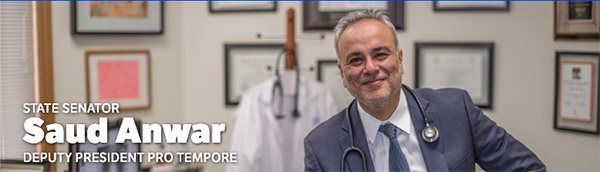
MEDIA ADVISORY – 11:30 AM HALL OF FLAGS – BIDEN ADMIN DRUG CONTROL DIRECTOR, ADVOCATES, LEGISLATORS TO FIGHT FOR FURTHER HARM REDUCTION INVESTMENT TO FIGHT OPIOID CRISIS

Where: State Capitol, Hall of Flags
When: Tuesday, April 14, 11:30 a.m.
Who: Dr. Rahul Gupta, former National Drug Control Policy director under the Biden Administration, whose focus on harm reduction reduced national overdose rates

  • Experts including Professor Scott Burris, director of Temple University’s Center for Public Health Law Research; Professor Robert Heimer, professor of epidemiology and pharmacology at Yale Institute for Global Health; and Liz Evans of Liberation Programs, a harm reduction expert
  • Additional advocates including Dita Bhargawa, board member of Shatterproof and Liberation Program, and Diane Santos, who both lost children to overdoses; and Cameron Breen, a street outreach case manager and drug checking technician
  • Legislators led by Public Health Chairs Senator Saud Anwar and Representative Cristin McCarthy Vahey, joined by additional legislators including State Representative Josh Elliott

On Tuesday, as Connecticut sees overdose deaths decline but more than two residents per day still die from overdose, advocates, legislators and experts will join Dr. Rahul Gupta, former National Drug Control Policy director to call for Connecticut to further its investments in harm reduction at an inflection point in the opioid crisis. With Connecticut continuing to pursue new strategies to battle the opioid crisis, now is the time for the state to commit further toward ending the tragedies that impact families, friends and loved ones every day.

MEDIA ADVISORY – TUESDAY 11:30 AM HALL OF FLAGS – BIDEN DRUG CONTROL DIRECTOR, ADVOCATES, LEGISLATORS TO FIGHT FOR OPIOID HARM REDUCTION

Senator Anwar

FOR IMMEDIATE RELEASE
Contact: Joe O’Leary | Joe.OLeary@cga.ct.gov | 508-479-4969

MEDIA ADVISORY – TUESDAY 11:30 AM HALL OF FLAGS – BIDEN ADMIN DRUG CONTROL DIRECTOR, ADVOCATES, LEGISLATORS TO FIGHT FOR FURTHER HARM REDUCTION INVESTMENT TO FIGHT OPIOID CRISIS

Where: State Capitol, Hall of Flags
When: Tuesday, April 14, 11:30 a.m.
Who: Dr. Rahul Gupta, former National Drug Control Policy director under the Biden Administration, whose focus on harm reduction reduced national overdose rates
Experts including Professor Scott Burris, director of Temple University’s Center for Public Health Law Research; Professor Robert Heimer, professor of epidemiology and pharmacology at Yale Institute for Global Health; and Liz Evans of Liberation Programs, a harm reduction expert
Additional advocates including Dita Bhargawa, board member of Shatterproof and Liberation Program, and Diane Santos, who both lost children to overdoses; and Cameron Breen, a street outreach case manager and drug checking technician
Legislators led by Public Health Chairs Senator Saud Anwar and Representative Cristin McCarthy Vahey, joined by additional legislators including State Representative Josh Elliott

On Tuesday, as Connecticut sees overdose deaths decline but more than two residents per day still die from overdose, advocates, legislators and experts will join Dr. Rahul Gupta, former National Drug Control Policy director to call for Connecticut to further its investments in harm reduction at an inflection point in the opioid crisis. With Connecticut continuing to pursue new strategies to battle the opioid crisis, now is the time for the state to commit further toward ending the tragedies that impact families, friends and loved ones every day.

TUESDAY: SENATORS LOONEY, DUFF & WINFIELD PREVIEW SENATE PASSAGE OF ICE BILL

Newsletter Header

***NEWS ADVISORY***

TUESDAY: SENATORS LOONEY, DUFF & WINFIELD PREVIEW SENATE PASSAGE OF ICE BILL

Sue ICE agents in federal court, ban masks, give AG and IG broad new powers; Bill also addresses responsible use of license plate readers

HARTFORD – Democratic state senators tomorrow will debate and pass Senate Bill 397, “AN ACT CONCERNING DEMOCRACY AND GOVERNMENT ACCOUNTABILITY,” that could help reduce in Connecticut some of the horrific human rights and Constitutional abuses already committed by federal Immigration and Customs Enforcement (ICE) agents in multiple cities and towns across America.

S.B. 397 also addresses the growth in government use of automated license plate reader systems to ensure that driver data is handled responsibly and not abused.

Senate President Martin Looney (D-New Haven), Senate Majority Leader Bob Duff (D-Norwalk), and Judiciary Committee Co-Chairman Senator Gary Winfield (D-New Haven) will discuss the need for the bill at Noon tomorrow, Tuesday, April 14, in Senator Looney’s Capitol office.

WHO: Senate President Martin Looney, Senate Majority Leader Bob Duff, Judiciary Committee Co-Chairman Sen. Gary Winfield

WHAT: Press conference on the ICE bill to be debated and passed Tuesday in the state Senate

WHEN: Noon, Tuesday, April 14

WHERE: Sen. Looney’s Capitol office, Room 311

###

FOR IMMEDIATE RELEASE

Contact: Kevin Coughlin | kevin.coughlin@cga.ct.gov | 203-710-0193
TUESDAY: SENATORS LOONEY, DUFF & WINFIELD PREVIEW SENATE PASSAGE OF ICE BILL

Newsletter Header

***NEWS ADVISORY***

TUESDAY: SENATORS LOONEY, DUFF

& WINFIELD PREVIEW SENATE PASSAGE

OF ICE BILL

Sue ICE agents in federal court, ban masks, give AG and IG broad new powers; Bill also addresses responsible use of license plate readers

HARTFORD – Democratic state senators tomorrow will debate and pass Senate Bill 397, “AN ACT CONCERNING DEMOCRACY AND GOVERNMENT ACCOUNTABILITY,” that could help reduce in Connecticut some of the horrific human rights and Constitutional abuses already committed by federal Immigration and Customs Enforcement (ICE) agents in multiple cities and towns across America.

S.B. 397 also addresses the growth in government use of automated license plate reader systems to ensure that driver data is handled responsibly and not abused.

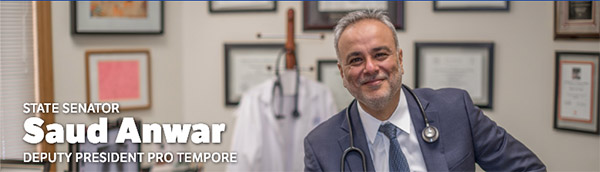
Senate President Martin Looney (D-New Haven), Senate Majority Leader Bob Duff (D-Norwalk), and Judiciary Committee Co-Chairman Senator Gary Winfield (D-New Haven) will discuss the need for the bill at Noon tomorrow, Tuesday, April 14, in Senator Looney’s Capitol office.

  • WHO: Senate President Martin Looney, Senate Majority Leader Bob Duff, Judiciary Committee Co-Chairman Sen. Gary Winfield
  • WHAT: Press conference on the ICE bill to be debated and passed Tuesday in the state Senate
  • WHEN: Noon, Tuesday, April 14
  • WHERE: Sen. Looney’s Capitol office, Room 311

###

FOR IMMEDIATE RELEASE

Contact: Kevin Coughlin | kevin.coughlin@cga.ct.gov | 203-710-0193

Senator Hartley Champions Restoration of Mashantucket Pequot and Mohegan Fund, Bill Passes Committee Unanimously

Banner

Senator Hartley Champions Restoration of Mashantucket Pequot and Mohegan Fund, Bill Passes Committee Unanimously

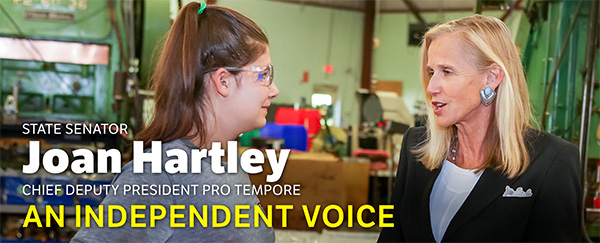
State Senator Joan Hartley (D-Waterbury), announced her strong support for Senate Bill 388, ‘An Act Concerning the Mashantucket Pequot and Mohegan Fund’, following the bill’s unanimous passage out of the Appropriations Committee last week. Senator Hartley is a co-sponsor of the legislation, which would restore the fund to its original intent of distributing gaming revenues equitably to all 169 Connecticut cities and towns.

SB 388 would increase the fund’s distributions from $54 million to $152 million, ensuring that the 44 municipalities that have received no funding since 2019, including towns in Senator Hartley’s district, are once again made whole. The funding is drawn from existing tribal payments already flowing into state coffers, creating no new burden on the state budget or Connecticut taxpayers.

“For too long, municipalities across Connecticut have been shortchanged by the diversion of funds that were always meant to go to them,” said Senator Hartley. “With the state in a strong fiscal position, there is simply no justification for continuing to withhold this money from our towns and cities. This funding gives local governments the flexibility they need to maintain roads, support public safety, and ease the burden on property taxpayers.”

The Mashantucket Pequot and Mohegan Fund was established to provide stable, non-property tax revenue to Connecticut’s municipalities from casino slot machine proceeds. For more than two decades beginning in 1993, every municipality received annual distributions through the fund. That changed in 2019, when the state overrode the statutory formula, eliminating funding for 44 communities and reducing allocations for many others as the state used the revenues to help balance its own budget.

With Connecticut now posting consistent budget surpluses and maintaining a historically strong reserve fund, advocates and legislators say the time has come to return these resources to their intended purpose.

The bill is also supported by First Selectwoman Jennifer Mahr. In her written testimony, she says, “This bill takes an important and long-overdue step toward restoring the Mashantucket Pequot and Mohegan Fund to what it was always intended to be: a reliable, equitable source of municipal aid for all 169 Connecticut cities and towns. When I campaigned for office last fall, all I heard was a cry to make Connecticut more affordable, especially for seniors and families. The simplest and easiest way to make progress toward this collective goal is to provide diverse revenue streams for towns and cities.”

Several other Mayors, First Selectwomen and First Selectmen have given their support with written testimony that can be found here.

SB 388 now advances to the full Senate for consideration.

Looney: Trump’s Attack on the Pope Is ‘an Affront to the Faith of More Than a Billion Catholics’

Newsletter Header

Looney: Trump’s Attack on the Pope Is ‘an Affront to the Faith of More Than a Billion Catholics’

HARTFORD — Senate President Pro Tempore Martin M. Looney (D-New Haven) today issued the following statement in response to President Trump’s social media attacks on Pope Leo XIV:

“As a lifelong Catholic, I find President Trump’s attack on Pope Leo XIV to be deeply offensive and, frankly, beneath the dignity of the office he holds. The Bishop of Rome does not answer to any political figure, and the suggestion that this Pope owes his position to Donald Trump is an affront to the faith of more than a billion Catholics worldwide. Pope Leo has spoken with moral clarity about the obligations we owe to one another as human beings, including the poor, the vulnerable, and those fleeing violence and persecution. That the President finds this threatening says far more about him than it does about the Holy Father. Catholics in Connecticut and across this country deserve a President who respects their faith, not one who treats the leader of their Church as a political prop to be attacked when he fails to offer sufficient deference.”

FOR IMMEDIATE RELEASE

Contact: Kevin Coughlin | kevin.coughlin@cga.ct.gov | 203-710-0193