|
|
|
|
|
|


The Department of Transportation’s Highway Safety Office has started a new public service announcement campaign, meant to remind drivers about the “Real Lives” at risk if they don’t comply with the state’s Move Over law.
Connecticut’s Move Over law is one of the strongest and most thorough in the United States, as it does not just require drivers to move over if there is an emergency vehicle stopped on the roadside, but for any vehicles on the side of the road. The law applies to all highways and side roads in Connecticut, including one-lane roads. If a driver cannot change lanes or is driving on a one-lane road, drivers must instead slow down and exercise caution in the process.
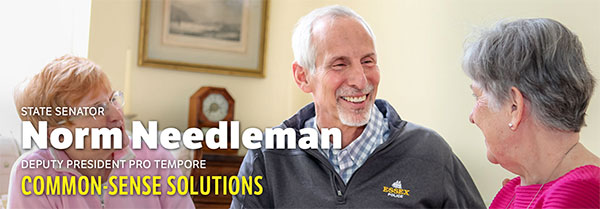
Sen. Norm Needleman, D-Essex, stressed the importance of the law during a Thursday event with Colchester emergency responders.
“There’s good reason why moving over for traffic was made law – it protects workers and prevents serious injury and death in the event of crashes,” Needleman said. “I’m proud to be here today with our state and local leaders to make sure those who need space will get it, and to help make sure we see fewer avoidable crashes on the side of the road.”
On an annual basis, Connecticut first responders rush to the scenes of more than 100,000 motor vehicle crashes just within state lines. On a national basis, since 2020, roughly 40 crash responders are killed in the line of duty per year, according to the Highway Safety Office.
Violators can face significant fines, especially if their actions lead to crashes, injury or death. A normal violation is an infraction, but a crash resulting in the injury of emergency personnel can see fines climb to $2,500, and a crash resulting in a fatality can lead to a fine of up to $10,000 and potential criminal charges.
While Connecticut first passed its Move Over law in 2009 and expanded it in 2017, unfortunately, the state continues to experience roadside crashes. From 2017 to 2021, 16 people lost their lives in roadside crashes in Connecticut, with 13 of those deaths happening after sunset on dark roadways. Those statistics prompted lawmakers to update the policy again in 2023, ensuring all roads were considered in its language.
The new campaign is designed to remind drivers that motorists can be parked on the side of roadways for any variety of reasons, including Department of Transportation crews and construction workers performing roadwork, tow operators hooking up damaged or malfunctioning vehicles and emergency responders who have pulled over other motorists or are assisting someone in need.
Drivers who see a vehicle stopped on or next to a roadway should immediately try to slow down within reason and move over to a lane that would give the vehicle extra space. If they cannot move over safely, they should slow down and proceed with caution – but the DOT reminded drivers not to stop, as that can compound and worsen traffic issues and lead to further damage.
Posted By Joe O’Leary

Kathleen Unger Holt, former associate director of the Center for Medicare Advocacy, has received Gov. Ned Lamont’s nomination to serve as state healthcare advocate, the governor’s office announced in a Wednesday press release.
As a leader of the Medicare policy nonprofit, Holt helped develop healthcare policy on a state and federal basis. The governor said that experience would serve Connecticut well as Holt steps into her new advocacy role.
“I am very excited that Kathy Holt has accepted our offer to serve as Connecticut’s next healthcare advocate because she has an incredible amount of experience, both here in our state and on a national level, in helping people access the coverage they need and advocating on their behalf, especially for people who are older, people who have disabilities, and people who frequently face barriers to obtaining health insurance,” Lamont said.
Holt, who was raised in Newtown and began her career working for Bloomfield-based insurance provider Cigna, said she was excited to begin working to ensure Connecticut residents had access to affordable healthcare.
“In addition to assisting individuals obtain access to healthcare services, the Office of the Healthcare Advocate represents the collective voice of all Connecticut patients,” she said. “I look forward to collaborating with healthcare providers, insurers, employers, other state agencies, and state and federal legislators to coordinate, deliver, oversee, and improve healthcare in Connecticut, making Connecticut a healthcare model for the country.”
Although Holt will serve on an interim basis beginning Sept. 30, her nomination will require approval from state lawmakers after the 2025 legislative session begins in January. Her nomination comes with a recommendation from the Healthcare Advocate Advisory Committee, a panel of legislative appointees tasked with evaluating candidates for the position.
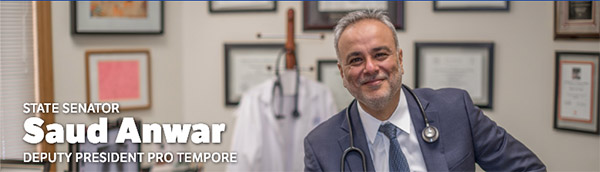
Holt earned praise from Sen. Saud Anwar, a South Windsor Democrat who co-chairs the Public Health Committee. In a Wednesday statement, Anwar said he looked forward to working with Holt on issues impacting Connecticut patients.
“Her experience advocating for Medicare and quality healthcare for our older populations and people with disabilities will be valuable and I know she will be focused on fixing issues patients face in getting care,” Anwar said. “Her career has spanned a variety of professional and legal roles in the healthcare industry and I’m confident that her breadth of knowledge will benefit many in our state.”
Holt is poised to take over the advocate position from Sean King, the office’s general counsel, who has been serving as an interim basis since last year, following the departure of former advocate Ted Doolittle. Doolittle left the position to accept a nomination as a federal immigration judge.
Posted By Hugh McQuaid

FOR IMMEDIATE RELEASE
Thursday, September 19, 2024
NORWICH – State Senator Cathy Osten (D-Sprague) today welcomed a $64,250 state grant to update the environmental assessment work at the Capehart Mill Riverfront Park project.
The funding, through the Connecticut Department of Energy and Environmental Protection (DEEP), will help update the remedial plan necessary to redevelop the 6-acre Norwich property into a municipal riverfront park.
“This is going to be a transformative riverfront project, and any and every state dollar we can get to move this redevelopment along and keep the financial burden off of local taxpayers is very much welcome,” Sen. Osten said.
Just three months ago, Sen. Osten welcomed a $4 million state grant for Norwich to clean up the former Capehart Textile Mill located in the Greeneville National Historic District and turn it into a riverfront park along the Shetucket River. That state grant will be used to create a remedial action plan and an asbestos work plan, abatement, and demolition of buildings A & B, the skywalk, and 5th Street Bridge.
DEEP expects to make future grants available to municipalities and non-profits annually over the next three years. DEEP announced that starting today, it is accepting applications for Round 2 of this grant program. In this round, a total of $750,000 available, up to $250,000 per applicant for assessment or cleanup (no minimum request). The program is open to municipalities and non-profit organizations. Applications will be accepted until noon on Friday November 22, 2024. To apply for a grant, go to: https://portal.ct.gov/deep/business-and-financial-assistance/grants-financial-assistance/grants-and-financial-assistance

Connecticut residents seeking to purchase eBikes between mid-September and Oct. 1 may be eligible for up to $1,250 in rebates under a voucher program re-launched Tuesday by the Department of Energy and Environmental Protection.
The agency began Round 2 of the Electric Bicycle Incentive Program on Sept. 17, following a “robust response” from consumers during the program’s first phase when it launched last summer. The program provides vouchers to offset the price of buying an eBike from participating brick-and-mortar retailers in Connecticut.
“Last year, we had $750,000 to award,” DEEP Commissioner Katie Dykes told Fox61 on Monday. “Ultimately, we helped 422 recipients get on a bike.”
This year’s program differs from the first round in that it will utilize a lottery system to prioritize applicants whose income is less than 300% of the Federal Poverty Level. The lottery will also prioritize applicants who reside in Environmental Justice communities or Distressed Municipalities, according to DEEP.
Benefits under the program range from $500 to a total of $1,250, depending on the vouchers for which applicants qualify.
The program represents an expansion of the Connecticut Hydrogen and Electric Automobile Purchase Rebate (CHEAPR), which provides incentives for consumers who purchase electric vehicles.
The state legislature voted to expand the rebate program to eBikes through the Connecticut Clean Air Act, led by Sen. Christine Cohen, co-chair of the Transportation Committee. In a press release issued at the launch of the first phase, Cohen said she was pleased to see its provisions taking effect.
“Making e-bikes and electric cars more accessible is an important step towards meeting our reduced carbon emission goals and I’m looking forward to seeing more affordable electric options on the road,” Cohen said.
Consumers seeking to participate in the program must apply for a voucher prior to making an eBike purchase. Visit DEEP’s eBike Incentive Program website for information on how to apply as well as a list of eligible eBikes and participating retailers.
Posted By Hugh McQuaid

Today, state Senator Herron Keyon Gaston (D-Bridgeport), Chair of the Public Safety Committee, is releasing a statement following threats made to Bridgeport Public Schools.
“A social media threat to a school is devastating,” said Sen. Gaston. “It disrupts education and it instills fear in students, parents, and teachers. Threats targeting schools have become too much of a common thing and we must do everything we can to stop that behavior. Kids should be able to go to school without fear. I want to commend the Bridgeport Police Department, State and Federal authorities, Bridgeport Public Schools, and local leaders for their swift action in making sure students and faculty are safe.”
Senator Gaston says providing services can help stop violence by addressing the root causes that often lead to violent behavior. Access to mental health support, education, and social programs can reduce feelings of frustration, hopelessness, or anger, which are common drivers of violence. By offering resources and support, individuals can develop healthier coping mechanisms and create safer, more resilient communities.
|
|
|
|
|
|
|

FOR IMMEDIATE RELEASE
Thursday, September 19, 2024
Five years of perfect voting records, 2020-2024
HARTFORD – State Senator Julie Kushner (D-Danbury) achieved a 100% perfect voting record in the recently concluded 2024 legislative session, according to a statistical summary from the Senate Clerk’s Office: a perfect 338 votes cast out of 338 voting opportunities.
Sen. Kushner is one of only a dozen state senators – nine Democrats and three Republicans – to achieve a perfect 100% voting record in 2024.
Sen. Kushner also achieved a perfect 100% voting record in the 2023, 2022, 2021, and 2020 legislative sessions, and is one of only four sitting state senators to achieve a perfect voting record for the past five years in a row.
“I’m the chair, vice-chair, or a member of six different legislative committees. That’s a lot of work, and it’s a huge time commitment, but it also gives me a very broad perspective of the work that we do here in the General Assembly. That makes it easier for me to have knowledge of, and to vote for, the bills that come before me,” Sen. Kushner said. “I was elected to represent the residents in my district, and the most important way of doing that is to vote on public policy matters that makes their lives better. While I made sure I cast every vote, this was a personally difficult year for me because I lost my dear brother to cancer during the legislative session, and it made it difficult at times to balance my family responsibilities with my legislative responsibilities. But this is real life, and these types of things happen to all legislators.”
Some of the new laws approved by Sen. Kushner in 2024 include:
Aging in Place
Nursing Home Quality of Care
Virtual Currency Regulation
Child Sexual Abuse Prevention
Disconnected Youth
Early Childhood Care and Education and Early Start CT
State Building Code and Fire Safety Code Amendments Affecting Residential Housing Projects
Teacher Certification Changes
Absentee Ballots
Solar Facilities
PFAS Regulation
Railway Pesticide Applications
Notice of Rent Increases
Coronary Calcium Scan insurance coverage
Paid Sick Leave
Deaf, Deafblind, or Hard of Hearing Services
Wheelchair Repair
Automated Traffic Enforcement
Property Tax Exemption for Veterans with a Permanent and Total Disability