Connecticut Enacts Protections to Shield Minors from Online Risks

Connecticut Enacts Protections to Shield Minors from Online Risks

A new online privacy and data protection law will take effect on Oct. 1, safeguarding the privacy of Connecticut minors and prohibiting the exploitation of their personal data in harmful ways.

Passage of the new law was led by state Sen. James Maroney, a Milford Democrat who co-chairs the legislature’s General Law Committee.

“Protecting children’s data privacy online is essential because it safeguards their innocence, ensures their safety, and preserves their right to grow and learn without being exploited or manipulated,” Maroney said. “In an increasingly digital world, their personal information should be secure for their future.”

The new law will require sites that offer online service to minors to use reasonable care to avoid a “heightened risk” of harm to young people. Such risks include unfair or deceptive treatment; financial, physical or reputational injury; and invasion of privacy. It will also ban targeted advertisements and the sale of data generated by users under the age of 18 without opt-in consent.

The new online privacy law will also prohibit features designed to significantly increase a minor’s use of the online service, i.e., endless scrolling habits, prohibit collection of geo location data without opt-in consent, and ban unsolicited direct messaging from an adult to an unknown minor.

The law follows, and is modeled in part on, the Age-Appropriate Design Code adopted in the United Kingdom. The UK law helped to spur reforms by leading tech companies. For instance, Google made SafeSearch the default for minors, YouTube turned off Autoplay and set bedtime reminders for young users, and TikTok disabled messaging between minors and unknown adults.

Researchers have found the wellbeing of America’s youth in an alarming state. According to a 2024 report by the CDC, 53% of high school girls in 2023 reported feeling “persistently sad or hopeless” over the previous year, up from 36% in 2011. Meanwhile, 27 percent of high school girls seriously considered attempting suicide in 2021, up from 19% in 2011.

Social media use by teens took off in that time frame, in a trend that began before the COVID-19 pandemic. Studies suggest there is a strong negative correlation between mental health and social media use.

As youth mental health metrics have declined, tech companies have employed the personal data of minors to target them with advertisements, to lure them into scrolling longer, or encourage them to continue watching videos.

From 2019 to 2021, youth increased their screen time 17%, which encompassed an average of 5 hours and 33 minutes daily for those 8 to 12 years old, and 8 hours and 39 minutes for those 13 to 18 years old.

Maroney introduced the bill in 2023, when it passed unanimously in the House and the Senate. Similar to the 2022 Data Protection Act, the bill only applies to certain companies of a significant size or otherwise control a significant amount of personal data.

Posted By Michelle Rappaport

Sen. Looney Releases Statement on End of Strike at Omni

Sen. Looney Releases Statement on End of Strike at Omni

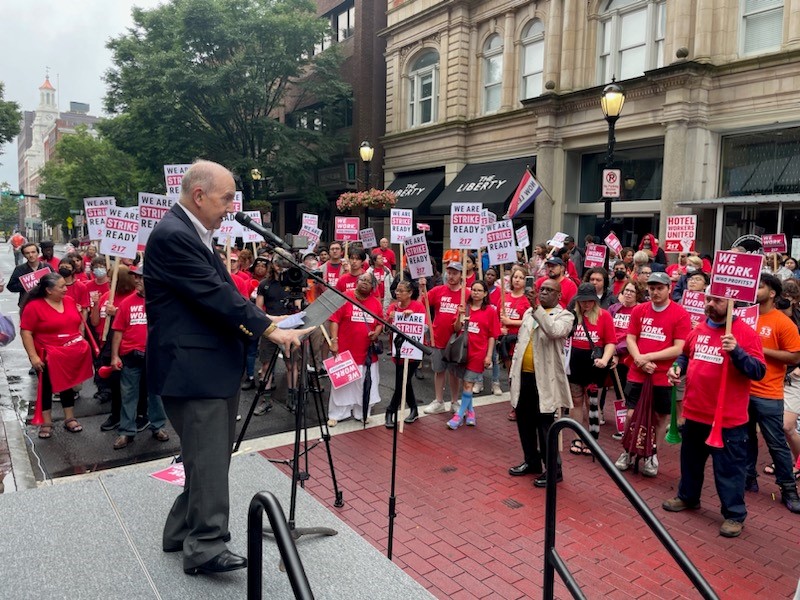
Today, Senate President Martin M. Looney (D-New Haven) released the following statement regarding the end of the strike of over 100 workers at Omni New Haven Hotel:

“As a proud supporter of labor and someone who has joined you on the picket lines, I want to extend my profound congratulations to all the hotel workers for standing strong and achieving this critical victory. Your perseverance and unity have won wage increases that will improve not just your livelihoods, but the well-being of your families and communities. The agreement with Omni should set a standard for hotels in the New Haven area. This is a powerful reminder that when workers stand together, real progress happens.”

FOR IMMEDIATE RELEASE
Contact: Kevin Coughlin | 203-710-0193 | kevin.coughlin@cga.ct.gov

When Will Peak Fall Foliage Hit Connecticut?

When Will Peak Fall Foliage Hit Connecticut?

It’s an annual tradition, one that brings tourism to our region and has even inspired humorous episodes of television programs like “Family Guy” – every year, Connecticut is filled with beautiful natural sights as trees’ leaves turn color and change.

It can be hard to know exactly when the leaves will turn before they fall, but the Department of Energy and Environmental Protection has changed that this year. DEEP created a Fall Foliage Report, utilizing its data as well as this year’s weather trends to determine when fall foliage should reach peak colors and beauty.

This tool will provide residents with the best information about when their communities can expect bursts of color; it’s also a valuable tool to help draw tourism to the state, supporting the local economy.
As of the end of September, the Fall Foliage Report indicates that most of Connecticut was not yet seeing strong foliage activity, but the northeast and northwest corners of the state, primarily Litchfield and Windham counties, were starting to see activity. DEEP expects there to be a band-like effect moving south through the state, similar to a weather system, that will lead to increases in color.

In the beginning of October, leaves should be turning to vivid colors in north-central Connecticut, with the band appearing like a wave, its lower limits including Waterbury and Hartford, with peak activity in the northern corners of the state.

Peak conditions should be visible everywhere north of Hartford and Waterbury by the middle of October, with the northern corners passing peak activity and seeing leaves falling. A relatively early leaf season should end everywhere but the southern coast by Halloween, with the state passing peak activity and heading toward winter conditions by Veterans’ Day.

DEEP’s website also includes several overlays including driving routes that will show the best sights, including loops that run from Storrs to Woodstock and back, Hartford into the northwest corner of the state, and loops starting in New Haven and Middletown. The map also displays several areas including the eastern border and north of I-84 that are known for having scenic, beautiful views.

Embracing fall foliage is part of DEEP’s latest efforts to promote tourism and travel in Connecticut, following reports last year by CT By The Numbers highlighting CTParks.com, a website created to draw more attention to the parks that are drawing twice as many visitors annually as they did prior to the pandemic in 2020 and 2021.

It also points to the importance of Connecticut’s forests for the state economy. According to the North East State Foresters Association, as of 2014, forest recreation in Connecticut drives hundreds of millions of dollars in economic value; fall foliage viewing was the biggest, representing just over $300 million of $1.2 billion overall.

Posted By Joe O’Leary

STATE SENATOR SAUD ANWAR NAMED EMS ADVISORY BOARD LEGISLATOR OF THE YEAR

FOR IMMEDIATE RELEASE
Contact: Joe O’Leary | Joe.OLeary@cga.ct.gov | 508-479-4969

September 26, 2024

STATE SENATOR SAUD ANWAR NAMED EMS ADVISORY BOARD LEGISLATOR OF THE YEAR

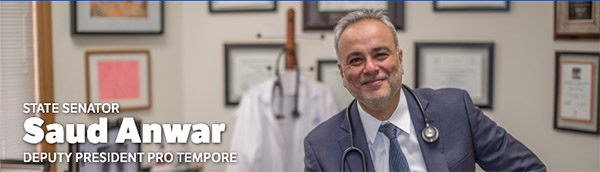
The Connecticut EMS Advisory Board Council of Regional Presidents announced this week that State Senator Saud Anwar (D-South Windsor) was awarded its Legislator of the Year award, recognizing his support for emergency medical services in the state of Connecticut. The awards were announced prior to their official presentation scheduled for Thursday, October 24 at the EMSPRO/FIREPRO Conference at Foxwoods Resort Casino.

“Our emergency medical services personnel perform incredible, lifesaving tasks every day, weathering challenges in the name of protecting the people of our state,” said Sen. Anwar. “I have been a strong advocate to ensure they receive the support they deserve in turn and am honored to receive this recognition. I will continue working with my colleagues however possible to bring them the security, safety and resources they need to continue helping save lives in Connecticut.”

For years, Sen. Anwar has worked with state EMS officials to advocate for better resources and services for them. He has fought for improved reimbursement rates for ambulance services, higher wages for staff members, preventing “EMS deserts” where only volunteer services are available for care and for the state to better match its aging demographics which will impact requirements and quality of care in years to come. He has also recognized the strain that the COVID-19 pandemic put on health and emergency services and increased issues workers have faced on the job accordingly.

Sen. Anwar has been a leader in seeking improvements to Medicaid ambulance rates, improving recruitment, reimbursement and retention for EMT staffers and increases in pay for workers. Earlier this year, he fought against a planned elimination of planned funding increases for emergency transportation responder staff. He has also voted in support of policies aiding EMS personnel including expanding workers’ compensation benefits for post-traumatic stress injury to include their ranks.

Sen. Anwar is only the fifth recipient of this award, following State Senator Julie Kushner in 2021, State Representative Jonathan Steinberg in 2019, State Representative J.P. Stredzinski in 2016 and State Representative Jason Perillo in 2014.

To see the full list of recipients in this year’s CT EMS Awards, please click here.

Three Connecticut Schools Receive National Honor

Three Connecticut Schools Receive National Honor

Three Connecticut schools made this year’s National Blue Ribbon Schools list from the U.S. Department of Education, which honors schools that have excelled in academic performance or progress in closing achievement gaps.

Among the institutions to receive this year’s Blue Ribbon awards were Meriden’s Israel Putnam Elementary School, Madison’s Daniel Hand High School, and Shelton’s Sunnyside Elementary School.

In a press release announcing the results, Gov. Ned Lamont said the recognition reinforced why Connecticut public schools were considered among the best in the nation.

“Every child deserves access to a quality education that prepares them for achievement,” Lamont said. “There’s no doubt that we must continue working to close persistent achievement gaps, but I firmly believe that the strong work of so many of our educators is having an impact. I congratulate these three public schools in Madison, Meriden, and Shelton on earning this national distinction and I wish them continued success.”

All three schools were nominated for the award by the State Department of Education, which based its choices off 2022-2023 data from the Next Generation Accountability System.

Israel Putnam Elementary’s accomplishments included progress in closing achievement gaps. The school serves 482 students, of which about 80% are eligible for free or reduced price meals while 19% are multi-language learners. Israel Putnam students ranked in the top 10% of growth in mathematics, both for high needs students and for all students, and achieved about 88% of their growth targets in 2022-2023.

State Sen. Jan Hochadel, D-Meriden, praised the school’s staff and student population for their efforts.

“As a former teacher, I’m overjoyed to see the students, educators, and support staff of Israel Putnam Elementary recognized for their hard work and dedication,” Hochadel said. “This honor puts a Meriden school among a select group across the nation and everyone in our city should be proud of what these students and the school community has accomplished.”

Meanwhile, Daniel Hand High School made the list due to its exemplary high performance. The school exceeded its performance accountability targets in every year since the 2014-2015 academic year. Last year, its students achieved an 88.4%, earning the “School of Distinction” status for the second consecutive year, according to the governor’s office.

Sunnyside Elementary School also has a history of distinction. During the 2022-2023 school year, Sunnyside students’ academic growth was among the top 10% of schools in math and reading for both high need students and the overall student population, the governor’s office said.

State Education Commissioner Charlene Russell-Tucker congratulated all three schools for their achievements.

“These schools exemplify Connecticut’s dedication to fostering educational environments where all students can thrive and reach their full potential, preparing them for academic success as well as life and work beyond school,” she said. “Congratulations to the students, educators, and school leaders on this prestigious honor and for their continued pursuit of excellence.”

Posted By Hugh McQuaid

NEW HAVEN DELEGATION WELCOMES $5.48 MILLION IN COMMUNITY INVESTMENT FUND SUPPORT

September 25, 2024

NEW HAVEN DELEGATION WELCOMES $5.48 MILLION IN COMMUNITY INVESTMENT FUND SUPPORT

Today, the New Haven Delegation of lawmakers including Senate President Martin M. Looney, State Senator Gary Winfield and State Representatives Pat Dillon, Roland Lemar, Juan Candelaria, Al Paolillo, Robyn Porter and Toni Walker welcomed the Community Investment Fund’s announcement that it will release $5,482,999 in grants supporting projects around the city.

The funds will include $3 million to support the “Grand-er Grand Avenue” roadway and streetscape project along Grand Avenue to Quinnipiac Avenue, $1,732,999 for the first phase of renovations of the South-Central Rehabilitation Center, and $250,000 each for City Seed, Inc. to plan for a commercial kitchen and food business incubator; for Goodwill to research the feasibility of a “Goodwill Excel Center,” and for the city to research and plan for the use of accessory dwelling units, or small homes.

“In the last several years, the Community Investment Fund has provided hundreds of millions of dollars statewide, including tens of millions here in New Haven, to support our cities and help them grow and meet the demands of their residents,” said Sen. Looney. “It’s a great day knowing another $5 million and more will support nonprofits, road development, new rehabilitation centers, new business opportunities and new concepts of living.”

“This support for our local communities represents new roadway improvements, new renovations for important city resources and new opportunities throughout New Haven,” said Sen. Winfield. “I’m excited to see how these projects develop in years to come.

“It’s great to see the Community Investment Fund supporting projects like the ‘Grand-er Grand Avenue’ project, which will help our local economy, bring our community closer, and keep our pedestrians safe,” Rep. Lemar said. “Groups like the CIF are what keep our communities strong, and I thank them for their critical support.”

“The Community Investment Fund has provided millions for New Haven over the years, and this latest round of funding will support those seeking rehabilitation services, accessible and affordable housing, a way to connect with their community, and more,” Rep. Candelaria said. “Thank you to the CIF for their support of our great city. I can’t wait to see how these projects unfold.”

“I thank the CIF Board for funding these projects, including CitySeed’s plan to create a commercial kitchen and a food incubator. This grant money gives CitySeed the financial support it needs to plan for the launch of the New Haven region’s first shared-use commercial kitchen and food incubator to help with food security in our communities,” said Rep. Paolillo. “Each of these projects will benefit our residents, including the streetscape improvements from Grand Avenue to Quinnipiac Avenue, which go hand in hand with some of the traffic calming and safety improvements we have been working on.”

“I appreciate the CIF for understanding that equitable growth is the way to equitable prosperity,” Rep. Porter said. “This investment will help New Haven remain on track as one of the most vibrant and welcoming cities in Connecticut.”

“This funding provides support to different facets of our community. New Haven is a growing, ever changing city, and this investment reflects and supports that reality. Thank you to Governor Lamont and the CIF board for delivering the funds that will make our great city even better,” said Rep. Dillon.

The Community Investment Fund 2030 (CIF) fosters economic development in historically underserved communities across the state. CIF will provide a total of up to $875 million to eligible municipalities as well as not-for-profit organizations and community development corporations that operate within them.

Grants are available for capital improvement programs, such as brownfield remediation, affordable housing and home or public facility rehabilitation; small business capital programs, including revolving or micro loan programs, gap financing, and start-up funds; and planning for capital projects including activities such as community engagement processes and feasibility studies.

The CIF vote is a key step toward final approval of the plan by the State Bond Commission, which must come in the next 60 days.

Contact – Kevin Coughlin – 203-710-0193

Biden Declaration Makes Grants, Loans Available to Connecticut Flood Victims

Biden Declaration Makes Grants, Loans Available to Connecticut Flood Victims

Ensuring that federal funding will be made available to help with the state’s recovery from severe flooding in August, President Joe Biden on Friday approved a major disaster declaration in Connecticut.

The declaration will make assistance like grants and low-cost loans available to impacted residents in Fairfield, Litchfield, and New Haven Counties, where heavy rainfall caused flooding and landslides during a severe storm on Aug. 18 and Aug. 19.

In a press release, Gov. Ned Lamont said the declaration would benefit residents affected by the storm.

“This historic weather event caused significant damage to homes and businesses in western Connecticut, and the approval of this major disaster declaration means that individuals will be able to access federal funding to support their recovery efforts, particularly when it comes to the rebuilding of uninsured infrastructure,” Lamont said.

Residents whose homes or businesses were damaged or lost during the weather event can apply for assistance at www.DisasterAssistance.gov, or by calling 800-621-3362, or using the FEMA app.

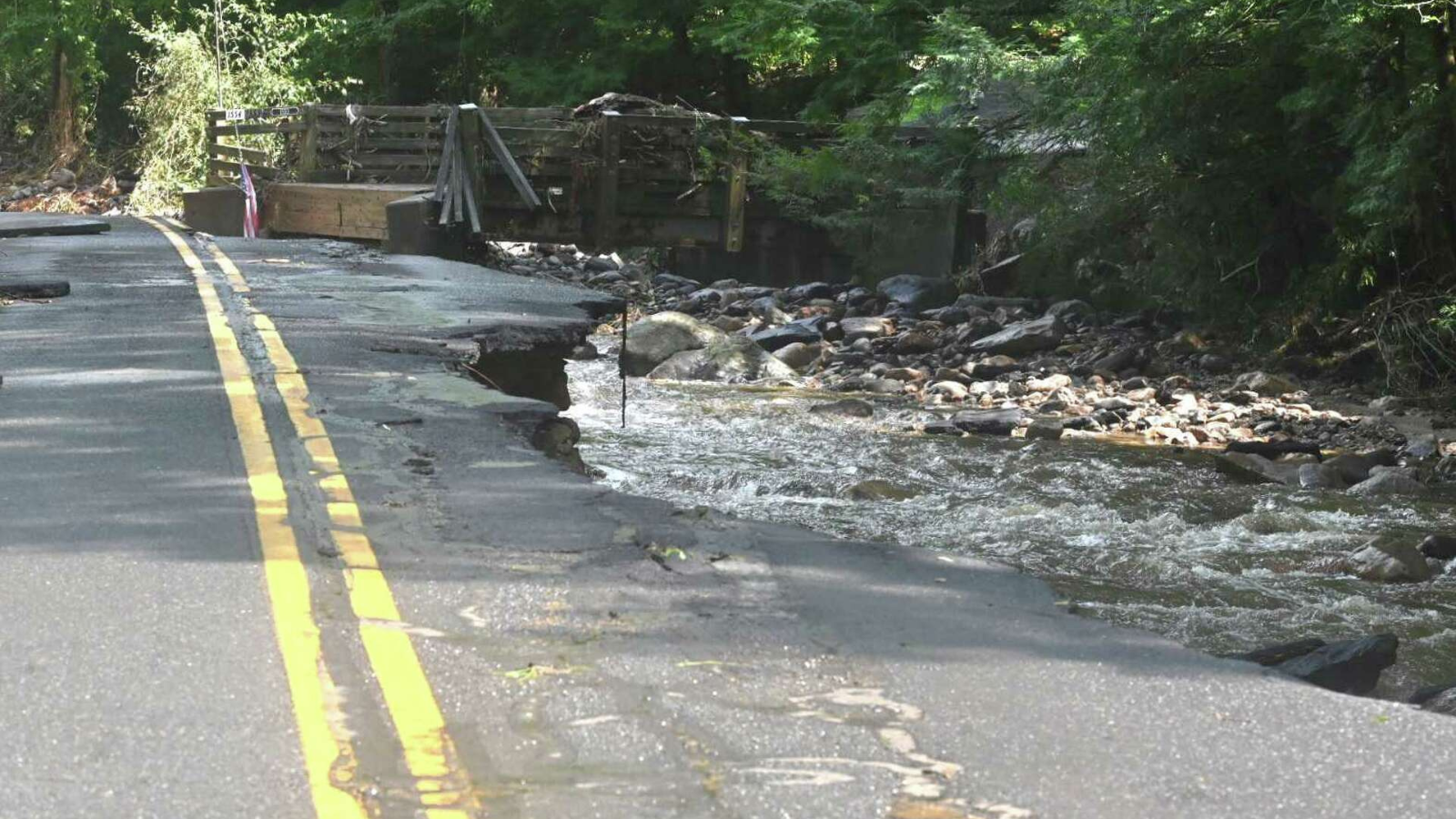
The disaster declaration follows roughly $3 million in emergency funding provided by the Biden-Harris administration earlier this month to assist Connecticut with road repair work in the aftermath of the historic flooding, which washed out roads and bridges throughout the impacted region.

The unusually heavy rainfall had severe consequences when it struck the state last month. Three residents were killed in the resulting flooding. Meanwhile, the water destroyed 19 homes and caused major damage to 170 more. At least 77 businesses sustained major damage, according to the governor’s office.

As of Friday, the state Division of Emergency Management and Homeland Security was collaborating with federal agencies to identify locations to open disaster and business recovery centers in order to provide in-person support for residents looking to apply for assistance.

Posted By Hugh McQuaid

Senator Maroney, West Haven Delegation Celebrates $250,000 Being Allocated Project in West Haven 

Senator Maroney, West Haven Delegation Celebrates $250,000 Being Allocated Project in West Haven

Today, state Senator James Maroney (D-Milford) and the West Haven Delegation is celebrating funds released to West Haven during the Community Investment Fund meet. West Haven applied for Community Investment Funds (CIF) that will help with the planning of the Village Improvement District.

The CIF is awarding $250,000 to the ‘West Haven Downtown Revitalization Planning’ project which will help with the development planning for the West Haven Village Improvement District.

“I am grateful that West Haven is getting funding to help improve an area that is becoming heavily trafficked,” said Sen. Maroney. “Securing these funds is not just an investment in infrastructure, but an investment in the well-being of our residents. By enhancing our neighborhoods today, we are creating a safer, more resilient community for those in the future.”

“The West Villages Improvement District is a neighborhood with an ever-growing potential and with this funding, the community will benefit for years to come,” said Senator Winfield. “Thank you to the members of the Community Investment Fund for believing in this project to create a safer and healthier environment for those in the surrounding area.”

“Equitable growth is the way to economic prosperity, and I am thankful the CIF clearly understands,” State Rep. Treneé McGee said. “The West Haven Village Improvement District will benefit from this funding. Thank you to the CIF for its commitment to West Haven.”

“I’m happy that the CIF Board has approved the request for $250,000 for the City of West Haven for the West Haven Revitalization Planning,” said Representative Bill Heffernan (District 115). “The development planning for the West Haven Village Improvement District moves the city in the right direction. I want to thank Mayor Dorinda Borer for her vision for the future of West Haven. The next step for this funding is approval by the State Bond Commission.”

“The Downtown District has been an area of focus for us, and in order to properly address significant changes, a professional plan is required,” said Mayor Dorinda Borer. “This will consist of evaluating potential traffic impacts, the remediation of brownfield concerns, and an overall comprehensive plan of smart development. This will allow us to be better positioned to request large-scale grants to help lift up the area.”

The West Villages Improvement District (WVID) was created in 2004 by a Special Act of the Florida Legislature. The planned improvements will reduce the speed of traffic and enhance safety for motorists, pedestrians and bicyclists along a US 41 in an area that is growing rapidly with new residential and commercial construction. Reduced speed will also help mitigate noise impacts associated with US 41 traffic.

The improvements are being completed in two phases to add sidewalk pathways, curbs, landscaping and functional traffic roundabouts. Extensive planning has been done to ensure there will be minimal traffic impacts.

The Community Investment Fund 2030 (CIF) was created by a bipartisan vote of the General Assembly in 2021 and is funded through state bonding.

The CIF fosters economic development in historically underserved communities across the state. CIF will provide a total of up to $875 million to eligible municipalities as well as not-for-profit organizations and community development corporations that operate within them.

Grants are available for:
-Capital improvement programs, such as brownfield remediation, affordable housing, infrastructure, clean energy development, and home or public facility rehabilitation

-Small business capital programs, including revolving or micro loan programs, gap financing, and start-up funds to establish small businesses

-Planning for capital projects including activities such as community engagement processes, feasibility studies, development of project plan and construction budget

FOR IMMEDIATE RELEASE
Contact: Michelle Rappaport | Michelle.Rappaport@cga.ct.gov| 508-479-4969

 Middletown Delegation Secures $8M for Northern Middlesex YMCA

FOR IMMEDIATE RELEASE
Contact: Garnet McLaughlin | Garnet.McLaughlin@cga.ct.gov

 Middletown Delegation Secures $8M for Northern Middlesex YMCA

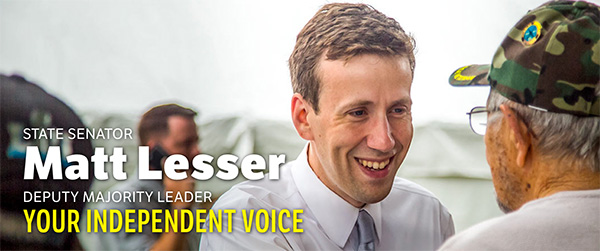
Today, State Senators Matt Lesser and Jan Hochadel, and State Representatives Kai Belton and Brandon Chafee welcomed $8 million in state Community Investment Fund dollars for renovations to the Northern Middlesex YMCA. This money will fund facility renovations including a focus on ADA access, creating multi-generational spaces and increasing early childhood and preschool care.

“The Northern Middlesex YMCA has been a fixture in Middletown’s downtown since it was first built in 1928,” said Sen. Matt Lesser. “The investment made today is an affirmation of the Y’s central role serving the Middlesex County area, and today’s funding is particularly important is many ways including supporting the Y’s preschool and early childhood programs which are critical for our economy. Today’s funding announcement represents the final piece in a multi-year effort, supported with generous private and corporate donations, state and federal funding, to transform Middletown’s Y to serve Middletown in the 21st century. I was present for a meeting many years ago, along with the late State Representative Q Williams, when Michele Rulnick first laid out her vision for transforming the Y and it is incredible to think that with this last major investment it is now coming to fruition.”

“Outstanding resources like the Northern Middlesex YMCA should be accessible to everyone in our community and this action by the Community Investment Fund board puts us one step closer to making that a reality by funding this critical project,” Sen. Jan Hochadel said. “Creating inclusive spaces, boosting childcare availability, and expanding ADA access will make the Y more accessible to families across the region. I’m grateful to see this investment in our future.”

“The Northern Middlesex YMCA has long been a pillar of our community, offering vital services and programs for residents of all ages. This $8 million investment is a huge win for Middletown and represents the Y’s commitment to the health, wellness, and strength of our families. I am deeply grateful to Governor Lamont and the CIF Board for this transformative funding, which will ensure the YMCA can continue to grow and serve as a place of support, connection, and opportunity for years to come,” said Rep Kai Belton.

“I am very appreciative of the CIF’s commitment to Middletown and specifically, one of its most beloved facilities, the Northern Middlesex YMCA, which will receive funding for the renovations, expansion to add ADA access, and increase childcare and preschool care,” Rep. Brandon Chafee said. “I’m confident these renovations and additions will only increase the positive impact the YMCA already has on the city and surrounding areas.”

“We are incredibly excited and grateful for this opportunity,” said Michele Rulnick, President/CEO of the Northern Middlesex YMCA. “This renovation will allow us to expand our programs and serve even more families, strengthening our commitment to a healthier, more engaged community.”

This funding supports this historic YMCA’s strategic vision to provide equitable access to programs and services for all ages that improve the quality life of the greater Middletown community. The facility renovation and expansion project will total $15 million. This project is supported through state, federal and private dollars. The CIF funding approved today will cover over half of the total cost, following $2 million in state bonding allocated in June. This spring, Congresswoman Rosa DeLauro announced that she secured $1.1 million in federal Community Project Funding and the Liberty Bank Team also made a $1 million donation.

Specifically, this renovation project aims to address the following critical needs:

-Relocate the main entrance to improve accessibility and safety throughout the facility

-Add an elevator and address ADA compliance

-Modernize and enhance the energy efficiency of the facility

-Create multigenerational, multi-use spaces that inspire community building and wellness

-Dedicated, safe space for youth to socialize and engage in youth development services

-Gender-neutral changing rooms and bathrooms

-Expanded space to engage in future partnerships with community-based organizations and to grow childcare services with new preschool classrooms and infant/toddler care

-The Community Investment Fund 2030 (CIF) fosters economic development in historically underserved communities across the state. CIF will provide a total of up to $875 million to eligible municipalities as well as not-for-profit organizations and community development corporations that operate within them.

Grants are available for:
-Capital improvement programs, such as brownfield remediation, affordable housing, infrastructure, clean energy development, and home or public facility rehabilitation

-Small business capital programs, including revolving or micro loan programs, gap financing, and start-up funds to establish small businesses

-Planning for capital projects including activities such as community engagement processes, feasibility studies, development of project plan and construction budget.

SENATOR CABRERA WELCOMES VOTE SEEKING $250,000 STATE GRANT FOR HAMDEN CENTER MASTER PLAN

FOR IMMEDATE RELEASE

Tuesday, September 24, 2024


SENATOR CABRERA WELCOMES VOTE SEEKING $250,000 STATE GRANT FOR HAMDEN CENTER MASTER PLAN

HAMDEN – State Senator Jorge Cabrera (D-Hamden) today welcomed a vote by the bipartisan Community Investment Fund (CIF) 2030 board that will bring $250,000 to Hamden to help create the “Town of Hamden Town Center Master Plan.”

The CIF vote is a key step toward final approval of the plan by the State Bond Commission, which must come in the next 60 days.

Hamden’s legislative delegation – including Sen. Cabrera – wrote a letter to the CIF in June advocating for the Hamden funding, saying an updated town center master plan is “at its core about developing a vision for a more vibrant Town Center. This planning project will create a critical, and actionable, roadmap toward future possibilities and implementation ensuring that even high-level visions are grounded in reality and needs of the community.”

“With this funding, we can position Hamden for decades of prosperity and vitality,” Sen. Cabrera said. “It’s a critical first step in revitalizing and connecting our different neighborhood centers if we’re going to meet the needs of Hamden residents and businesses.”

The Community Investment Fund 2030 (CIF) was created by a bipartisan vote of the General Assembly in 2021 and is funded through state bonding.

The CIF fosters economic development in historically underserved communities across the state. The CIF will provide a total of up to $875 million to eligible municipalities as well as not-for-profit organizations and community development corporations that operate within them.

Grants are available for:

Capital improvement programs, such as brownfield remediation, affordable housing, infrastructure, clean energy development, and home or public facility rehabilitation

Small business capital programs, including revolving or micro loan programs, gap financing, and start-up funds to establish small businesses.

Planning for capital projects including activities such as community engagement processes, feasibility studies, development of project plan and construction budget.