SENATOR MAHER ISSUES STATEMENT AS SENATE PROTECTS YOUTH MENTAL HEALTH

SENATOR MAHER ISSUES STATEMENT AS SENATE PROTECTS YOUTH MENTAL HEALTH

February 25, 2026

Today, State Senator Ceci Maher (D-Wilton) released the following statement regarding the Senate’s passage of legislation providing Certificate of Need authorization to the Albert J. Solnit Children’s Center and ensuring the provision of $2.5 million in state funds to support school-based mental health programs:

“As the Solnit Center provides support and aid to the state’s children and adolescents experiencing crisis, I am relieved to see its operations will continue through the changes we made today. Through the future oversight of the University of Connecticut, we have responded quickly to preserve the resources available today for at-risk youth with an opportunity to provide even more support in the months ahead. Combining this effort with an ensured focus for students to remain connected with mental health supports in schools, we’re making certain we don’t lose focus on caring for our children.”

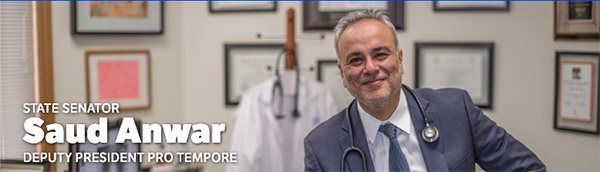
SENATOR ANWAR ISSUES STATEMENT AS SENATE PROTECTS YOUTH MENTAL HEALTH

Senator Anwar

FOR IMMEDIATE RELEASE
Contact: Joe O’Leary | Joe.OLeary@cga.ct.gov | 508-479-4969

February 25, 2026
 

SENATOR ANWAR ISSUES STATEMENT AS SENATE PROTECTS YOUTH MENTAL HEALTH

Today, State Senator Saud Anwar (D-South Windsor) released the following statement in response to the Senate’s passage of legislation providing Certificate of Need authorization to the Albert J. Solnit Children’s Center, which provides much-needed mental health treatment for children and adolescents, and its clarification that $2.5 million in funds will be used for school-based mental health funding.

“Moving to ensure this center will continue to perform the absolutely vital work it does for the youth of Connecticut protects the health and wellness of some of our most vulnerable populations. With $56 million at stake, there are few actions we can take with more immediate impact. Keeping this care available to the public is a needed service. In addition, further ensuring that another $2.5 million in state funds must support school-based mental health programs will play a key role in bolstering the development of our state’s most vulnerable youths. I am grateful that we are taking this step to preserve and ensure the health of so many in our state.”

SENATE DEMOCRATS TO STRENGTHEN ELECTION SECURITY, WORKER PROTECTIONS AND RECYCLING

Newsletter Header

SENATE DEMOCRATS TO STRENGTHEN ELECTION SECURITY, WORKER PROTECTIONS AND RECYCLING

Connecticut Senate Democrats today will vote to protect voter data, warehouse workers and the state’s bottle redemption program. Key provisions that were thoroughly reviewed by lawmakers in 2025 and 2026 will take steps to prevent federal interference with state voter data, place restrictions on quotas for warehouse workers and prevent exploitation of the state’s recycling programs, among other actions.

“We will not apologize for passing legislation that has had a public hearing and has the support of a majority of the General Assembly,” said Senate President Martin M. Looney (D-New Haven). “Connecticut will benefit from today’s legislation strengthening our election security, empowering workers and ensuring our bottle redemption system continues to support sustainability. Republicans will look for any excuse to vote against legislation that supports workers and makes our elections safer.”

“When we have the opportunity to deliver needed change for Connecticut residents, we need to take it. In the current landscape, that means protecting voter data, supporting warehouse workers and keeping recycling viable,” said Senate Majority Leader Bob Duff (D-Norwalk). “The White House is bringing out AI-written executive orders and handing them to Donald Trump. That’s a mockery of the governmental process. In contrast, the Senate is committed to passing legislation that has been thoroughly vetted, thoroughly reviewed and will make life better for its constituents.”

The bill utilizes aspects of important bills that passed the committee process in the 2025 legislative session and received strong support from lawmakers but did not become law. Several reflect statewide, national and global issues impacting Connecticut, including:

Election Security Enhancements

In response to escalating actions of the Trump administration’s efforts to perpetuate The Big Lie, stoke baseless claims about non-citizen voting and potentially meddle in future elections, Connecticut is taking action to protect its voters’ privacy and election integrity.

The United States Department of Justice (U.S. DOJ) seeks to acquire voter files and sensitive information such as driver’s license numbers and partial Social Security numbers from all states. Connecticut’s Secretary of the State provided information regarding the state’s election protections and security. In response, the U.S. DOJ sued Connecticut, and several other states, for their refusal to provide the Department with this information.

In order to further protect voter privacy, the legislation passed today restricts the release of the birth month and day from voter file data shared with the federal government or the public. However, a voter’s birth year will still be shared. It also prohibits the voter file from being used for anything other than election-related, scholarly, journalistic, political or governmental purposes, and thus bans its use for commercial or private purposes, such as harassment.

The DOJ alleges its actions are in pursuit of “election integrity” as it seeks to “clean-up” voter rolls from ineligible voters – particularly undocumented people. Despite widespread evidence to the contrary, President Trump and his allies claim that non-citizen voting is rampant in democratic-leaning and swing states, may have cost him the 2020 election, and may falsely affect the 2026 midterms.

In Connecticut, the state constitution and statute limits voting to only U.S. citizens. It is a class A misdemeanor for a non-citizen to register to vote, and it is a class D felony to vote when ineligible.

The legislation passed today also expands the FOIA (Freedom of Information Act) exemption of ballots. Ballots are currently exempt from FOIA except for stand-alone referendums like one for a town budget. The bill will extend the exemption from FOIA to referendums.

In addition to voter privacy measures, the legislation strengthens our elections through several provisions from HB 7228 from the 2025 legislative session. This bill received a public hearing on March 21, 2025, was voted out of the Government Administration and Elections Committee on March 27, 2025 and the Appropriations Committee on May 5, 2025. These provisions include:

  • Allowing Early Voting ballots to be placed directly into tabulators instead of envelopes to be counted on election day, streamlining the vote counting process.
  • Requiring party registration changes 18 days before primary.
  • Prohibits individuals convicted of an election crime, or felony involving fraud, forgery, larceny, or other deceit, from serving as a moderator.
  • Allowing candidates to cure problems with their endorsement certifications after filing by making corrections with the SOTS within 19 days.

Supporting Warehouse Workers

As more and more companies move into or expand and grow right here in Connecticut, today’s bill seeks to create protections for workers in Connecticut warehouses, fulfillment centers, distribution centers and other such large-scale operations against unreasonable quotas imposed by their employer.

The bill applies to companies with at least 100 employees at a single warehouse in the state, or 1,000 employees in total at multiple warehouses across the state, and it requires employers to give employees a written description of each quota that they’re subject to and any consequences that could result from failing to meet those quotas.

The quotas cannot interfere with meal periods or bathroom breaks, and they cannot set a performance standard that measures an employee’s total output over a time period that’s shorter than the employee’s workday or based solely on ranking the performance of one employee in relation to others.

Violations allow an employee or the state attorney general to file a civil action in Superior Court seeking damages and penalties of up to $1,000 for a first violation, $2,000 for a second violation, and $3,000 for a third or subsequent violation.

Bottle Bill Updates

Connecticut’s Bottle Bill has long served as a cornerstone of the state’s recycling infrastructure, but the current system has faced mounting pressure from out-of-state container fraud, abuse at redemption centers, and inadequate enforcement tools.

Today’s legislation will strengthen and modernize Connecticut’s Bottle Bill, cracking down on fraud and ensuring the redemption system works as intended for Connecticut consumers, retailers, and the environment.

Under the bill, redemption centers would be required to obtain a state license beginning July 1, at a cost of $2,500. The bill also tightens the rules around which containers may be accepted for redemption, prohibiting the acceptance of containers that are known or suspected to have originated out of state, that have been previously redeemed, that are too damaged for their barcode to be scanned, or that are not included on a distributor’s product list.

The bill also lowers the thresholds at which redemption centers must collect identification from customers, from 2,500 containers to 2,000. It will reduce the maximum daily collection amount from a person from 5,000 to 4,000 containers, except for nonprofit organizations or verified fundraising activities. All containers returned from a single vehicle would be attributed to one individual.

The bill both increases penalties for violators of the bottle bill and increases the legal pathways to punish wrongdoers.

In addition to these key changes, the legislation will also make minor educational changes, including increased focus on multi-language learners, improvements to crisis response plan development and earlier potential access to vision screenings for young children.

It will further support development of police training to better respond to individuals with mental and physical disabilities, better support the Fire Fighter Cancer Relief Fund and ensure continued compliance with federal child support standards.

With this passage in the Senate, the bill now heads to the House floor, where it’s expected to be taken up February 26.

SENATE DEMOCRATS TO STRENGTHEN ELECTION SECURITY, WORKER PROTECTIONS AND RECYCLING

Newsletter Header

SENATE DEMOCRATS TO STRENGTHEN ELECTION SECURITY, WORKER PROTECTIONS AND RECYCLING

Connecticut Senate Democrats today will vote to protect voter data, warehouse workers and the state’s bottle redemption program. Key provisions that were thoroughly reviewed by lawmakers in 2025 and 2026 will take steps to prevent federal interference with state voter data, place restrictions on quotas for warehouse workers and prevent exploitation of the state’s recycling programs, among other actions.

“We will not apologize for passing legislation that has had a public hearing and has the support of a majority of the General Assembly,” said Senate President Martin M. Looney (D-New Haven). “Connecticut will benefit from today’s legislation strengthening our election security, empowering workers and ensuring our bottle redemption system continues to support sustainability. Republicans will look for any excuse to vote against legislation that supports workers and makes our elections safer.”

“When we have the opportunity to deliver needed change for Connecticut residents, we need to take it. In the current landscape, that means protecting voter data, supporting warehouse workers and keeping recycling viable,” said Senate Majority Leader Bob Duff (D-Norwalk). “The White House is bringing out AI-written executive orders and handing them to Donald Trump. That’s a mockery of the governmental process. In contrast, the Senate is committed to passing legislation that has been thoroughly vetted, thoroughly reviewed and will make life better for its constituents.”

The bill utilizes aspects of important bills that passed the committee process in the 2025 legislative session and received strong support from lawmakers but did not become law. Several reflect statewide, national and global issues impacting Connecticut, including:

Election Security Enhancements

In response to escalating actions of the Trump administration’s efforts to perpetuate The Big Lie, stoke baseless claims about non-citizen voting and potentially meddle in future elections, Connecticut is taking action to protect their voters’ privacy and election integrity.

The United States Department of Justice (U.S. DOJ) seeks to acquire voter files and sensitive information such as driver’s license numbers and partial Social Security numbers from all states. Connecticut’s Secretary of the State provided information regarding the state’s election protections and security. In response, the U.S. DOJ sued Connecticut, and several other states, for their refusal to provide the Department with this information.

In order to further protect voter privacy, the legislation passed today restricts the release of the birth month and day from voter file data shared with the federal government or the public. However, a voter’s birth year will still be shared. It also prohibits the voter file from being used for anything other than election-related, scholarly, journalistic, political or governmental purposes, and thus bans its use for commercial or private purposes, such as harassment.

The DOJ alleges its actions are in pursuit of “election integrity” as it seeks to “clean up” voter rolls from ineligible voters – particularly undocumented people. Despite widespread evidence to the contrary, President Trump and his allies claim that non-citizen voting is rampant in democratic-leaning and swing states, may have cost him the 2020 election, and may falsely affect the 2026 midterms.

In Connecticut, the state constitution and statute limits voting to only U.S. citizens. It is a class A misdemeanor for a non-citizen to register to vote, and it is a class D felony to vote when ineligible.

The legislation passed today also expands the FOIA (Freedom of Information Act) exemption of ballots. Ballots are currently exempt from FOIA except for stand-alone referendums like one for a town budget. The bill will extend the exemption from FOIA to referendums.

In addition to voter privacy measures, the legislation strengthens our elections through several provisions from HB 7228 from the 2025 legislative session. This bill received a public hearing on March 21, 2025, was voted out of the Government Administration and Elections Committee on March 27, 2025 and the Appropriations Committee on May 5, 2025. These provisions include:

  • Allowing Early Voting ballots to be placed directly into tabulators instead of envelopes to be counted on election day, streamlining the vote counting process.
  • Requiring party registration changes 18 days before primary.
  • Prohibits individuals convicted of an election crime, or felony involving fraud, forgery, larceny, or other deceit, from serving as a moderator.
  • Allowing candidates to cure problems with their endorsement certifications after filing by making corrections with the SOTS within 19 days.

Supporting Warehouse Workers

As more and more companies move into or expand and grow right here in Connecticut, today’s bill seeks to create protections for workers in Connecticut warehouses, fulfillment centers, distribution centers and other such large-scale operations against unreasonable quotas imposed by their employer.

The bill applies to companies with at least 100 employees at a single warehouse in the state, or 1,000 employees in total at multiple warehouses across the state, and it requires employers to give employees a written description of each quota that they’re subject to and any consequences that could result from failing to meet those quotas.

The quotas cannot interfere with meal periods or bathroom breaks, and they cannot set a performance standard that measures an employee’s total output over a time period that’s shorter than the employee’s workday or based solely on ranking the performance of one employee in relation to others.

Violations allow an employee or the state attorney general to file a civil action in Superior Court seeking damages and penalties of up to $1,000 for a first violation, $2,000 for a second violation, and $3,000 for a third or subsequent violation.

Bottle Bill Updates

Connecticut’s Bottle Bill has long served as a cornerstone of the state’s recycling infrastructure, but the current system has faced mounting pressure from out-of-state container fraud, abuse at redemption centers, and inadequate enforcement tools.

Today’s legislation will strengthen and modernize Connecticut’s Bottle Bill, cracking down on fraud and ensuring the redemption system works as intended for Connecticut consumers, retailers, and the environment.

Under the bill, redemption centers would be required to obtain a state license beginning July 1, at a cost of $2,500. The bill also tightens the rules around which containers may be accepted for redemption, prohibiting the acceptance of containers that are known or suspected to have originated out of state, that have been previously redeemed, that are too damaged for their barcode to be scanned, or that are not included on a distributor’s product list.

The bill also lowers the thresholds at which redemption centers must collect identification from customers, from 2,500 containers to 2,000. It will reduce the maximum daily collection amount from a person from 5,000 to 4,000 containers, except for nonprofit organizations or verified fundraising activities. All containers returned from a single vehicle would be attributed to one individual.

The bill both increases penalties for violators of the bottle bill and increases the legal pathways to punish wrongdoers.

In addition to these key changes, the legislation will also make minor educational changes, including increased focus on multi-language learners, improvements to crisis response plan development and earlier potential access to vision screenings for young children.

It will further support development of police training to better respond to individuals with mental and physical disabilities, better support the Fire Fighter Cancer Relief Fund and ensure continued compliance with federal child support standards.

With this passage in the Senate, the bill now heads to the House floor, where it’s expected to be taken up February 26.

HIGHER EDUCATION COMMITTEE SENDS LEGISLATION FULLY FUNDING COLLEGE SCHOLARSHIP PROGRAM TO SENATE FLOOR

Banner

HIGHER EDUCATION COMMITTEE SENDS LEGISLATION FULLY FUNDING COLLEGE SCHOLARSHIP PROGRAM TO SENATE FLOOR

February 27, 2025                                       Contact: Joe O’Leary, 508-479-4969

HIGHER EDUCATION COMMITTEE SENDS LEGISLATION FULLY FUNDING COLLEGE SCHOLARSHIP PROGRAM TO SENATE FLOOR

Today, the Higher Education and Employment Advancement Committee cast a bipartisan vote to support Senate Bill 5, “An Act Concerning Higher Education Affordability and Accountability,” sending it to the Senate floor for further consideration. The bill fully funds the state’s Roberta B. Willis scholarship foundation, which provides financial relief to Connecticut four-year college and university students on a needs basis.

If made law, the law would fully fund the foundation’s scholarships, which provide students with between $4,500 and $5,200 per year toward tuition. In the 2022 fiscal year, 16,000 students qualifying for the scholarships did not receive state assistance, as only 31% of eligible students received scholarships due to underfunding.

In public testimony, the Connecticut Business and Industry Association noted only 40% of eligible students received grants in the 2023 fiscal year.

The Hartford Foundation for Public Giving testified that the legislation seeks to provide more predictable and timely financial support to Connecticut students pursuing their educations.

“Right now, the status quo in Connecticut is that two-thirds of students who are eligible for the Roberta B. Willis scholarship program – students from middle- and low-income families, many the first in their families to go to college – get nothing because we do not fully or adequately fund our public scholarship programs like many other states,” said State Senator Derek Slap (D-West Hartford), Senate Chair of the Higher Education and Employment Advancement Committee, during the Committee’s meeting today. “As a result, we have one of the worst brain drains in the country. That’s bad for families, it’s bad for our economy. This bill is a game changer. It’s an important statement from our committee that says this is important to support families and keep our students here.”

Under the legislation, beginning in the 2025-26 fiscal year, the Office of Higher Education would disburse funds for the scholarship program no later than May 1 for grants awarded in the following fall semester and November 1 for grants awarded in the following spring semester.

The bill also seeks to support Connecticut students and students and the state’s workforce as questions arise nationally and statewide regarding future federal funding for financial aid programs.

According to a study by the National Association of State Student Grant and Aid Programs, Connecticut is in the bottom ten states nationally regarding percentage of state higher education funding for student aid. As many as three out of four of students seeking undergraduate degrees in the United States remain in-state for college, but in Connecticut, that figure drops to about three out of five.

With final passage, Senate Bill 5 would become Connecticut’s latest Democrat-led expansion of access to higher education, building on the state’s debt-free community college program, automatic admission program and expanded access to lower-interest loans from the Connecticut Higher Education Supplemental Loan Authority.

Caption: State Representative Seth Bronko (R-Naugatuck), on left, speaks to State Senator Derek Slap during Thursday’s Higher Education Committee meeting.

Legislation to Protect Students from Federal Cuts to Loan Programs Advances

Banner

Legislation to Protect Students from Federal Cuts to Loan Programs Advances

Senate Priority Bill is Voted out of the Higher Education Committee
 
HARTFORD — Today, Senate President Martin Looney, Senate Majority Leader Bob Duff and Senate Chair of the Higher Education and Employment Advancement Committee State Senator Derek Slap applaud committee passage of legislation that will protect Connecticut graduate students from cuts to federal loan programs.

Senate Bill 8 establishes the Supplemental Graduate Student Loan Program under the Connecticut Higher Education Supplemental Loan Authority (CHESLA) which will allow Connecticut graduate students to access lower-interest, state-subsidized student loans. The legislation includes $10 million in bonding in FY 27 and $20 million in FY 28, while also increasing CHESLA’s bonding authority.

The legislation passed unanimously and will head next to the Senate floor for consideration.

“Federal student loans have long been a safe, low-interest borrowing option for students, particularly those from low-income backgrounds. The Trump administration’s actions will either push these students towards predatory, high-interest private loan servicers, or prevent them from entering their desired fields at all. This legislation will give Connecticut students another option – a state-backed loan program that allows them to continue their education without being saddled with high-interest student debt,” said Senate President Martin Looney.

“When the Trump regime attempts to make college less affordable and make it harder for young, passionate folks to pursue degrees in education, nursing and social work, Connecticut steps up,” said Senate Majority Leader Bob Duff. “The White House may consider these degrees ‘non-professional’, but here in Connecticut we know that teachers, nurses and social workers do critical work to support our communities and we’ve got their back.”

“Connecticut believes in the power of education and the importance of public service and this legislation proves that,” said State Senator Derek Slap. “While Washington D.C. cuts federal graduate loan programs and makes it harder for nurses, teachers and social workers to access loans, we are creating another avenue for Connecticut students to pursue these important careers, join the state workforce and avoid high-interest student loan debt.”

For 20 years, American students have used the federal GradPLUS loan program to access lower-interest loans to bridge financial gaps while paying for their graduate studies. In 2025, the Trump administration cut the program and reclassified nursing, education and social work degrees as “non-professional”, significantly lowering borrowing limits for students pursuing these degrees. Senate Bill 8 will create a state-funded borrowing option for students, thereby investing in workforce development and offering Connecticut students a pathway to affordable higher education without relying on high-interest private loan servicers.

Sen. Slap, Rep. Haddad Statement on Comptroller’s CSCU Report

Banner

Sen. Slap, Rep. Haddad Statement on Comptroller’s CSCU Report

Today, State Senator Derek Slap and State Representative Gregg Haddad. co-chairs of the Higher Education and Employment Advancement Committee released a statement on the findings of Comptroller Sean Scanlon’s report on the Connecticut State Colleges and Universities (CSCU) Special Examination.

“The report by the Comptroller’s office confirms the existence of questionable spending practices and controls – and identifies new examples at additional campuses. We are concerned about these findings and the potential misjudgement by leaders who are entrusted to always use state resources responsibly. As leaders of the Higher Education committee we will pursue proposals this session to improve accountability within the CSCU system and will consider further action as more information comes to light.

We believe passionately in the power of higher education to transform lives so we take seriously any processes or actions that take resources away from the classroom and undermines public confidence in our institutions of higher education.”

Senator Derek Slap

Legislation to Protect Students from Federal Cuts to Loan Programs Advances

Newsletter Header

Legislation to Protect Students from Federal Cuts to Loan Programs Advances

Senate Priority Bill is Voted out of the Higher Education Committee

HARTFORD — Today, Senate President Martin Looney, Senate Majority Leader Bob Duff and Senate Chair of the Higher Education and Employment Advancement Committee State Senator Derek Slap applaud committee passage of legislation that will protect Connecticut graduate students from cuts to federal loan programs.

Senate Bill 8 establishes the Supplemental Graduate Student Loan Program under the Connecticut Higher Education Supplemental Loan Authority (CHESLA) which will allow Connecticut graduate students to access lower-interest, state-subsidized student loans. The legislation includes $10 million in bonding in FY 27 and $20 million in FY 28, while also increasing CHESLA’s bonding authority.

The legislation passed unanimously and will head next to the Senate floor for consideration.

“Federal student loans have long been a safe, low-interest borrowing option for students, particularly those from low-income backgrounds. The Trump administration’s actions will either push these students towards predatory, high-interest private loan servicers, or prevent them from entering their desired fields at all. This legislation will give Connecticut students another option – a state-backed loan program that allows them to continue their education without being saddled with high-interest student debt,” said Senate President Martin Looney.

“When the Trump regime attempts to make college less affordable and make it harder for young, passionate folks to pursue degrees in education, nursing and social work, Connecticut steps up,” said Senate Majority Leader Bob Duff. “The White House may consider these degrees ‘non-professional’, but here in Connecticut we know that teachers, nurses and social workers do critical work to support our communities and we’ve got their back.”

“Connecticut believes in the power of education and the importance of public service and this legislation proves that,” said State Senator Derek Slap. “While Washington D.C. cuts federal graduate loan programs and makes it harder for nurses, teachers and social workers to access loans, we are creating another avenue for Connecticut students to pursue these important careers, join the state workforce and avoid high-interest student loan debt.”

For 20 years, American students have used the federal GradPLUS loan program to access lower-interest loans to bridge financial gaps while paying for their graduate studies. In 2025, the Trump administration cut the program and reclassified nursing, education and social work degrees as “non-professional”, significantly lowering borrowing limits for students pursuing these degrees. Senate Bill 8 will create a state-funded borrowing option for students, thereby investing in workforce development and offering Connecticut students a pathway to affordable higher education without relying on high-interest private loan servicers.

FOR IMMEDIATE RELEASE

Contact: Kevin Coughlin | kevin.coughlin@cga.ct.gov | 203-710-0193

Legislation to Protect Students from Federal Cuts to Loan Programs Advances

Newsletter Header

Legislation to Protect Students from Federal Cuts to Loan Programs Advances

Senate Priority Bill is Voted out of the Higher Education Committee

HARTFORD — Today, Senate President Martin Looney, Senate Majority Leader Bob Duff and Senate Chair of the Higher Education and Employment Advancement Committee State Senator Derek Slap applaud committee passage of legislation that will protect Connecticut graduate students from cuts to federal loan programs.

Senate Bill 8 establishes the Supplemental Graduate Student Loan Program under the Connecticut Higher Education Supplemental Loan Authority (CHESLA) which will allow Connecticut graduate students to access lower-interest, state-subsidized student loans. The legislation includes $10 million in bonding in FY 27 and $20 million in FY 28, while also increasing CHESLA’s bonding authority.

The legislation passed unanimously and will head next to the Senate floor for consideration.

“Federal student loans have long been a safe, low-interest borrowing option for students, particularly those from low-income backgrounds. The Trump administration’s actions will either push these students towards predatory, high-interest private loan servicers, or prevent them from entering their desired fields at all. This legislation will give Connecticut students another option – a state-backed loan program that allows them to continue their education without being saddled with high-interest student debt,” said Senate President Martin Looney.

“When the Trump regime attempts to make college less affordable and make it harder for young, passionate folks to pursue degrees in education, nursing and social work, Connecticut steps up,” said Senate Majority Leader Bob Duff. “The White House may consider these degrees ‘non-professional’, but here in Connecticut we know that teachers, nurses and social workers do critical work to support our communities and we’ve got their back.”

“Connecticut believes in the power of education and the importance of public service and this legislation proves that,” said State Senator Derek Slap. “While Washington D.C. cuts federal graduate loan programs and makes it harder for nurses, teachers and social workers to access loans, we are creating another avenue for Connecticut students to pursue these important careers, join the state workforce and avoid high-interest student loan debt.”

For 20 years, American students have used the federal GradPLUS loan program to access lower-interest loans to bridge financial gaps while paying for their graduate studies. In 2025, the Trump administration cut the program and reclassified nursing, education and social work degrees as “non-professional”, significantly lowering borrowing limits for students pursuing these degrees. Senate Bill 8 will create a state-funded borrowing option for students, thereby investing in workforce development and offering Connecticut students a pathway to affordable higher education without relying on high-interest private loan servicers.

FOR IMMEDIATE RELEASE

Contact: Kevin Coughlin | kevin.coughlin@cga.ct.gov | 203-710-0193

CANCELED: TODAY, 10:30AM: SENATOR MAHER, CHILD CARE FOR CT LEAD CALL TO INCREASE CARE 4 KIDS FUNDING

CANCELED: SENATOR MAHER, CHILD CARE FOR CT LEAD CALL TO INCREASE CARE 4 KIDS FUNDING  BEFORE PUBLIC HEARING

CANCELED: SENATOR MAHER, CHILD CARE FOR CT LEAD CALL TO INCREASE CARE 4 KIDS FUNDING  BEFORE PUBLIC HEARING

**CANCELLED DUE TO WEATHER**

Where: Legislative Office Building Room 1C

When: Canceled

Who: State Senator Ceci Maher, State Representative Corey Paris, legislative advocates, Child Care For CT

At 10:30 a.m., State Senator Ceci Maher, Senate Chair of the Committee on Children, will lead the call endorsing Senate Bill 265, legislation seeking to invest $70 million into Connecticut child care. The press conference is scheduled before the bill is part of a public hearing Tuesday afternoon in the Committee on Children. In this proposal, $65 million would support the state’s child care subsidy program, to help children currently on waiting lists gain direct access to care, with another $5 million specifically providing bonuses to care providers in eastern Connecticut, a region of the state seeing care shortages and access issues in recent years.